
Minneapolis Shoal Light Station: Standing watch since 1935
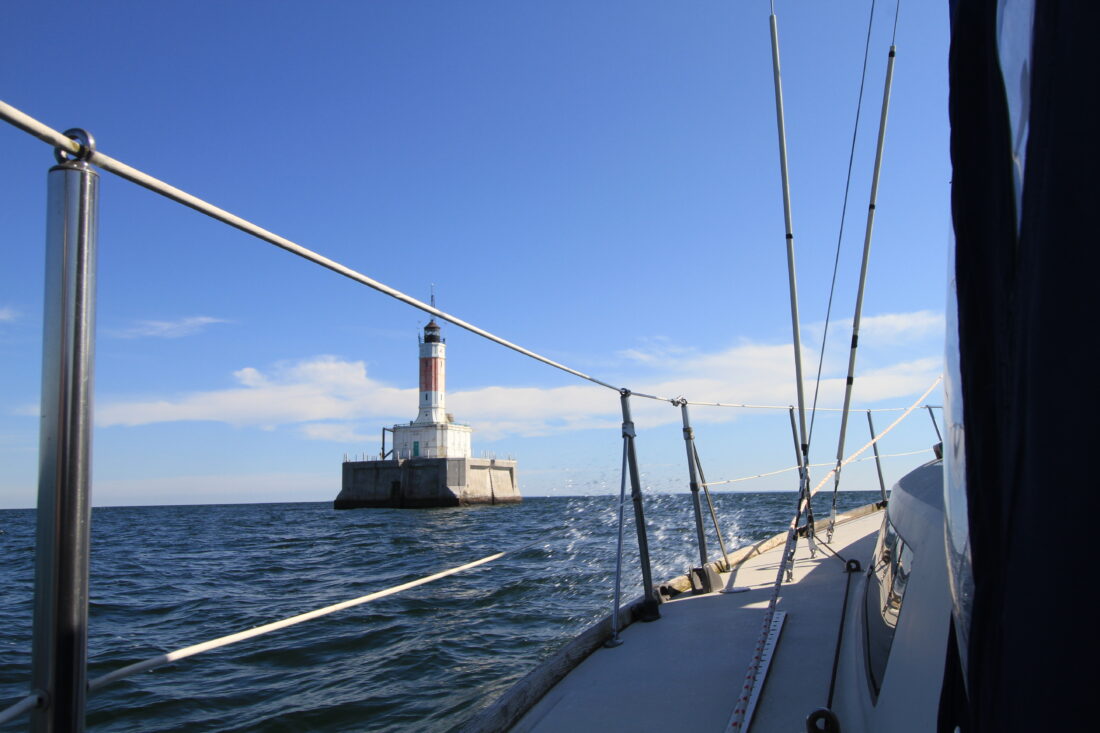
While the Minneapolis Shoals Light Station was automated in 1979 and is not currently open to the public, it continues to provide a vital navigational aid to mariners on Lake Michigan. Here is the structure as seen from Manitu, a vessel that makes port in Escanaba. (R. R. Branstrom | Daily Press)
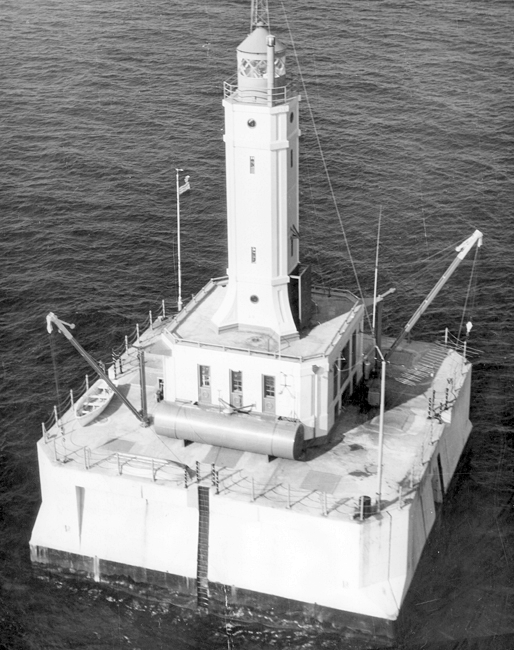
The Minneapolis Shoal Light Station replaced lightships that were stationed at the Eleven Foot Shoal for many years before 1935. (Photo courtesy of the United States Coast Guard)
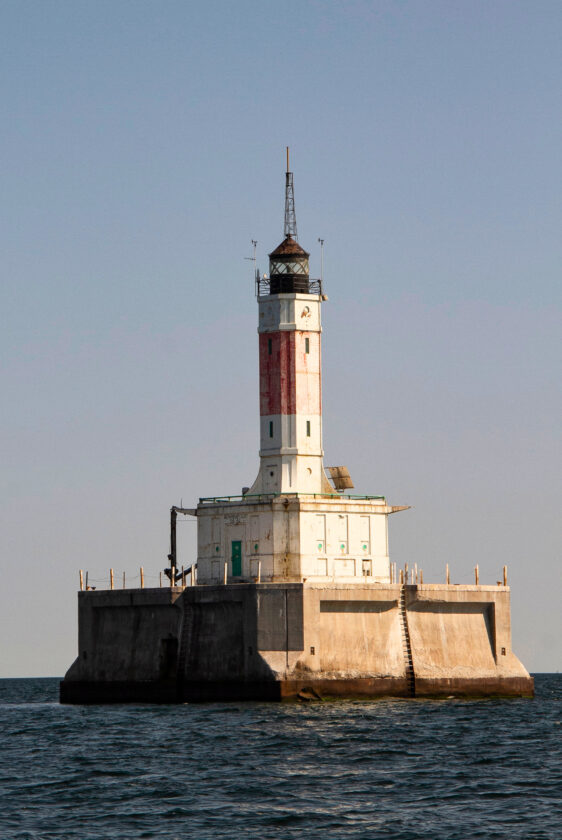
A concrete structure rising from the lake bottom, the Minneapolis Shoal Light Station's steel-framed structure, encased in riveted steel plates, rests on a concrete pier measuring 64 square feet and standing 12 feet high, which is placed on a crib. (R. R. Branstrom | Daily Press)
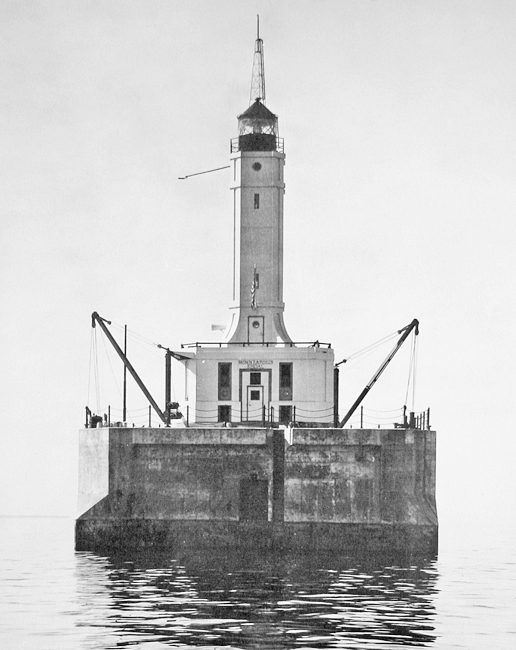
The Minneapolis Shoal Light Station was built in 1934 and first lit in 1935 to guide vessels safely around the shallow waters of Minneapolis Shoal. (Photo courtesy of the National Archives)
While the Minneapolis Shoals Light Station was automated in 1979 and is not currently open to the public, it continues to provide a vital navigational aid to mariners on Lake Michigan. Here is the structure as seen from Manitu, a vessel that makes port in Escanaba. (R. R. Branstrom | Daily Press)
The Minneapolis Shoal Light Station replaced lightships that were stationed at the Eleven Foot Shoal for many years before 1935. (Photo courtesy of the United States Coast Guard)
A concrete structure rising from the lake bottom, the Minneapolis Shoal Light Station's steel-framed structure, encased in riveted steel plates, rests on a concrete pier measuring 64 square feet and standing 12 feet high, which is placed on a crib. (R. R. Branstrom | Daily Press)
The Minneapolis Shoal Light Station was built in 1934 and first lit in 1935 to guide vessels safely around the shallow waters of Minneapolis Shoal. (Photo courtesy of the National Archives)
Trending
Editor's note: This story on Minneapolis Shoal Light Station is the fourth in a series on the area's lighthouses and lightships.
ESCANABA -- While many of the area’s lighthouses have gone dark over the decades, one familiar to local residents and lighthouse lovers still shines and continues to serve as a warning beacon on Lake Michigan -- the Minneapolis Shoal Light Station.
Built in 1934 and first lit in 1935, the light station sits in the waters of Green Bay nearly seven miles south of Peninsula Point by Big Bay de Noc and 12 miles south of Escanaba. It was designed to guide vessels safely around the shallow waters of Minneapolis Shoal.
Unlike a traditional lighthouse, which generally refers to the tower housing a navigational light, a light station includes the entire facility. At Minneapolis Shoal, that meant not only the light tower but also living quarters, mechanical equipment and work spaces that supported the Coast Guard crews who maintained the beacon before it was automated.
The light station replaced the lightships anchored at Eleven Foot Shoal, located approximately two and a half miles off the Stonington Peninsula. Lightships had been anchored at the shoal since 1893.
The Minneapolis Shoal Light Station is a concrete structure rising from the lake bottom, and it originally displayed a fourth-order Fresnel lens. It contains an electric fog signal, and its steel-framed structure, encased in riveted steel plates, rests on a concrete pier measuring 64 square feet and standing 12 feet high, which is placed on a crib.
It also consists of three decks -- the first deck at the water line served as a storage room, the middle housed the machinery and the top served as living quarters for crew members.
According to the Historic American Engineering Record of the Department of the Interior, “The Minneapolis Shoal Light Station exemplifies the design used by the Coast Guard for the last generation of manned light stations built on isolated reefs in the Great Lakes.”
The department also noted the light station is virtually identical to the Gray’s Reef Lighthouse in Emmet County, which was built two years after the Minneapolis Shoal Light Station.
The few men stationed at the Minneapolis Shoal at any given time reportedly spent two or three weeks on duty before receiving one week off.
Visitors were few until the lake became ice-free and pleasure boaters returned to the water. The Escanaba Coast Guard station serviced the lighthouse each week, delivering supplies and rotating personnel.
The station earned a reputation as the “bug” capital of the Great Lakes, according to various historical reports, making life out on the water difficult for many crew members.
“We had May flies for the last two weeks, now it’s horse flies,” said crew member Walter Lucas, 26, of Maine, in a newspaper report.
On hot days, a boom mounted on the platform was swung over the water with a rope attached, allowing crew members to swing out over the lake. This provided a welcome break from the isolation of life at the light station.
The crew also recounted one of the worst storms they experienced at the light station in an interview with the Daily Press sometime between 1955 and 1979.
"The storm of November, 1955, was the worst in the experience of the present crew. All night long the whole crib would shake and vibrate from the pounding waves, and the following morning, the whole structure was sheathed in ice, temporarily disrupting all operations at the light," the Minneapolis Shoal crew said.
Talk of automating the light station began in the mid- to late 1970s. Chief Richard Lelievre of the Escanaba Coast Guard Station told The Escanaba Reporter in November 1977, “The light was supposed to have been converted from manual operation to automatic next year but has been temporarily delayed until 1979.”
The delay, he said, was due to funds being cut from the budget and transferred to other Coast Guard projects.
The light station was officially automated in 1979, replacing the crews that had maintained a constant watch over operations at the light station for decades.
“I won’t miss it,” said Ray Leverick, 20, upon the automation of the lighthouse. He had been stationed at the shoals for nearly a year and was originally from New Mexico.
Leverick added, “It’s boring. I do a lot of reading. I read books this thick,” his fingers a couple of inches apart, “to keep from going crazy.”
Instead of personnel stationed on-site, the Escanaba Coast Guard station reportedly monitored the lighthouse’s automated functions around the clock.
“Unmanned lights are marvels of efficiency,” one newspaper report states. “Reliable electric power is crucial. If one generator fails, the second starts up automatically. If all power fails, a standby battery system takes over. Any failure in the system is signaled to the nearest shore station by radio.”
The conversion program reportedly began in 1972, when the Coast Guard automated Poe Reef and Spectacle Reef lighthouses in Lake Huron. 11 more Great Lakes lighthouses were automated during the following five years.
According to past Daily Press reports, the changeover was part of a congressional mandate requiring all manned Great Lakes lighthouses to be automated by the end of 1980 as a cost-cutting measure.
The Minneapolis Shoal Light Station was listed on the National Register of Historic Places in 2006 and continues to operate throughout the navigation season. It is not open to the public, but many boaters still enjoy catching a glimpse of the lighthouse and photographing it as they pass.
The Detroit News reported in 2016 the Minneapolis Shoal Light Station was put up for auction by the United States Coast Guard. It has since gone up for auction multiple times on the Government Services Administration's auction site but remains under the operational authority of the Coast Guard.
Though the light station has been unmanned for decades, it continues to provide a vital navigational aid to mariners and is expected to do so for the foreseeable future.
------
Sophie Vogelmann can be reached at 906-786-2021 or svogelmann@dailypress.net.