Delta County voters to decide on countywide transit millage
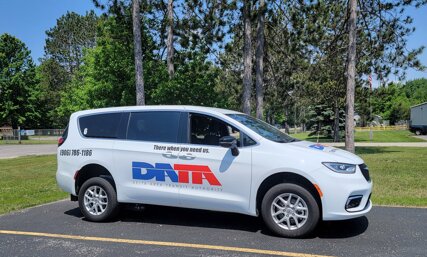
Delta County voters will decide Aug. 4 whether to approve a new countywide transit millage that would expand Delta Area Transit Authority (DATA) service into seven currently unserved townships and extend DATA’s operating hours. (Photo courtesy of DATA)
ESCANABA — A proposed countywide transit millage on the ballot this August could bring expanded public transportation service to every township in Delta County.
Delta County voters will decide Aug. 4 whether to approve a new countywide transit millage that would expand Delta Area Transit Authority (DATA) service into seven currently unserved townships and extend DATA’s operating hours.
If approved, the eight-year millage would replace existing city and township transit millages — currently .6 mills in Escanaba and Gladstone and .5 mills in seven participating townships — with a single countywide rate of 0.689 mill from 2026 through 2033.
According to DATA, a $200,000 household with a taxable value of $100,000 would pay an estimated $68.90 annually, or about $5.75 per month. The millage is projected to generate approximately $1.1 million in its first year.
DATA, a nonprofit organization, currently provides demand-response transit service Monday through Friday in Escanaba, Gladstone and seven townships: Bay de Noc, Bark River, Brampton, Ensign, Ford River, Masonville and Rapid River.
Seven Delta County townships — Wells, Garden, Nahma, Maple Ridge, Baldwin, Cornell and Fairbanks — do not currently receive DATA service because no local transportation millage funding is in place.
Five other Upper Peninsula counties, including Alger, Gogebic, Marquette, Ontonagon and Schoolcraft, already operate countywide transit millages.
DATA officials said reliable transportation can determine whether residents are able to reach jobs, medical appointments and other essential services.
More than half of DATA riders are working-age adults, according to the agency. DATA also serves seniors, veterans, individuals with disabilities, students and the general public.
“Public transportation is more than a ride,” said John Stapleton, DATA executive director. “It connects Delta County residents to work, medical care and daily life. This proposal gives every corner of the county access to that connection.”
DATA further provides emergency transportation for nursing homes, housing complexes and warming centers.
Agency officials noted that Delta County’s geography presents challenges for transit service, particularly because routes often pass through areas that do not currently receive service.
“Currently, DATA vehicles travel through non-service areas, most notably Wells Township, which has nearly 5,000 residents, to reach service areas,” the agency said.
The agency also said that travel through non-service areas creates a common misconception that DATA already serves the entire county, which it does not.
The total population living in currently unserved areas is estimated at about 8,358 residents, which DATA noted is comparable to the populations of entire Upper Peninsula counties such as Schoolcraft County — about 8,047 residents — and Alger County — 8,842 residents.
Not only would the funds expand countywide service, but they would also add operation hours to six days per week, including early morning and evening service on certain days.
Expanded DATA hours would include: 6 a.m. to 6 p.m., Monday to Thursday; 6 a.m. to 2 a.m. on Fridays; and 7 a.m. to 2 a.m. on Saturdays.
The proposal would also make DATA eligible for additional state and federal funding at a 50% match, bringing approximately $1 in outside funding for every $1 raised locally.
“Residents told us what they need,” Stapleton said. “We did surveys, we did listening sessions. They told us they need to get places on the weekend, in the early mornings, in the evenings.”
DATA surveys found that when transit is unavailable, 59% of residents stop going out to eat or shopping, 65% cut social visits and 15% skip medical care.
The surveys also found that one in four individuals will have a disability at some point in their life, and seniors outlive their ability to drive safely by an average of seven to 10 years.
Delta County’s senior population stands at 27.5% today — compared to a statewide average of 18% — and is projected to reach 32% by 2040.
Michigan provides support to local transit agencies through Local Bus Operating funds, though DATA officials said state support covers a smaller share of transit costs than in previous decades.
DATA has served Delta County since 1989. The agency currently employs 29 individuals and operates a fleet of 18 vehicles. In fiscal year 2025, DATA operated 260 days and traveled 450,539.19 vehicle miles.
For more information on DATA and its services, visit www.databus.org or call 906-786-1186.
—
Sophie Vogelmann can be reached at 906-786-2021 or svogelmann@dailypress.net.
Local News

Small fleet, big hearts
Semi-trailer fire on Lincoln Road
MDHHS awards substance use prevention funds to Sault Tribe
ESCANABA — The Michigan Department of Health and Human Services (MDHHS) has awarded nearly $3.75 million to 12 ...

Michigan AG releases report on sexual abuse allegations within Diocese of Saginaw

Two children, 17 animals removed from home in Ishpeming Township