
Delta County Board hears from CEO of Pathways Community Mental Health
Trending
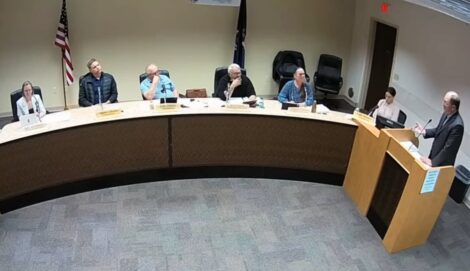
ESCANABA -- Delta County Commissioners heard from Matt Maskart, CEO of Pathways Community Mental Health (CMH), as he presented Pathway CMH's annual report to the board.
Pathways CMH, an authority of county government, provides a wide range of support for individuals with severe mental illness, severe emotional disturbances or developmental disabilities.
The organization offers various services, including mental health assessments and testing, treatments, medication administration and review, mental health therapy and counseling, long-term residential care services and more.
Pathways CMH serves Alger, Delta, Luce and Marquette counties.
During Maskart's report to the board, he stated Medicaid accounts for over 90% of Pathways CMH funding. The Healthy Michigan Plan -- a Medicaid expansion program -- also contributes to the organization’s funding, as well as state and federal grants.
Maskart also noted Pathways CMH received the Bell Seal for Workplace Mental Health award from Mental Health America (MHA) for the fourth year in a row. The award recognizes the organization's commitment to employee mental health and well-being.
“We still have struggles along the way, of course," Maskart said. "All of 2025 was spent fighting threats to privatization. There were changes that the state had wished to move forward that would privatize the payment organization PIHP -- Prepaid Inpatient Health Plan."
In 2025, the Michigan Department of Health and Human Services (MDHHS) proposed reducing the state's 10 regional PIHPs to three and introducing a competitive bidding process for those contracts -- a move many leaders in the healthcare space said could lead to greater privatization.
The state’s request for proposals was eventually found to violate state law by a Court of Claims judge in January, and the state rescinded their RFP soon after.
Maskart told commissioners it took a significant amount of resources from the organization to fight the changes.
The organization is also experiencing staffing shortages and is working to maintain staffing levels in working with the state, according to Maskart.
Maskart also serves as chairman of the Rural and Frontier Caucus -- a caucus of the Community Mental Health Association of Michigan made up of over a dozen other statewide organizations to advocate for rural mental healthcare.
Currently, there are varying definitions of rural across MDHHS programs that create instability for providers and counties and can impact funding eligibility, disrupt service planning and affect access to care, according to the caucus.
"Unfortunately, Michigan has gone ahead and said that Wayne County is partially rural," Maskart said. "Wayne County, as you know, is a metro area and is the 19th largest county in the whole United States."
Maskart told commissioners he visited Lansing to speak with the House Appropriations Committee in March to advocate for a standard definition of rural.
He added, "I'm sure there's a farm somewhere in Wayne County, but it's not rural as far as we consider rural. Not only is it the population density that makes something rural, but also the distance to an urban center."
Maskart's proposal aims to standardize MDHHS' standard definition of rural and frontier in the FY27 budget by basing the definitions on the U.S. Department of Agriculture's Economic Research Service Frontier and Remote Area Codes.
Because the caucus’ FY27 budget boilerplate proposal to the board was not in a resolution format, the board chose to send a letter of support on Tuesday for the standard definition of rural as presented in the proposal.
In other business, commissioners:
– Deferred the agenda item regarding the Delta County Parks and Recreation Campground Policies and Regulations indefinitely, as the Parks and Rec Commission is forming a subcommittee to read through the regulations. An earlier version of the regulations prohibited firearms and fireworks on park property, prompting concerns from community members who argued the restriction infringed on their Second Amendment rights at prior meetings. In April, Commissioner Christine Williams told attendees she would ensure the issue was addressed. A revised draft of the Hunting and Weapons section, now pending Parks and Rec Commission review, states, "Nothing in this section is intended to prohibit the lawful possession, carrying, or transportation of firearms or ammunition in accordance with applicable State of Michigan and federal law."
– Received the Equalization Department's updated and continued service agreements with townships in Delta County. The individual agreements are set for a five-year term with an updated Appendix A Price List.
--
Sophie Vogelmann can be reached at 906-786-2021 or svogelmann@dailypress.net.