
Ash Elegy
The fate of ash trees highlights one of the several tragic tales within the world of forest ecology. The exotic emerald ash borer struck a hard blow. Yet, the story is not over.
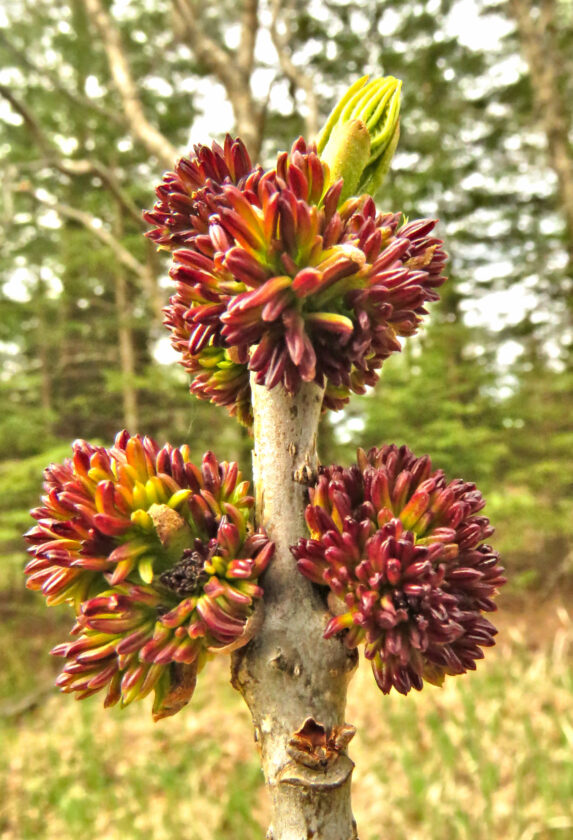
Flower clusters on an ash (courtesy photo).
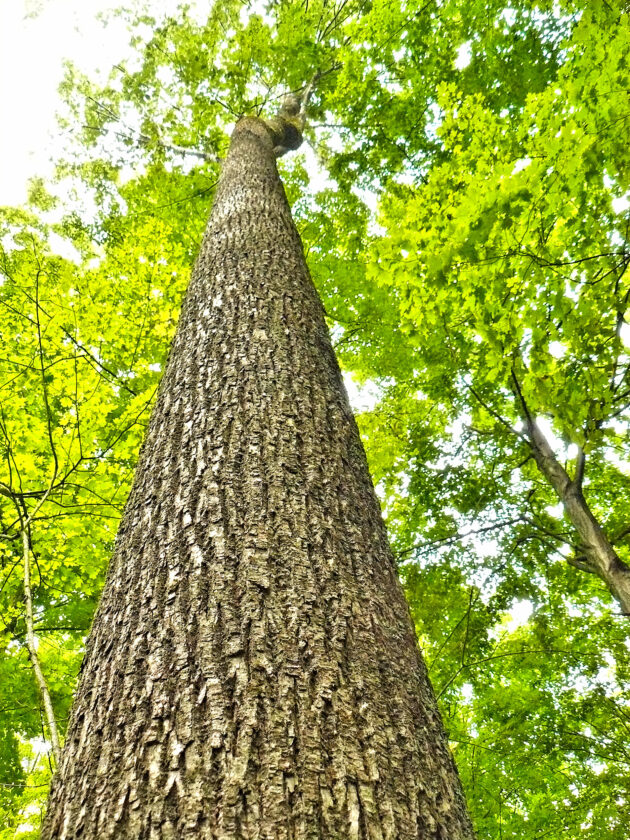
Tall, straight bole of a white ash (courtesy photo).
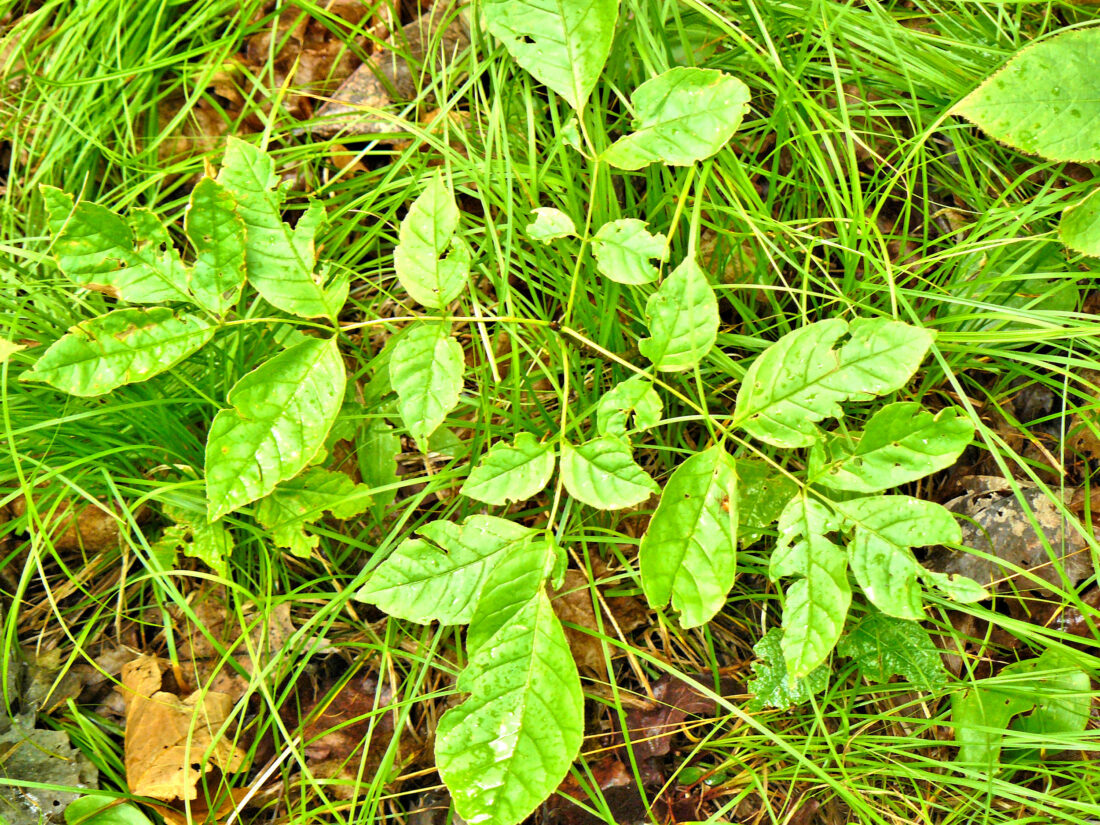
Ash seedlings with an uncertain future (courtesy photo).
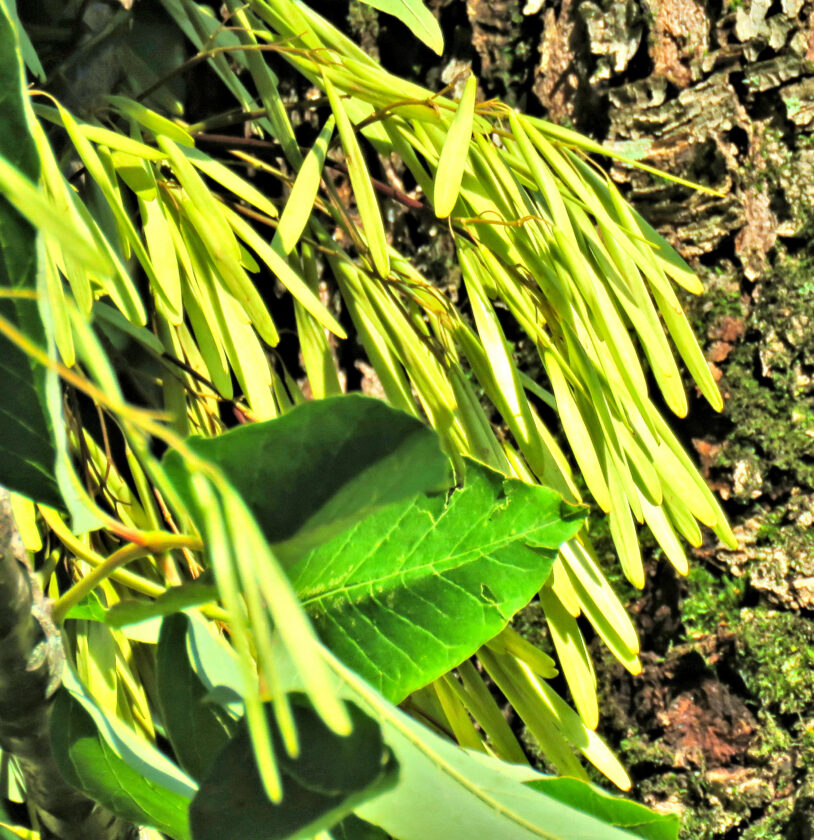
Ash fruits, or samaras (courtesy photo).
Flower clusters on an ash (courtesy photo).
Tall, straight bole of a white ash (courtesy photo).
Ash seedlings with an uncertain future (courtesy photo).
Ash fruits, or samaras (courtesy photo).
Trending
Ashes (Fraxinus spp.) have never been a large part of the Michigan forest landscape. At most, about three percent of the volume was occupied by a combination of white, black, and green ash. Yet, black ash (F. nigra) was sometimes the only tree species that could grow in wetlands. The elms used to be co-inhabitants, but we all know what happened to the elms. With the loss of the ashes, many forested wetland habitats will become open wetlands.
Green ash (F. pennsylvanica) cultivars were very common street trees, resistant to most maladies, but over-planting ash in municipalities has now left many residential blocks treeless. The same thing happened when the street elms succumbed to Dutch elm disease. Oddly, city planners didn't take the lesson the first time round. Most have now.
White ash (F. americana) was the family member with the greatest timber value. The wood grains are similar to oaks and made gorgeous furniture. It was regularly mixed-in with other mesic hardwoods. Tall, straight trunks graced many a woodland.
Unrealized was the beauty of black ash, which I think was even more spectacular than white ash. And, I have made cabinets of black ash to prove my point. Wonderful material.
These three ash species were the most common in Michigan. Two other species can be found here and there in the southern counties, however. Pumpkin ash (F. profunda) and blue ash (F. quadrangulata). Blue ash has demonstrated a fair amount of resistance to the emerald ash borer. A narrow ray of promise.
For the record, mountain ashes or rowans (Sorbus spp.) are not true ashes. Rather, they belong to the rose family.
Ashes have compound leaves, meaning a single leaf appears to be several leaves, which are actually leaflets. Leaves begin where the buds erupt from the woody twig. Flowers are inconspicuous and wind pollinated. The fruits are single-winged helicopters, or samaras in botanical-speak.
The inner bark tends to be more fibrous than most trees, especially the black ash, which was commonly used in basketry. In some circles, black ash is called basket ash.
All of the ashes have stout twigs, much fewer in number than most trees. Ashes are oppositely-branched. The trees typically leaf-out late, which leads some to believe the trees are dead. Of course, now, most of them are dead, indeed.
The buds were particularly good ways to identify the ashes. All have blunt end buds, and the key was how back the first pair of leaf scars were located from the end bud, and how the top of the scar was notched.
White ash bud scars have a wide "smile" or deep "U" and lie close to the end, or terminal, bud.
Black ash bud scars are slightly notched and usually sit about a quarter-inch away from the terminal buds.
Green ash bud scars are tight against the terminal bud and the top of the scars are straight across. The tips of the branches tend to be more flattened than other ashes.
The exotic emerald ash borer put the ecological kibosh on our ash resource. I remember one particular tree, as an example. A beautiful white ash thriving in a floodplain near the mouth of a delightful little river, as it bled into Little Bay de Noc. The towering ash was fully 26 inches in diameter. This sentinel tree was one of the first to go in my area.
I mourn for my grandchildren, who will not see the peculiar architecture of ash trees in the forest, nor watch wood ducks paddling within a spring-flooded ash swamp. Although, forest floors in some places are loaded with white ash seedlings. However, their chances to grow mature are dim.
Most of the outcomes of harmful exotics have not ended well for our native trees. We caught the spread of the ash borer too late. Yet, vigilance and aggressive action has occasionally held a new invader at bay. But for some tree species, seed banks and genetic research might be their only pathway into the future.