
Poverty Island Lighthouse: ‘America’s Most Endangered Lighthouse’
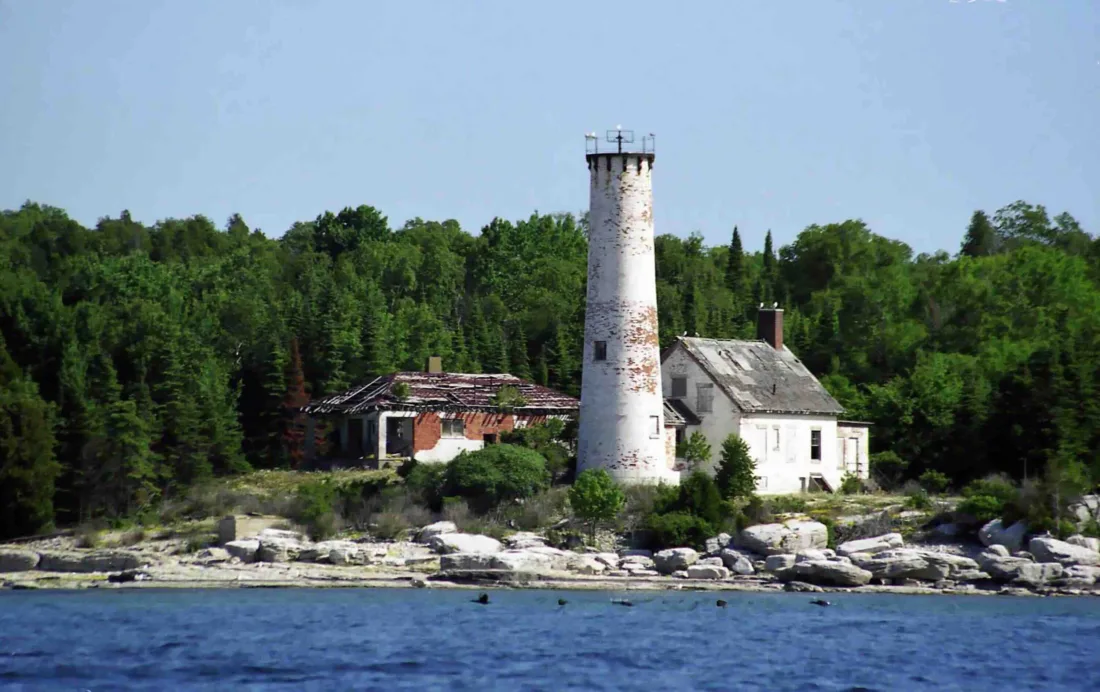
The Poverty Island Lighthouse has weathered decades of isolation (Photo courtesy of the United States Lighthouse Society)
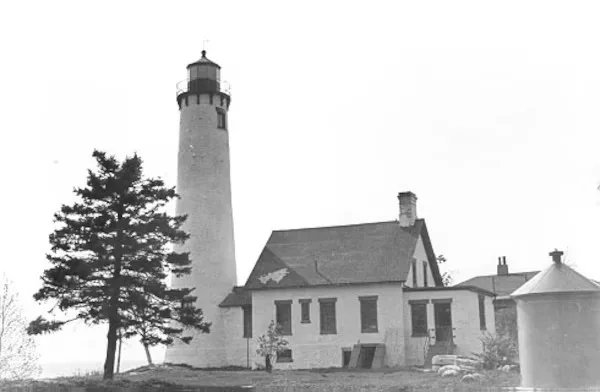
The Poverty Island Lighthouse on Poverty Island in Garden (Photo courtesy of the United States Coast Guard)
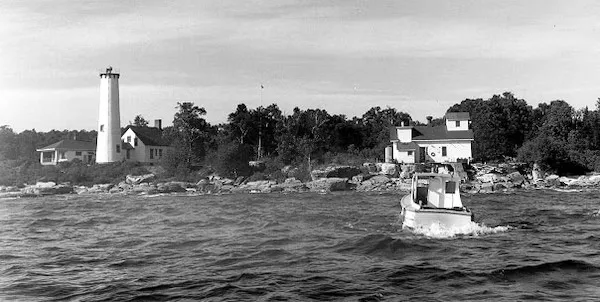
The Poverty Island Lighthouse sits approximately 100 feet from the island’s south shore. (Photo courtesy of United States Coast Guard)
The Poverty Island Lighthouse has weathered decades of isolation (Photo courtesy of the United States Lighthouse Society)
The Poverty Island Lighthouse on Poverty Island in Garden (Photo courtesy of the United States Coast Guard)
The Poverty Island Lighthouse sits approximately 100 feet from the island’s south shore. (Photo courtesy of United States Coast Guard)
Trending
Editor's note: This story on the Poverty Island Lighthouse is the sixth in a series on the area's lighthouses and lightships.
GARDEN -- Surrounded by the waters of Lake Michigan and separated from the mainland by miles of open water, the Poverty Island Lighthouse has stood as a silent guardian for more than a century. Once guiding ships through the Poverty Island passage, the abandoned lighthouse now remains as a reminder of the island's maritime history, mysteries and uncertain future.
Poverty Island lies in Lake Michigan 27 miles southeast of Escanaba and is one of a chain of islands stretching from Wisconsin's Door Peninsula to Michigan's Garden Peninsula. Much of the island is bordered by limestone cliffs, which transition into a shoreline of large rocks near the lighthouse.
The Poverty Island Lighthouse sits approximately 100 feet from the island's south shore in a small, rocky clearing, where the abandoned tower, keeper's dwelling and remaining structures have weathered decades of isolation. The lighthouse's deteriorating condition has earned it recognition as "America's Most Endangered Lighthouse" on Lighthouse Digest's "Doomsday List."
According to former Delta County Historical Society President Peter Strom, Poverty Island has less historical recognition than neighboring St. Martin Island because of its smaller size and remote location. The St. Martin Island Lighthouse is reportedly visible from the Poverty Island Lighthouse.
Strom stated that after a ship passed Poverty Island, its crew would look for navigational lights on St. Martin Island, followed by the Eleven Foot Shoal Lightship, Minneapolis Shoal Light Station, Peninsula Point Lighthouse and finally Sand Point Lighthouse.
The United States Lighthouse Board first requested $18,000 in 1867 to construct a lighthouse on Poverty Island. Congress did not approve the funding until 1873, and construction began in August of that year.
Construction continued until a fire destroyed the temporary barracks used by the construction crew in October 1873.
In May 1874, a small work crew resumed construction, installing stairs and landings up to the height of the walls and partially completing the interior plastering. The keeper's dwelling was also connected to the tower.
The Lighthouse Board requested another $3,000 in 1875 to finish construction, which Congress approved. Some sources state the light was first displayed on Aug. 10, 1875, while the Coast Guard reports it was first lit in 1874.
The lighthouse originally featured a 70-foot-tall conical red-brick tower and housed a flashing red Fourth Order Fresnel lens, which was reportedly visible for 16 miles in all directions. The cast-iron lantern room was 10 sides and topped with a ventilator ball.
An enclosed passageway also connected the tower and the one and a half story keeper's dwelling. An updated assistant keeper's dwelling was built to the west of the tower sometime around 1930.
According to the United States Coast Guard, the Poverty Island Lighthouse is a duplicate of Wisconsin's Sturgeon Point Lighthouse.
Just over a decade later, a fog signal building was constructed in 1885 to house boilers and machinery for a steam fog whistle, and an oil house was added in 1894.
Like many lighthouses during this time period, the lighthouse was automated in 1957. In 1976, the Coast Guard installed a 300mm lens on a pole to replace the original light.
The Fresnel lens and lantern were removed from the tower in 1976, and the tower was sealed, though the lantern remained on the property until 1982 when it was restored by the Delta County Historical Society and placed atop the Sand Point Lighthouse in Escanaba.
The Coast Guard states the lighthouse was eventually deactivated sometime between 1976 and 1982, though online sources differ on the exact date.
In 2004, the Delta County Historical Society added much of Poverty Island's history to the Sand Point Lighthouse's Historic Structures Report. An excerpt of that history was provided to the U.S. Coast Guard and helped support the Poverty Island Lighthouse's addition to the National Register of Historic Places in 2005.
Today, 49 handwritten letters from keepers and assistant keepers at the Poverty Island Lighthouse, dating from May 2, 1887, to April 16, 1890, are preserved by the Society.
One keeper, George Larsen, was born in Norway and fought in the Civil War. He reportedly taught himself English, and his letters offer a glimpse into daily life on the isolated island.
Poverty Island Lighthouse keepers' link to the outside world was by cable telephone line running from Poverty to Washington Island then to Door County Peninsula, according to historical reports.
Historical records do not indicate exactly how many keepers served at the Poverty Island Lighthouse during its operation. However, various online sources state that at least a dozen keepers were responsible for the light, not including assistant keepers.
The Coast Guard continues to own the property, while the U.S. Fish and Wildlife Service manages the island as part of the Green Bay National Wildlife Refuge. The lighthouse has been inactive for decades and remains closed to the public, as the site is overgrown and the lighthouse stands in a state of decay.
In its report recognizing the Poverty Island Lighthouse on the Doomsday List, Lighthouse Digest said, "Poverty Island Lighthouse was built for one purpose only; to save lives. Now it needs to be saved… It is now time for federal, as well as local public agencies and officials, to step to the plate and help those who want to save Poverty Island Lighthouse."
Despite its isolation, the home of the Poverty Island Lighthouse has gained national attention for its history and legends, including a feature on "Unsolved Mysteries." While several versions of Poverty Island’s lore remain unproven, one legend claims five chests filled with gold bullion and coins are buried offshore -- treasure that would reportedly be worth more than $400 million today.
The Daily Press plans to publish a series featuring area islands in the future.
------
Sophie Vogelmann can be reached at 906-786-2021 or svogelmann@dailypress.net.