
Chip sealing to begin in Delta County

People will be seeing signs with the message "loose gravel" in Delta County during the next two weeks as the road commission works on chipsealing a number of township roadways. (MDOT image)
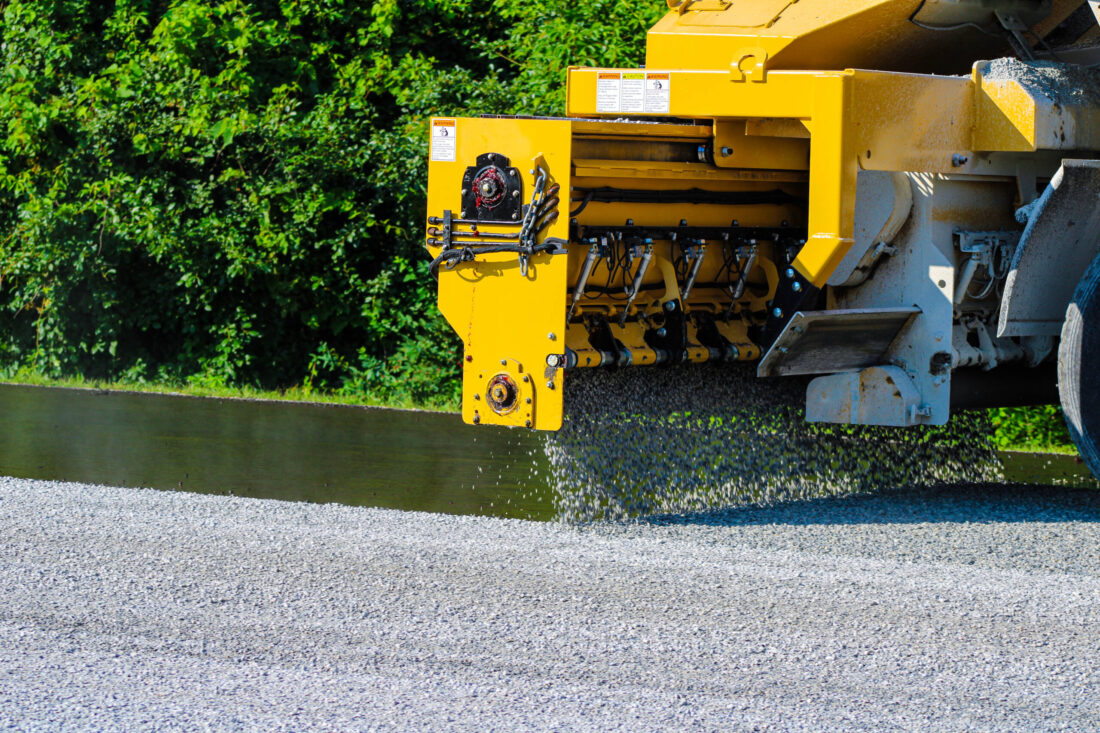
Aggregate is spead over a roadway sprayed with an emulsion during a chip sealing operation. (Photo via Saginaw County Road Commission)
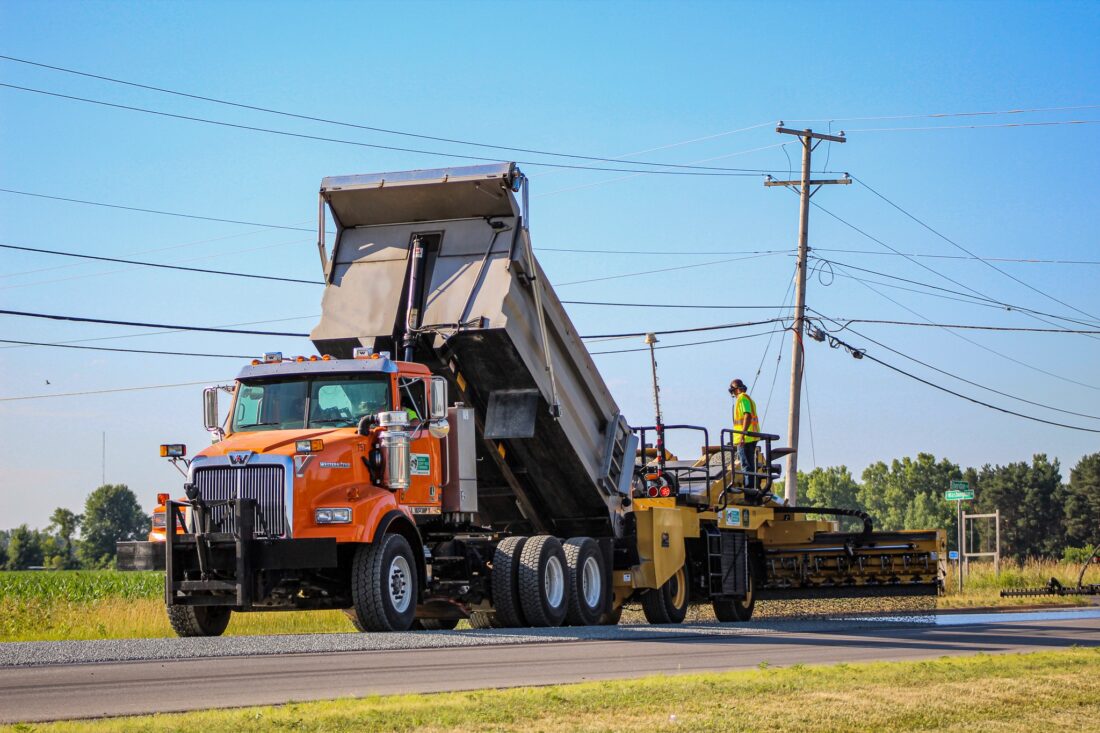
In Lower Michigan, the Saginaw County Road Commission reinforces pavement by chip sealing. The same practice is used in Delta County and is soon to begin. (Photo via Saginaw County Road Commission)
People will be seeing signs with the message "loose gravel" in Delta County during the next two weeks as the road commission works on chipsealing a number of township roadways. (MDOT image)
Aggregate is spead over a roadway sprayed with an emulsion during a chip sealing operation. (Photo via Saginaw County Road Commission)
In Lower Michigan, the Saginaw County Road Commission reinforces pavement by chip sealing. The same practice is used in Delta County and is soon to begin. (Photo via Saginaw County Road Commission)
Trending
DELTA COUNTY - Chip sealing operations will begin Monday, July 6, and continue for up to two weeks on various roads throughout Delta County, the Delta County Road Commission has announced.
Chip sealing, intended to prolong a road’s lifespan, involves spraying an emulsion on the roadway and then spreading and packing gravel-like aggregate into the surface.
“Chip seal remains the most cost-effective method to preserve our infrastructure. A chip seal treatment, upon application, may appear to be a nuisance to the traveling public, but over time the treated surface improves,” says an article from the Road Commission of Kalamazoo County.
Though chip sealing has its benefits — it’s affordable, waterproof and skid-resistant — there are also drawbacks and things motorists should be aware of.
As not every piece of aggregate ends up adhered to the binding emulsion, loose pieces can end up becoming hazards. Motorcyclists and drivers seeking to protect their paint and windshields sometimes prefer to avoid recently-chip-sealed areas; when driving on such surfaces, speed should be reduced and caution exercised.
Between about July 6 and July 20, several roads in Bark River, Wells, Cornell, Baldwin, Maple Ridge, Masonville, Bay de Noc, and Fairbanks Townships will receive the treatment, shared the Delta County Road Commission.
“High-traffic roads will have ‘Loose Gravel’ signs posted. Please watch for signs and use caution when traveling through work areas,” the commission stated.
When used appropriately, seal coating is effective at preserving existing pavements.
“The tar is actually an emulsion of water and liquid asphalt which penetrates and seals small cracks in the existing pavement. Sealing these cracks on a regular basis prevents water from seeping into and softening the base of the road and over time causing potholes to form,” states Delta County. “The porous stone that we use to cover the asphalt emulsion sticks and, after rolling and sweeping, provides a slightly roughened, skid-resistant surface to improve safety. It is important to apply seal coat to a road BEFORE this deterioration occurs, which leads us to seal coat roads that are in generally good condition rather than waiting for them to deteriorate to the point that extensive patching is necessary.”
There are certain types and conditions of roads that chip sealing is best for, and there are situations where chip sealing is inappropriate. Areas subject to frequent turning, such as cul-de-sacs and intersections, should not be chip sealed, according to a 2024 report “Synthesis of Seal Coat Research in Minnesota.”
A similar earlier report, which considered multiple Midwest states including Michigan, noted that “chip seal is not an appropriate method when the pavement is structurally deficient or cracks are generally wider than 0.25 inches. It is also not recommended where medium to high-severity alligator cracking, extensive potholes, and/or excessive rutting is present. Chip seals also include other limitations such as relatively long curing times for non-polymer modified emulsions, loose aggregate chips which can cause windshield damage, noise due to the rough surface, and need of warm weather to allow for construction.”
When newly applied, aggregate may come loose.
“When a motorist encounters a newly chip sealed road, which will be marked with ‘Loose Gravel’ signs, the best practice is to reduce one's speed and keep plenty of distance from the vehicle in front of you,” the Delta County website explains.
Patience is requested.
“Please watch for road crews, follow all posted signs, and use caution when traveling through work zones. We appreciate your patience as we work to maintain and improve our road system,” the road commission stated this week.
Questions about specific roads may be directed to the Delta County Road Commission at 906-786-3200.