
Drinking water line replacements latest in battle against lead
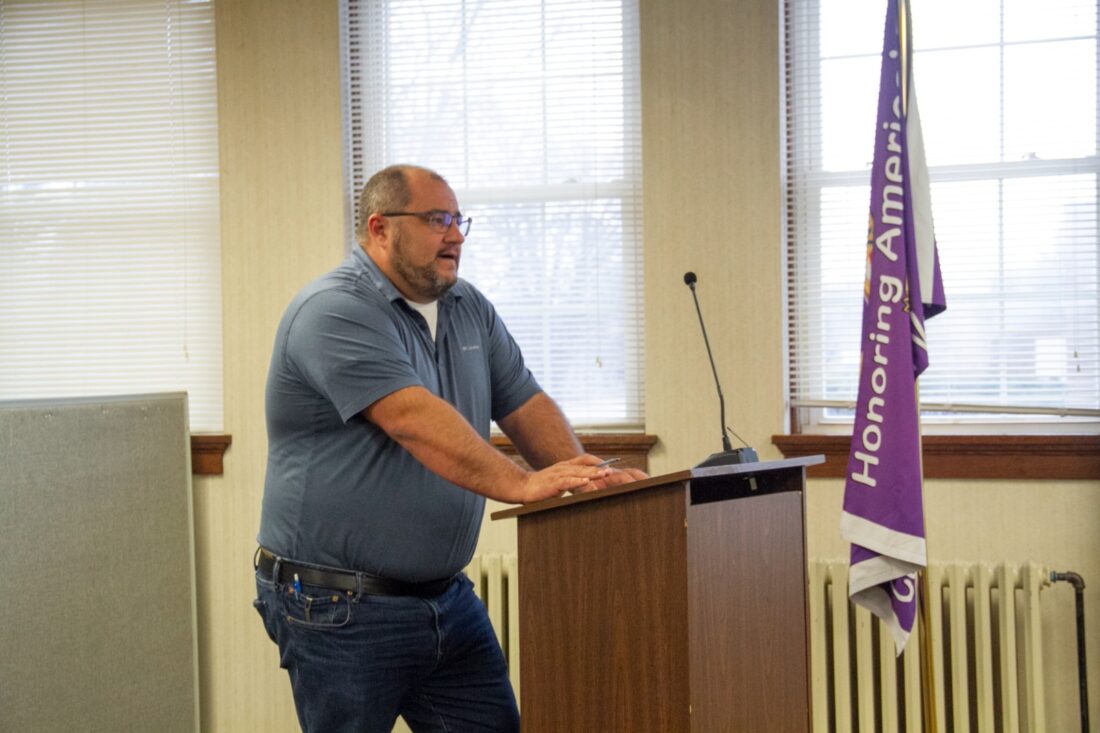
Scott Nowack of Coleman Engineering Company speaks to the Gladstone City Commission about replacing lead and galvanized pipes that distribute drinking water in the city. (R. R. Branstrom | Daily Press)
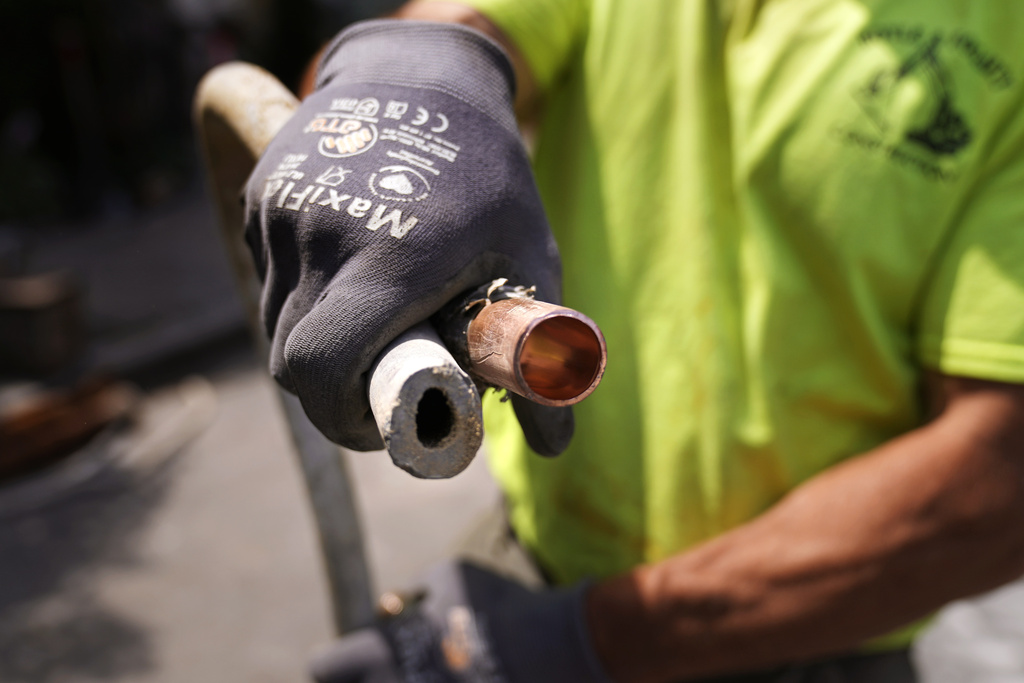
Richie Nero, of Boyle and Fogarty Construction, shows the the cross section of an original lead, residential water service line, at left, and the replacement copper line, at right, outside a home where service was getting upgraded, Thursday, June 29, 2023, in Providence, R.I. (AP Photo/Charles Krupa)
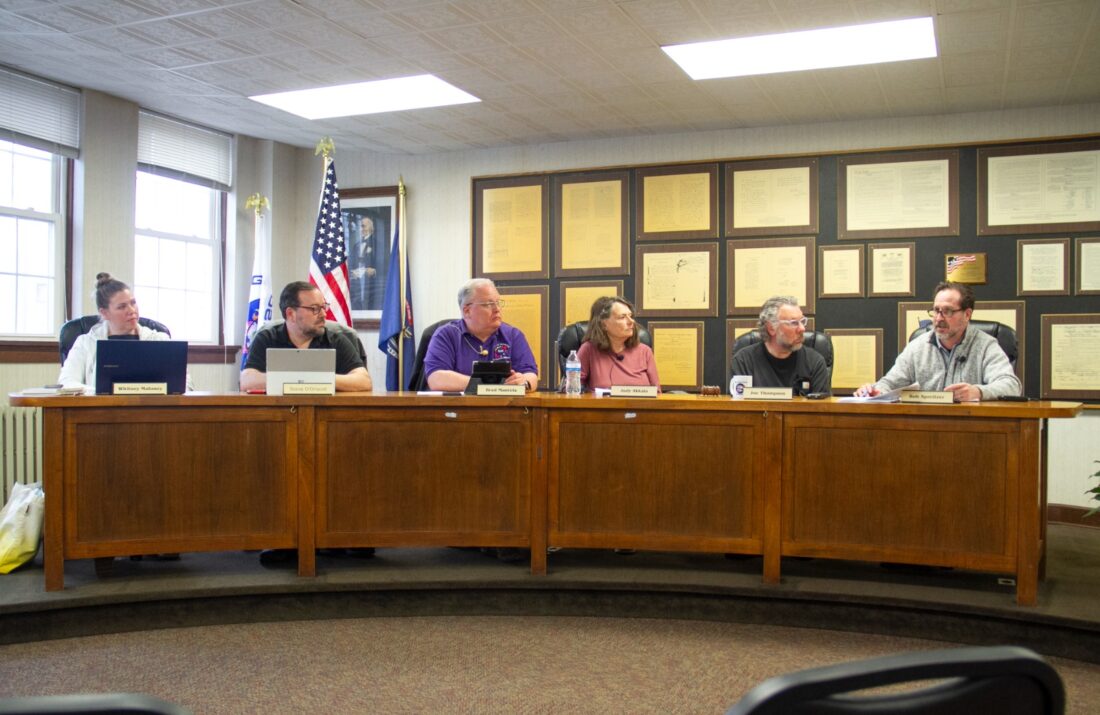
Gladstone City Commissioners (from left) Whitney Maloney, Steve O'Driscoll, Brad Mantela, Judy Akkala and Mayor Joe Thompson listen to City Manager Rob Spreitzer (far right) during a meeting on Monday, April 27, 2026. (R. R. Branstrom | Daily Press)
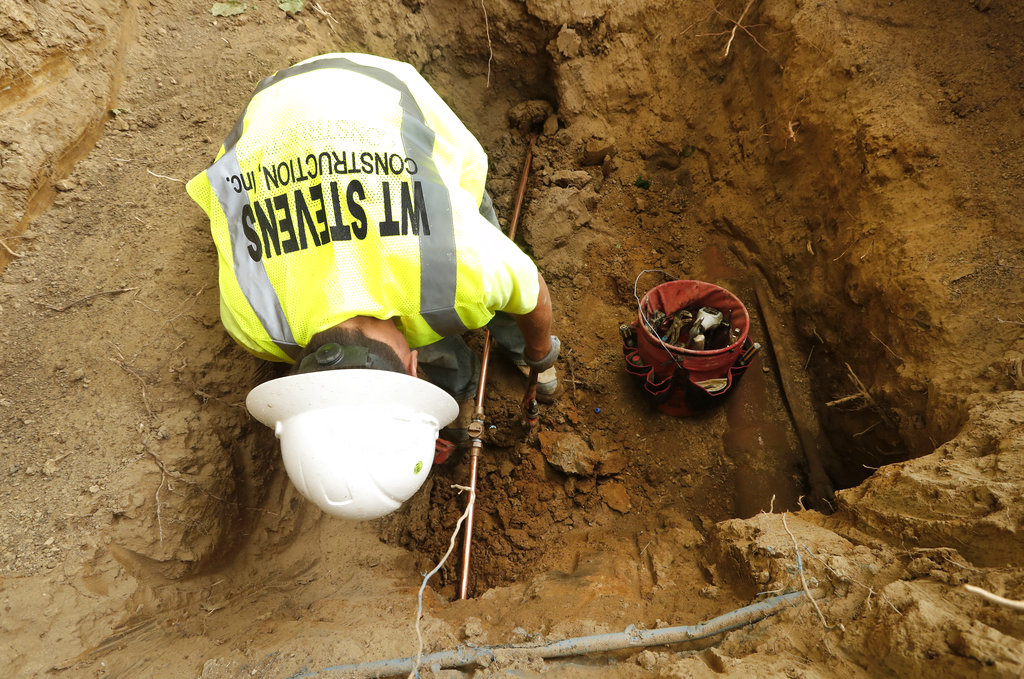
A new copper water supply line is installed at a home during lead pipe replacement in Flint, Mich., Friday, July 20, 2018. (AP Photo/Paul Sancya)
Scott Nowack of Coleman Engineering Company speaks to the Gladstone City Commission about replacing lead and galvanized pipes that distribute drinking water in the city. (R. R. Branstrom | Daily Press)
Richie Nero, of Boyle and Fogarty Construction, shows the the cross section of an original lead, residential water service line, at left, and the replacement copper line, at right, outside a home where service was getting upgraded, Thursday, June 29, 2023, in Providence, R.I. (AP Photo/Charles Krupa)
Gladstone City Commissioners (from left) Whitney Maloney, Steve O'Driscoll, Brad Mantela, Judy Akkala and Mayor Joe Thompson listen to City Manager Rob Spreitzer (far right) during a meeting on Monday, April 27, 2026. (R. R. Branstrom | Daily Press)
A new copper water supply line is installed at a home during lead pipe replacement in Flint, Mich., Friday, July 20, 2018. (AP Photo/Paul Sancya)
Trending
GLADSTONE — Gladstone aims to be one of the next municipalities to replace underground water lines. The City Commission agreed on Monday to submit a project plan developed by Coleman Engineering to the Michigan Department of Environment, Great Lakes and Energy (EGLE) as part of a funding application.
Pipes that carry drinking water and are either made of lead or galvanized once connected to lead must be completely replaced by 2037 — not only in the State of Michigan but across the nation.
Lead, an element whose chemical symbol is Pb, is a neurotoxin. Even ancient Romans knew it was dangerous in high concentrations — lead poisoning was known as “plumbism.” But the effects of prolonged, low-level exposure to the heavy metal — such as from pipes carrying drinking water — wasn’t widely recognized before the 20th century.
Lead’s low melting point makes it malleable and a good material to work with. Early colonial settlers in the U.S. mined and smelted the metal extensively. Later, the country became the top producer of refined lead. Compounds were used as fuel additives, and even though tetraethyl lead was proven to be deadly in the 1920s, it took several more decades before regulations were created to limit use.
In the 1970s, seeing that automobile exhaust was a direct threat to human health, the Environmental Protection Agency (EPA) began controlling the use of lead as a fuel additive.
Congress passed the Safe Drinking Water Act, meant to monitor the levels of lead in tap water, in 1974.
The federal government banned lead-based paint in 1978.
In 1991, the EPA established the Lead and Copper Rule, which required public water systems to monitor and minimize lead and copper in drinking water with corrosion control treatment. Minor revisions to the LCR were made in 2000.
During the first half of 2016, lead levels in the water in Flint were measured at 20 ppb, according to EGLE. The primary cause was identified as a 2014 water source change that led to pipe corrosion. A state of emergency was declared.
Subsequent studies by the Centers for Disease Control and Prevention (CDC) showed that more than half of Flint households exhibited behavioral and physical health issues, possibly due to lead poisoning.
The City of Flint, the State of Michigan’s legal framework, and federal agencies all came under fire for delayed reaction to the crisis.
In response, Michigan enacted the country’s strictest Lead and Copper Rule in 2018. The lead limit was set at 15 ppb, and EGLE requested samples. Pipe replacement for lead and galvanized lines became required, regardless of how much lead was shown to be in the water.
A new level of 12 ppb went into effect on Jan. 1, 2025.
With every municipality in the state ordered to replace lines, the projects must be spread out over time, since there are only so many engineers and construction contractors. For example, Escanaba’s line replacement work has begun, while Gladstone has yet to kick off physical construction — though their planning is underway.
Coleman Engineering Company has been assisting the City of Gladstone with studies of its existing infrastructure and identifying needs.
In October of 2025, the city granted the water department permission to submit an intent to apply for the State Revolving Fund (SRF) for fiscal year 2027.
In March of 2026, Coleman submitted a report of findings to EGLE. This week, Scott Nowack, a representative for Coleman, brought a draft project plan to the Gladstone City Commission.
“The project plan lays out replacing all 330 of the city’s existing lead (and galvanized) water services that are known,” Nowack said. “We estimate that to be about $4 million.”
Unfortunately, the pipes aren’t just in under the roads. Service lines go through people’s private property.
“Probably the biggest disruption to people’s lives is we’re tearing up yards,” Nowack said, but added that they do their best to work with residents. “We do a mass mailer to everyone that we need access to their property.”
While the estimated cost of completed the required work is $4,041,780, the city and Coleman hope that Gladstone might be able to earn some loans from the state.
Though a grant, loan forgiveness or even any loan is not guaranteed, Nowack said he believes that now is a good time to submit the project plan and ask for a SRF loan, which could potentially be financed in various ways.
The law requires funding to come from the municipality’s water department, so rate increases will almost certainly take place after an evaluation.
All commissioners agreed that the document from Coleman — which outlined the need for pipe replacements as well as things to be aware of, like protecting the shipwreck offshore — looked good, so they approved a resolution to submit the project proposal and apply for a loan.
“We’ll submit that by June 1, hopefully hear something back from the state in September. It’s fairly quick turnaround with the revolving fund,” Nowack told the commission.
This means that project bidding and the hiring of contractors will likely not begin before 2027.
Theoretically, the work to replace all 330 identified problem lines in Gladstone could be done in one summer but may take more time. People could expect to see streets and lawns dug up in 2027 and 2028 if the current projections pan out.