Right tools – and actions – are key when it comes to affordable housing
It’s no secret that affordable housing — or the lack thereof — in Marquette County has been a hot topic in recent years, especially as rent and housing prices soared nationwide amid the COVID-19 pandemic.
But thankfully, the situation seems to be on the radar for local units of government and other major players in the county. For example, the Marquette Ad-Hoc Housing Committee’s final report on housing in the city — and potential solutions to address the shortage of affordable housing — was recently approved by the Marquette City Commission. It’s now headed to the city’s planning commission, which will consider implementing report recommendations into the city’s community master plan documentation.
Another example of local movement on the issue is the Lake Superior Community Partnership’s Marquette County Housing Solutions Summit, a two-day webinar on Wednesday and Thursday that featured presentations on multiple housing-related issues. The sessions touched on topics such as housing needs in the county, using land bank tools and tax increment financing for housing, housing tools for local governments, a housing policy update, innovative housing models and a roundtable on implementing and identifying resources discussed during the summit.
This summit brought together many of the county’s local leaders and officials, as well as knowledgeable regional officials to discuss the problem from many angles.
Taking part in the session titled “Local Government Housing Tools” were Nate Heffron, Negaunee city manager; Craig Cugini, Ishpeming city manager; Sean Hobbins, Marquette assistant city manager; and Jason McCarthy, Marquette Township planning and zoning administrator.
“I think zoning is kind of where a lot of these discussions start,” LSCP CEO Sarah Lucas said.
We wholeheartedly agree with Lucas. Zoning is ultimately the determination of what can be built where in a given locale.
If too few areas are zoned as residential — or if existing residential density is too low — for a given area’s population, it’s a recipe for a housing shortage, especially in terms of starter homes and affordable properties for low-to-middle income households.
And based on what we heard from the several city officials from across the county during that presentation, this fact is understood.
“One thing that I think we’ll start talking about in the future is going back to some of our residential zoning districts that were typically single-family — our platted area, let’s say, Trowbridge Park — and maybe allowing multi-family or duplexes in those types of districts, because typically right now it’s very single-family only, and I think there’s properties that we have that could be accessible,” McCarthy said.
As McCarthy alludes to, changes in zoning can be transformative for housing availability in communities. While it can take time to see the fruits of rezoning efforts, it can be a long-term solution to the multi-faceted housing shortage issue, which brewed for years before boiling to a head in recent times.
While zoning is just one piece of a much larger puzzle, we hope that our local leaders will continue to gather, discuss and consider a wide array of solutions and approaches without losing sight of the most important part of the process — implementation.
— The (Marquette) Mining Journal
Editorial
Congress needs to rein in ‘turbo’ gerrymandering
The redistricting arms race now roiling American politics was not merely predictable, but inevitable. It began the ...

Editorial cartoon for May 16, 2026
AAA: Gas cost‑cutting moves could backfire
Thinking of stretching that tank of gas as far as it can get you before facing the current pain at the pumps ...
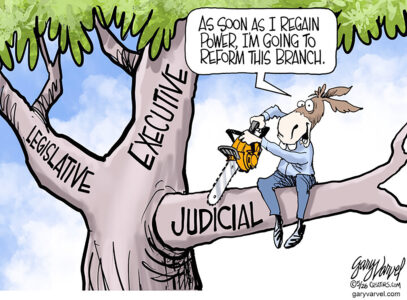
Editorial cartoon for May 15, 2026
Motorists urged to share the road with motorcyclists
With the snow gone and warmer weather returning — though slowly — to the region, drivers should expect an ...