
Local support fuels recovery of emaciated dog at Delta Animal Shelter
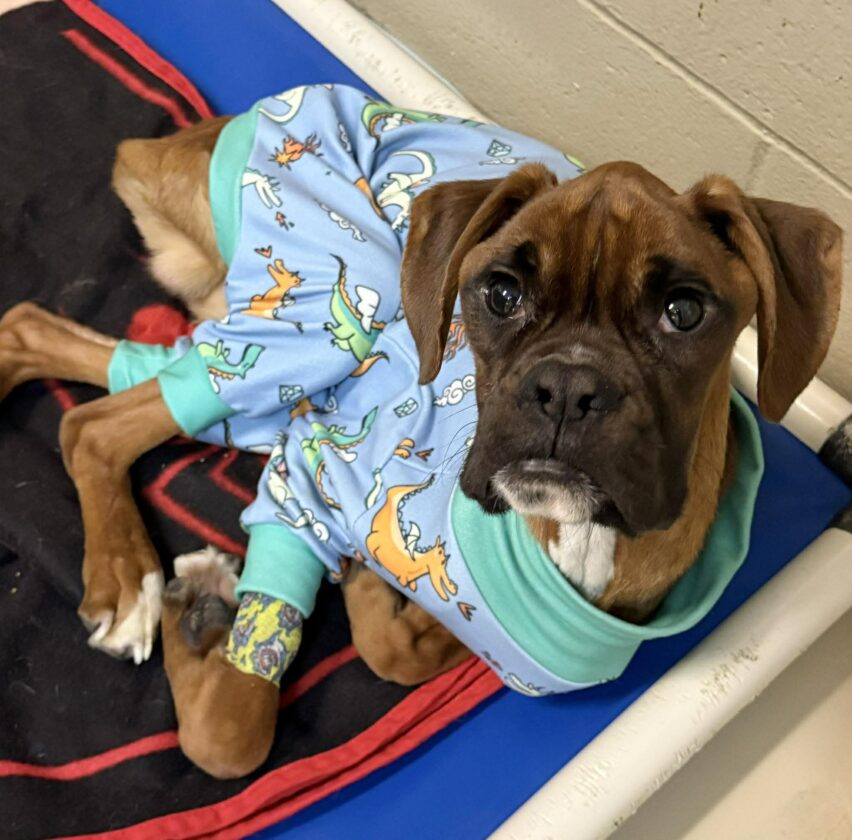
A young adult male Boxer, who was later named Archie, arrived at the Delta Animal Shelter severely emaciated on April 12. He is now on the road to recovery in the shelter's care. (Photo courtesy of the Delta Animal Shelter)
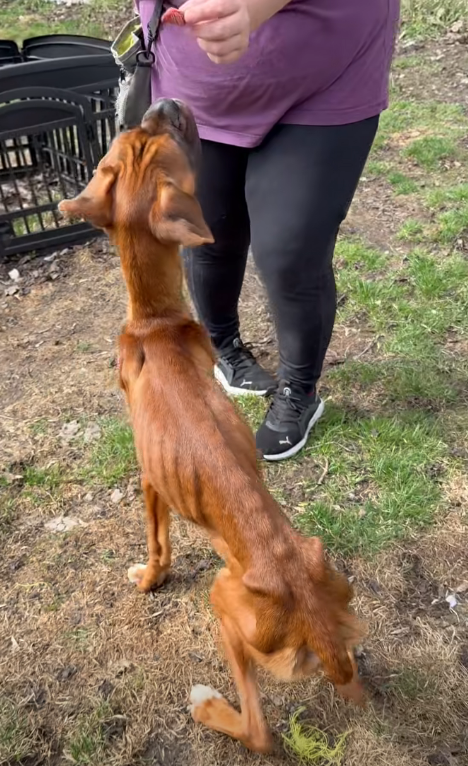
A community member found an emaciated dog walking along M-35 near the Gladstone High School on April 12. (Photo courtesy of the Delta Animal Shelter)
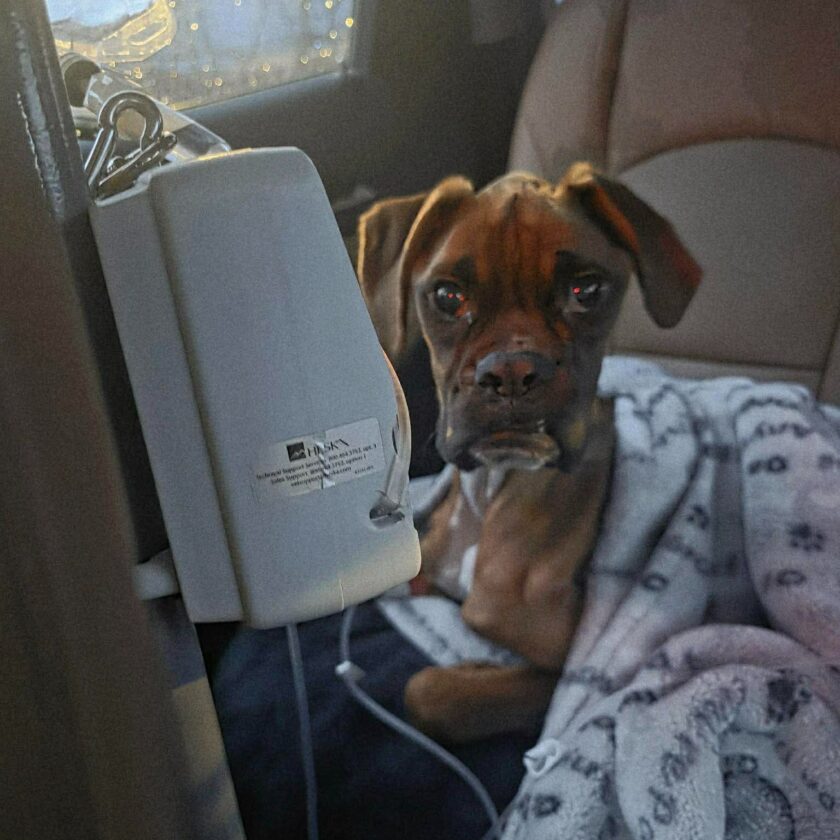
A rescued Boxer named Archie was brought home by Delta Animal Shelter's executive director, Tonya Gartland, during his first weekend in the shelter's care. He received continuous IV fluids to balance his kidney levels. (Photo courtesy of the Delta Animal Shelter)
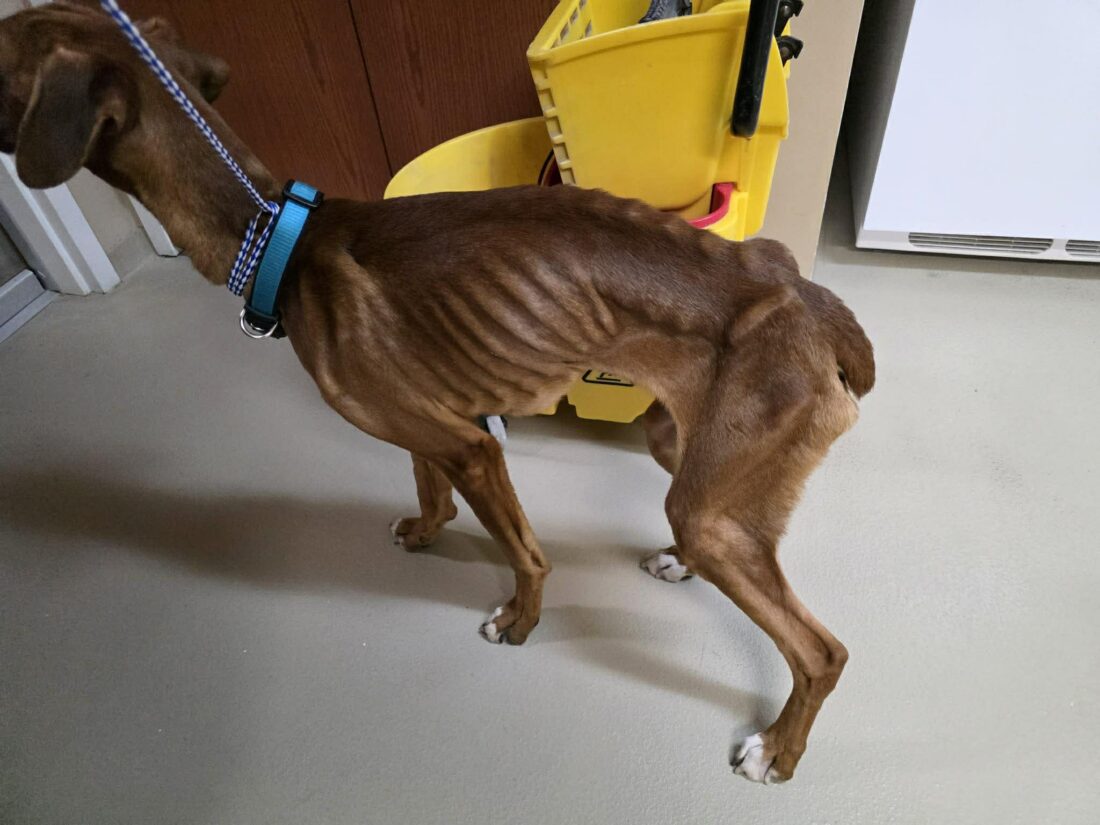
Delta Animal Shelter's operations coordinator, Vonnie Bruce, said Archie's body condition score is “the worst that we’ve ever seen.” (Photo courtesy of the Delta Animal Shelter)
A young adult male Boxer, who was later named Archie, arrived at the Delta Animal Shelter severely emaciated on April 12. He is now on the road to recovery in the shelter's care. (Photo courtesy of the Delta Animal Shelter)
A community member found an emaciated dog walking along M-35 near the Gladstone High School on April 12. (Photo courtesy of the Delta Animal Shelter)
A rescued Boxer named Archie was brought home by Delta Animal Shelter's executive director, Tonya Gartland, during his first weekend in the shelter's care. He received continuous IV fluids to balance his kidney levels. (Photo courtesy of the Delta Animal Shelter)
Delta Animal Shelter's operations coordinator, Vonnie Bruce, said Archie's body condition score is “the worst that we’ve ever seen.” (Photo courtesy of the Delta Animal Shelter)
Trending
Content warning: This article includes a photo and discussion of an emaciated animal.
ESCANABA -- Staff at the Delta Animal Shelter are currently caring for a dog whose body condition, according to Shelter Operations Coordinator Vonnie Bruce, is "the worst that we've ever seen."
On Sunday, April 12, the shelter was contacted after hours by the Delta County Sheriff's Department when a community member found an emaciated dog walking along M-35 near the Gladstone High School.
The individual reached out to the sheriff's department, which in turn notified the shelter's executive director, Tonya Gartland. Gartland arrived shortly afterward to admit the dog -- now known as Archie -- into the shelter's care.
"He’s not like a dog who’s scared of people, so obviously we didn’t know the full story when we first met Archie, but he didn’t appear to be a dog who was running on his own for a long time. He was wandering right in a populated area," said Bruce.
Bruce added that if a dog in Archie's condition was wandering as a stray for an extended period in such condition, he likely would have been seen and brought in sooner.
Staff determined Archie is a young adult male Boxer between one to three years old. Additionally, staff found a healthy, well-bred adult male Boxer's weight should be between 60 to 70 pounds, but Archie weighed 23.4 pounds upon intake.
His condition was further evaluated using a Body Condition Score (BCS), which assesses fat reserves and muscle coverage, typically on a scale of one to five. A score of one indicates severe emaciation, and five indicates ideal or overweight condition.
Bruce said Archie's BCS was the worst the shelter has encountered.
Archie was then taken to the Bay Veterinary Clinic in Gladstone for testing and a full medical evaluation to determine the next steps in his recovery.
He was also found to be severely anemic, and his kidneys had begun shutting down prior to medical intervention.
"The first weekend [Archie] was here, our director took him home for the weekend," Bruce said. "He was on IV fluids -- hooked up to an IV all weekend. We just had to try to get those kidney levels back up. Luckily, that did help."
The Delta Animal Shelter has since received information regarding Archie's alleged previous owner and passed it along to the sheriff's department for further investigation.
Bruce said Archie also has underlying medical issues that likely contributed to his inability to maintain a healthy weight or hold nutrients.
"Regardless if someone was purposely starving him or not, he definitely was incredibly malnourished, and medical care should've been sought out a lot sooner, because he was pretty close to probably not being living anymore."
Bruce encourages pet owners to reach out to a veterinarian or local shelter for guidance on how to best handle medical expenses when it comes to caring for a pet if needed.
"Medical care is really expensive, and unfortunately, that's just part of being a pet owner," said Bruce. "We understand stuff is super expensive, but animals can’t advocate for themselves. If we’re going to take on a pet, we have to be willing to step up and do what we have to do when they need us."
Archie's road to recovery consists of several small meals each day. Staff are carefully managing his feeding to avoid refeeding syndrome -- a potentially deadly condition that can occur when food is reintroduced too quickly after severe malnutrition.
He is now able to consume around 1,000 calories a day. According to the Animal Medical Center of Chicago, an intact adult male dog between 60 to 70 pounds requires between 1503 and 1688 calories each day.
Archie will continue to undergo blood work and continuous monitoring. So far, he has gained just over one pound while at the shelter.
"He’s slowly gaining, but it’s hard to see that in the pictures and video because he just looks so skinny," said Bruce. "He seems to be getting stronger, and instead of just kind of laying down, he's up and wanting treats and that kind of stuff."
Archie will eventually be eligible for adoption from the Delta Animal Shelter. To follow Archie's journey, visit the shelter's Facebook page, https://www.facebook.com/Deltaanimalshelter.nokill.
The shelter has raised more than $6,000 to support Archie's ongoing care. Those interested in donating can do so through the shelter's Facebook post about Archie, https://www.facebook.com/share/p/1HBZnR9fnT/.
Donations can also be made through the shelter's website, https://deltaanimal.org/, by calling (906) 789-0230 or by visiting in person at 6975 County 426 M.5 Rd in Escanaba. The Delta Animal Shelter is open Monday through Friday from 12 to 4 p.m.
--
Sophie Vogelmann can be reached at 906-786-2021 or svogelmann@dailypress.net.