Delta Co. sees spike in deaths in 2020
ESCANABA — 2020 was a particularly deadly year in Delta County, but not all of the deaths can be attributed to the pandemic sweeping the nation — at least not directly.
According to the state’s coronavirus reporting system, 60 people had died from the virus as of Dec. 31, 2020, with another 17 deaths believed to have been linked to the disease but still unconfirmed when the stroke of midnight hit to usher in the new year. Those 77 deaths represented 15% of all deaths in the county for 2020.
However, the deaths that have been linked to the virus don’t paint a full picture of 2020’s deadly impact. According to the Delta County Clerk’s Office, which maintains death records, about 360 people have died in the county on average for the past 20 years. In 2020, 504 people died in Delta County.
The number of deaths does not include those who died in other counties, such as patients that were moved to UP Health Systems – Marquette for more advanced care prior to their death. While it is difficult to know exactly how many Delta County residents died outside of the county’s boarders, the number of Delta County residents who died in 2020 may be higher — possibly significantly — than what is recorded by the county.
Still, even the deaths recorded by the county raise a grim question: if 144 more people died in 2020 than in a typical year, what killed the additional 67 people whose deaths weren’t tied to the virus?
At this point, even local health officials are scratching their heads.
“I really can’t speculate on what the additional causes of death would be without seeing the actual numbers of what increased more than what the average is for certain diseases,” said Mike Snyder, public health officer with Public Health Delta-Menominee Counties.
Unfortunately, the statistics on causes of death in the county may not be available for some time. The most current information available from the Michigan Department of Health & Human Services only includes the top causes of death for years between 2000 and 2018.
In 2018, the county recorded 350 deaths,and according to MDHHS, the top causes of death were cancer (23.3%), heart disease (22.4%), and chronic lower respiratory disease (7.3%). Cancer and heart diseases have consistently been the top two killers since at least the year 2000. Chronic lower reispiratory disease rounded out the top three causes of death nine out of the 19 years recorded.
The prevalence of heart disease and chronic lower respiratory disease could further complicate the question. In addition to those with respiratory issues and existing heart conditions having a higher risk of developing a severe case of COVID-19, the Centers for Disease Control and Prevention (CDC) has identified inflammation of the heart muscle and lung function abnormalities as possible long-term complications of the disease. Some patients who recover from a COVID-19 infection could, in theory, be killed by heart attacks or other ailments months after the fact, and separating those deaths from non-COVID-19 deaths could be problematic.
That doesn’t mean the state isn’t trying. Recognizing some COVID-19 deaths may not be immediately obvious as virus-related, the state has been doing regular checks of death records compared to infections through the Michigan Disease Surveillance System. If someone who has been identified as a confirmed case of the virus by the MDSS dies within 30 days of the onset of COVID-19 and has a death certificate that lists their cause of death as “natural,” their death is included as a confirmed virus-related death for reporting purposes.
But how long “long-term” complications can last isn’t known, and it’s too early to know how long-term complications can affect mortality rates.
“While most persons with COVID-19 recover and return to normal health, some patients can have symptoms that can last for weeks or even months after recovery from acute illness,” reads a statement posted on the CDC’s official website. “Even people who are not hospitalized and who have mild illness can experience persistent or late symptoms. Multi-year studies are underway to further investigate. CDC continues to work to identify how common these symptoms are, who is most likely to get them, and whether these symptoms eventually resolve.”
Setting aside the possibility of the 67 deaths somehow being related to a COVID-19 infection, it is also possible these deaths were the result of individuals foregoing treatment.
“I do know there was that fear of receiving services because of the COVID,” said Snyder.
In that case, other causes of death like accidents, Alzheimer’s, diabetes, kidney failure, or the flu — all of which have had made appearances on the top ten list of deaths in Delta County — could have risen in 2020. If that’s the case, these deaths will likely never be attributed to the disease regardless of whether or not the pandemic was a driving factor.
At this point, any theories about the additional deaths are purely speculation, but the economic climate may have also impacted the death rate.
Historically, about 1.22% of deaths in Delta County over the 19-year period on record with the state have been the result of suicides, with a spike in 2018 bringing the percentage as high as 2.6%. However, the suicide rate has not correlated with unemployment data in the county over the 19-year period. According to FRED, the economic data research tool maintained by the Federal Reserve Bank of St. Louis, peak unemployment in Delta County in 2018 was 7.3% — lower than the peak of any year in the 19-year period except for 2000. In 2000, suicide was not listed in the top 10 causes of death in the county.
However, April of 2020’s peak unemployment rate of 23.4% was unprecedented and was coupled with lockdowns and, for many, forced isolation, either due to quarantines or in the name of “social distancing.” It is theoretically possible the suicide rate also increased in 2020, however, that will not be known until the state data is officially released sometime in the future.
Local News
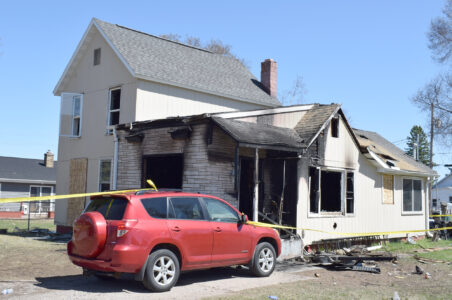
Electric bicycle explosion causes fatal fire in Kingsford

High-flying ORVs will feature at fair
BraveBots head to Worlds
Local robotics teams from Delta County made a strong showing at the FIRST State Championship in Saginaw, ...
Deadly explosion, fire in Kingsford
KINGSFORD — A Dickinson County resident and several pets died in a house fire after an electric bicycle ...
Delta County teacher’s aide requests court to enter a plea of not guilty