Wildfire season less severe so far
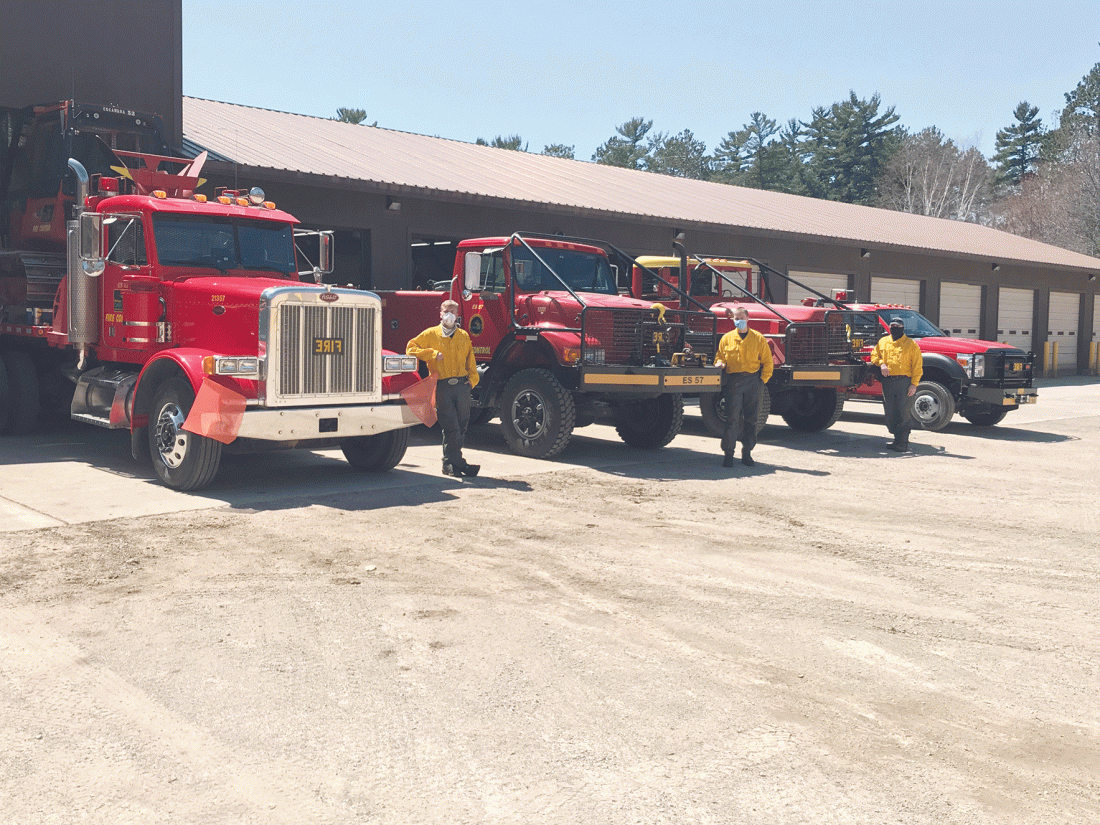
Courtesy photo From left, Michigan Department of Natural Resources Escanaba Field Office Forest Fire Officer Sam Salo, Forest Technician Nick Urich, and Forester Dan Racine are pictured along with equipment used for firefighting. Most wildfires in Michigan take place in the months of April, May and June, but this year’s wildfire season has been less severe so far locally than 2019’s season was.
ESCANABA — Michigan has entered its peak season for wildfires. According to Jay Osterberg, fire supervisor for the Department of Natural Resources (DNR) Escanaba Forest Management Unit, this year’s wildfire season has been less severe so far locally than 2019’s season was.
Most wildfires in Michigan are seen in the months of April, May and June.
“Dead vegetation from the previous year is readily available to burn, normally until mid-June when trees have fully produced leaves to provide shading for plants and other vegetation beneath the forest canopy,” Osterberg said.
Other factors behind the prevalence of spring wildfires include high winds and low relative humidity at this time of year.
In the area, Osterberg said the spring wildfire season has been off to a relatively slow start in 2020.
“The DNR Escanaba Management Unit which includes the Escanaba and Stephenson Field offices, has responded to six fires so far this spring compared to 11 fires to date last spring,” Osterberg said.
He also noted the season has been less severe for Michigan as a whole.
“It’s pretty much the same across the entire state right now, conditions-wise,” Osterberg said.
Local weather conditions are among the most important factors in determining the course of the wildfire season.
“Cooler temperatures with normal precipitation had a noticeable impact on wildfires so far this spring,” Osterberg said.
A late snowfall has also helped to mitigate wildfires locally.
However, spring is still Michigan’s peak time for wildfires and the severity of the season could change quickly. Because of this, the DNR uses Remote Automated Weather Stations to predict fire danger across the area on a daily basis.
“DNR Field Offices are staffed seven days a week when conditions warrant the need during spring fire season,” Osterberg said.
Osterberg shared some safety tips for people planning to burn waste in the near future.
“Always check the burn permit website at www.michigan.gov/burnpermit to see if conditions allow open burning in your area, or call 866-922-2876,” he said.
Osterberg also said people should:
– Never leave a fire unattended.
– Have a shovel and water source close by.
– Keep their fires small.
– Avoid burning on windy days.
– Make sure their fires are out before leaving, douse with water, stir the ashes and repeat until cool.
– Consider composting or recycling yard waste instead of burning it.
Local News
‘A death sentence’: Prison conditions under fire after third death at Women’s Huron Valley

Flag Day ceremonies in Esky and Gladstone

MSP promotes troopers to serve at Gladstone Post and Manistique Outpost
MIOSHA reports Daggett farm worker death
DAGGETT — The Michigan Occupational Safety and Health Administration (MIOSHA) has reported the death of a ...
Strings on the Bay kicks off season with new director
ESCANABA – Bay College recently announced a new season of Strings on the Bay, its annual chamber music concert ...