
The long history of the UP’s indigenous people
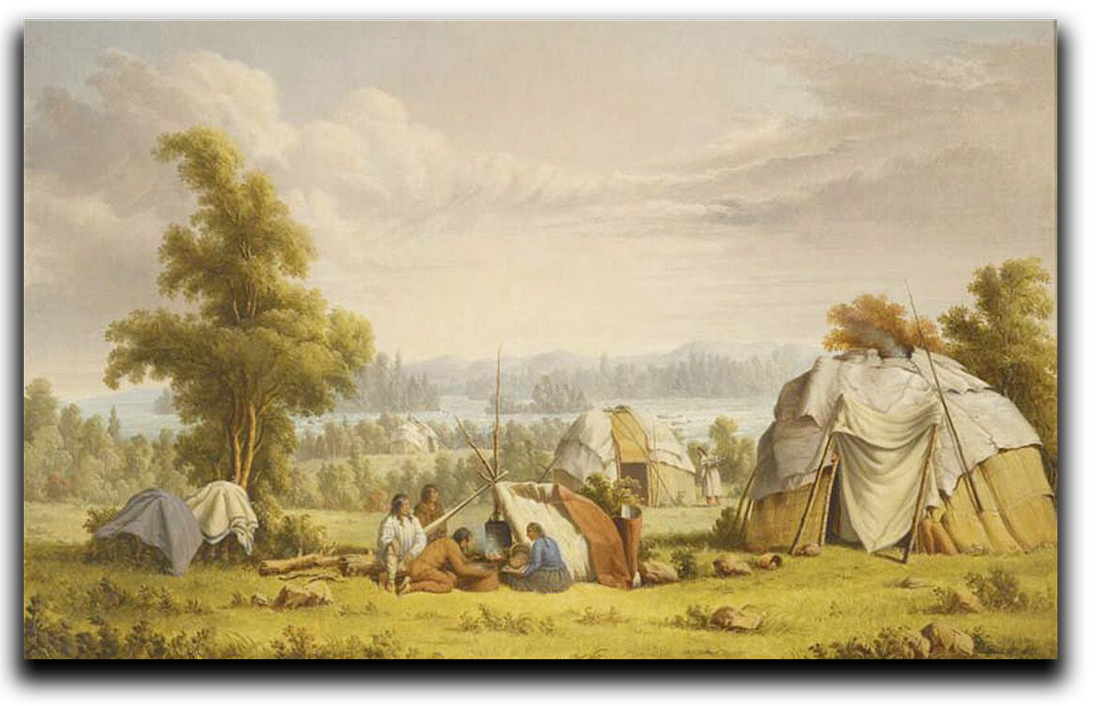
“Sault St. Marie, Chippewa/Southeastern Ojibwa” by Paul Kane, 1849. (Courtesy of the Royal Ontario Museum)
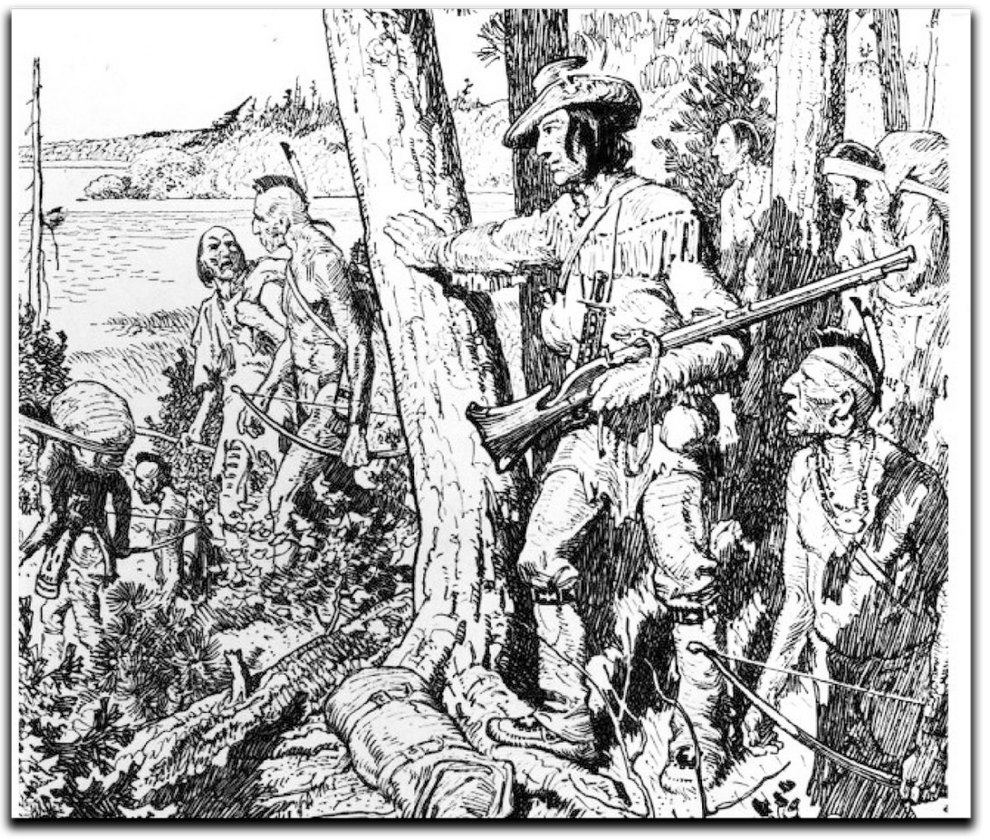
Étienne Brûlé and Huron warriors at the mouth of the Humber River. (Drawing by C.W. Jefferys, via Northern Michigan University’s Beaumier U.P. Heritage Center)
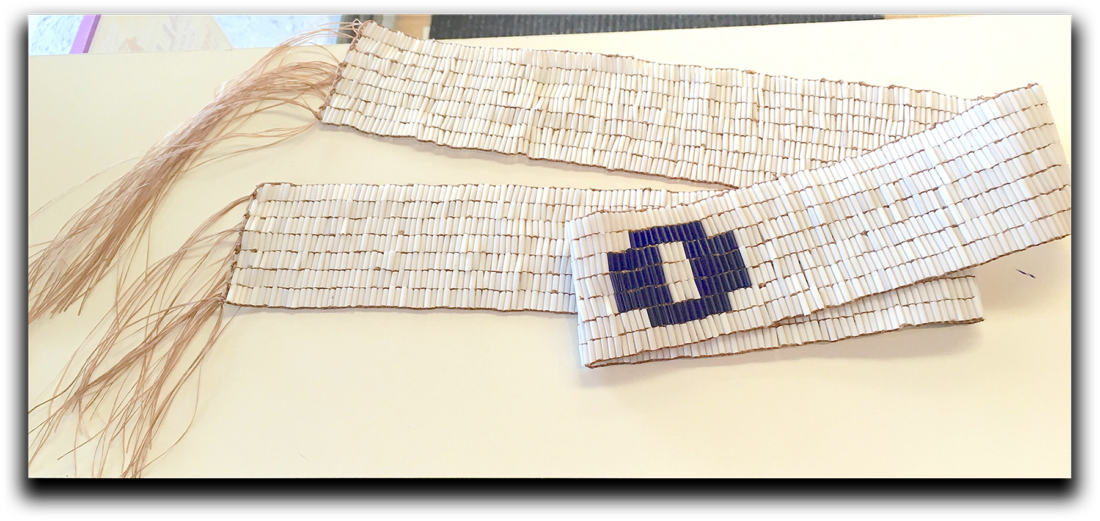
Wampum belt made for the Dish and One Spoon Treaty. (Image courtesy of John Sproule, via Northern Michigan University’s Beaumier U.P. Heritage Center)
“Sault St. Marie, Chippewa/Southeastern Ojibwa” by Paul Kane, 1849. (Courtesy of the Royal Ontario Museum)
Étienne Brûlé and Huron warriors at the mouth of the Humber River. (Drawing by C.W. Jefferys, via Northern Michigan University’s Beaumier U.P. Heritage Center)
Wampum belt made for the Dish and One Spoon Treaty. (Image courtesy of John Sproule, via Northern Michigan University’s Beaumier U.P. Heritage Center)
Trending
When the 13 colonies in the east began their push toward independence from Britain, Michigan was more than a half-century away from becoming a state and the people of the Upper Peninsula still primarily indigenous.
To tell their history in the region, Northern Michigan University in 2019 added to its website "Walking Together: Finding Common Ground," a project developed by the Episcopal Diocese of Northern Michigan in conjunction with the Great Lakes Peace Center and NMU's Beaumier U.P. Heritage Center.
Part of that project is "The Seventh Fire." The title, according to the introduction, comes from the Seven Fires Prophecies the Anishinaabe people received more than 1,500 years ago that "foretold of the catastrophic events that would befall their people over the next several centuries."
It is a timeline of Anishinaabe history "as well as videos that show the many different perspectives on decolonization and Anishinaabe culture, including foodways, education, sovereignty and the challenges of living in a colonized world."
It also contains early and pre-colonial history, the legends and stories passed down through the Anishinaabe culture about its origins, its clan system and the Anishinaabe migration from the eastern seaboard to the Lake Superior region.
The website states, "The three groups that began to emerge from the Anishinaabeg during the Great Migration each took on necessary tasks for the survival of the people. The Ishkodaywatomi, today known as the Potawatomi, were in charge of safekeeping the sacred fire. In the council they are the youngest of the three brothers and are known as the keepers of the fire. The Odawwahg, or Odawa, were responsible for providing food and supplies. They are the middle brother and known as the keepers of the trade. The Ojibwe are the eldest brother and are known as the keepers of faith. During the migration they were entrusted with keeping safe the sacred scrolls and the Water drum. It is estimated that the Council of the Three Fires formed in approximately 796 A.D. This date was figured out by Potawatomi elder Shup-Shewana using Midewiwin scrolls."
The Beaumier U.P. Heritage Center granted permission to reprint some of that timeline, which has been edited for length and to align with Ogden Newspapers' "America at 250" series, which so far has focused on history related to the Revolutionary War. Readers are encouraged to view the entire "The Seventh Fire" timeline at https://nmu.edu/walking-together/7th-fire.
The first people of European descent did not reach what now is Michigan until the early 1600s, according to "The Seventh Fire." But those initial steps came in what now is the Upper Peninsula.
In 1615, Samuel de Champlain becomes "the first recorded European to have contact with the Anishinaabe people when he arrives at Lake Huron, near present-day Sault Ste. Marie, Canada, along the shore of Georgian Bay. At the time of French settlement, approximately 15,000 Native Americans from various tribes lived in the area that became Michigan."
In 1620, Étienne Brûlé landed at Bahweting -- now Sault Ste. Marie, Michigan -- becoming what is believed to be the first person of European descent to step foot on Michigan soil.
In 1641, the first Jesuit missionaries, or members of Saint Ignatius Loyola's Society of Jesus, arrived in Sault Ste. Marie. While they hoped to establish a mission, their plans were delayed by the Beaver Wars, which according to Wikipedia was a series of conflicts that pitted the Iroquois -- with support of the Dutch and later the English -- against neighboring indigenous nations such as the Huron, who were supported by the French.
In 1660, the first official trade mission from Quebec arrives in the Lake Superior region. Accompanying the traders was Jesuit priest Rene Menard, who establishes St. Therese in the Keweenaw Bay, the first Catholic mission in the Upper Peninsula. Menard later disappeared while searching for a group of Huron Indians in Wisconsin.
In 1668, Jesuit missionaries Father Louis Nicolas and Jacques Marquette, along with Brother Louis Boeme, establish a Catholic mission at Sault Ste. Marie. "This is the first permanent European settlement in the Upper Great Lakes," the timeline states.
In 1669, Father Claude Dablon built the first Catholic church in Michigan at Sault Ste. Marie. Dablon later traveled to modern-day St. Ignace, where he founded another Catholic mission, according to "The Seventh Fire" timeline.
In 1671, Father Marquette built a temporary chapel at the newly founded mission in St. Ignace. While Dablon founded the mission, Marquette is often considered the founder since he built the chapel.
In 1674, the temporary church at St. Ignace was replaced after several years with a permanent building. The first sermon offered at the new church was given in Odawa, Huron and French, “so all can understand."
In 1701, the One Dish One Spoon Treaty is made between the Anishinaabe, Mississaugas and Haudenosaunee peoples. This treaty basically states land from the Great Lakes to Quebec and Lake Simcoe is to be shared between these three tribal nations. It is debated whether this includes parts of New York and Michigan.
In 1715, the French build Fort Michilimackinac on the southern shore of the Straits of Mackinac. This area would later be known as Mackinaw City.
In 1717, the first recorded smallpox epidemic occurs in the Upper Lakes Country. "It is among a number of diseases from which the indigenous people of 'Turtle Island' had no immunity to defend themselves. It is estimated that millions in both South and North America died from different diseases brought by Europeans during the 16th and 17th centuries alone."
In 1750, France builds Fort de Repentigny in Sault Ste. Marie. The post was originally to protect the French fur trade in the area.
In 1754, the Seven Years War, or The French and Indian War, begins between France and England. The Anishinaabeg people are allies with France.
In 1762, Fort de Repentigny is destroyed by a fire after the British capture it the previous year. Despite that, the British continue to occupy the Sault Ste. Marie area.
In 1763, the Seven Years War ends with the signing of the Treaty of Paris. The Anishinaabe and other indigenous peoples are left out of treaty discussions. The treaty officially ends the French era, as Great Britain claims sovereignty over the Great Lakes Region. The Proclamation Line of 1763 prohibits colonists from settling on lands west of the Appalachian Mountains. Land sales were also banned between settler and Native Americans east of the line.
The U.P. and its indigenous population did have some links to the Revolutionary War, according to "The Seventh Fire" timeline --
In 1776, during the American Revolution, Captain A.S. De Peyster of England sent several Anishinaabe and Menominee troops to recapture Montreal in Canada from American forces. However, American troops had already abandoned the city.
In 1780, the British build Fort Mackinac on Mackinac Island, fearing that Fort Michilimackinac was vulnerable to attack.
In 1783, at the end of the American Revolution, Great Britain and America sign the Treaty of Paris that stipulates the United States is its own country and has claim to all land east of the Mississippi. This includes the Great Lakes Region. However, Britain still has a great deal of influence in this area. Much like after the Seven Years War, the indigenous people who fought on both sides of the war are left out of negotiations.