Mighty Oaks
Forestry column
-
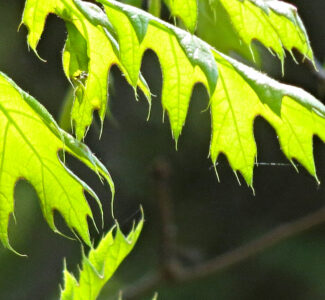
- Species in the red oak group have pointed leaf lobes. (Bill Cook photo)
-
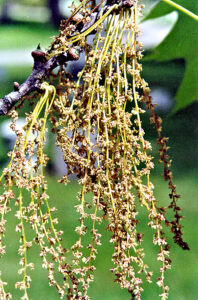
- Catkins of male flowers occur on all oaks. (Bill Cook photo)
-
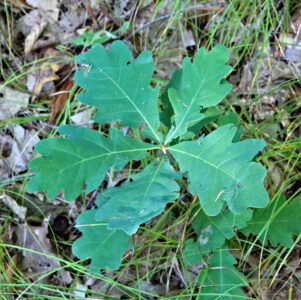
- Species in the white oak group have rounded leaf lobes. (Bill Cook photo)
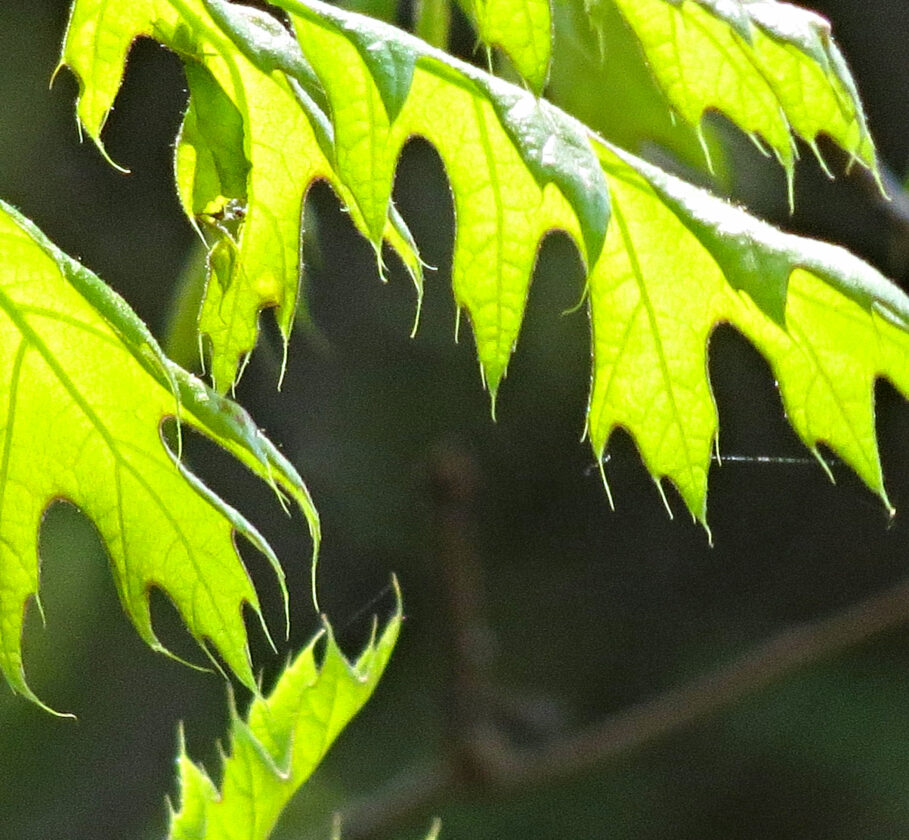
Species in the red oak group have pointed leaf lobes. (Bill Cook photo)
Oaks and their cousins are the third largest group of tree species, by volume, in Michigan forests. They’re found in all 83 counties and number at least twelve species, with over 50 species in the eastern United States. Oaks carry a mystique, probably attached to centuries of folklore and human utilization that drifts back to Europe.
The genus “Quercus” is divided into two subgroups, the red oaks (Erythrobalanus) and the white oaks (Leucobalanus). “Balanus” is Latin that refers to acorns. “Erythro” is red and “Leuco” is white. Oak leaves with pointy tips are red oaks. Those with rounded tips are white oaks. There are individual species also called “red oak” and “white oak” which can confuse the taxonomy a wee bit.
Red oak (Querus rubra) is, by far, the most common oak in Michigan, making up over forty percent of the oak volume. It’s the fifth most common tree throughout the state’s forests. Next common among the oak family are white oak (Q. alba) and black oak (Q. velutina). The remaining oak species are minor components.
Of special note are beech and chestnut, which are non-Quercus members of the Fagaceae family. Beech volumes have dropped dramatically over the past couple of decades due to the exotic beech bark disease. The historic chestnut range only barely reached into Michigan, but across the eastern states it was once the most common forest tree until the introduction of the exotic chestnut blight, which all but wiped-out the once mighty and valuable chestnut.
Taxonomically, oaks are members of the “Amentiferae”, or those trees that carry catkins (aments). They share this floral distinction with birches, alders, hickories, and walnuts. These catkins are the male flowers. The separate female flowers are inconspicuous, sometimes in singles or only a few flowers on short stalks. The fruits are, of course, the famous acorns of lore.
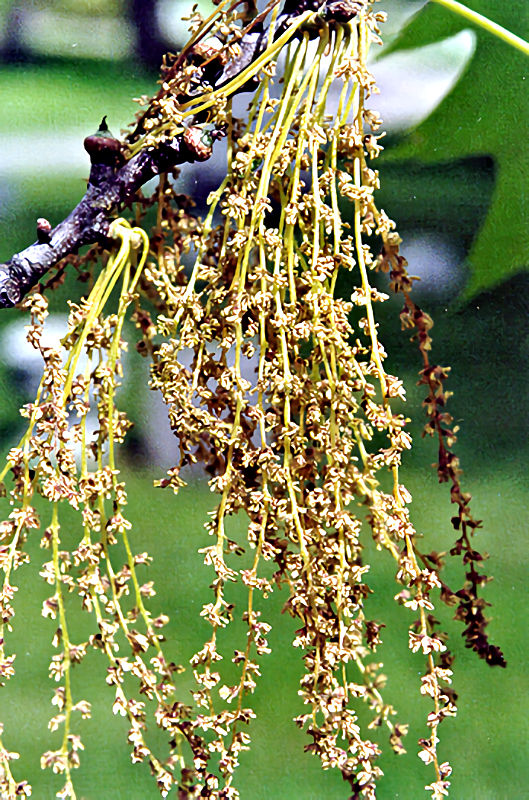
Catkins of male flowers occur on all oaks. (Bill Cook photo)
Oaks are more common today than they were a couple of hundred years ago. Human intrusion has favored oaks, especially with the introduction of huge, million-acre-plus wildfires a century ago. Few other species could survive these repeated and overly destructive blazes. The pines did not. Many expanses of oaks are human artifacts and not “natural” by some definitions, especially in the northern Lower Peninsula. Most of these were once pine.
Commercially, high quality red oak often carries a high stumpage price for the forestowner. However, that price can vary widely with market preferences for oak furniture and other wood products. High quality white oak is especially valuable for bourbon casks. An oak cask is used just once for bourbon. Fortunately, the market for used bourbon casks is strong, especially for finishing the finer whiskies of Scotland.
Most standing oak trees are not high-quality trees. Quality can be greatly increased through forest management, on better soils, but this does not happen with enough frequency across the landscape. However, the lower quality oak has many commercial uses, such as pallets and other industrial products.
Many species of wildlife use oaks for food, nesting, roosting, and other purposes. Oaks are as useful for wildlife as they are for people. Deer hunters tend to plant oaks and then manage their woodlands to favor oaks, although deer browsing is a major reason for regeneration failure. Oaks are also preyed upon by a long, long list of insects, diseases, and other pests. They might be considered the smorgasbord of the forest.
The most serious pest threat to oaks is oak wilt, especially those trees in the red oak group. Once introduced to a tree, death usually comes within a year. Connecting roots carry the disease from tree to tree until an entire stand dies. Overland, the disease is carried by unwitting picnic or sap beetles, sometime during the period of mid-April to mid-July, depending partly upon the weather. The beetles feed on the sap from fresh wounds. That’s why spring and early summer are bad times to prune oaks.
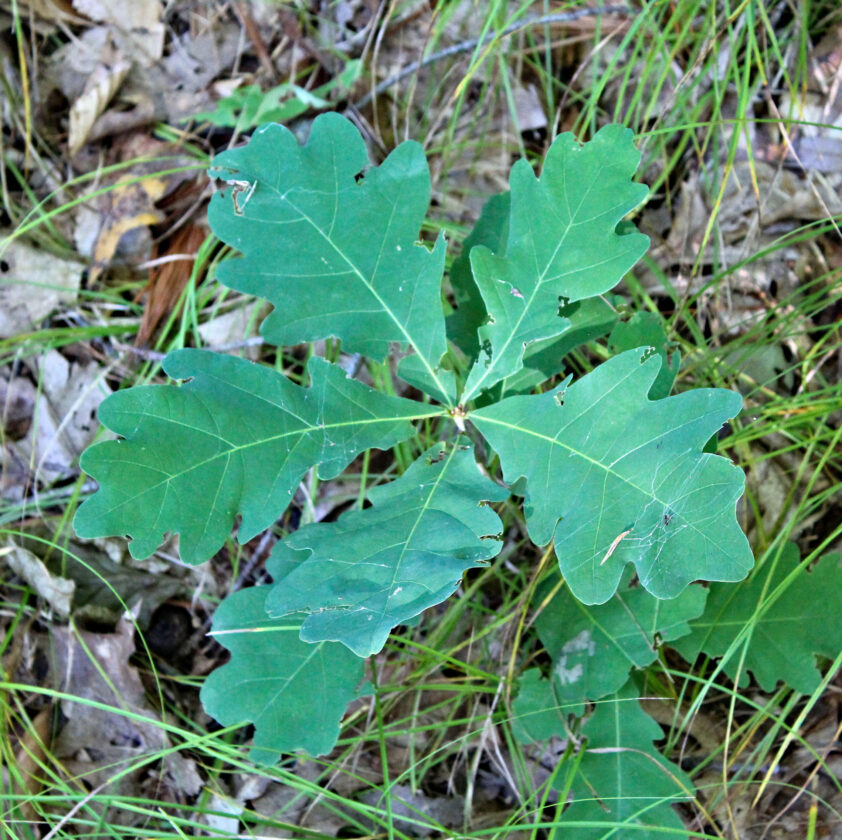
Species in the white oak group have rounded leaf lobes. (Bill Cook photo)
Another dramatic pest in the gypsy moth, now called spongy moth. Just a few years ago, huge swaths of oak forests were defoliated by the voracious caterpillars. Many June canopies were leafless. Roads became slippery with migrating caterpillars. All looked bleak. Fortunately, most trees, including oaks, can withstand a season of defoliation. Trees will often flush-out with a second set of leaves. Mortality from gypsy moth is usually not high, unlike oak wilt, which is near 100 percent.
Many of our oak forests have reached the end of their natural lifespan. Future oak stands have some serious challenges.