
“Moderately severe” flu season lingering
-
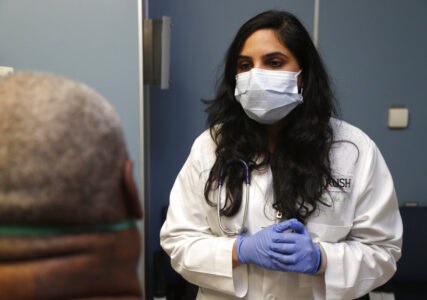
- Dr. Meeta Khan wears a face mask as she sees a respiratory patient at the Rush University Hospital emergency department in Chicago. Though it’s been a moderately severe year with still a high number of cases, flu season often drops off at the end of March. (AP Photo/Charles Rex Arbogast)
-
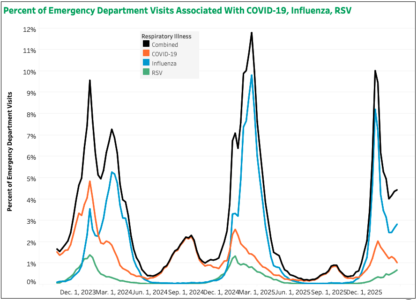
- Using data on hospital admissions associated with acute respiratory diseases in Michigan, rates over the last three flu seasons are shown. Last year, the highest peak was the week of Feb. 15; this winter, Dec. 27 marked the highest number of reported cases. (Chart courtesy of Michigan Department of Health and Human Services)
-

- Jim Murphy, CEO of Pima County Council on Aging, right in front, encourages seniors to get their flu shot before the start of the flu shot clinic at the Armory Park Senior Center in Tucson, Ariz., a few years ago. This clinic was part of the “Flu + You” initiative to educate 65 and older adults about available flu vaccine options. (John Miller/AP Images for NCOA)
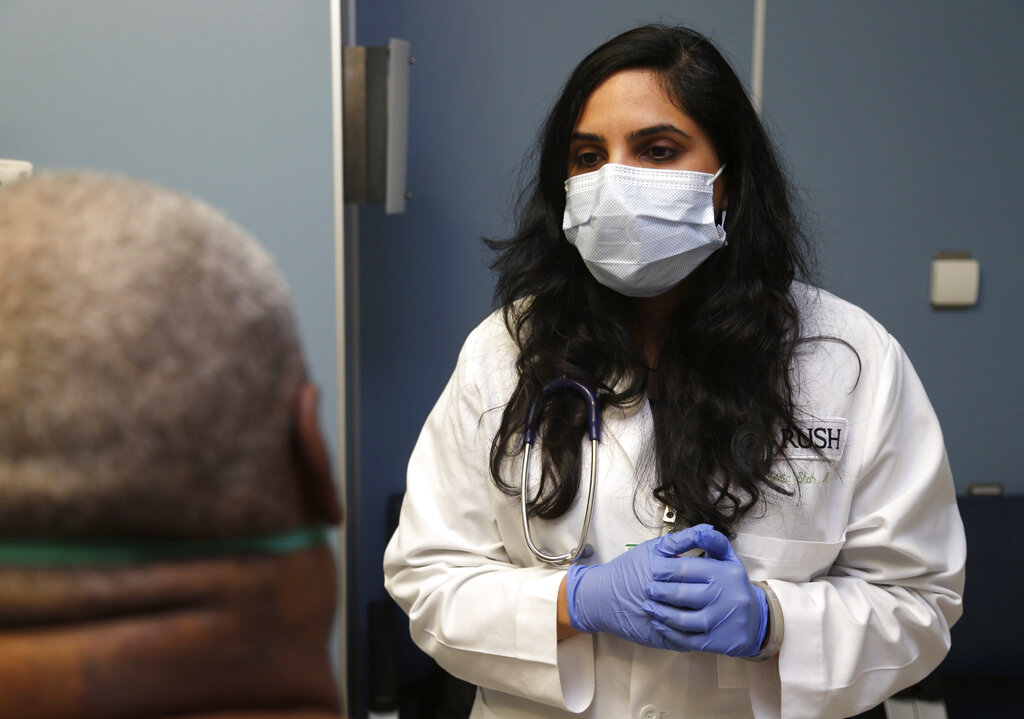
Dr. Meeta Khan wears a face mask as she sees a respiratory patient at the Rush University Hospital emergency department in Chicago. Though it's been a moderately severe year with still a high number of cases, flu season often drops off at the end of March. (AP Photo/Charles Rex Arbogast)
ESCANABA — Respiratory illness thrives in the winter. This year, cases have been high and continue to be quite present, but Michigan appears to be past the season’s highest peak.
The blanket term “respiratory illness” refers to a handful of afflictions that affect the lungs and airways. According to an OSF nurse, their symptoms tend to be fever, cough, sore throat, runny or congested nose, body aches, chills, fatigue, nausea or vomiting and diarrhea. People refer to the time of year they take hold the most — usually about December to March — as “flu season.”
There are a few reasons that instances of influenza, respiratory syncytial virus (RSV), rhinoviruses and coronaviruses spike in the colder months. One is that people spend more time indoors in the winter, and are therefore in closer proximity to others in contained quarters, making it easier for pathogens to spread. But the cold itself also plays a role.
A few years ago, a team from Harvard Medical School set out to study biological mechanisms at play when presented with respiratory viruses and cool temperatures. Their findings, published in the Journal of Allergy and Clinical Immunology in February 2023, showed that antiviral immune defense functions were impaired by cold exposure — meaning that the human body is less effective at fighting viruses in cooler temperatures.
While the Centers for Disease Control and Prevention (CDC) classifies the 2025 to 2026 U.S. flu season as “moderately severe,” cases in Michigan this flu season have been trending milder than in 2024 to 2025, according to seasonal data gathered by the Michigan Department of Health and Human Services from emergency department (ED) visits and hospital admissions associated with acute respiratory diseases.
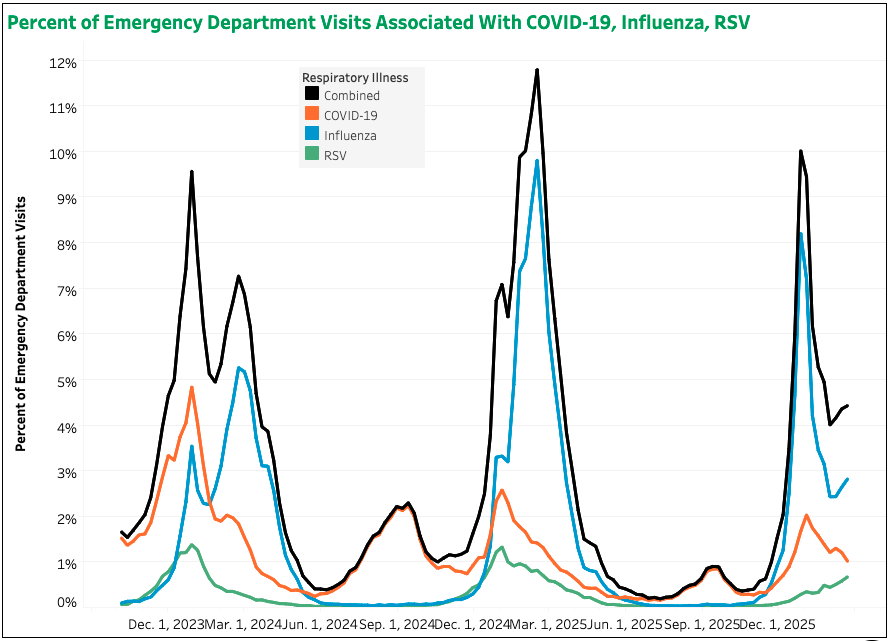
Using data on hospital admissions associated with acute respiratory diseases in Michigan, rates over the last three flu seasons are shown. Last year, the highest peak was the week of Feb. 15; this winter, Dec. 27 marked the highest number of reported cases. (Chart courtesy of Michigan Department of Health and Human Services)
“The severity determination is based on influenza-like illness outpatient visits, hospitalizations, and deaths,” explained Immunization/Communicable Disease Coordinator Jennie Miller RN, BSN with Public Health of Delta and Menominee Counties. “Nationally, seasonal influenza activity remains elevated.”
As of the last week of February, Michigan was still listed as “high” in the respiratory illness tracer.
Close to home, too, numbers are hanging on.
“Our positivity rate is still higher, showing respiratory season is still here to stay. Locally we are still seeing some admissions, but the majority of patients have been seen and treated as outpatients in the clinic setting,” said Infection Preventionist Nicole Pirlot, RN, with OSF Healthcare in Escanaba. “Currently, in our testing we are seeing influenzas A and B. …Along with influenza, we are seeing other respiratory illnesses such as RSV, COVID and human metapneumovirus circulating.”
Miller advised that people who are able should get the flu shot.

Jim Murphy, CEO of Pima County Council on Aging, right in front, encourages seniors to get their flu shot before the start of the flu shot clinic at the Armory Park Senior Center in Tucson, Ariz., a few years ago. This clinic was part of the "Flu + You" initiative to educate 65 and older adults about available flu vaccine options. (John Miller/AP Images for NCOA)
“(The vaccine) helps to reduce the overall community spread of flu. The real power of the flu vaccine lies not with its ability to completely prevent influenza, but in its ability to shorten symptoms and prevent severe illness and death,” Miller said. “(Since) viruses are constantly changing and vaccine protection fades over time, getting a flu shot each year is essential to reduce the risk of infection. …It is not too late to get vaccinated this flu season.”
Since some viruses are constantly evolving and vaccines are developed based on circulating strains early in the season, the Press asked how effective this year’s flu shot was.
“This year’s severity is being driven largely by a mutated strain of influenza A(H3N2) virus called subclade K. This mutation is different from what was expected and put in the vaccine, allowing it to bypass some of our baseline immunity and therefore leading to more infections,” Miller explained. “This strain has also been the most predominant strain circulating, with some estimating that it is responsible for approximately 90% of the season’s flu cases. Low vaccination rates, particularly among children and working-age adults, have exacerbated the impact.”
However, vaccination still provides benefits, she said, protecting against the viruses that are represented in the vaccine and helping prevent severe illness, hospitalization and death.
To keep healthy and prevent spreading disease, “the public can do simple healthy habits to protect themselves and their loved ones such as: keeping your hands clean by using soap and water or alcohol based hand gels; avoid touching your eyes, nose and mouth; avoid close contact with people who are sick; stay home when you are not feeling well, especially if you have a fever; clean and disinfect items you frequently have contact with, like phones, door knobs, counters, remote controls, and light switches; and drink plenty of fluids,” shared Pirlot.
For those who find themselves already ill, getting plenty of rest, drinking fluids, and taking over-the-counter medicines as needed can aid in recovery.
“However, there are times when signs and symptoms linger or worsen,” Pilot warned. “If you are concerned about your symptoms, you should always contact your doctor. High fevers, difficulty breathing and severe coughing are all symptoms you should seek medical attention for.”
Testing for respiratory viruses and pertussis is done by a medical provider through a nasal swab. Most results are available within 24 hours, though some may take a little longer.
Fortunately, though another little spike seemed to appear at the end of February, the season should be on its way out: “In previous years, we have tended to see respiratory illnesses begin to decrease in mid to end of March,” Pirlot said.
Local News
U.P. veterinarian to judge Iditarod
“Moderately severe” flu season lingering

Key witnesses, detectives testify in second day of Jackson trial
Arrests made following attempted drug smuggling at Newberry prison

Seasonal road restrictions beginning
Escanaba City Council to discuss West Side Park equipment
ESCANABA - The Escanaba City Council will consider several agenda items at its regular meeting Thursday, including ...