
The cool waters of Hunter’s Brook
Trending
Karen Wils photo
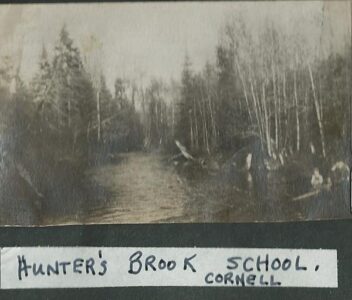
A black and white photo of Hunter's Brook taken by my grandmother more than 100 years ago.
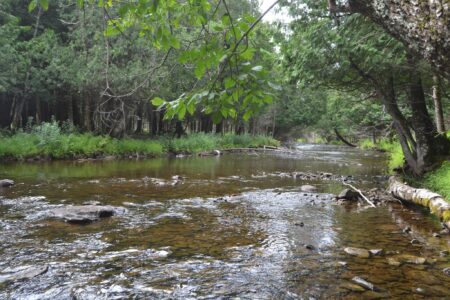
ESCANABA -- One barefoot steps cautiously into the babbling brook.
Cold, crystal clear water causes a sudden sigh on a hot day.
The foot lands on smooth, slippery limestones, and all of a sudden we drift back in time.
It is 1900, and ancient cedar and pine trees form an awning on both sides of the brook. Wolves roam the wilderness. Whitetail deer are now plentiful due to the constant clear cutting of virgin timbers off in the distance.
In the early 1900s Native peoples still harvested sweet grass along the brook and summered along her mossy banks.
The second foot steps into the refreshing water.
I wade out into a rivulet lined with fossils from a different time. A small trout tickles my shin as he scurries by in the deeper water.
An ageless tranquility engulfs the brook. Red squirrels and chickadees chatter in the dense trees. The shy snowshoe hare hides in the ferns and wildflowers that hem in the water.
A few miles to the south a cedar shingle saw mill is making Cornell Michigan a thriving area. To the north a healthy stand of ancient white pines touch the sky.
The sounds of the train whistles and the lowing of cows are still new sounds to northern Delta County.
My beagle barks alongside Hunter's Brook. My reverie is shattered. I am back in 2022 on a warm late summer's day. Hunter's Brook has been one of my family's favorite hideouts from the heat for over three generations.
My grandfather bought land along Hunter's Brook in 1919. Our family's camp is near the brook. Over the years we have spent many hours in the cool recesses of the brook wading, swimming, fishing, and collecting wild mint or hunting or hiking.
My grandmother Bertha Martin (Rose) taught at the little one room schoolhouse that once stood near the brook. In the early 1920s, my grandmother took some of her earliest photographs of her Cornell students and of Hunter's Brook.
To me it is totally amazing that I can stand at the brooks edge and enjoy most of the same beauty and peacefulness that she enjoyed. The big trees have grown back and the beaver and wolves have returned. My children can step into the same clear water and chase trout or crayfish the same as they did a hundred years ago.
I often think of my grandmother trying to get a picture of the brook with her early box camera with a lack of light, wilderness conditions and no wide angle lens.
How lucky I am today to have such modern technology and digital photography. I have taken dozens of pictures of the Brook over the years, but none can do justice to its pristine charm.
Two spring-fed ponds north of Watson give birth to Hunter's Brook and then it gentle rolls through lowlands hidden beneath cedars and balsams. Four miles north of Cornell the brook meets the Escanaba River in a series of bubbling white waterfalls.
Many U.P. families have a little sanctuary like Hunter's Brook. It may be a nearby river, lake, stream or pond.
Stick your feet into whatever water is by you, enjoy.
------
Karen (Rose) Wils is a lifelong north Escanaba resident. Her folksy columns appear weekly in Lifestyles.