On Michigan cherry farms, small falcons are improving food safety
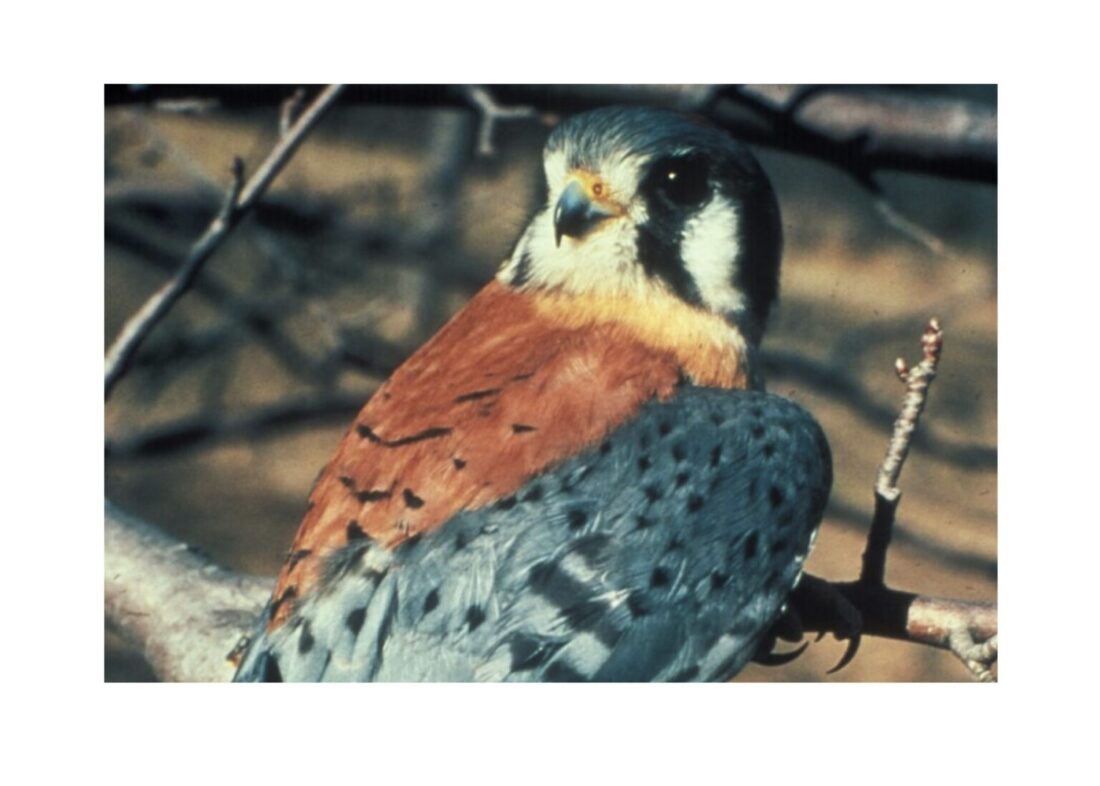
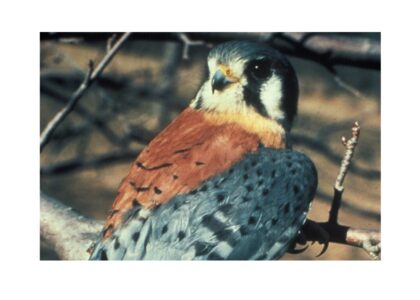
An American Kestral observes its surroundings while resting on a branch. (Photo by Dave Menke/U.S. Fish & Wildlife Service)
Every spring, raptors return to nesting sites across northern Michigan. The smallest of these birds of prey, a falcon called the American kestrel (Falco sparverius), flies through the region’s many cherry orchards and spends its days hunting for even tinier creatures to eat. This quest keeps the kestrels fed, but it also benefits the region’s cherry farmers.
Fruit farmers have been working symbiotically with kestrels for decades, adding nesting boxes and reaping the benefits of the birds eliminating the mice, voles, songbirds and other pests that wreak havoc by feeding on not-yet-harvested crops. In addition to limiting the crop damage caused by hungry critters, new research suggests kestrels also lower the risk of food-borne illnesses.
The study, published in November in the Journal of Applied Ecology, suggests the kestrels help keep harmful pathogens off of fruit headed to consumers by eating and scaring off small birds that carry those pathogens. Orchards housing the birds in nest boxes saw fewer cherry-eating birds than orchards without kestrels on site. This translated to an 81 percent reduction in crop damage–such as bite marks or missing fruit–and a 66 percent decrease in branches contaminated with bird feces.
“Kestrels are not very expensive to bring into orchards, but they work pretty well” at deterring unwanted bird species, said Olivia Smith, lead study author and assistant professor of horticulture at Michigan State University. “And people just like kestrels a lot, so I think it’s an attractive strategy.”
Finding a good strategy for managing pests is essential for cherry farmers. Pests cause expensive damage that worsens yields already impacted by other threats to the cherry industry, such as climate change, labor shortages and the vagaries of international trade. To stop the added damage from pests, growers have turned to nets covering their trees, noisemakers, scarecrows, pesticides and even the removal of natural habitats around crop-growing areas.
However, these options can be expensive and aren’t always effective. Even with these management strategies in place, birds like starlings, robins and crows cost farms in some top cherry growing states–including Michigan, New York, Oregon, Washington and California–about $85 million annually. For many growers, this is where the kestrels come in.
It may seem counterintuitive to solve a bird problem by bringing in more birds, but kestrels are skilled hunters whose presence drives off songbirds afraid of being eaten. Habitat loss, competition for food and climate change are leading to slow and steady population declines for the American kestrel, losses of about 1.4 percent annually. Still, these birds are abundant enough that, in many areas of the continental United States, all farmers need to do to attract them is add a nesting box to their land.
“I’ve noticed a difference having the kestrels around, hovering over the spring crops,” said Brad Thatcher, a farmer based in Washington state who has housed kestrels on April Joy Farm, an organic fruit and vegetable farm, for over 13 years. “There’s very little fecal damage from small songbirds at that time of year versus the fall.”
With farmers who already had kestrels on their land reporting fewer songbirds and less crop damage, study authors hypothesized that food safety risks associated with pathogens birds carry may also be lower for farms harboring kestrels. To test this, the researchers evaluated 16 sweet cherry orchards in Michigan’s Leelanau and Grand Traverse counties (the latter of which is considered the “Cherry Capital of the World”). Eight of the orchards studied had nesting boxes for kestrels and eight did not.
The study authors randomly selected two areas of each orchard to search for crop damage and fecal contamination. The orchards frequented by kestrels saw the amount of damaged fruit drop from 2.5 percent to 0.47 percent. The number of crops contaminated by bird droppings also saw a three-fold decrease, falling from 6.88 percent to 2.33 percent. When researchers tested this excrement, they found that more than 10 percent contained campylobacter, a type of bacteria that is common in birds and causes food-borne illness in humans.
Campylobacter is a common cause of food poisoning and is on the rise in Michigan and around the world. It spreads to humans through food products made from, or that come into contact with, infected animals, primarily chickens and other birds. So far, only one outbreak of campylobacteriosis has been definitively linked to feces from wild birds. Still, because it causes milder symptoms than some other types of bacteria, the Centers for Disease Control considers campylobacter a significantly underreported cause of food-borne illness that may be more common than current data indicates.
“Trying to get more birds of prey would be beneficial to farmers,” Smith said. “If you have one predator, versus a bunch of prey, you have fewer birds overall. If you have a lot fewer birds, even if the ones that are there are carrying bacteria, then you can reduce the transmission risk.”
The study’s findings that kestrels significantly reduce physical damage and food safety risks on Michigan cherry farms demonstrate that managing crops and meeting conservation goals–by bolstering local kestrel populations and eliminating the need to clear wildlife habitat around agricultural areas–can be done in tandem, study authors say. They recommend farmers facing pest-management issues consider building kestrel boxes, which cost about $100 per box and require minimal maintenance.
Whether nesting boxes in a given region will be successfully inhabited by kestrels depends on whether there is an abundance of the birds there. In Michigan’s cherry-growing region, kestrels are so abundant that 80 percent to100 percent of boxes become home for kestrels rather than other nesting birds, said Catherine Lindell, avian ecologist at Michigan State University and senior author of the study.
“It seems like this is just a great tool for farmers,” Lindell said, suggesting interested farmers “put up a couple boxes and see what happens.”