Clean slates must come with vigilance
It’s a promising development that hundreds of thousands of criminal records were expunged this week as the state began implementing the final step in a 2020 law that gives those with certain misdemeanor and felony criminal records a “clean slate.”
But police and lawmakers must ensure the law is being implemented carefully and with clarity, and they must prioritize the well-being and safety of the majority of Michigan residents who don’t have past convictions on their records.
This legislation, passed with bipartisan support, is one of the most impactful developments in Michigan’s justice system in years, affecting about 10% of the state’s population. The number of convictions cleared represents about 35% of the criminal records here.
The expungements will expand employment, housing and other opportunities to those burdened by a past criminal conviction.
But the ambiguous language in the law and confusion over how it is implemented must be clarified.
A chief concern is the vagueness surrounding which crimes can actually be expunged. It’s not clear precisely what misdemeanors are allowed to be wiped clean, nor is it clear which felonies can be expunged — only what can’t be — and sealed.
It’s concerning that any individual with a conviction for an assaultive crime (of an unclear nature) would be eligible to be expunged either automatically or through an application. The law says that it does not apply to “an individual who has more than (one) conviction for an assaultive crime or an attempt to commit an assaultive crime that is recorded and maintained in the department of state police database.”
Individuals with certain criminal histories — particularly offenses the state no longer considers crimes, such as incidents involving now-legalized marijuana — certainly deserve a second chance at reengaging freely with society.
But individuals with records of assaultive behavior, sexual criminal conduct, and other serious crimes shouldn’t automatically have their records wiped or sealed from all public interaction.
Policymakers have stated that “crimes of dishonesty” are not eligible to be cleared. But that technically means false personation, and it’s unclear how broadly that will be applied. Are those crimes more threatening than those involving assault?
The law also makes it a crime for any person except the individual whose record is cleared or their victim to divulge or publish the existence of a past conviction.
That ostensibly creates criminal liability for a school official to divulge a job candidate’s past criminal behavior to a hiring school board, or for a journalist to report on past convictions of a candidate for public office. Presumably, this would be a crime even if those convictions were the subjects of previous news reports.
But recounting past expunged convictions can be in the public interest. This aspect of the law is untenable and almost certainly would not pass Constitutional review. The First Amendment historically protects the publishing of accurate accounts of judicial proceedings, as it should.
More than 1.2 million convictions were set aside Tuesday on the first day of the automatic expungement program.
“Those will just continue to go up as the program continues to run,” Attorney General Dana Nessel said in a video the same day.
The legislation is a step in the right direction to help clear the state’s overloaded courts and criminal database. But it must be executed clearly and safely.
— Detroit News
Editorial
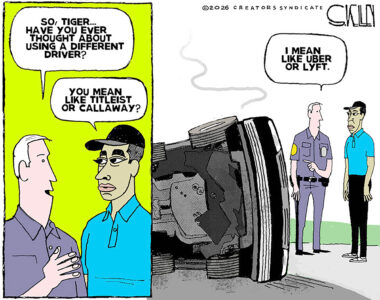
Editorial cartoon for April 1, 2026
Emphasizing safe and responsible alcohol use
For Alcohol Awareness Month in April, the Michigan Liquor Control Commission is promoting moderation and making ...

Editorial cartoon for March 31, 2026
DNR: With young wildlife it’s best to keep your distance
While snow may remain on the ground in the region — though fading fast — spring is taking hold. It’s the time ...
Be safe when preparing traditional holiday meals
With this week leading up to Easter Sunday for Christians plus having the Jewish holiday of Passover starting ...