Appeals Court denies bid to suppress confession in 1997 ‘Baby Garnet’ cold case
Former Newberry woman to stand trial
-
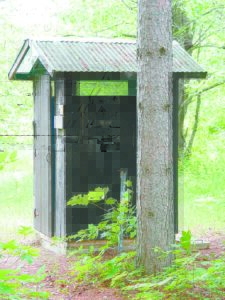
- This photo shows the men’s bathroom at the Garnet Lake Campground in Mackinac County where a septic worker made the grisly discovery of the remains of Baby Garnet on June 26, 1997. (Photo courtesy of The Mining Journal, Marquette)
-

- Nancy Gerwatowski, a former Newberry resident, faces one count each of open murder and involuntary manslaughter. The charges stem from an investigation that began in June 1997 when the remains of a deceased infant were discovered in a campground pit toilet at Lake Garnet Campground in Hudson Township, Mich. (Photo courtesy of the Mackinac County Sheriff’s Office)
-
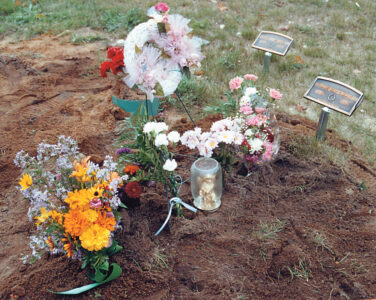
- Flowers and a small angel decorate the grave of Baby Garnet at Maplewood Cemetery in Hudson Township in June 1997. (Photo courtesy of The Mining Journal, Marquette)
-
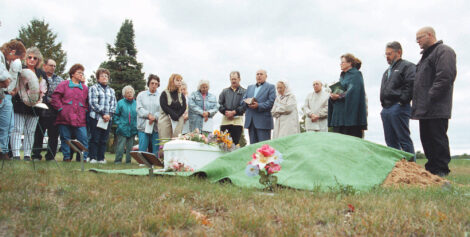
- About 40 people attended the memorial in June 1997 at Maplewood Cemetery in Hudson Township for Baby Garnet, a newborn infant found at the bottom of a campground outhouse. (Photo courtesy of The Mining Journal, Marquette)
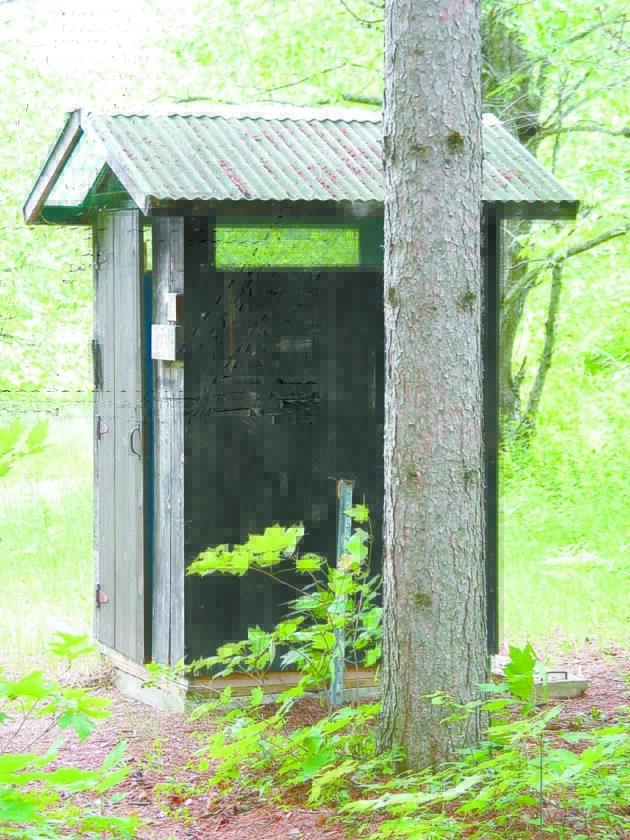
This photo shows the men's bathroom at the Garnet Lake Campground in Mackinac County where a septic worker made the grisly discovery of the remains of Baby Garnet on June 26, 1997. (Photo courtesy of The Mining Journal, Marquette)
MACKINAC COUNTY – The Michigan Court of Appeals denied an appeal filed by a former Newberry resident who is set to stand trial for the cold-case murder of an infant discovered almost three decades ago.
Nancy Ann Gerwatowski faces one count each of open murder and involuntary manslaughter. According to the State of Michigan, one count of concealing the death of an individual has been dismissed. Open murder carries a potential life sentence.
The charges stem from an investigation that began in June 1997 when the remains of a deceased infant were discovered in a campground pit toilet at the Garnet Lake Campground in Mackinac County’s Hudson Township.
According to a news release by the Michigan Department of Attorney General (MDAG), an autopsy at the time determined the decedent was a “term or near-term infant” with a gestational age of 36-42 weeks.
Throughout the summer and fall of 1997, the Mackinac County Sheriff’s Office and Michigan State Police investigated the death but were unable to identify any witnesses or generate viable leads. The unidentified infant became known as “Baby Garnet.”

Nancy Gerwatowski, a former Newberry resident, faces one count each of open murder and involuntary manslaughter. The charges stem from an investigation that began in June 1997 when the remains of a deceased infant were discovered in a campground pit toilet at Lake Garnet Campground in Hudson Township, Mich. (Photo courtesy of the Mackinac County Sheriff's Office)
In 2017, investigative efforts were renewed when a Michigan State Police Detective Sergeant initiated familial genetic genealogical tracing with the assistance of a private laboratory and the FBI, according to the MDAG. A lab received the remains for testing in 2020, and two years later a DNA profile was developed that indicated a specific familial lineage.
Nearly 25 years after Baby Garnet’s remains were discovered, investigators identified Gerwatowski, who was living in Pinedale, Wyo., as the child’s probable mother.
Armed with a warrant for her DNA, Sergeant Gary Demers of the Michigan State Police St. Ignace post and Undersheriff Ron Umbarger of the Mackinac County Sheriff’s Office, accompanied by two local officers, went to Gerwatowski’s home to request her cooperation in an unspecified investigation.
Rather than accompany the officers immediately to the sheriff’s office, she invited them inside. Officers then revealed to Gerwatowski that they believed she was Baby Garnet’s mother.
After further discussion, officers informed Gerwatowski she had the legal right to refuse to go with them to the police station. At her request, they later drove her to the local sheriff’s office.
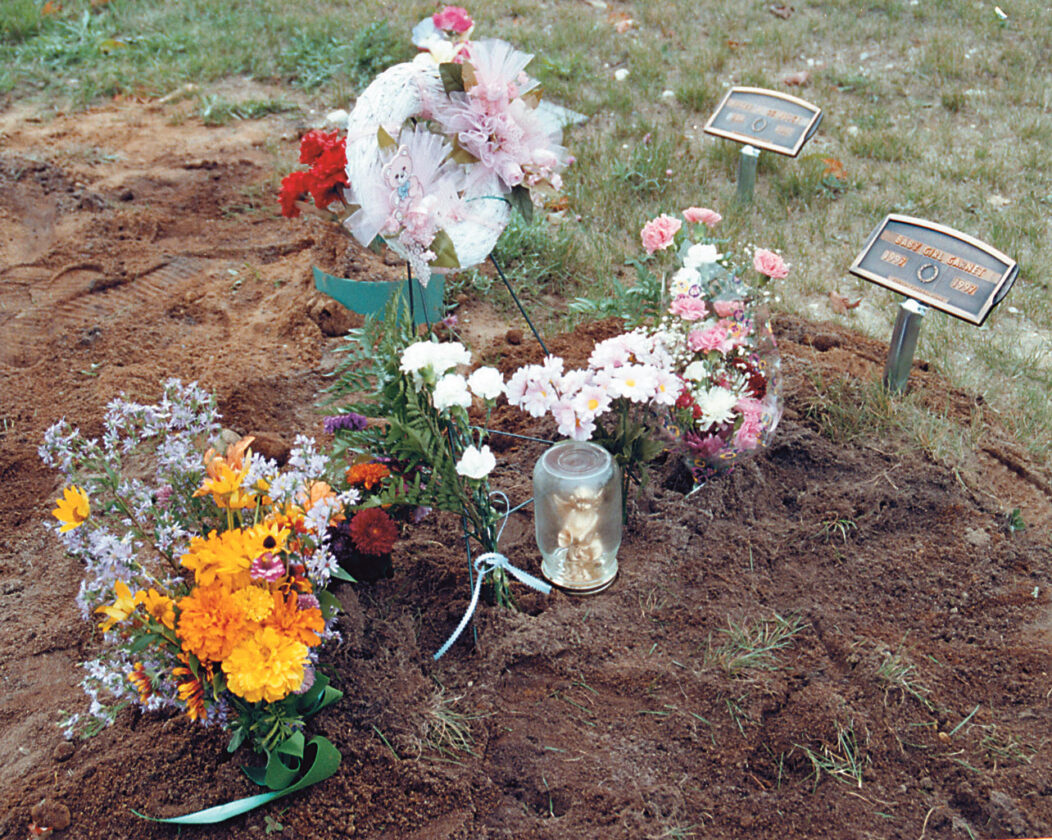
Flowers and a small angel decorate the grave of Baby Garnet at Maplewood Cemetery in Hudson Township in June 1997. (Photo courtesy of The Mining Journal, Marquette)
At the sheriff’s office, officers read Gerwatowski her Miranda rights under Miranda v. Arizona. She said she understood her rights, did not wish to speak and asked whether an attorney was available.
Officers told her they had not brought an attorney and explained that while she was free to consult an attorney of her choosing, she would not be entitled to a court-appointed attorney unless she was under arrest.
After executing the search warrant to obtain a DNA sample, officers provided their contact information and said they would be returning to Michigan the next day. Gerwatowski then left and went home.
Hours later, Gerwatowski contacted investigators and returned voluntarily to the sheriff’s office. She was again advised of her Miranda rights and told she did not have to speak, but she agreed to waive those rights, responding, “I guess, yeah.”
During the second interview, she admitted she was Baby Garnet’s mother. She described going through a divorce at the time of her pregnancy, saying both she and her then-husband were “drinking a lot and running around.” When she learned she was pregnant, she said she “didn’t know what to do right away, so [she] just didn’t do anything.”
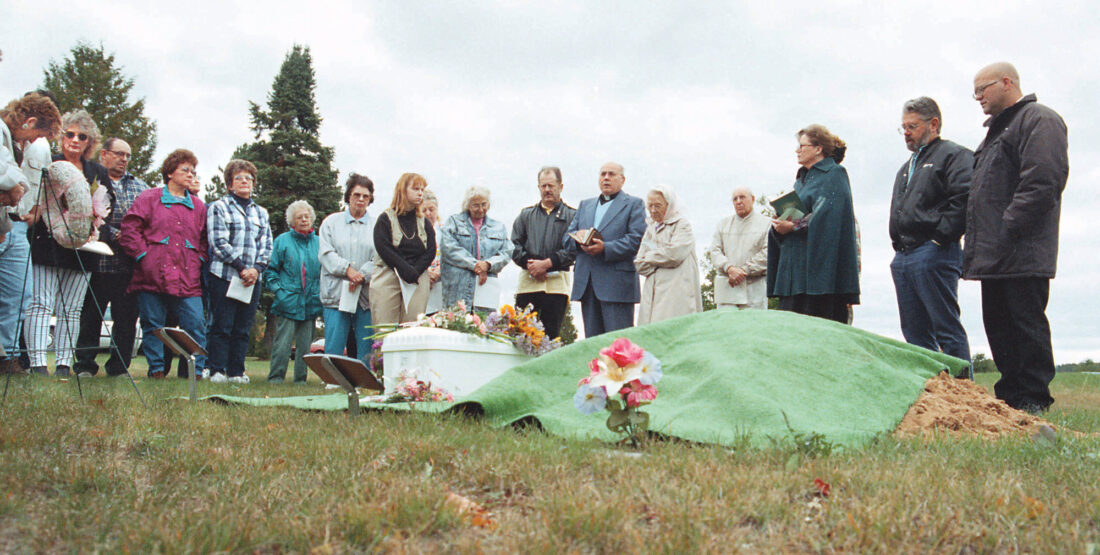
About 40 people attended the memorial in June 1997 at Maplewood Cemetery in Hudson Township for Baby Garnet, a newborn infant found at the bottom of a campground outhouse. (Photo courtesy of The Mining Journal, Marquette)
According to Gerwatowski, she visited a doctor once, mentioned considering an abortion and was referred to a provider in Marquette, Mich., but said car trouble and a lack of support prevented her from pursuing it.
She also told officers that a divorce attorney warned her that being pregnant by another man could jeopardize custody proceedings involving her other children.
Gerwatowski said she went into labor over a weekend while her children were away. She took a bath hoping the pain would subside, but the birth progressed faster than expected.
She said the baby became stuck during delivery, was not breathing or crying and appeared blue. After forcibly removing the baby and losing a significant amount of blood, she panicked and “just finally decided that nobody would know.” Gerwatowski could not recall whether she had a cellphone at the time.
Following her statements, officers placed Gerwatowski under arrest.
“The State alleges Gerwatowski delivered the newborn alone at her Newberry home, during which Baby Garnet died due to asphyxiation, and that this death could have been prevented by medical intervention Gerwatowski did not seek,” wrote the MDAG in a news release. “She then, allegedly, concealed the deceased newborn in an outhouse at the campground in Hudson, more than 20 miles out of town.”
Gerwatowski appealed to the Michigan Court of Appeals to suppress her confession, claiming her Fifth Amendment rights were violated.
She argued she was effectively in custody during questioning at both her home and the sheriff’s office and that officers misled her about her right to a court-appointed attorney, rendering her waiver of rights invalid.
In the Michigan Court of Appeals ruling on Feb. 4, the court acknowledged that officers made an error in explaining her right to counsel but found that it did not invalidate her waiver.
While officers correctly noted she had no right to a court-appointed attorney under the Sixth Amendment unless arrested, this was misleading regarding her Fifth Amendment rights, which protect against self-incrimination before and during custodial interrogation.
Despite the incomplete explanation, the court determined Gerwatowski was not in custody during her second visit to the sheriff’s office, so the error did not affect the validity of her waiver.
The court further ruled that Gerwatowski was not in custody during the officers’ visit to her home or her second visit to the sheriff’s office. It noted that a reasonable person in her position would have felt free to end the home interview.
Regarding the second interview at the police station, the court said she voluntarily contacted police, went to the station willingly and was told she could leave – all of which weighed against a finding of custodial status.
Before returning to the sheriff’s office, she spoke with her son and “bade him a tearful farewell.” She brought her contact lenses and Bible, suggesting she did not expect to return home.
The court concluded her conduct showed she had a basic understanding of the ramifications of waiving her rights.
The court also addressed evidence that she considered abortion and did not obtain prenatal care, stating that it “makes [Gerwatowski’s] motive to murder Baby Garnet more probable than it would be without the evidence.”
In summary, the appellate court concluded Gerwatowski was not subject to custodial interrogation during her home encounter or either police interviews and rejected her argument that evidence regarding abortion and prenatal care was irrelevant or unfairly prejudicial.
Gerwatowski was arraigned in the Mackinac County 11th Circuit Court in August 2022 and released on personal recognizance bond on Dec. 23, 2023, under conditions that include house arrest and electronic monitoring with an ankle tether. In May 2024, her case was bound over to the Michigan Department of Attorney General.
Her next court appearance is a status conference set for March 3. As of this report, a trial date has not yet been scheduled.
—
Sophie Vogelmann can be reached at 906-786-2021 or svogelmann@dailypress.net.
Michigan News

Proposal for psychiatric hospital replaces suggestion for ICE detention at former prison

Michigan receives less funding for rural healthcare
Appeals Court denies bid to suppress confession in 1997 ‘Baby Garnet’ cold case

Mackinac Bridge closed

Lobbyists spent record amount on free meals for Michigan lawmakers in 2025