
Ski resorts plan, prep for winter weather uncertainties
Trending
LANSING - As winter approaches Northern Michigan, ski resorts, snowmobile clubs and tourism officials are preparing for a familiar challenge: Not knowing what kind of winter they'll get.
For decades, communities across Northern Michigan have relied on consistent snowfall to attract skiers, snowboarders, snowmobilers and other outdoor enthusiasts. But increasingly unpredictable winter conditions are forcing recreation businesses to rethink how they operate and plan for the season.
"If you don't like the Michigan winter, wait five minutes - it'll change," said Mike Panich, the executive director of the Michigan Snowsports Industries Association in Bellaire.
Panich said ski resorts have long prepared for fluctuating weather through investments in snowmaking technology, allowing operators to maintain ski conditions even when natural snowfall is limited.
"The fact of the matter is every one of our ski areas in Michigan relies on snowmaking to operate," Panich said. "We can have great skiing all over the state and barely have any natural snow."
Many resorts continue to invest heavily in those systems. Panich pointed to the recent acquisition of 16 new snowmakers by Shanty Creek Resort in Bellaire as one example of how operators are preparing for future winters.
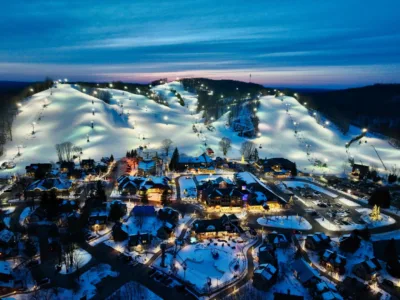
At Crystal Mountain, snowmaking has become a central part of the resort's strategy for managing unpredictable weather.
"If I'm a family or a consumer looking to make a safe bet, Michigan's going to be it," said John Melcher, the CEO of Crystal Mountain in Thompsonville. "Michigan really has a great story to tell about the strength of our snowmaking collectively."
Melcher said nearly all of Crystal Mountain's ski terrain is covered by snowmaking equipment. The resort operates about 179 snow guns and has invested millions of dollars in snowmaking upgrades over the past decade.
"It's that important to us," Melcher said. "Every year we're looking at improvements we can make to be more efficient and get more snow down when we have the right temperatures."
The shift comes as federal forecasters expect a strong El Niño pattern to influence weather across the Great Lakes region this winter.
Historically, El Niño years have been associated with warmer and drier conditions in Michigan, creating uncertainty for recreation businesses that depend on cold temperatures and snowfall.
However, Panich said ski resorts are not making drastic changes based on this year's forecast.
"They're really not doing anything special this year to prepare," he said. "They just know they have to continually invest in snowmaking."
Melcher said snowmaking has enabled resorts to continue operating even during winters with limited natural snowfall.
"A great example is three years ago when we had the last El Niño," he said. "Folks south of us didn't have any snow in their backyards, but the ski areas had plenty of snow because we were able to make enough to get us through the season."
Beyond snowmaking, many resorts have expanded their attractions to reduce dependence on ideal skiing conditions.
Several destinations now offer year-round amenities such as water parks, zip lines, cross-country trails, dining options and other outdoor activities. Panich said those additions attract visitors even when weather conditions are less than perfect.
"A lot of people don't come out and ski from open to close," Panich said. "The resorts have added a lot of cool things people can do besides skiing."
Crystal Mountain is among the resorts that have expanded into a four-season destination. In addition to skiing and snowboarding, the resort offers golf courses, mountain biking, a spa, conference facilities and an outdoor water park.
Melcher said the resort's owners began diversifying decades ago to make the business more resilient to changing weather patterns and to keep employees working year-round.
"We've added a lot of different things just to make ourselves more resilient to fluctuating weather," Melcher said.
Those adaptations reflect the growing economic importance of winter recreation across the state.
Visitors traveling to ski destinations often spend money on lodging, restaurants, fuel and other local businesses, providing an important revenue source for many Northern Michigan communities.
Panich said the impact extends beyond tourism dollars. Ski areas also serve as major seasonal employers, particularly in rural communities.
"Most of our ski resorts have hundreds of employees that are seasonal," he said. "It's not just the tourism dollars. It's the economic impact of having an employer in the area."
While Michigan is often best known as a summer tourism destination, Panich said winter recreation remains an overlooked part of the state's economy.
"We serve a lot of Ohio, Indiana, Illinois and Wisconsin skiers that come to Michigan," he said. "The travel and the influx of revenue to the state is huge."
Melcher said Michigan's ski industry is well-positioned to handle increasingly unpredictable winters because of its long history of investing in snowmaking and year-round attractions.
"I think Michigan really has a competitive advantage with the amount of snowmaking coverage that we have," he said.
As resorts continue investing in snowmaking systems and diversifying their attractions, operators say they hope to remain resilient regardless of what kind of winter arrives.
"We ensure that winter happens," Panich said. "Does natural snow make it more fun? Absolutely. But we've built an industry that doesn't have to rely on it. No matter what kind of winter we get, people are still going to be out there skiing."