
No on 1, yes on 2
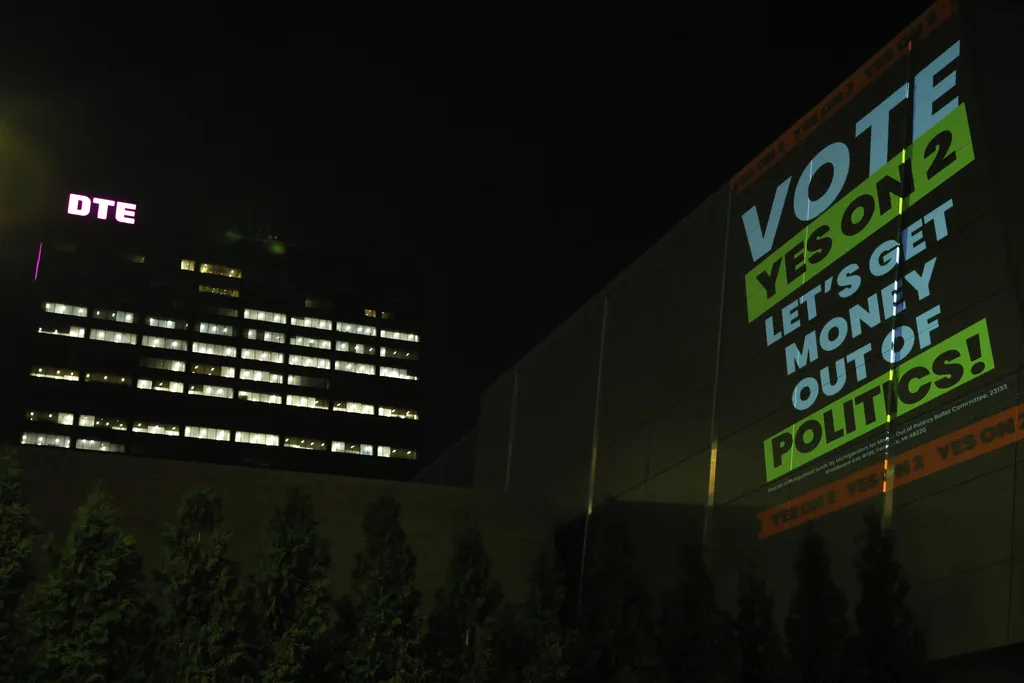
Massive projections lit up buildings in Detroit, on October 28, 2026, highlighting the outsized influence of major corporate political donors, including Blue Cross Blue Shield of Michigan and DTE, over Michigan politics ahead of statewide elections on the nonpartisan, citizen-led ballot initiative, Proposal 2, which would ban monopoly utilities and corporations holding state or local government contracts of $250,000 or more from contributing to state politicians and political parties in Michigan. The proposal passed, but immediately caused a lawsuit. (Rick Osentoski/AP Content Services for Michiganders for Money Out of Politics Ballot Committee)
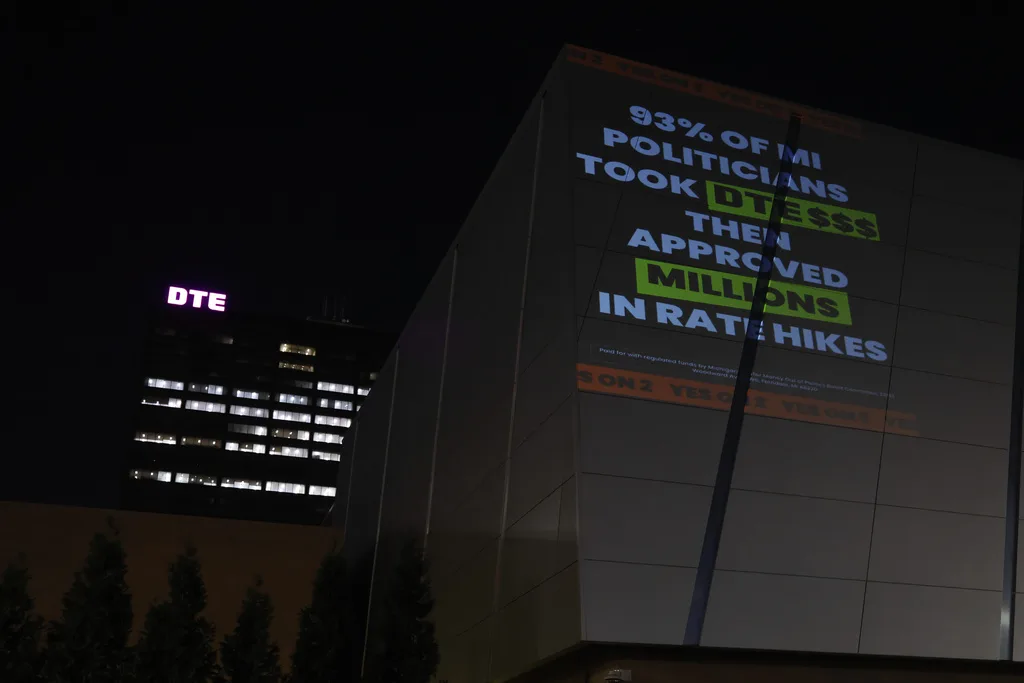
Massive projections lit up buildings in Detroit, on October 28, 2026, highlighting the outsized influence of major corporate political donors, including Blue Cross Blue Shield of Michigan and DTE, over Michigan politics ahead of statewide elections on the nonpartisan, citizen-led ballot initiative, Proposal 2, which would ban monopoly utilities and corporations holding state or local government contracts of $250,000 or more from contributing to state politicians and political parties in Michigan. (Rick Osentoski/AP Content Services for Michiganders for Money Out of Politics Ballot Committee)
Massive projections lit up buildings in Detroit, on October 28, 2026, highlighting the outsized influence of major corporate political donors, including Blue Cross Blue Shield of Michigan and DTE, over Michigan politics ahead of statewide elections on the nonpartisan, citizen-led ballot initiative, Proposal 2, which would ban monopoly utilities and corporations holding state or local government contracts of $250,000 or more from contributing to state politicians and political parties in Michigan. The proposal passed, but immediately caused a lawsuit. (Rick Osentoski/AP Content Services for Michiganders for Money Out of Politics Ballot Committee)
Massive projections lit up buildings in Detroit, on October 28, 2026, highlighting the outsized influence of major corporate political donors, including Blue Cross Blue Shield of Michigan and DTE, over Michigan politics ahead of statewide elections on the nonpartisan, citizen-led ballot initiative, Proposal 2, which would ban monopoly utilities and corporations holding state or local government contracts of $250,000 or more from contributing to state politicians and political parties in Michigan. (Rick Osentoski/AP Content Services for Michiganders for Money Out of Politics Ballot Committee)
Trending
MICHIGAN -- Voters denied Proposal 1, which asked for a constitutional convention, and approved Proposal 2, the “money out of politics” question on Michigan’s November ballot.
Proposal 1
The first ballot proposal asked if voters in the state would support a convention to rewrite the state Constitution, which hasn’t been done in over 60 years. If it had passed, 148 delegates would have been elected to prepare a revised document to go before voters. The last constitutional convention in Michigan in 1962 abolished the office of state highway commissioner and banned the death penalty.
Since then, voters have approved 39 amendments to the Michigan Constitution but have repeatedly rejected the suggestion of a new one.
It is a requirement within the Michigan Constitution that Proposal 1 appear before voters every 16 years.
Only 23 percent voted yes to the proposal of a constitutional convention in 1978, 28 percent voted yes in 1994, and the last time one was proposed in 2010, a high of 33 percent of voters were in favor.
This year, over 70 percent of Michiganders who cast ballots were against a constitutional convention. Prior to the election, a number of groups urged voters to say no, fearing that it would give a small number of people the power to radically alter a document that already includes several modernizations.
Some, however, like Senator Ed McBroom, supported the idea, claiming that it would be an opportunity to include matters that are rarely heard in Lansing.
Proposal 2
Michigan’s second ballot question this season was an amendment to the Michigan Campaign Finance Act.
The citizen-initiated petition was intended primarily to stop corporations and utilities from influencing laws that govern them. It also regulates political advertising.
It was overwhelmingly accepted; 81 percent voted yes. However, a lawsuit immediately erupted, stating that the act violates the first amendment.
A summary from the Michigan Legislature described the proposal thusly:
“Proposal 26-2 would amend the Michigan Campaign Finance Act to prohibit regulated utilities and entities with government contracts over a certain amount from making contributions to certain candidates and officeholders; to regulate ads that refer to a clearly identifiable candidate during the period before an election even if they do not directly advocate for or against the candidate's election; to require election-related internet ads to disclose who paid for them; and to expand the meaning of the term expenditure when used in the act.”
Christy McGillivray, executive director of Voters Not Politicians and a major proponent for Proposal 2, urged Michiganders to vote yes “to ban the corrupt campaign donations flowing from regulated utilities, like DTE and Consumers, and corporations with contracts with the state of Michigan, like Blue Cross Blue Shield. These are the same companies who are not checked when they raise our utility bills, when they raise our health care premiums, because they are the ones funding the politicians who are supposed to be representing us.”
Opponents, however, call the move overreaching. The Mackinac Center for Public Policy filed a lawsuit Tuesday in the U.S. District Court for the Western District of Michigan, Southern Division, naming Michigan Attorney General Dana Nessel and Secretary of State and governor-elect Jocelyn Benson as defendants.
“Proposal 2 targets everyone who spends money speaking about public policy if they talk about an elected official at the wrong time or with the wrong words. Those who do so must report who they are speaking about, how much they spend on their speech, and sometimes who their donors are,” the suit states, calling the act a free speech violation. Additionally, the “expansive disclosure mandates for ‘electioneering communications’ and election ‘expenditures’ capture vast amounts of speech that have nothing to do with elections or campaigns,” the Mackinac Center wrote, noting that organizations like theirs would suffer.