
Project reborn after 89 years
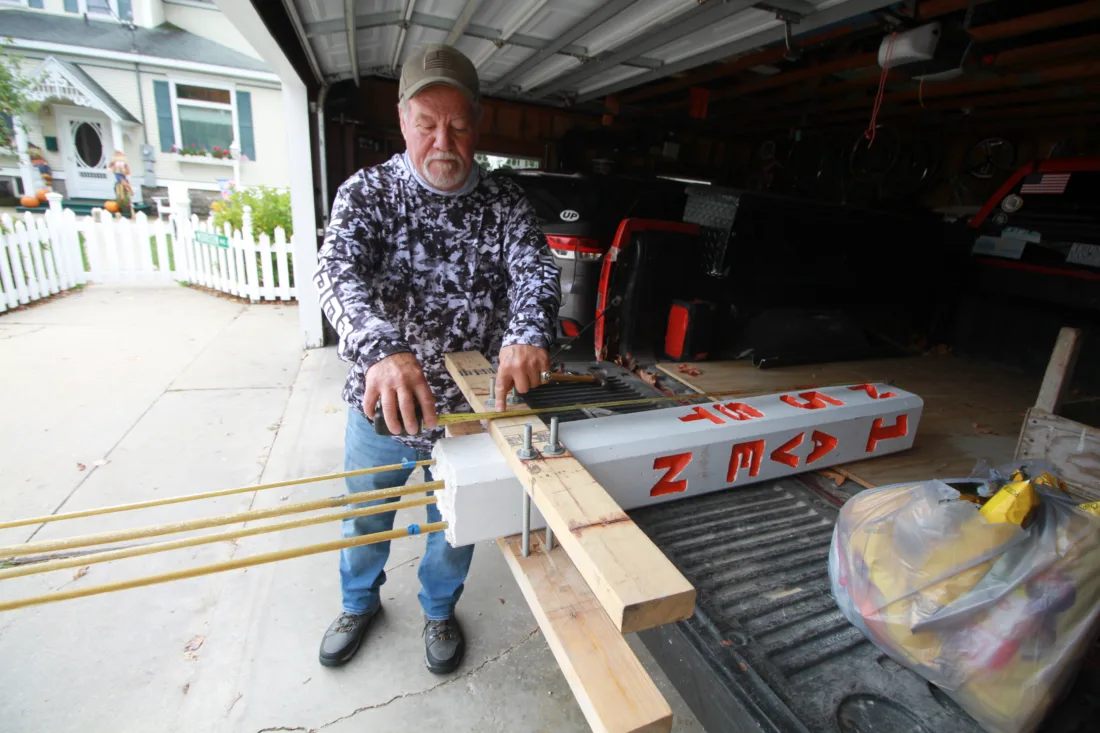
Monte Morrison of Escanaba has a newly-fabricated street marker that will be placed on First Avenue North, where it might help guide cruise ship passengers. Markers like this one were initially installed in Escanaba as a Works Progress Administration project in the late 1930s. (R. R. Branstrom | Daily Press)
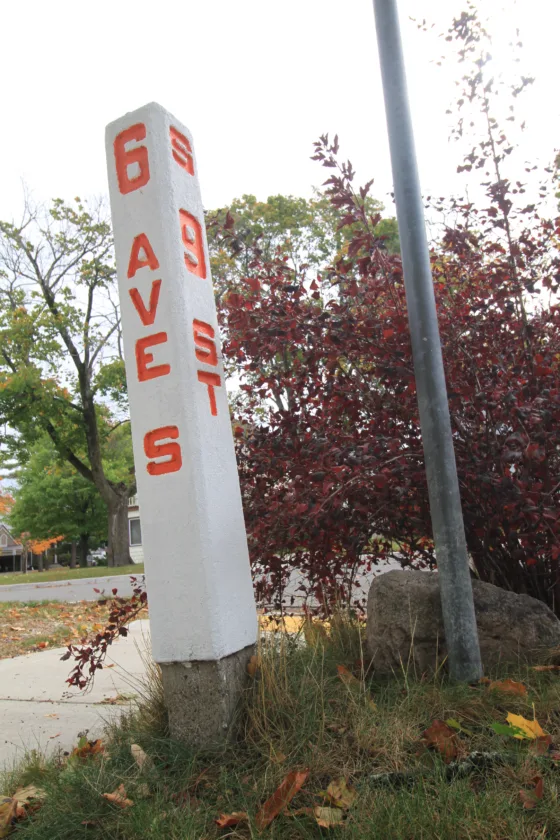
A not-fully-buried post shows the concrete base below the painted sign portion. (R. R. Branstrom | Daily Press)
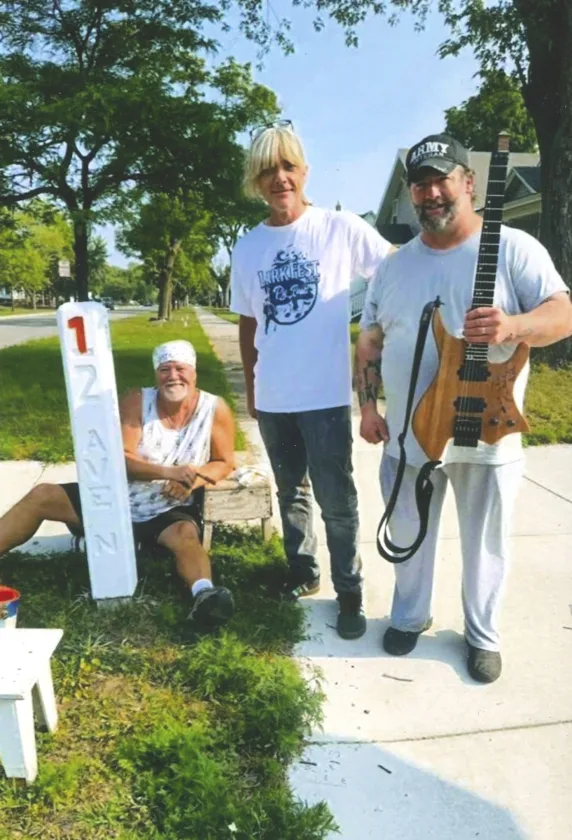
While Monte Morrison and Kevin Chown were working on repainting a historic street marker in the summer of 2025, a man brought a guitar for world-travelled musician Chown (center) to sign. (Courtesy of Morrison)
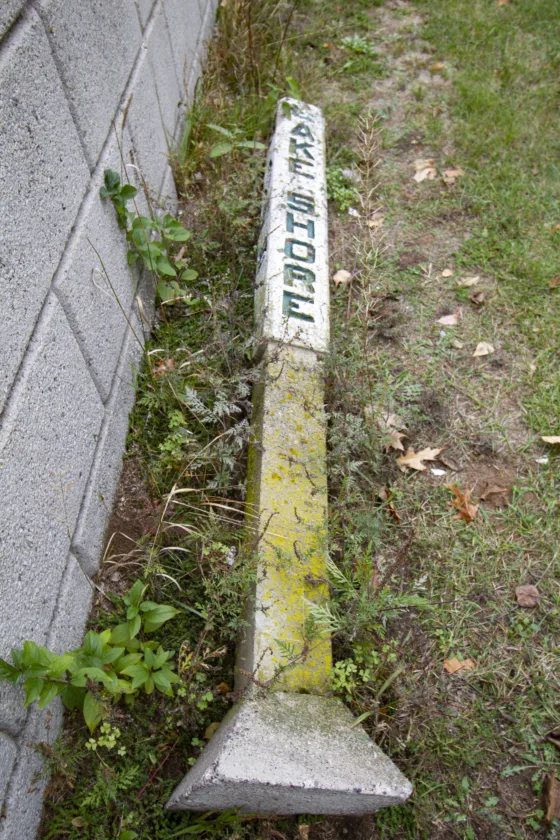
Seeing an entire unearthed 1937 monolith formerly used as an Escanaba street sign was like learning the Easter Island heads have bodies. (R. R. Branstrom | Daily Press)
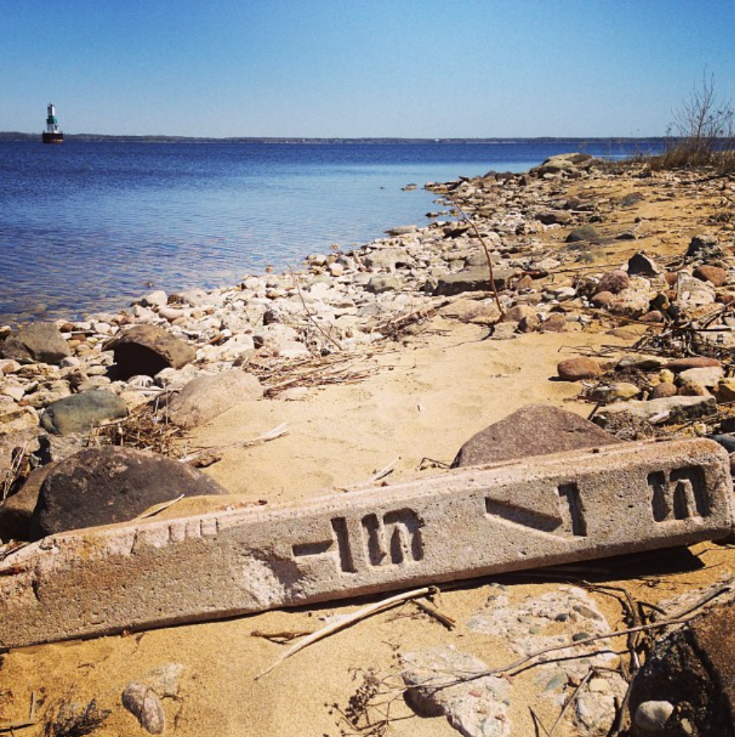
In 2013, a concrete street marker made during the Great Depression is seen discarded on the beach on the north side of Sand Point. (Photo courtesy of beatenpath906 on Instagram)
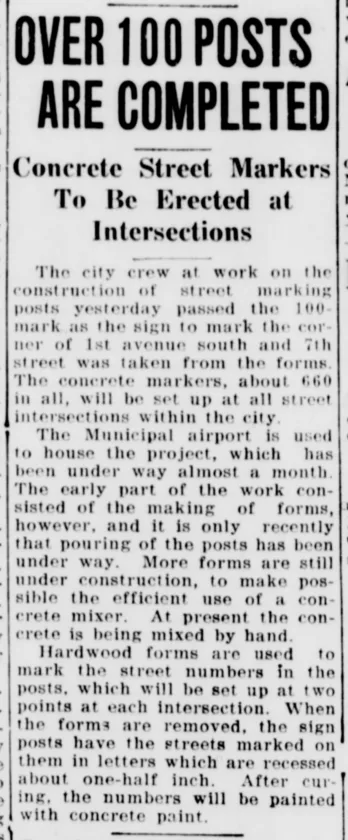
A 1938 Daily Press article discusses the then-in-progress street markers for the City of Escanaba, which were being made from hand-mixed concrete in an airport hangar as a WPA project. (Daily Press file)
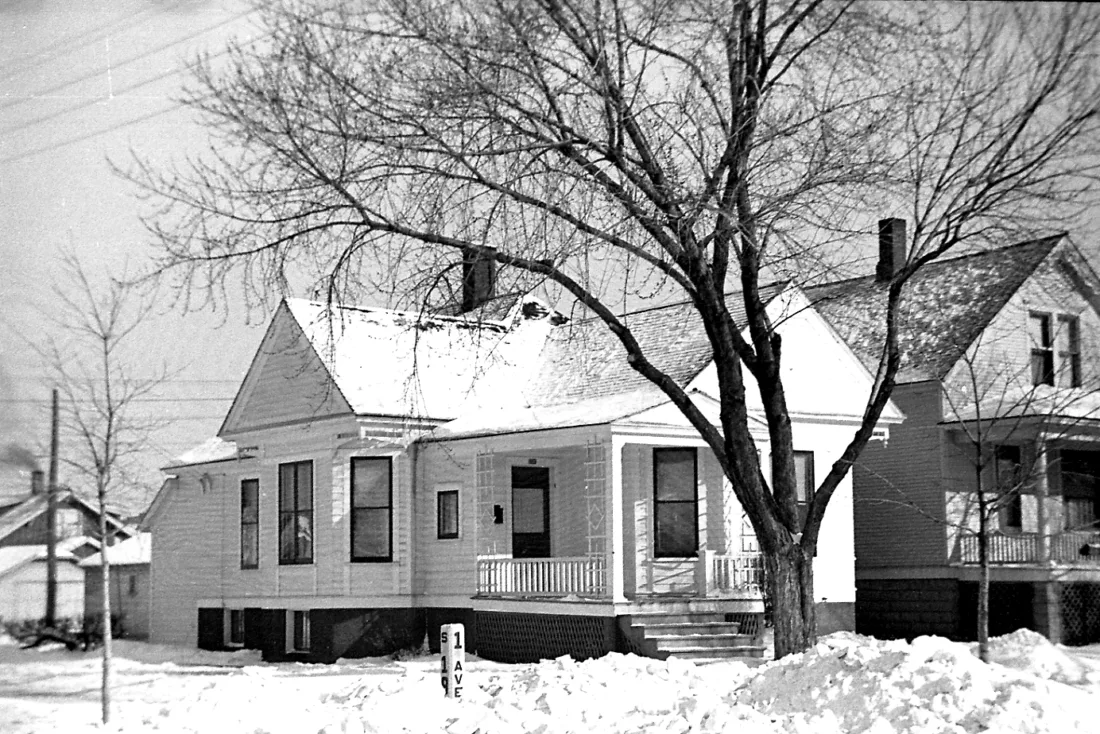
A concrete street marker — which served as the main signage before the era of street signs on metal posts — is seen though the snow at the corner on First Avenue South and South 19th Street. (Photo courtesy of Delta County Historical Society)
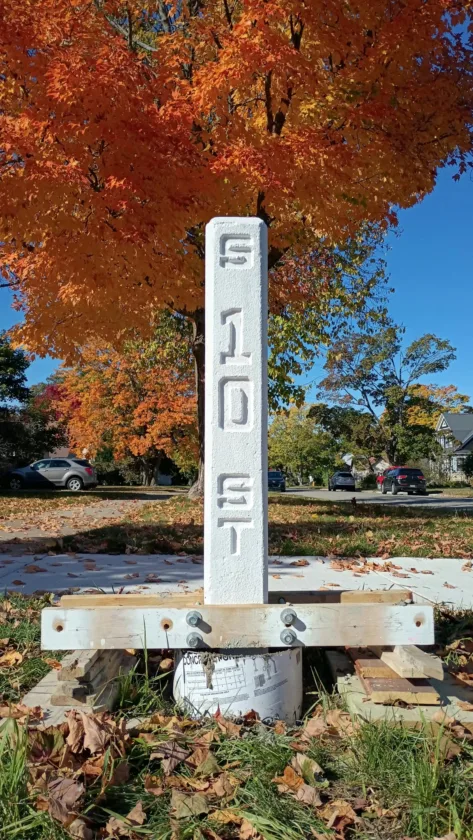
On Friday, Oct. 9, a repaired street marker — original to the WPA project — is seen drying at the corner os South 10th Street and Sixth Avenue South. (R. R. Branstrom | Daily Press)
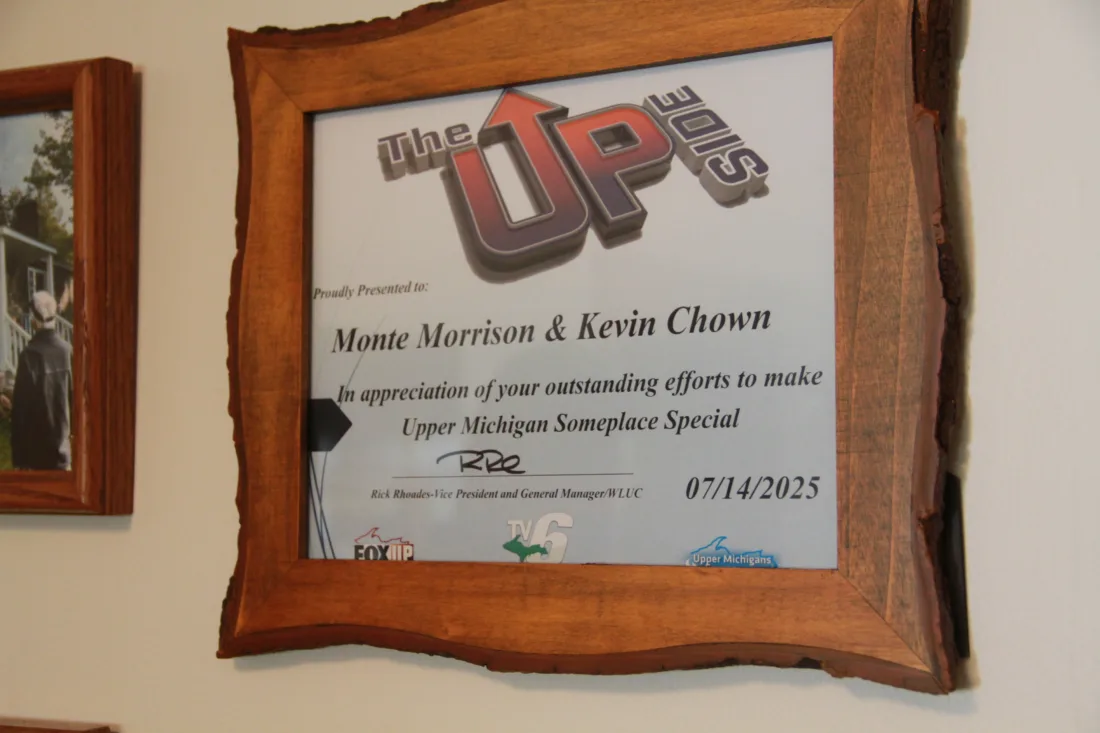
A plaque in Monte Morrison's home shows that he and Kevin Chown were recognized for their work on Escanaba's street markers on TV6's "The UPside" segment. (R. R. Branstrom | DAily Press)
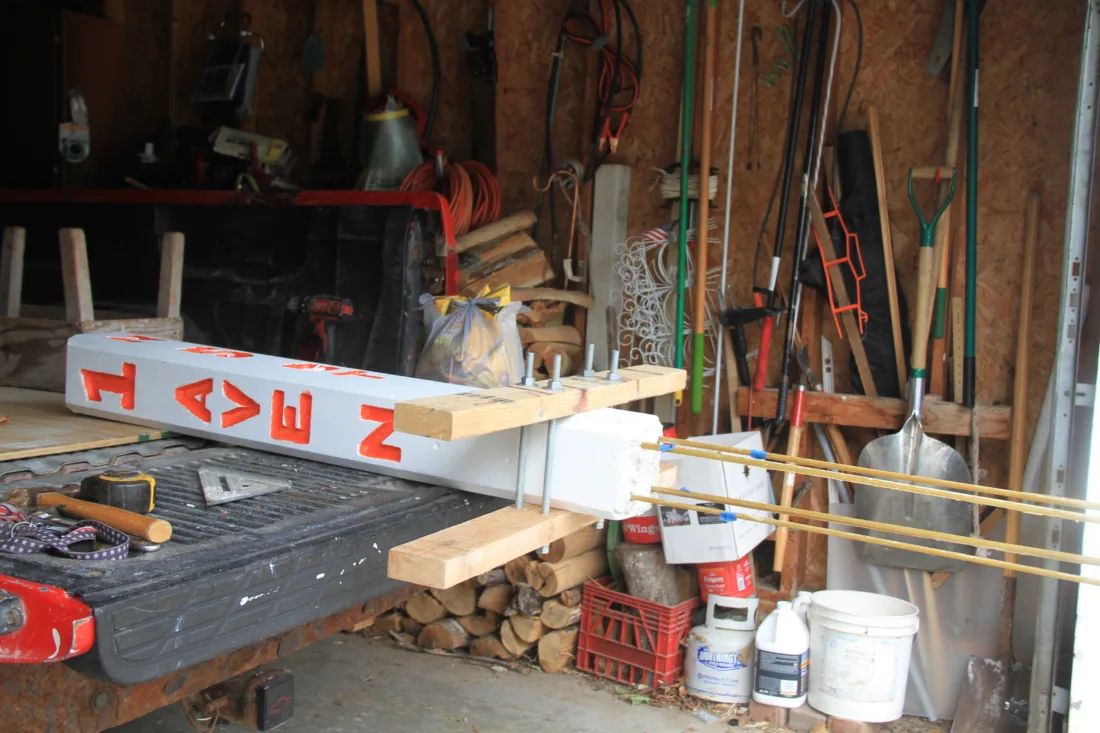
A new model replicating the 1930s street markers in the City of Escanaba is just about ready for installation. (R. R. Branstrom | Daily Press)
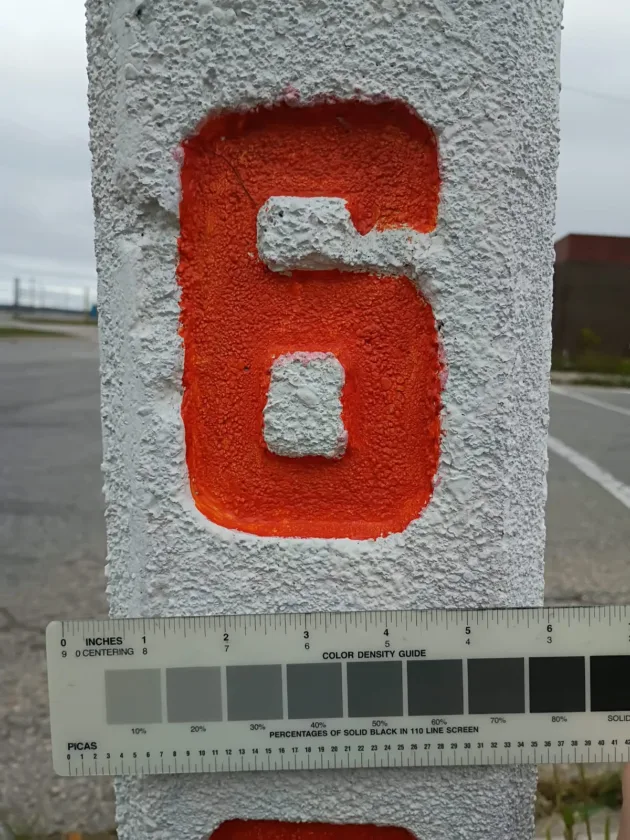
A close-up of one of the pillar-like, concrete street markers. Kevin Chown and Monte Morrison began restoring the markers last summer. (R. R. Branstrom | Daily Press)
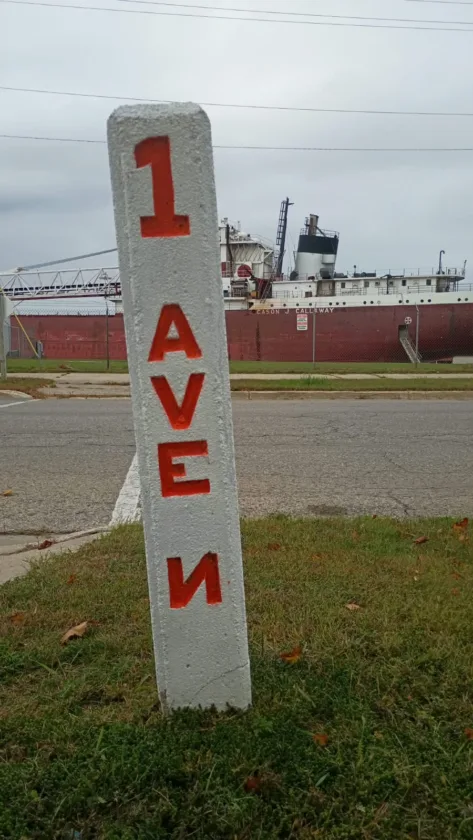
Crooked and with a backwards "N," this marker installed in downtown Esky in 1938 has character. (R. R. Branstrom | Daily Press)
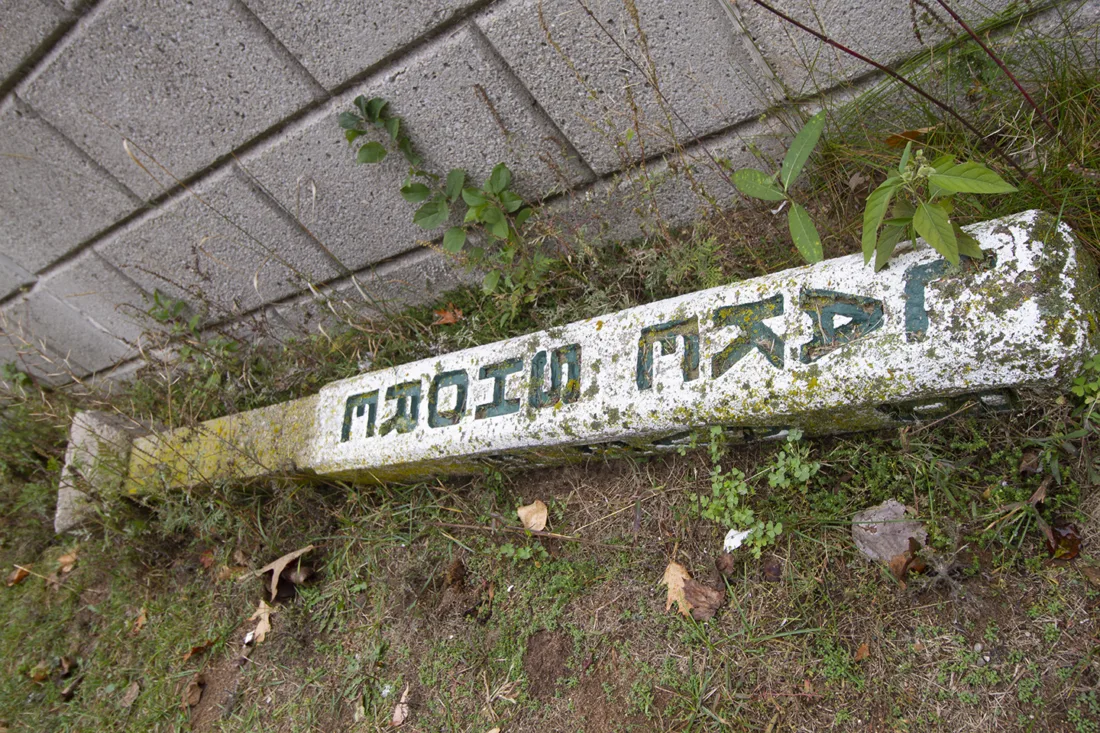
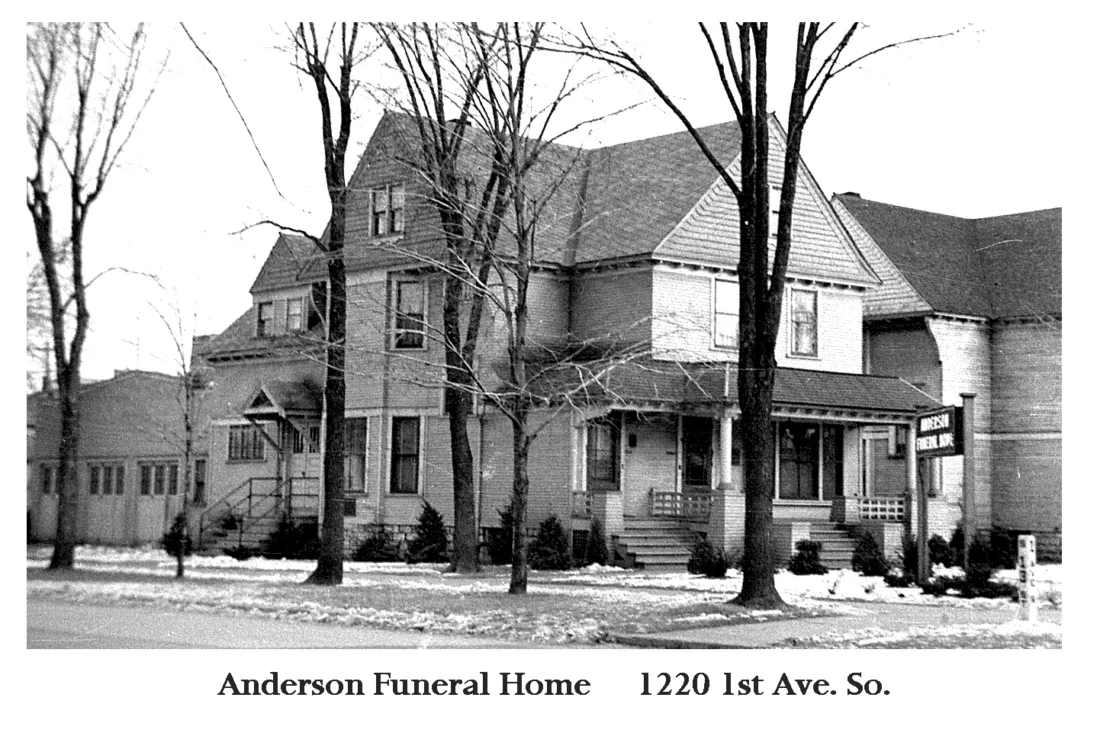
A concrete marker labeling South 13th Street and First Avenue is visible at the bottom right of this photo of a longstanding local business. (Photo courtesy of Delta County Historical Society)
Monte Morrison of Escanaba has a newly-fabricated street marker that will be placed on First Avenue North, where it might help guide cruise ship passengers. Markers like this one were initially installed in Escanaba as a Works Progress Administration project in the late 1930s. (R. R. Branstrom | Daily Press)
A not-fully-buried post shows the concrete base below the painted sign portion. (R. R. Branstrom | Daily Press)
While Monte Morrison and Kevin Chown were working on repainting a historic street marker in the summer of 2025, a man brought a guitar for world-travelled musician Chown (center) to sign. (Courtesy of Morrison)
Seeing an entire unearthed 1937 monolith formerly used as an Escanaba street sign was like learning the Easter Island heads have bodies. (R. R. Branstrom | Daily Press)
In 2013, a concrete street marker made during the Great Depression is seen discarded on the beach on the north side of Sand Point. (Photo courtesy of beatenpath906 on Instagram)
A 1938 Daily Press article discusses the then-in-progress street markers for the City of Escanaba, which were being made from hand-mixed concrete in an airport hangar as a WPA project. (Daily Press file)
A concrete street marker — which served as the main signage before the era of street signs on metal posts — is seen though the snow at the corner on First Avenue South and South 19th Street. (Photo courtesy of Delta County Historical Society)
On Friday, Oct. 9, a repaired street marker — original to the WPA project — is seen drying at the corner os South 10th Street and Sixth Avenue South. (R. R. Branstrom | Daily Press)
A plaque in Monte Morrison's home shows that he and Kevin Chown were recognized for their work on Escanaba's street markers on TV6's "The UPside" segment. (R. R. Branstrom | DAily Press)
A new model replicating the 1930s street markers in the City of Escanaba is just about ready for installation. (R. R. Branstrom | Daily Press)
A close-up of one of the pillar-like, concrete street markers. Kevin Chown and Monte Morrison began restoring the markers last summer. (R. R. Branstrom | Daily Press)
Crooked and with a backwards "N," this marker installed in downtown Esky in 1938 has character. (R. R. Branstrom | Daily Press)
A concrete marker labeling South 13th Street and First Avenue is visible at the bottom right of this photo of a longstanding local business. (Photo courtesy of Delta County Historical Society)
Trending
ESCANABA -- New street markers nearly indistinguishable from the concrete pillars installed almost 90 years ago are reappearing at corners in the City of Escanaba.
Last summer, Monte Morrison and Kevin Chown attracted attention when they took it upon themselves to restore the molded obelisks that remained from the original 660 placed in town as part of a Works Progress Administration (WPA) project in 1938.
Funded by federal grants during the Great Depression, WPA projects were arranged all over the country to put Americans to work as well as improve infrastructure.
According to Morrison’s research, the design, production, painting and installation of the bollard-like signs for Escanaba’s intersections was all done in 18 months. The concrete was poured during the winter of 1937 to ’38 in an airport hangar, and the implantation was done between May and October of 1998.
“Much criticism has been voiced during the past several years by residents of this city against the lack of proper identification of streets,” read a 1938 Daily Press article announcing the project. Records mention that the posts were to be eight inches at the base, tapering upwards, and that the letters -- recessed about one-half inch -- would be painted black.
During the town’s earliest days, many of Escanaba’s streets bore different names; examples are Wells Avenue (now First Avenue South), Charlotte Street (10th Street), Flat Rock Avenue (7th Avenue North) and Ayer Street (3rd Avenue South). Shortly before the onset of this project came the conversion to the numbered grid in use today.
The markers in Escanaba stand about three-and-a-half feet tall, with both a width and depth of about six inches near the top. On the one behind the Daily Press marking the southwest intersection of First Avenue North and North 6th Street, the numbers are five inches tall and the letters three.
Over the years, the rectangular chunks of concrete became vestiges as metal street signs took over. Though similar monoliths can still be seen in a handful of towns -- especially on the East Coast, like in Florida and at the Jersey shore -- many cities that had previously used the markers removed them. Esky’s, too, experienced a slow death; signs were damaged, crashed into, and/or removed for construction.
By the time Chown and Morrison decided that the blighted relics needed a facelift, about 220 of the 660 remained.
With the blessings of city officials, the pair -- Morrison, who’d made his career as a masonry contractor; and Chown, who’d recently moved back to his hometown and wanted to make the place more enjoyable -- set about cleaning and repainting the sometimes crumbling, somewhat moldy fixtures. They funded the materials themselves.
The process for each required about five visits to a single marker, Morrison said.
“I usually would go through and I would scrape them. … ground it, wire brush, scrape everything clean, get all the old paint off it,” Morrison explained. “Some had different colored paints, some had (bad) paints, some had good paint.”
After removal of the old gunk, a concrete pillar would be washed with a mold remover.
“And then we’d prime the whole thing, and then move on and then go clean up another one, and then we’d come back the next day and prime it,” Morrison continued. “And then we’d come back the next day to paint the letters. Then we’d go back the next day and touch up because some of the letters would kind of smear and it would drip.”
Last summer, residents watched with interest as the team worked. Some people requested certain colors for the ones near their homes -- by default, Morrison and Chown had been painting the pillars white with orange letters, but some folks wanted green or red, so it was done.
News station TV6 interviewed the duo and aired the story on their segment “The UPside,” which highlights positive community happenings.
“Every little bit matters when it comes to living in a neighborhood, and I think if everybody does their part, it makes the world around them look better. You make the world look better everywhere you go," Chown said during the TV6 interview.
Later, John Stacy joined the team, and the three men hemmed and hawed about how to reproduce replacement markers for the missing ones.
They came up with a method that’s been employed a few times so far. Using an interior rebar cage for rigidity, poured concrete, and lumber for staking, the new structures look very similar to the old ones -- at least above the ground. The originals features much longer concrete bases.
Though Chown passed away earlier this year, Morrison, Stacy and young hands are continuing the work. Presently, the character stencils -- numbers and letters -- are 3D-printed by Bill Dufour’s students at the Delta-Schoolcraft Intermediate School District. Morrison said they’re considering ways to bring the whole construction project to the DSISD so kids can have a hand in the creation of new posts from the ground up.