
MMR opens doors
Ambulance service provides hospital transfers
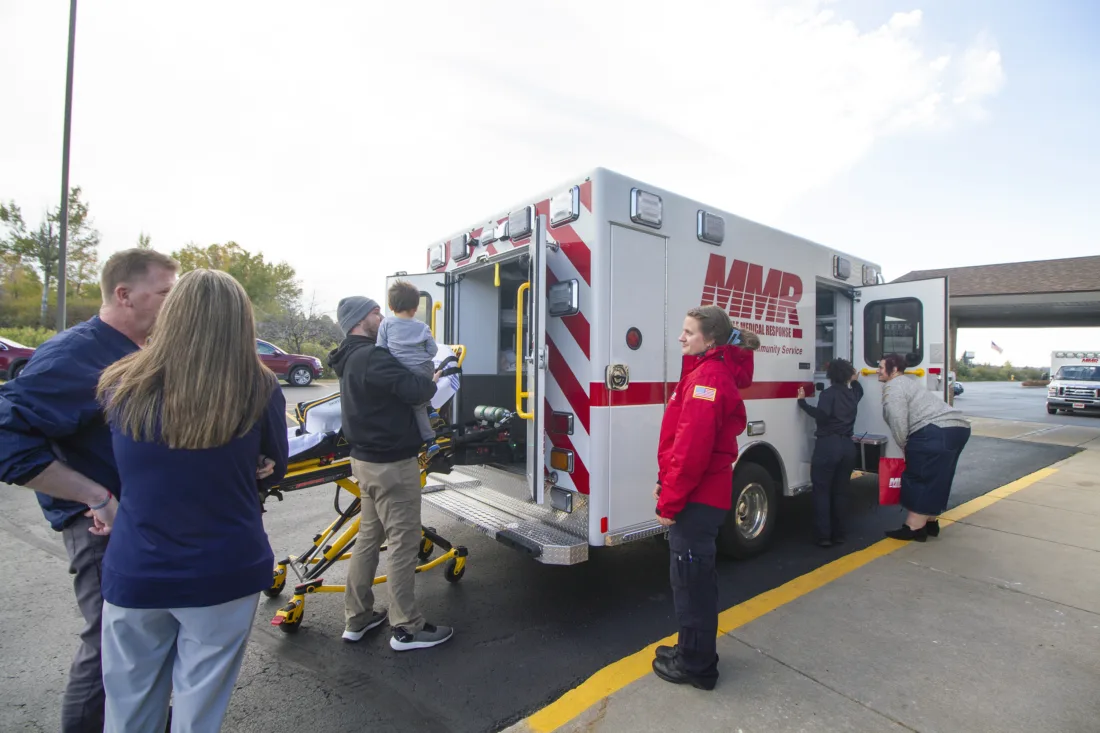
Members of the public on Wednesday got to see the high-tech ambulances and newly-renovated building of Mobile Medical Response, the newest team serving Delta County. (R. R. Branstrom | Daily Press)
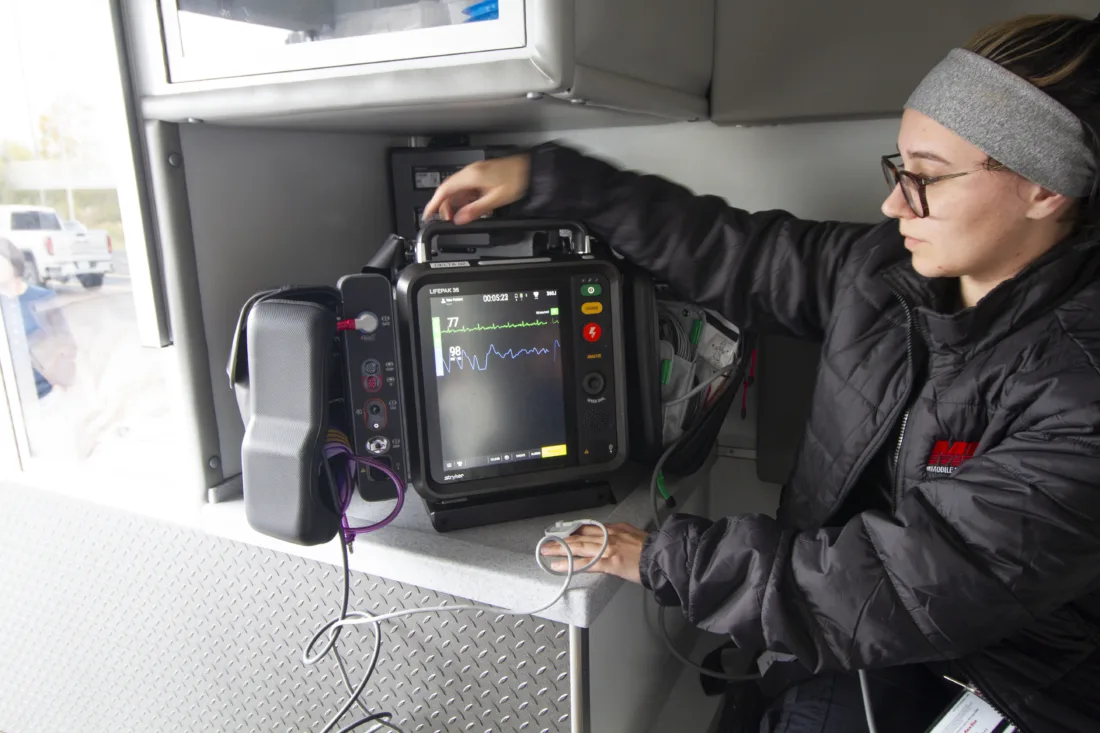
Inside an MMR ambulance, Emergency Medical Technician Ella Tuttle shows off the LifePak 35, a Stryker device with a range of capabilities designed to make the jobs of emergency responders more efficient and thorough. (R. R. Branstrom | Daily Press)
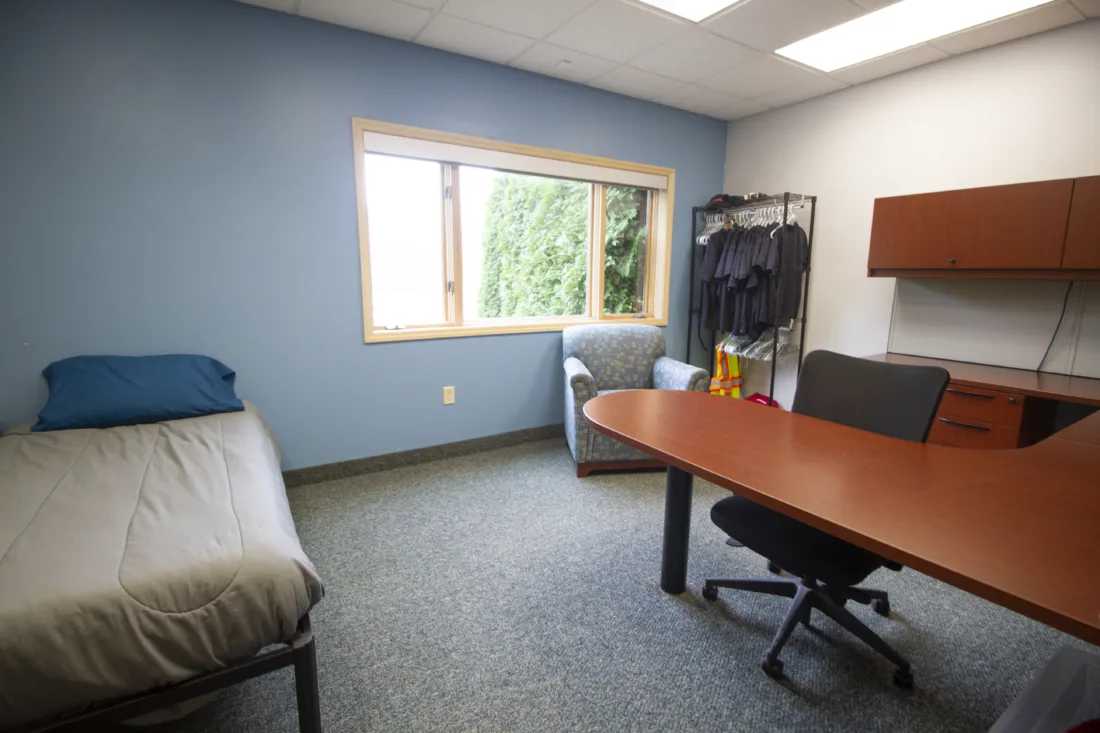
Renovations to 3500 Ludington St. in Escanaba, owned by Ken Gertland and which formerly housed the Escanaba Vet Center, include beds for MMR employees who are on call around the clock. (R. R. Branstrom | Daily Press)
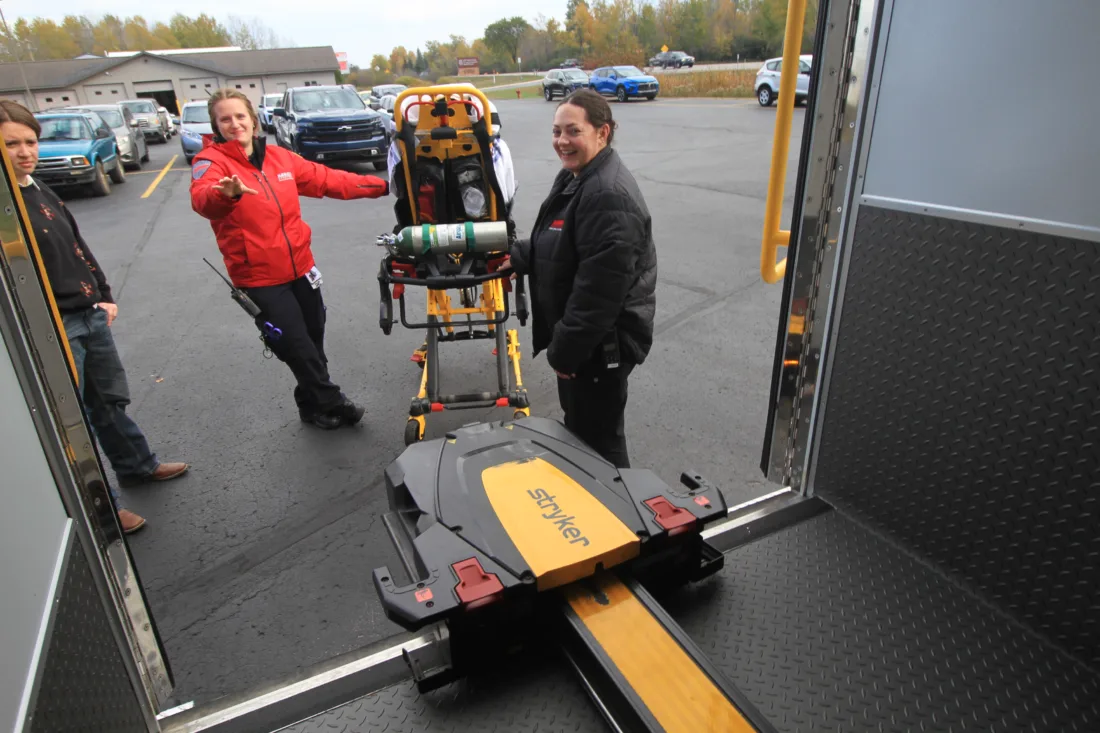
During MMR's open house at 3500 Ludington St. in Escanaba this week, an EMT and a paramedic laugh while demonstrating the way a new type of stretcher moves. (R. R. Branstrom | Daily Press)
Members of the public on Wednesday got to see the high-tech ambulances and newly-renovated building of Mobile Medical Response, the newest team serving Delta County. (R. R. Branstrom | Daily Press)
Inside an MMR ambulance, Emergency Medical Technician Ella Tuttle shows off the LifePak 35, a Stryker device with a range of capabilities designed to make the jobs of emergency responders more efficient and thorough. (R. R. Branstrom | Daily Press)
Renovations to 3500 Ludington St. in Escanaba, owned by Ken Gertland and which formerly housed the Escanaba Vet Center, include beds for MMR employees who are on call around the clock. (R. R. Branstrom | Daily Press)
During MMR's open house at 3500 Ludington St. in Escanaba this week, an EMT and a paramedic laugh while demonstrating the way a new type of stretcher moves. (R. R. Branstrom | Daily Press)
Trending
ESCANABA -- Residents may have seen the red-and-white vehicles of the newest emergency medical crews in Delta County -- Mobile Medical Response, which was brought in via a contract with OSF St. Francis Hospital. MMR’s advanced life support (ALS) ambulance service is now operating in addition to the longstanding Rampart EMS, which has been serving the Escanaba area for decades and is now part of UP Health System.
But beyond being solely for emergency response, the organization also provides another service that has been needed for a while -- transfers.
MMR -- a private, non-profit 501(c)(3) organization providing medical transportation services in Michigan -- was started in Saginaw, Michigan in 1994. Now operating in 19 counties, they specialize in rural response and hospital-to-hospital transport.
The newest MMR location -- based in Escanaba at 3500 Ludington St., the Willow Creek Professional Building -- is the very first in the Upper Peninsula. The partnership with the hospital in Escanaba became officially about two months ago, but the parties had been working towards it for about a year, said MMR staff during an open house event on Wednesday.
“We’re used to working with hospitals. We are owned by three hospital systems, and so working with OSF is kind of up our alley,” said Eric Snidersich, director of quality and clinical services for MMR. “We make sure that patients that need definitive care get to where they need to go in a timely manner.”
The introduction of MMR to the local emergency scene was to fill a need. Their primary reason for coming to Escanaba was to carry out transfers -- that is, transporting patients from OSF to places like Maquette, Green Bay, Cleveland Clinic, Mayo Clinic or wherever they need to go.
MMR responds to 9-1-1 calls as well, which may ease some pressure on other medic teams. Ambulance services are almost universally strained, said one paramedic who has worked in Delta County for eight years.
Already operating in Delta were “a few transporting BLS (basic life support) units with just EMTs, and then we do have a couple first responding units too, but they can’t transport,” explained Paramedic Angie Hughes, noting that MMR and Rampart are the only two transporting services in the county with ALS, or advanced life support, and paramedics on board.
The open house this week gave the public a chance to meet some of the people who make up MMR’s teams, tour the newly-remodeled facility and check out the ambulances.
Renovation to the premises, owned by Ken Gartland, was underway and nearly completed between August and October. The office space that had previously housed the Escanaba Vet Center was remodeled to accommodate MMR units; as crews must be available 24/7, the building offers now offers them a kitchen, full bathroom and some simple bedrooms.
“Even at night, there’s usually two to three crews here, so everyone can have their own space to sleep,” Hughes said.
A detached garage on the eastern side of the property also got a glow-up. Construction on the garage was still underway as of the open house on Wednesday, but the space features larger bay doors and a heated interior for MMR’s three Escanaba-based rigs.
All of the ambulances are fairly new and equipped with quality, high-tech equipment. “MMR is proud to be an innovator in EMS. We were the first to offer pre-hospital blood as well as a Community Paramedic-based Medicated Opioid Use Disorder treatment plan to the patients we serve. As an organization, it is important to bring the best, most evidence-based, and advanced care to our communities,” read a piece of literature from MMR for a presentation to the Delta County Townships Association on Thursday.
MMR staff was visibly excited to show people the features and elements in the newest rig, a 2022 model with less than 5,000 miles on it. One EMT, showing off the devices within, referred to the Stryker LifePak 35 as “pretty rad.”
Said unit monitors a number of patient readings, offers manual and semi-automated defibrillation, can perform synchronized cardioversion, runs electrocardiograms, is capable of data transmission and is portable.
Explaining that the numerous cables can be put on various places on a person’s body to take readings from different places, “We look at multiple angles so that we can see all the parts of the (heart) muscle and see if any of them aren’t getting oxygen,” said Snidersich, adding that doing so helps narrow down diagnoses before a patient gets to the hospital.
“We can (detect) basically what part of your heart is not working right …based on what they’re seeing, and we see on EKG, we can kind of predict what arteries are bad. And then we tell the hospital, and they can kind of prep,” Snidersich said.
The information is useful because certain types of heart attack are treated differently; while administering nitroglycerin to dilate arteries is good for some, it can actually be harmful in other instances.
“Another fascinating thing about these,” said EMT Ella Tootle, still talking about the LifePak 35, “is if we were to run on a (cardiac) arrest, we do get feedback every time we compress.”
At least one young person who attended the open house did so because of an interest in pursuing a future as an EMT or paramedic. Hughes supported the notion, saying, “There’s definitely a need everywhere right now for more EMTs and paramedics.”
While many of the medics now working with MMR at the Escanaba post are local, a few relocated here for the job. Tootle had been living in Texas and searching nationwide for an employer that would be a good fit.
“I was looking for an agency that was very education-heavy because I want to educate down the line,” Tootle said. “I moved from Houston, and one of the things that I really aligned with was a heavy, heavy emphasis on education. And MMR, when when I interviewed, seemed really physical education-forward, and that’s something that I’ve found to be very consistent since I’ve started.”
Additionally, response in more remote areas is different than in cities.
“I’m very passionate about rural healthcare, so being able to come up to the Upper Peninsula and do it has been very rewarding,” Tootle said.
Hughes, who became a paramedic after going through the program at Bay College and later worked several years with Rampart, said that she had been interested in getting into more of the transport side that MMR focuses on. And her local background and experience in the field helps when she’s paged to 9-1-1 calls in Delta County.
Mentioning the other teams that respond to medical emergencies iin the area, Hughes said, “we’re all pretty good at working together, and honestly, our dispatch is a huge part of that.”
—
R. R. Branstrom can be reached at rbranstrom@dailypress.net.