
Abdul in Escanaba
Abdul El-Sayed visits Escanaba as part of his "It Shouldn't Be This Hard" bus tour along with AOC
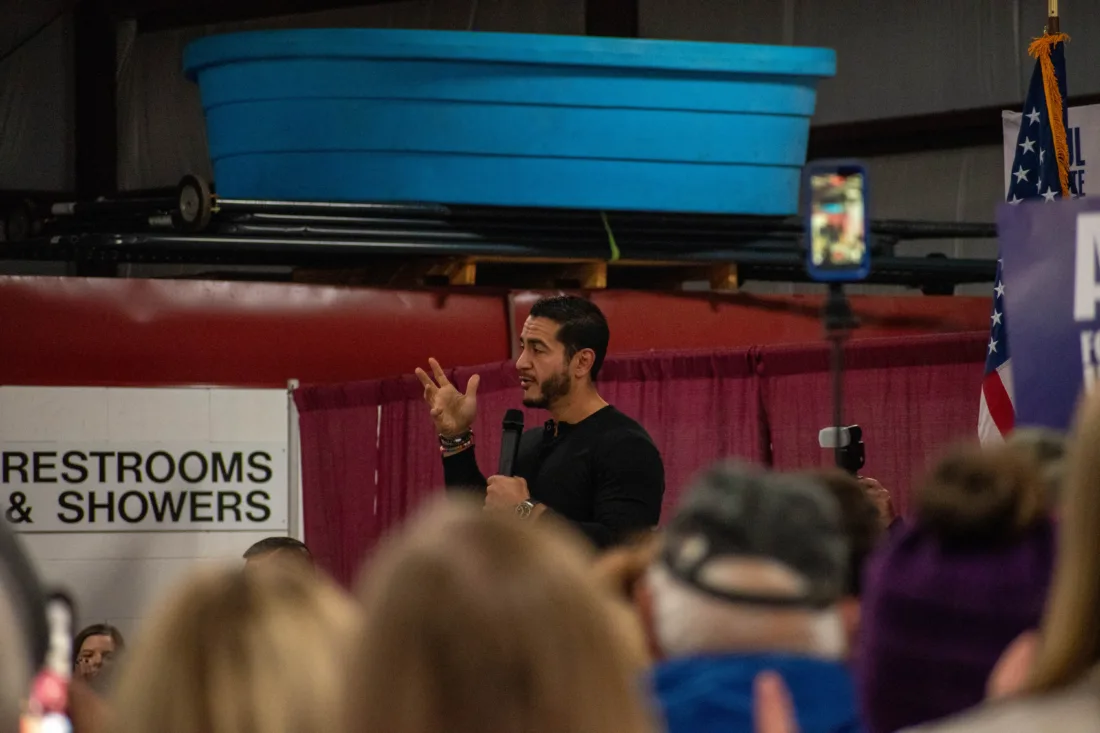
Abdul El-Sayed visited Escanaba as his first stop in the "It Shoulbn't Be This Hard" town hall tour. (Liam Houston | Daily Press)
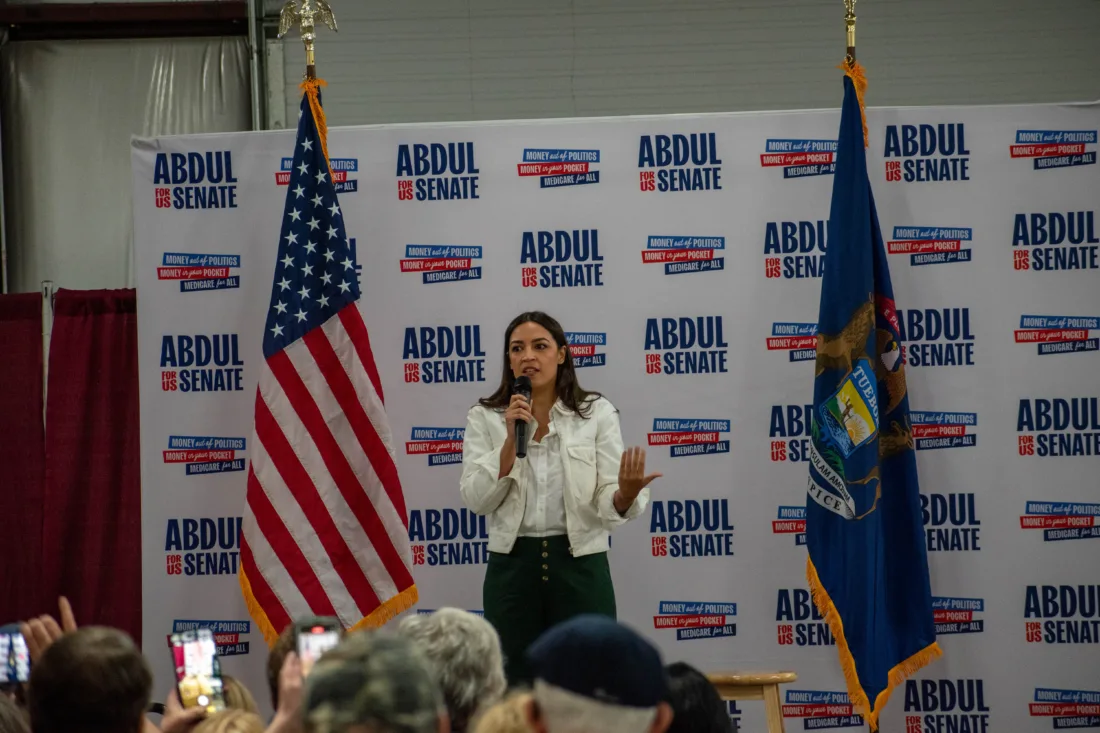
AOC accompanied El-Sayed on his tour and spoke alongside him. (Liam Houston | Daily Press)
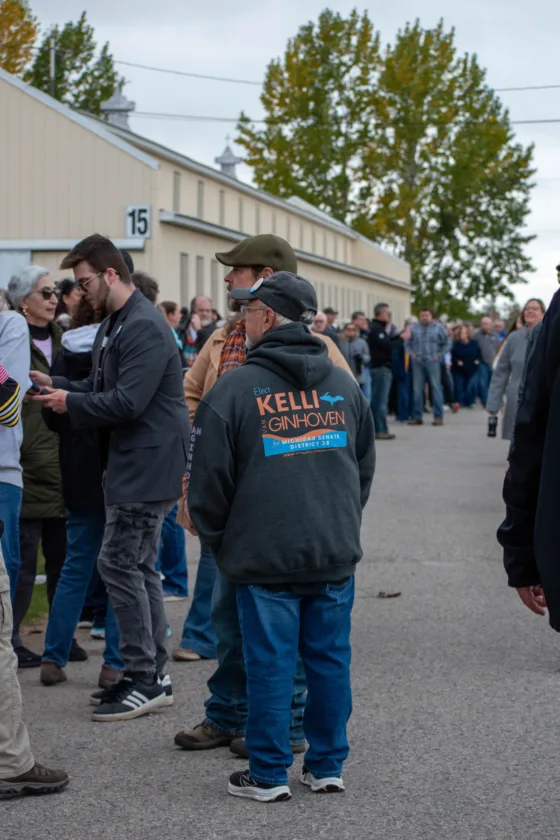
Many community members lined up early to attend the event with El-Sayed. (Liam Houston | Daily Press)
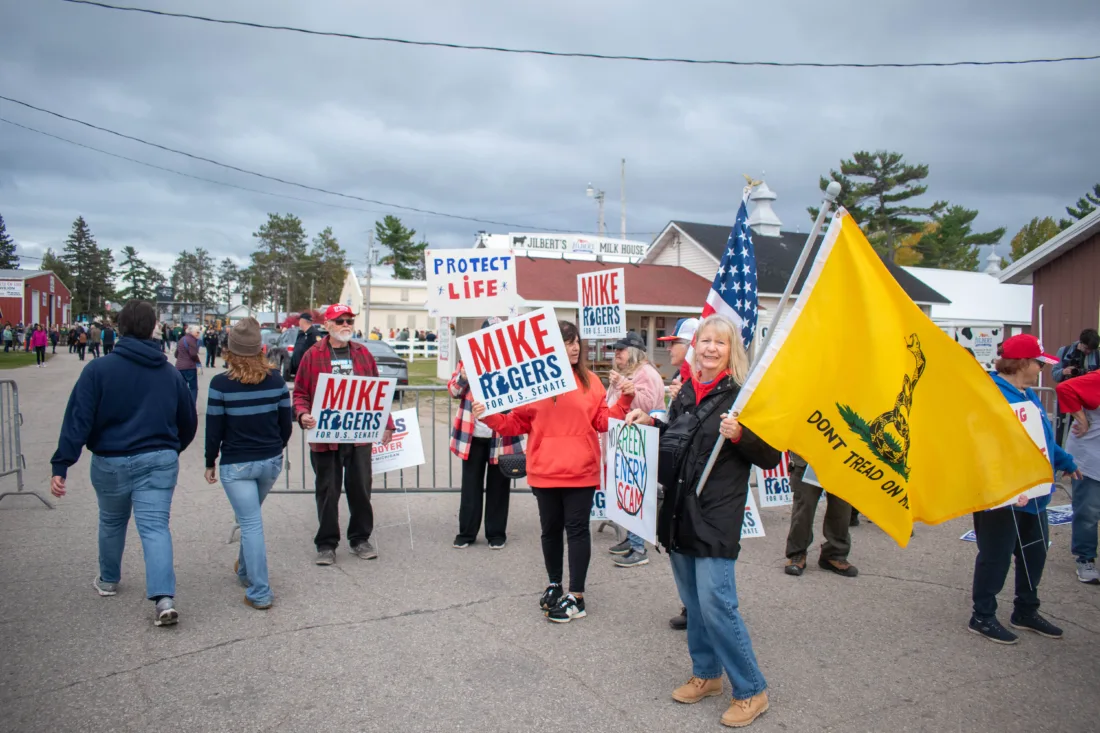
Supporters of Mike Rogers also showed up to show support for their chosen candidate outside the venue. (Liam Houston | Dailt Press)
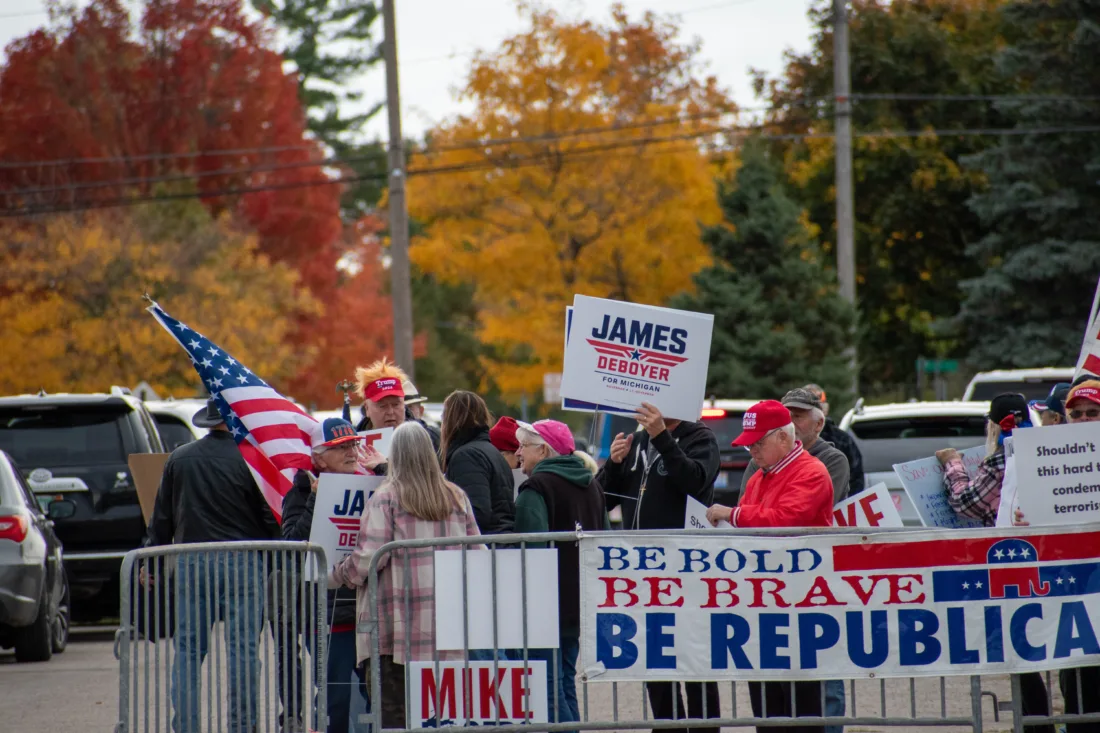
Supporters of Mike Rogers also showed up to show support for their chosen candidate outside the venue. (Liam Houston | Dailt Press)
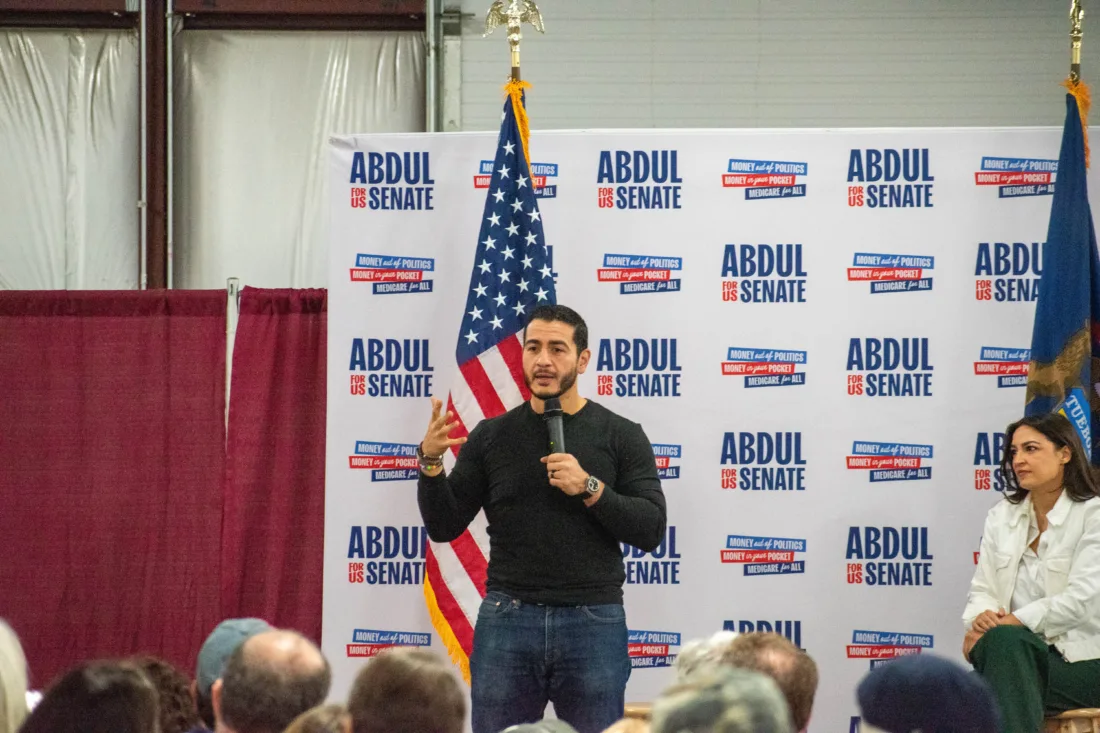
Abdul El-Sayed spoke to the local community on issues in the area. (Liam Houston | Daily Press)
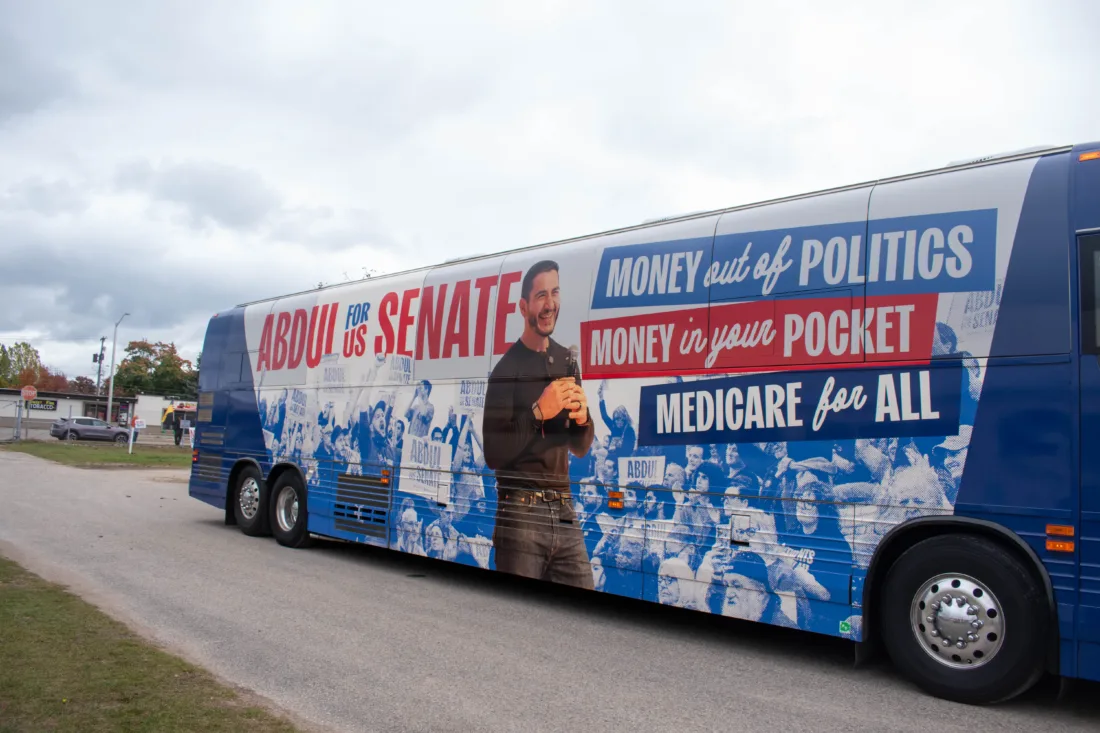
Abdul El-Sayed's tour bus taken through the Upper Peninsula. (Liam Housotn | Daily Press)
Abdul El-Sayed visited Escanaba as his first stop in the "It Shoulbn't Be This Hard" town hall tour. (Liam Houston | Daily Press)
AOC accompanied El-Sayed on his tour and spoke alongside him. (Liam Houston | Daily Press)
Many community members lined up early to attend the event with El-Sayed. (Liam Houston | Daily Press)
Supporters of Mike Rogers also showed up to show support for their chosen candidate outside the venue. (Liam Houston | Dailt Press)
Supporters of Mike Rogers also showed up to show support for their chosen candidate outside the venue. (Liam Houston | Dailt Press)
Abdul El-Sayed spoke to the local community on issues in the area. (Liam Houston | Daily Press)
Abdul El-Sayed's tour bus taken through the Upper Peninsula. (Liam Housotn | Daily Press)
Trending
ESCANABA -- U.S. Senate candidate Abdul El-Sayed visited Escanaba Thursday as the first stop in his "It Shouldn't Be This Hard" town hall tour in the Upper Peninsula.
El-Sayed spoke on many topics during his address and through answering questions from the crowd.
In his initial address to the crowd, El-Sayed talked about affordability. The recurring theme of his address was that it "shouldn't be this hard" to afford to live in Michigan.
"It shouldn’t be this hard in the richest and most powerful country in the history of the world to afford a tank of gas," El-Sayed stated. "It shouldn't be this hard to afford a bag of groceries. It shouldn't be this hard to afford a mortgage. It shouldn't be this hard to go see a doctor."
El-Sayed also discussed the idea that the citizens of Michigan shouldn't have to pay their taxes, only for those taxes to fund unpopular conflicts overseas instead of improving life at home. He directly called out his opponent Mike Rogers for avoiding talking about these issues that concern most Americans going into the midterms, pointing out that Rogers has not made a campaign appearance in Escanaba.
El-Sayed further called out Trump and the state of politics in the country as being an issue he is campaigning to solve.
"Donald Trump himself is not a disease in our politics, he is a symptom of the disease in our politics. The disease itself is a system that allows private corporations and private interests to buy and sell politicians in ways that lead to rigging the system against us," El-Sayed stated. "Too often, politicians take money from big corporations. They do what [the corporations] want done and they tell you what they think you want to hear."
During the public question portion of the event, El-Sayed was prompted to address several topics of particular concern to the local community and the Upper Peninsula as a whole.
One attendee shared his experience as a federal employee, detailing how federal cuts and attempts to automate workforces with artificial intelligence has made it harder for federal employees to do their jobs.
El-Sayed explained that the federal government, in reality, isn't the elected officials that rotate in and out of the system. The reality for El-Sayed is that it is the federal workforce that makes up the actual body of the government. El-Sayed went on to recognize that these positions are a full time commitment to communities, a commitment that is relied upon.
El-Sayed recounted how cuts to federal workforces under the current administration have led to uncertain outcomes in the ability of the federal government to do its job. He recalled the cyclospora outbreak in Michigan this summer. El-Sayed explained that cuts to the CDC led to the agency being unable to accurately monitor and prevent the outbreak. El-Sayed pointed out that the kinds of DOGE cuts that were claimed to save federal spending ended up hurting the American public in this and many other ways. He also called attention to how lucky Michigan was that it had been a cyclospora outbreak -- a terrible but often not life threatening disease -- and not a more serious one like Ebola.
When addressing the audience member's point on automation, El-Sayed expressed concern over the faith that is placed in the automated system.
"If you've ever had a conversation with a chat bot, it can give you a lot of the right answers, but it does not give you the crucial answer in the moment that you need it," El-Sayed said. "And it turns out, that bot is not going to be able to show up for its neighbors in the U.P. when it’s mission critical, you will. So we have got to resist [automation]."
Other concerns brought up through public questions were healthcare in the Upper Peninsula and protecting our water.
El-Sayed recognized that the Upper Peninsula does not have enough healthcare practitioners. He discussed the current state of the higher education system that often leaves those seeking to become healthcare professionals with student debt. He described how this debt can often encourage medical practitioners to seek higher paying jobs outside of the Upper Peninsula simply so that they can pay off their debt.
"You shouldn’t have to go into debt to get a higher education, period, full stop," El-Sayed said. "It shouldn't be that you are now stuck in quicksand, despite the fact that you are making... making your loan payments, and working in your profession. Something has to be done."
U.S. Rep. Alexandria Ocasio-Cortez, D-N.Y. (AOC), who attended this event with El-Sayed, also gave her comments on the issue.
"When we make a business of education, our communities get left behind. Not only should we not be charging interest rates, public colleges should be tuition free." AOC further said, "I want to make very clear, that what the Trump administration is doing, specifically, is attacking women's ability to seek higher education."
When it came to the topic of protecting the Great Lakes and clean water, the public concern was over projects with potential threat to the cleanliness of our resources. Projects like the Line 5 pipeline and Copperwood Mine. Abdul took the importance of the issue past just those projects.
"Our water is 21 percent of the world's fresh water. We owe it to the world to protect that incredible water source," El-Sayed pointed out.
El-Sayed stated that we should not allow corporations the ability to pollute our water resources without a way to hold them liable for the cleanup in the event of contamination. He further listed some of the other water infrastructure issues that Michigan faces across the state, which led into his position that the country needs a comprehensive water bill that can address the degradation of the country's water infrastructure.
"The fact that Michigan has water issues, should tell us a lot about the fact that there are water issues all over the country."
El-Sayed's visit to Escanaba drew community members and supporters in great numbers, with AOC speculating that there were over 400 people in attendance.
"It means hope, and that somebody is on our side," said Lisa Fosmo. "They are the hope that things can be rebuilt."
Supporters of Mike Rogers also showed up at the event to peacefully protest and support their chosen candidates.
"We believe Mike Rogers is a better candidate to bring jobs to Michigan and to keep us and our families safe," said Lisa Pieczynski. "We believe in supporting ICE, supporting our police. We don't believe in Medicare for All, and we want to repeal the green energy mandate."
After the event, El-Sayed and his team quickly packed up and set off. El-Sayed spoke at two other stops in the tour -- in Iron Mountain and Marquette.
More information on Abdul El-Sayed's campaign and future public appearances leading up to the midterms can be found at abdulforsenate.com.
Mike Rogers has planned a similar bus tour through the Upper Peninsula that is set to arrive in Delta County on Oct. 22. More information on the location and registration for that event can be found at mikerogersforsenate.com.