
A new chapter for Delta County’s District Court judge
Parks set to retire after lengthy legal career
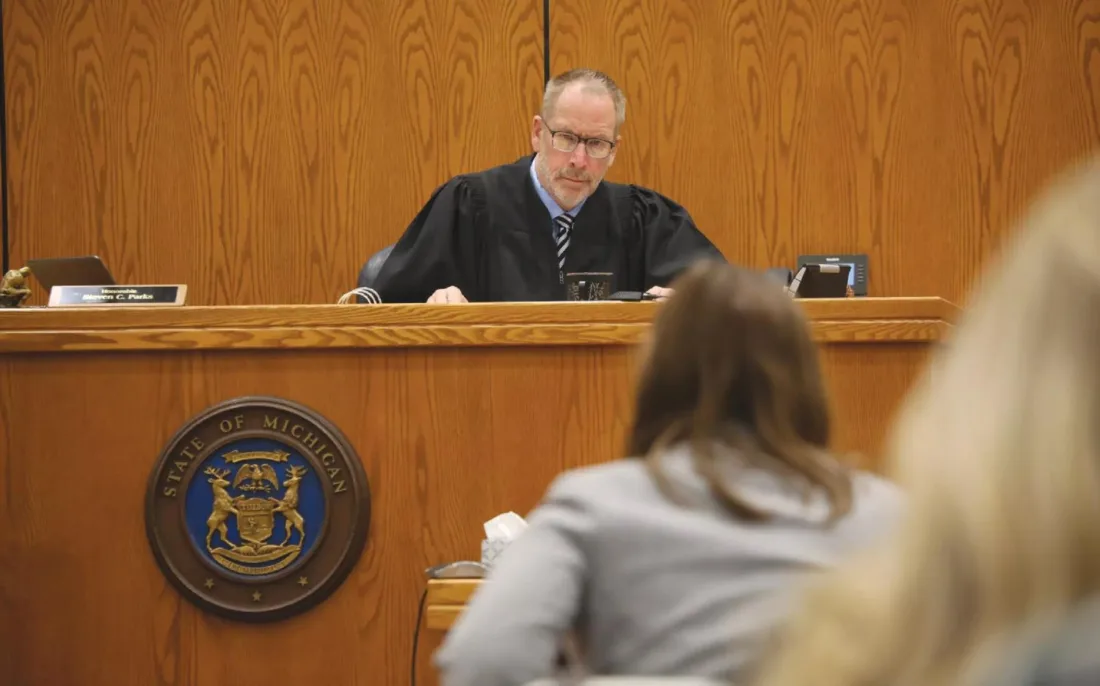
Delta County District Court Judge Steve Parks listens as Delta County Prosecutor Lauren Wickman rises to present evidence in court during the preliminary examination of Tavaris Jackson. (Daily Press file photo dated Aug. 22, 2023)
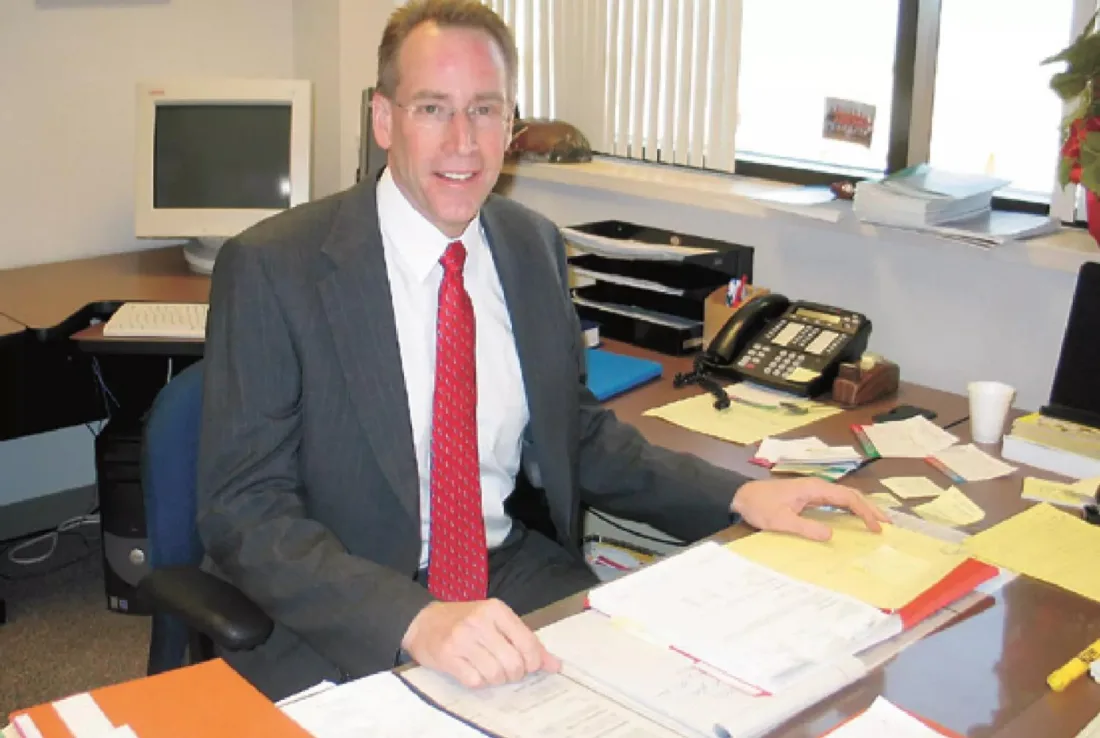
Delta County Prosecuting Attorney Steve Parks, who's been on the job six weeks, says he enjoys the challenges and rewards of his new position. As prosecutor, he is the chief law enforcement official in the county. (Daily Press file photo dated Feb. 14, 2005)
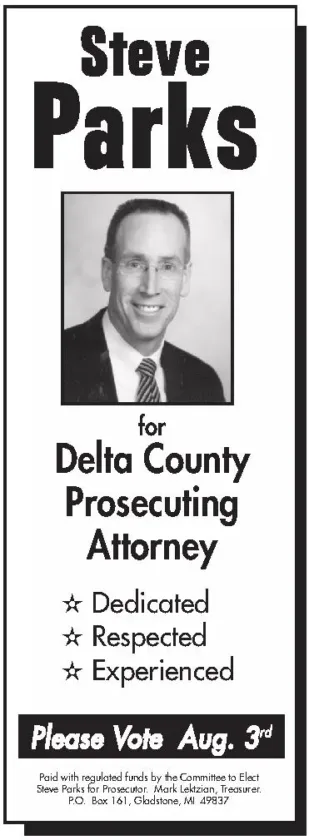
Daily Press clipping dated July 26, 2004
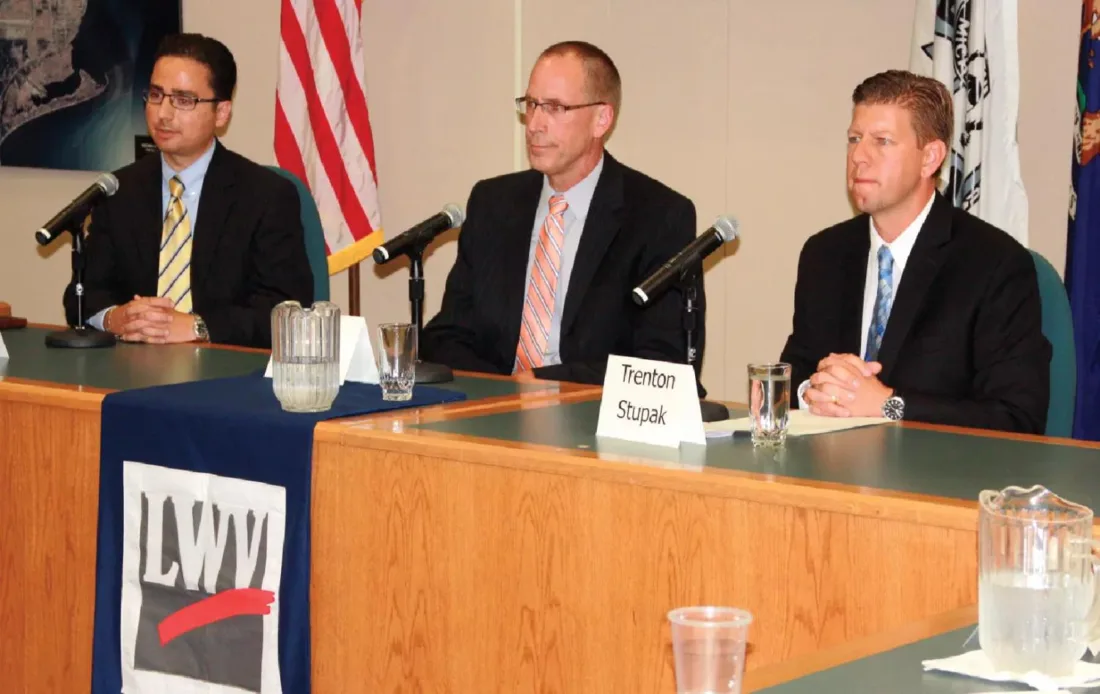
Candidates in the non-partisan race for Delta County District Court judge answer questions during a public forum at Escanaba City Hall on Wedensday. From left are John Economopoulos, Steve Parks and Trenton Stupak. (Daily Press file photo dated July 24, 2014)
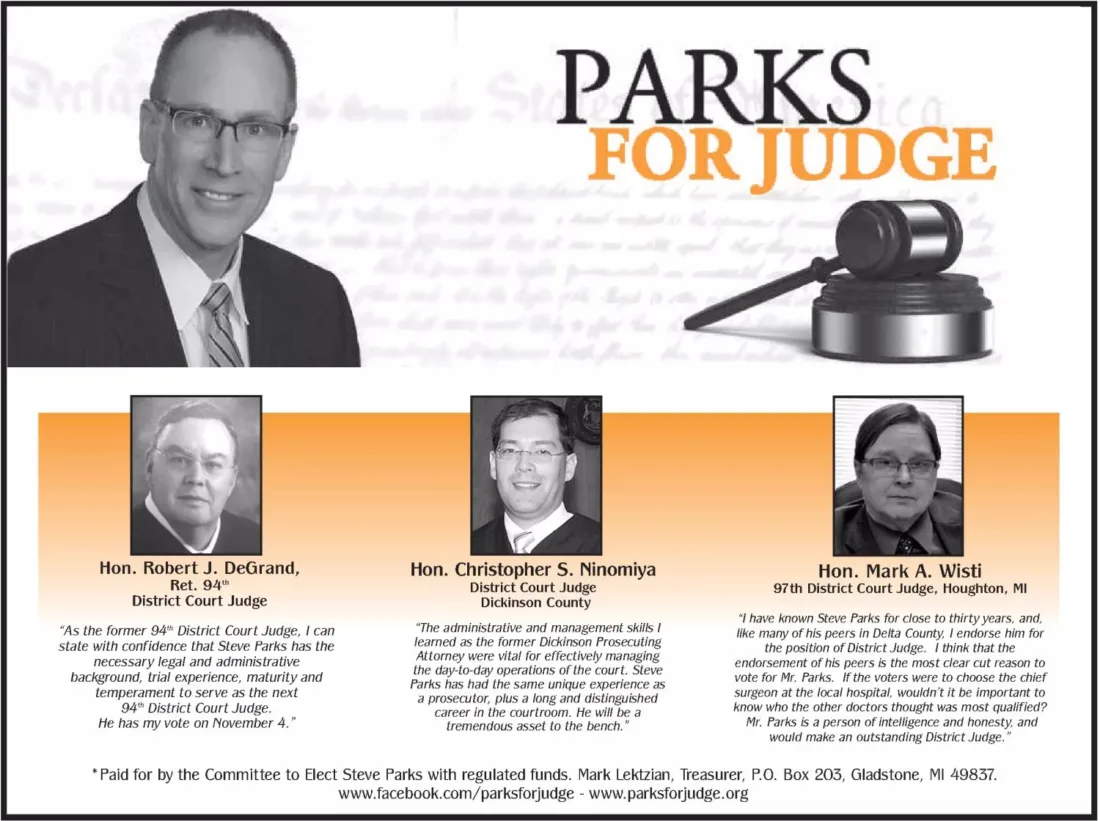
Daily Press clipping dated Oct. 24, 2014
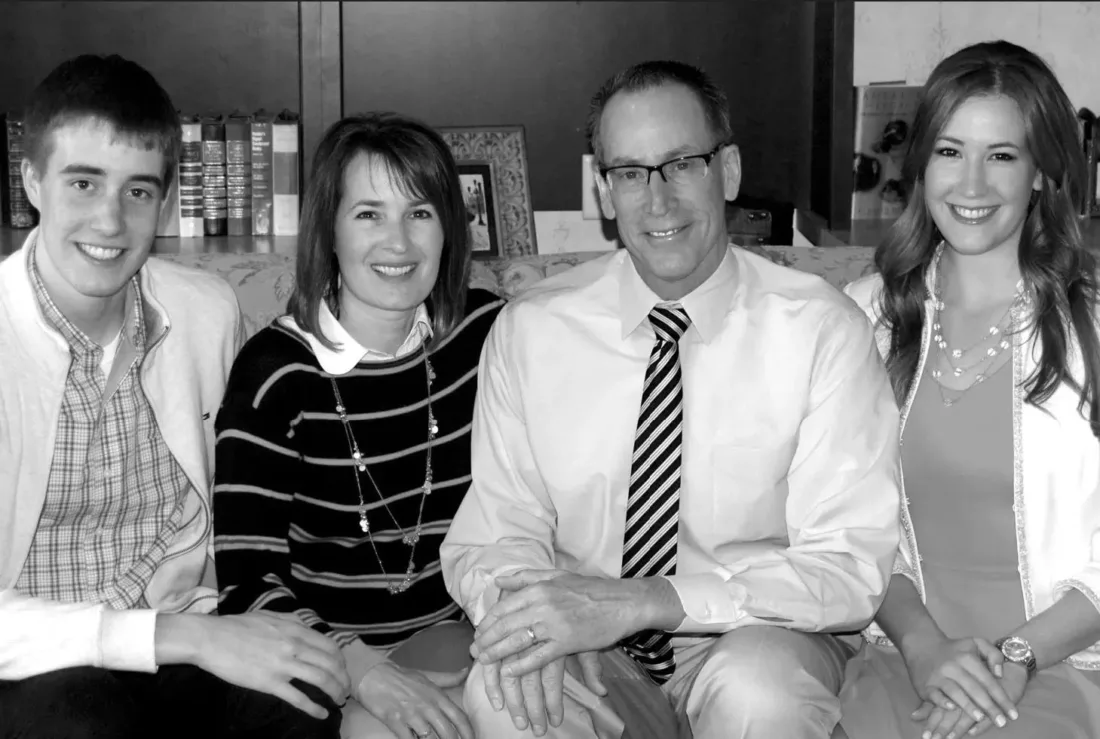
Parks family photo published during Steve's time running for Delta County 94th District Court judge. From left, Chad, Candice, Steve and Abbie Parks. (Daily Press file photo dated Aug. 2, 2014)
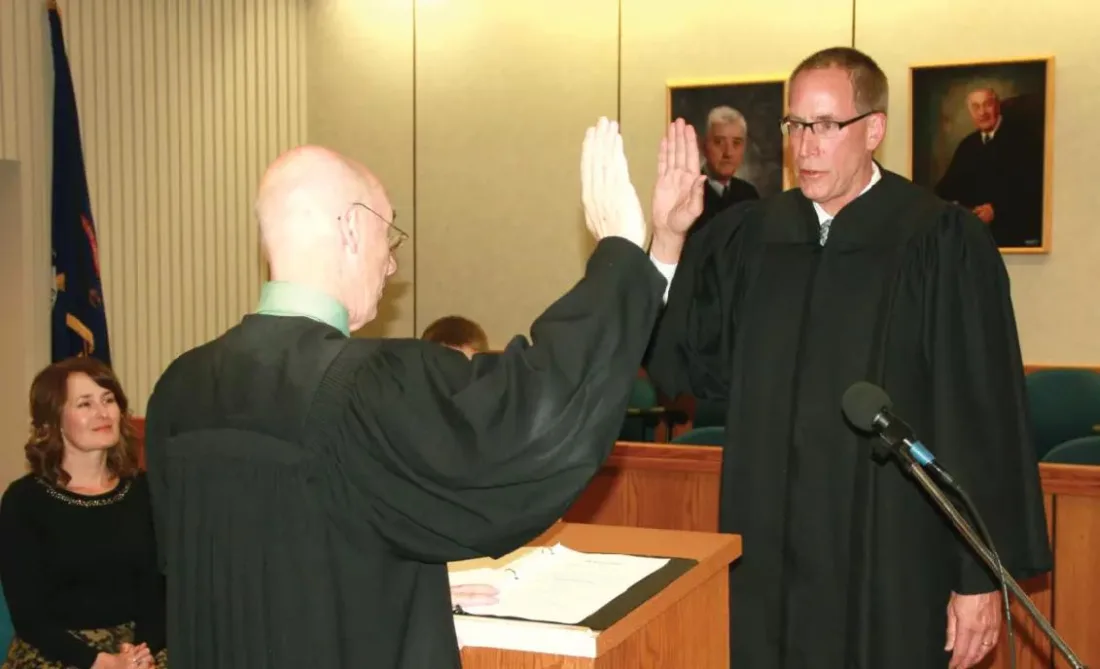
Delta County Circuit Court Judge Stephen Davis, middle, swears in Steve Parks, at right, as the county's new district court judge during an oath of office ceremony at the Delta County Courthouse. Parks' wife, Candice, is also pictured. (Daily Press file photo dated Dec. 31, 2014)
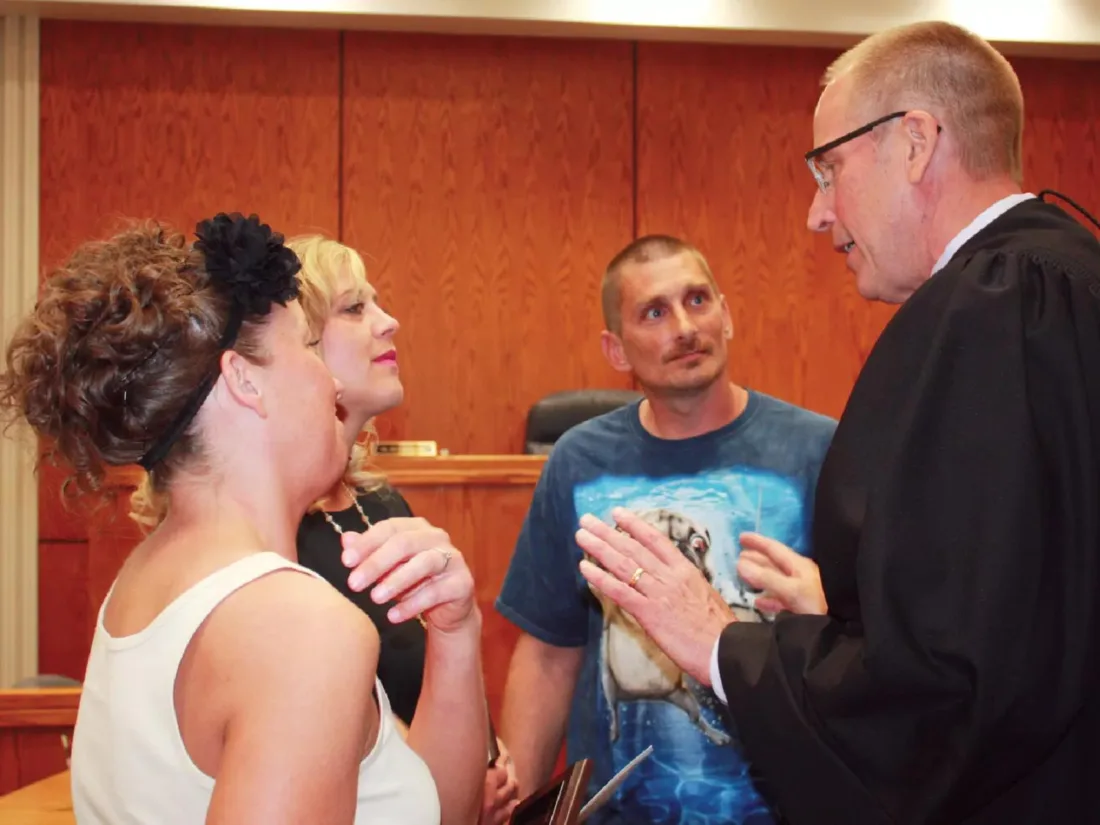
Delta County District Court Judge Steve Parks congratulates the first graduates of the county's drug court following a ceremony in circuit court. Pictured, from left, are April Dubord-Eskofski, Amara Nelson and Joseph Shinaver, who successfully completed a four-phase recovery program following strict state rules under court supervision while also undergoing random drug testing for more than 15 months. (Daily Press file photo dated March 30, 2018)
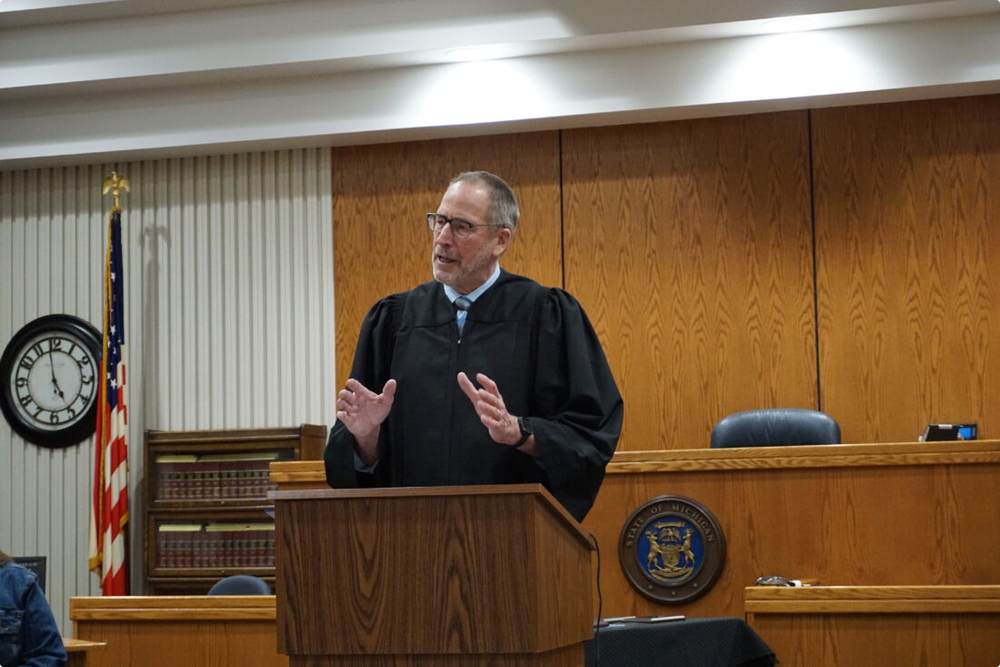
The Delta County Drug/Sobriety Court had a graduation ceremony Nov. 10 in the 47th Circuit Courtroom in Escanaba for two individuals who successfully completed the program. Judge Steve Parks of the 94th District Court, founder of the program, spoke at the ceremony. (Daily Press file photo dated Nov. 18, 2025)
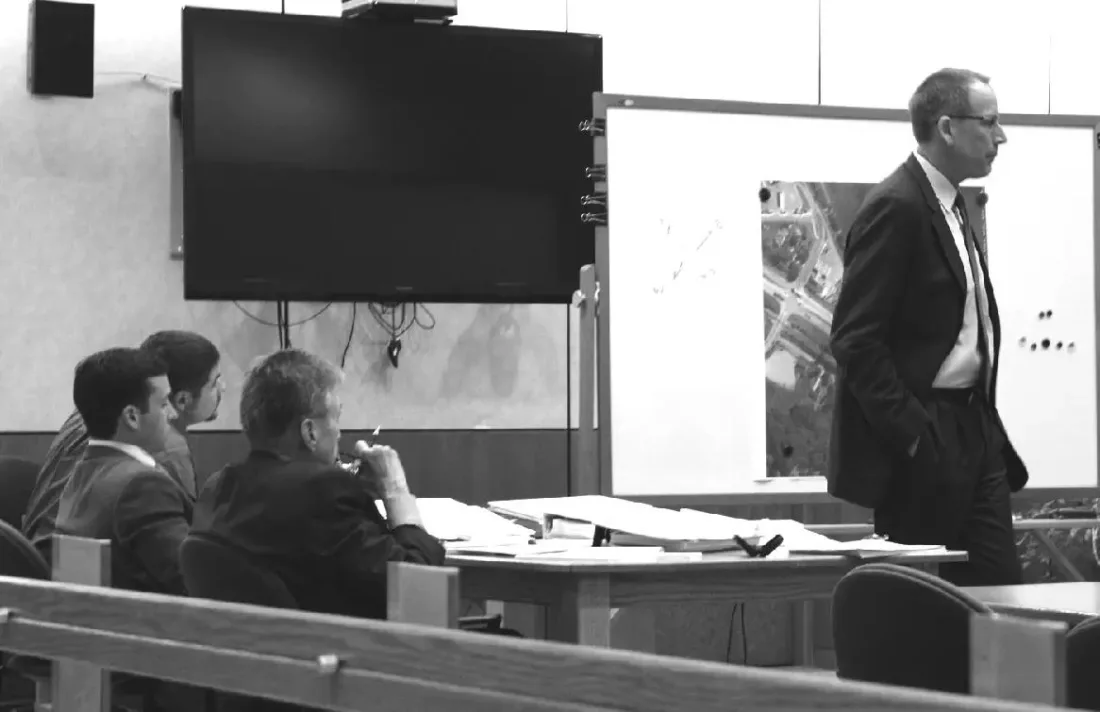
Delta County Prosecutor Steve Parks, right, questions a witness (not pictured) during the trial of Harley Davidson Durocher, in the furthest seat. (Daily Press file photo dated April 22, 2014)
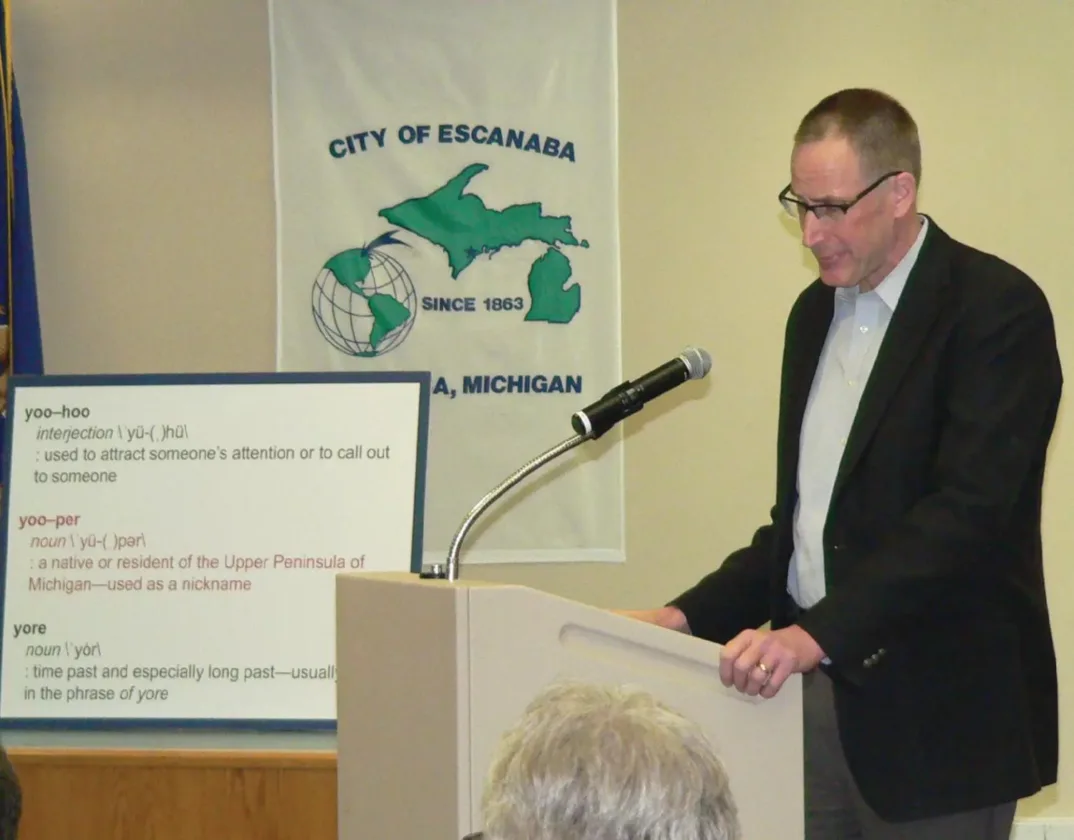
Steve Parks, who sent letters to Merriam Webster advocating for the inclusion of the word "Yooper" in the dictionary for more than 10 years, speaks during a press conference at Escanaba City Hall that announced the inclusion of the word in the latest edition of the Merriam-Webster Dictionary. (Daily Press file photo dated March 25, 2014)
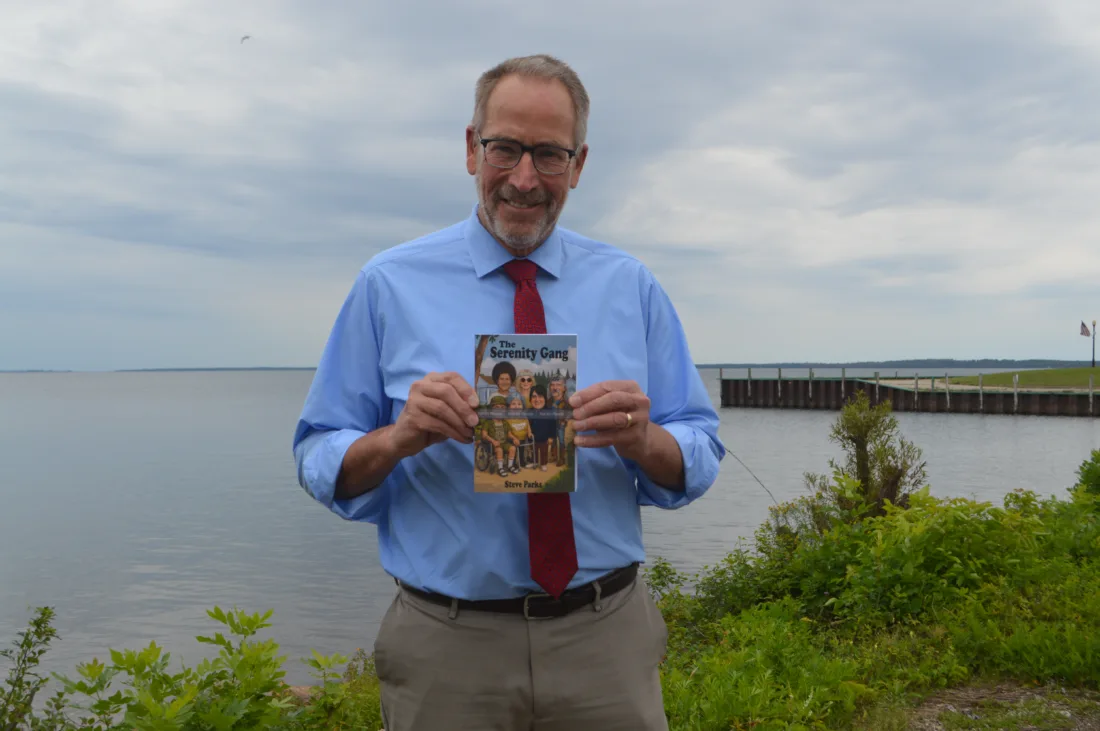
Steve Parks, 94th District Court judge in Delta County, holds his debut novel "The Serenity Gang." (Daily Press file photo dated Sept. 11, 2025)
Delta County District Court Judge Steve Parks listens as Delta County Prosecutor Lauren Wickman rises to present evidence in court during the preliminary examination of Tavaris Jackson. (Daily Press file photo dated Aug. 22, 2023)
Delta County Prosecuting Attorney Steve Parks, who's been on the job six weeks, says he enjoys the challenges and rewards of his new position. As prosecutor, he is the chief law enforcement official in the county. (Daily Press file photo dated Feb. 14, 2005)
Daily Press clipping dated July 26, 2004
Candidates in the non-partisan race for Delta County District Court judge answer questions during a public forum at Escanaba City Hall on Wedensday. From left are John Economopoulos, Steve Parks and Trenton Stupak. (Daily Press file photo dated July 24, 2014)
Daily Press clipping dated Oct. 24, 2014
Parks family photo published during Steve's time running for Delta County 94th District Court judge. From left, Chad, Candice, Steve and Abbie Parks. (Daily Press file photo dated Aug. 2, 2014)
Delta County Circuit Court Judge Stephen Davis, middle, swears in Steve Parks, at right, as the county's new district court judge during an oath of office ceremony at the Delta County Courthouse. Parks' wife, Candice, is also pictured. (Daily Press file photo dated Dec. 31, 2014)
Delta County District Court Judge Steve Parks congratulates the first graduates of the county's drug court following a ceremony in circuit court. Pictured, from left, are April Dubord-Eskofski, Amara Nelson and Joseph Shinaver, who successfully completed a four-phase recovery program following strict state rules under court supervision while also undergoing random drug testing for more than 15 months. (Daily Press file photo dated March 30, 2018)
The Delta County Drug/Sobriety Court had a graduation ceremony Nov. 10 in the 47th Circuit Courtroom in Escanaba for two individuals who successfully completed the program. Judge Steve Parks of the 94th District Court, founder of the program, spoke at the ceremony. (Daily Press file photo dated Nov. 18, 2025)
Delta County Prosecutor Steve Parks, right, questions a witness (not pictured) during the trial of Harley Davidson Durocher, in the furthest seat. (Daily Press file photo dated April 22, 2014)
Steve Parks, who sent letters to Merriam Webster advocating for the inclusion of the word "Yooper" in the dictionary for more than 10 years, speaks during a press conference at Escanaba City Hall that announced the inclusion of the word in the latest edition of the Merriam-Webster Dictionary. (Daily Press file photo dated March 25, 2014)
Steve Parks, 94th District Court judge in Delta County, holds his debut novel "The Serenity Gang." (Daily Press file photo dated Sept. 11, 2025)
Trending
ESCANABA -- Delta County 94th District Court Judge Steve Parks is preparing to step away from the bench, bringing a 40-plus-year legal career and 12-year judgeship to close.
Parks, 72, will officially retire Dec. 23, ending a career that has taken him from private practice to the Delta County Prosecutor's Office and, ultimately, presiding over the county's busiest courtroom.
During his time as judge, Parks helped establish Delta County's first and only Drug/Sobriety Court, a program designed to provide structured oversight and services while addressing the underlying causes of behavior among high-risk individuals. Parks considers the program the highlight of his entire career.
Parks' career in public service began long before he took the bench. He graduated from Owosso High School in 1973 and initially pursued a broad liberal arts education.
"Like a lot of high school graduates, I really didn't have a clue what I was going to do. I knew that I was stronger in reading and writing rather than I was in math and science," Parks said. "I started out with sort of liberal arts, political science and history."
Parks graduated from the University of Michigan in 1977. He then began considering law school after an older friend was also contemplating a legal career.
Additionally, Parks was influenced by a highly-respected attorney whom he grew up across from.
"I always admired him, and he was a good role model. I guess those things in combination sort of steered me toward the direction I went," Parks said.
Parks earned his law degree from Thomas M. Cooley Law School in 1982 and took the bar exam that summer. He then became assistant prosecutor in Menominee for several months before being hired as an assistant prosecutor in Hillsdale.
A couple of years later, Parks took the Minnesota bar exam and planned to work in the Duluth area.
"It was about that time I was contacted by what was then Butch, Quinn, Rosemary and Jardis," Parks said. "Mike Quinn was a good friend of the family, and so when they got wind that I was possibly leaving Hillsdale, they reached out and I came up here for an interview."
In January 1985, Parks began working at the firm. He would go on to become an established member for 20 years, practicing in civil litigation and specializing in products liability, automobile negligence and medical malpractice.
"At that time, I really didn’t have any (idea) what was my ultimate career ambition. I was still only a couple years out of law school," Parks recalled. "I jumped into it, and it was a good fit for me."
While Parks worked in private practice, former Delta County 47th Circuit Court Judge Stephen Davis would occasionally ask Parks to serve as counsel for a defendant when other attorneys had a conflict, knowing Parks had prior trial experience.
"The firm encouraged this. If the judge reaches out to you and needs you to do a favor and represent someone, it was kind of expected that you would just do that," Parks said. "Not so much anymore, because they have different ways of doing things."
Parks met his future wife, Candice, just a couple of years after joining the firm. The pair married in 1990 -- the same year Parks became a partner at the firm. The couple would later share a daughter, Abbie, and a son, Chad.
During his time in private practice, Parks was often on the road taking depositions in Atlanta, New York, Las Vegas and Duluth alongside three other attorneys at the firm -- Bob Rosemary, Alan Bush and Paul Strong.
After 20 years at the firm, however, Parks said significant changes in the law prompted the next change in his career.
"The laws had changed significantly to the detriment of that kind of work, so there were laws limited product liability actions, medical malpractice actions, ‘no fault’ came into play," Parks said. "I began to see the handwriting on the wall that what I was doing was starting to dry up."
Notably, Parks said a major demand within the firm was domestic work, such as family law and divorce, which he was not interested in doing.
"That coincided with the prosecutor position here opening up," Parks added. "With the support of the firm, I left on really good terms and decided to run for prosecutor."
Parks described campaigning for Delta County prosecutor as stressful and rigorous work, though he had a strong support team helping with signage and mailings.
"Some of the staff at the firm were really, really helpful, and so I was able to do that -- be running and still working -- and everybody was really supportive that way. So, I’m really indebted to that, because a lot of employers wouldn’t put up with that," Parks said. "I feel a lot of gratitude toward the people who pulled the lever and put me here, but I also feel a lot of gratitude to both my staff from the prosecutor’s office and here."
Delta County voters ultimately elected Parks as prosecutor over two opponents. He served in that position for nearly 10 years, beginning in 2005.
As Delta County prosecutor, Parks helped establish the Coalition Against Prescription Drug Abuse.
"At that time, there was a really, really serious problem with prescription drug abuse right on down into the high school," Parks said. "There were many accounts of students who might have a knee problem giving their Vicodin to somebody else, and we recognized it. Law enforcement recognized it. The medical community recognized it… we reached out to the medical community and started this group with the idea that we were going to educate and try to raise awareness about this problem."
The group also created a popular poster and video contest to raise awareness about the issue. Students who created the winning videos or drawings received prizes and were honored on stage.
After several years, the campaign phased out. Parks and others then created Families Against Narcotics, now called Face Addiction Now, or FAN. Parks has served as president on the organization’s board for a number of years.
Recalling his time as prosecutor, Parks said he prosecuted three cases in Delta County involving methamphetamine possession — a sharp contrast to the number of those cases passing through Delta County's District Court today.
"They called them meth labs, but what it was was some guy with a Gatorade bottle who went to the store and got the stuff he needed to make the meth. I had three of those, and that was toward the end of my time as prosecutor," Parks said. "Now, it's not unusual that you might have three to five meth cases a week."
His role as prosecutor also brought new challenges.
In private practice, Parks represented one person or company at a time. As prosecutor, he represented an entire community with a number of constituents.
"That can be a challenge, because you can’t please everyone all the time," Parks said about working as prosecutor. "Sometimes you have to make decisions that either law enforcement will disagree with or the public will disagree with, and that can be very stressful. I did not realize how much stress I was under until I wasn’t under it anymore."
The position required countless late nights and long hours, though Parks said that was not the primary reason why he chose to leave the prosecutor's office and run for District Court judge.
"I think really the reason why I left is that I just thought I was ready for a change a little bit, and this position opened up. I thought that maybe that would be a nice way to learn new stuff, a new challenge -- a nice way to end my career (as prosecutor)," Parks added.
Parks campaigned for the 94th District Court judgeship in 2014, running against John Economopoulos, who is now Delta County's 47th Circuit Court judge; and Trenton Stupak, who is currently running for 94th District Court judge 12 years after his first campaign.
Parks and Economopoulos advanced to the general election, with Parks winning by a few hundred votes. Two years later, Economopoulos became 47th Circuit Court judge.
"It's been a really good arrangement. I actually think it's better. I just think the stars were aligned -- that this was a better fit for me," Parks said. "I think in the big scheme of things, the county and the people of the county benefited from the way things all played out. He’s a better person for that job than me. I don’t mean that in any disparaging way. I just think I’m better here, and I think he’s better there."
Parks credited his family's support as essential to his campaign for judge.
"My wife was very supportive about the decision, and that was huge, because when you’re in your campaign, you’re in it together -- there’s just no way around it. You cannot have a spouse that says, 'Go do it, but I’m doing my own thing.’ It doesn’t work that way. A commitment from me is a commitment from her on this, and so she was very, very supportive of it," Parks said.
According to Parks, his wife's involvement in his campaign was particularly important because she grew up in the area and has a large family.
It did not take long for Parks' family to notice that becoming a judge had changed the way he carried the pressures of his job.
"After I got the job 12 years ago, after the first six months, my family --particularly my kids -- commented that they didn’t think I was as edgy and I wasn’t so stressed as much, which was surprising, because I really would have expected in some ways this job would be more stressful," Parks added. "It certainly has its moments, but not to the degree that the (prosecutor) job had."
One of the most memorable parts of Parks' campaign for judge was his advocacy for Delta County's first and only Drug/Sobriety Court.
At the time, Parks said, every Michigan county other than Delta and Menominee counties had specialty courts. He wanted to change that.
"Judge Davis was the one who broached the subject with me a long time ago,” Parks recalled. “He was on the bench, and he goes, 'What do you think about that?' And I got thinking about it, and I began to think that it’s right, because I would see people as the prosecutor, and I’d give them a break, and then three months later they’re back, and I was taking that personally. It’s just like, really? I gave you a break, and here you are. I didn’t fully understand addiction then, but I knew that the time in jail wasn’t working."
During his campaign, Parks said many community members and officials were not particularly supportive of launching a Drug/Sobriety Court in Delta County.
"What I really had to try to make people understand is that this wasn’t some feel-good thing -- a way to avoid a jail sentence," Parks noted. "As much as I tried, a lot of law enforcement felt really unsupportive of the idea, because they didn’t understand it."
Over time, perceptions of the specialty court would change as the community observed its proven results.
"What’s really gratifying to me to go forward ahead is when we started it, there was certainly skepticism, for sure," Parks said. "People were not familiar with the concept. I definitely sense, over the years that have passed, that a lot of people have been persuaded and realized how beneficial it is. I was really happy that both candidates are committed to keeping it going."
Parks said launching the Drug/Sobriety Court is the highlight of anything he has ever done.
"When it gets right down to it, if you can save one life, right, that’s a pretty big thing. I would venture to say that if you interviewed a number of the graduates who are now long out of their recovery and doing well, they would tell you that that either saved their life or saved them a prison sentence," Parks said.
As Parks reflects on his time on the bench, he hopes most people feel they were treated fairly and with dignity, no matter what brought them before him.
When it comes to how he will be remembered by professionals in the legal profession, Parks said he hopes those who have practiced before him would say he had a "very slow-burning fuse," was patient and treated everybody with respect.
"I certainly have appeared in courts with other judges, and they warn you when you go to a baby judge school about what they call 'black robe syndrome,'" Parks added. "You do wield a lot of responsibility and power, and sometimes power creeps into people’s heads, whether it be a judge or a county commissioner or a prosecutor."
Others in Parks’ field of work have recommended that judges surround themselves with people who will be honest and tell them if they are heading in a negative direction.
“I’ve never felt (black robe syndrome) at all. I mean, it’s an important job, and I take pride in my job, but it’s not my identity," Parks said. "Like everything else, you can only try your best and try to be prepared and realize that everybody that comes before me, it might be the worst day of their life… it stinks when you feel like you're being judged as a person, so I try not to come off that way."
Parks delivered his investiture speech when he became a judge more than a decade ago. As he prepares to leave the bench, he said the words still ring true.
"I said the court’s not mine. I’m just a temporary occupant, and the actual court is all the people that make it work," Parks said. "I’m just the figurehead, and all that’s so true. Whether it’s the success of the drug court or just the court operations, it would not be honest for me to sort of claim all that, because a lot of people in supporting roles make things go the way they do."
While Parks is best known for his lengthy legal career, another accomplishment has followed him far beyond the courtroom: helping get the term "Yooper" added to the Merriam-Webster dictionary.
While he was prosecutor, Parks began writing letters to a Merriam-Webster analyst under the pen name "Clayton Park," repeatedly asking the analyst to recognize "Yooper" in the dictionary.
After 12 years of letters, Parks eventually received a call from an analyst in Boston informing him that “Yooper” would be added to the dictionary.
“When it was known that it got much bigger than expected, I panicked because I thought that the analyst that I had been writing to at the time was going to be really mad at me,” Parks said. “Thankfully — I’ll never forget — I told her who I was, and she didn’t react for what seemed like two minutes but was really just like three seconds. And she started laughing.”
The addition of “Yooper” to Merriam-Webster drew attention well beyond the Upper Peninsula. Parks was interviewed by several major news organizations, including CBS News, The Detroit News, New York Daily News and the New York Post, among others.
Parks also found time to write a novel during his judgeship. He had been working on “The Serenity Gang” since 2019, and the book was finally published last fall.
The title earned the 2025 North American Book Award Gold Medal in Humor, and Parks has since held book signings and discussions at various locations throughout the state.
Looking toward to retirement, Parks is entering unfamiliar - but exciting - territory.
“Only in the last six months has it really occurred to me that this is really a big -- this retirement -- is tantamount to big life events, like high school graduation, getting married, having kids. It’s a very big, page-turning life event," Parks said.
With his first book now published, Parks is working on the final touches of his second book, which is expected to be available by December.
Now, another chapter in Parks' life is about to begin.
"I feel a little bit of apprehension about that and excitement -- it’s the unknown."
——
Sophie Vogelmann can be reached at 906-786-2021, ext. 148, or svogelmann@dailypress.net.