
Judge upholds property sale to developers
Escanaba admits to violating FOIA
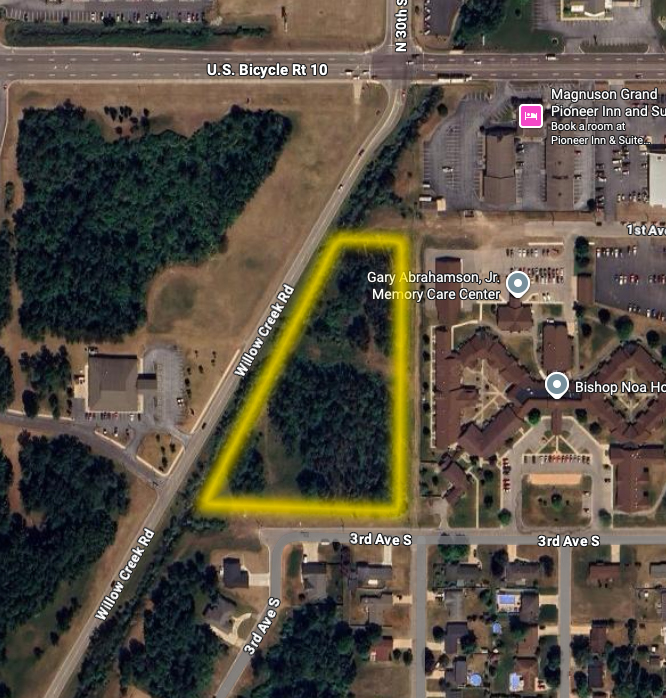
The 5.17-acre parcel near Willow Creek Road and Third Avenue South (Courtesy photo)

Several attorneys attended a hearing in the Delta County 47th Circuit Court on Friday, Aug. 28 for litigation between the Bishop Noa Home for Senior Citizens versus the City of Escanaba and Old State Development LLC. (Sophie Vogelmann | Daily Press)
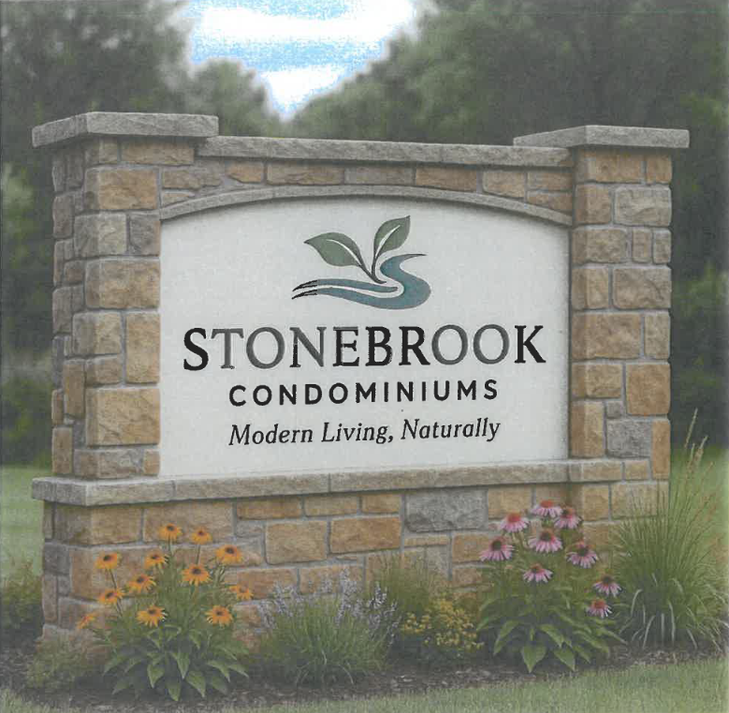
Rendering of Stonebrook Condominiums by Old State Development LLC (Courtesy rendering)
The 5.17-acre parcel near Willow Creek Road and Third Avenue South (Courtesy photo)
Several attorneys attended a hearing in the Delta County 47th Circuit Court on Friday, Aug. 28 for litigation between the Bishop Noa Home for Senior Citizens versus the City of Escanaba and Old State Development LLC. (Sophie Vogelmann | Daily Press)
Rendering of Stonebrook Condominiums by Old State Development LLC (Courtesy rendering)
Trending
ESCANABA -- The future of a parcel in Escanaba recently came before the Delta County 47th Circuit Court, where the Bishop Noa Home for Senior Citizens challenged the City of Escanaba's sale of the property to Old State Development. The nursing home argued the city was prohibited from selling the land without voter approval and that several actions surrounding the sale were unlawful.
Several attorneys appeared before 47th Circuit Court Judge John Economopoulos on Friday, Aug. 28, to address motions for summary dispositions from both the plaintiff and defendant.
Attorney Adrianne Wolf, member of McDonald & Wolf, PLLC in Marquette, represented the plaintiff, Bishop Noa. Attorney Matthew Cross, partner at Cummings, McClorey, Davis & Acho, P.L.C. in Petoskey, represented the defendant, the City of Escanaba, and Attorney Michael Dorocak, of Couzens, Lansky, P.C. in Farmington, represented the other defendant in this case, Old State Development LLC.
The dispute centers on a 5.17-acre parcel located at 3000 Third Ave. S. -- hereby referred to as "the property" -- that is part of 40 acres the Michigan Department of Natural Resources (DNR) conveyed to the city in 1972 for $1. The deed reportedly requires the property be used for "public purposes" and allows the city to sell the property when they no longer need it.
The Escanaba City Council accepted Old State Development's $75,000 bid for the property last fall, where the company plans to develop 25 condominiums.
Bishop Noa, which is located directly next to the property at issue, argues that various resolutions and recommendations made since 1972 designate the property as a park, and that language continues to restrict the property's use while also protecting it under a section of the city charter that requires approval from 60% of voters before a park can be sold.
The city disputes both arguments, maintaining the deed contains no reverter clause and therefore does not restrict the city's ability to sell the property. It also argues the property was never formally designated as a park or used as a park and that the city council was well within its authority to remove its 1977 designation for future recreational use.
The case also involves the property's rezoning and a Freedom of Information Act (FOIA) dispute.
The property's history dates to 1972, when the DNR sold the land at issue to the City of Escanaba. While the deed specifically cited the property must to be used for "public purposes," it also allowed the city to sell the property when it was no longer needed.
In May 1974, the city's recreation board "recommended that the particular site requested would be suitable for a park area," after which the city's planning commission recommended that the Escanaba City Council accept their recommendation to allow the property to be used for "park purposes."
By July 1974, the city council sent the matter back to the planning commission for consideration of placing it directly on the city's master plan as a dedicated park area.
In March 1977, the planning commission reviewed the property matter again. The commission reportedly first used the phrase "setting aside this triangular parcel of land for future recreational use," which Wolf argues describes their prior May 1974 request to city council of accepting Willow Creek Park for "park purposes."
In April 1974, the city council considered the renewed recommendation. The minutes from the April meeting reportedly characterize the recommendation as "Establishment of a park north of 3rd Avenue South and west of 30th Street."
Wolf also claimed in her brief to the court the minutes further reflect the history of the issue and cite the fact that, in 1974, the city attorney advised city council if the planning commission's recommendation was accepted, the property could not be sold without a vote of the people.
The attorney's advise, Wolf says, was based on a part of Section 7 of the city's charter, which states, "The city shall not sell, exchange, farm out, lease out, or in any way alienate or dispose of property, easements, income or other equipment, privilege or assets belonging to and appertaining to its present system of… its parks, and all contracts, negotiations, grants, leaves or other forms of transfer in violation of this provision shall be void and of no effect…. unless and except the proposition shall first have been submitted according to law to the qualified electors of the city and approved by them by a vote of three-fifths of the electors voting."
City council did not take any action on the issue until 1977, when the planning commission again recommended that council, by resolution, set aside the triangular parcel for future recreational use.
That same year, the city council then designated the parcel "for future recreational use in accordance with the recommendation of the planning commission."
Wolf argues those actions amounted to a park designation and triggered protections in the city charter. She said the later references to "future recreational use" must be read in the context of the earlier resolutions.
The city maintains the property was never actually designated as a park and was never used as one. However, Wolf claims the property had been used by locals for recreation, including walking and snowshoeing.
The property was also included in the city's recreation planning and budget. The city's 2021 Recreation Master Plan identified the property as a "future park" and said it could potentially be developed as a pump track or small park for residents on the west side of the city.
The city began considering developing the property in 2022, when the then-City Manager Patrick Jordan recommended that the property be sold for development.
During a planning commission discussion the following month, then-chair James Hellermann noted the property had previously been listed on the Capital Improvement Plan as a park, according to Wolf's court filings.
The issue resurfaced in 2025. On July 2, Jim Baxter, a member of Old State Development LLC, expressed interest in purchasing the property in an email to then-City Manager James McNeil.
The city subsequently commissioned a survey of the property. On Aug. 6, McNeil asked the city attorney to draft a purchase agreement for the property with Old State Development, and a draft was sent to the developer five days later.
"It is only after this purchase agreement had been negotiated between the city manager and Old State that the idea of selling the property was even brought to the city council," Wolf said.
Wolf told the court that on Aug. 15, McNeil provided the negotiated purchase agreement to the city council and then presented the idea of selling the land to Old State Development Aug. 21, reportedly omitting what Wolf considered to be the property’s designation as a park.
Eight days later, the city attorney issued an opinion stating the property was not a park because no deed or plat identified it as one and the property had never been used as a park.
In September, the city council rescinded its 1977 resolution designating the property for future recreational use.
The council then issued a request for proposals for the property. Bishop Noa's attorneys reportedly warned the city that a sale would require voter approval under the charter. The city responded that the property had never been used as a park and that the council was free to remove its designation.
The city council ultimately approved Old State Development's proposal and directed city management to prepare a purchase agreement on Oct. 2. On Oct. 16, the council approved the purchase agreement for the sale of the property.
According to Wolf, the purchase agreement called for a 12-month due diligence period, though the property was sold to Old State on Nov. 21 -- the same day the city was notified of Bishop Noa's complaint.
At last Friday’s hearing, Wolf argued the 1972 deed and resolutions made thereafter referring to the property as a park prevent the city from selling the property for private development.
The city takes a different view.
Cross argued that Michigan Supreme Court decisions in two different case laws establish that language describing the purpose of a conveyance does not restrict future use when a deed contains no reverter clause.
"A statement pertaining to use is really a statement of declaration of the purpose of the conveyance," Cross told the court, arguing that the language does not limit how the property can ultimately be used.
Cross also argued that "public purpose" is broad enough to encompass the city's decision to address housing needs through development of the property.
Wolf countered that the guidance provided in both cited case laws is "simply a method of interpretation and is not a rule, and in fact in this particular case, it's trumped by the actual language of the deed itself."
She also pointed to Section 2 of the Michigan Constitution, which was amended in 2006 to provide that public use does not include the taking of private property or transfer to a private entity for the purpose of economic development or enhancement of tax revenues.
The litigation also challenges the city's rezoning of the property.
On Nov. 6, 2025, the city council held the first reading of an ordinance changing the property's zoning from O-Open Space to C-Multi-Family.
According to Wolf's filings, the first reading was added to the council agenda at the beginning of the meeting at the request of McNeil rather than appearing on the previously published agenda.
The council held a second reading and public hearing before approving the rezoning Dec. 4.
Wolf argues the sale to Old State Development was invalid because the property was sold before the rezoning occurred. She also argues the planning commission and city council failed to properly consider the criteria governing the zoning change.
Additionally, Bishop Noa's counsel challenged the city's handling of a FOIA request.
On Sept. 17, 2025, Bishop Noa's attorneys submitted a FOIA to the city, requesting all documents, inquires and communications concerning the status or sale of 3000 Third Ave. S. from 2017 to the present.
The city granted itself a 10-business day extension to respond and later provided an estimate for the cost of fulfilling the request, requesting a deposit.
Bishop Noa's counsel reportedly sent the deposit and continued pressing for a substantive response.
According to Wolf's filings, the city did not grant the FOIA request until March 4, 2026 -- months after the request was submitted and after the lawsuit had been filed.
The city produced documents the following day, claiming the request was granted in full, but Wolf argued the production was incomplete.
On Aug. 28, Cross conceded the city did violate FOIA and noted they were willing to pay reasonable attorney fees, costs and disbursements related to the FOIA argument.
"The court has not commented on this record that the actions on the part of the city were arbitrary or capricious. They seem to be more negligent," Economopoulos added.
As to Economopoulos' other recent rulings, he denied Bishop Noa's motion for summary disposition on all matters except for two -- the zoning issue brought to the court and the plaintiff’s FOIA claim against the city and Old State Development. He further granted the city and Old State Development's summary disposition except for the zoning issue.
Economopoulos ruled he did not find genuine, material fact on the declaration of the Willow Creek property and therefore stated the court cannot declare it as a park.
The judge further ruled that because the property was not designated in the present system of parks, the sale to Old State Development did not require the issue to be taken to a vote.
However, he granted Wolf's request to rule the rezoning of the property did not comply with the city's zoning ordinance, finding the city’s efforts to comply with the Zoning Enabling Act "substantial, just not perfect."
Economopoulos also found the public purpose language in the original deed can mean anything that aligns with a public use. Economopoulos emphasized that the Escanaba City Council making decisions last fall is not a separate body from the council in 1977.
"That body establishes, on Sept. 4, 2025, what it meant, what it intended and what the designation amounted to," Economopoulos said. "That begs the question, why would it be necessary, or why would they feel that it was necessary, to rescind the resolution and rescind the designation of the property for future recreational use if they were not concerned that it was a park?"
The judge continued, "The answer is explained in the correspondence from council that the city procured on this issue… the city stated explicitly certain things then that it held to be true, and that was that it did not designate the property as a park, that it was not used by the city as a park and that it was designated for this future recreational purpose. That is the city’s own words."
Economopoulos noted that the court can only work with what actually happened and what was exactly said by the city council itself, as the council interprets its own actions that occurred years prior and takes action moving forward.
The court also considered the property's use in terms of the city charter, saying it defines public parks as public property specifically designated and utilized for multi-recreational and leisure purposes.
"In this case, (the property) was designated for future recreational use in the future sense, not the present sense," Economopoulos added. "To Mr. Cross’ point, if people used the property for leisure purposes because it was vacant and it was convenient in its location, and it was something that they had reaped pleasure or happiness or enjoyment from doing, that’s neither here nor there… the city, itself, on Sept. 4 of 2025 says it was not used as a park. That's the city's language, not mine."
It is unknown whether the parties will continue to litigate the case in court or when the next court hearing is scheduled for.
------
Sophie Vogelmann can be reached at 906-786-2021, ext. 148, or svogelmann@dailypress.net.