
Delta County aviation trailblazer’s legacy nationally recognized
First female T-37 instructor pilot in the world honored in Military Women\\\\\\\\\\\\\\\\\\\\\\\\\\\\\\\\\\\\\\\\\\\\\\\\\\\\\\\\\\\\\\\\\\\\\\\\\\\\\\\\\\\\\\\\\\\\\\\\\\\\\\\\\\\\\\\\\\\\\\\\\\\\\\\'s Memorial
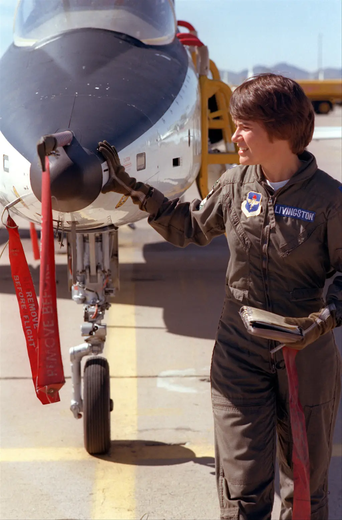
First Lt. Mary Livingston performs a pre-flight check on a T-38 aircraft prior to flying a training mission in 1977. (Photo courtesy of the U.S. National Archives)
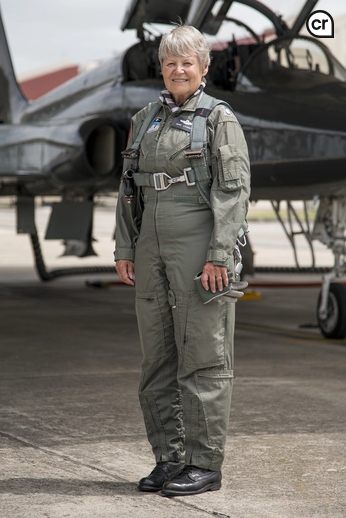
Retired U.S. Air Force Lt. Col. Mary Livingston poses in front of a T-38 Talon from the 435th Flying Training Squadron June 29, 2020, at Joint Base San Antonio-Randolph, Texas. (Photo courtesy of U.S. Air Force by Sean M. Worrell)
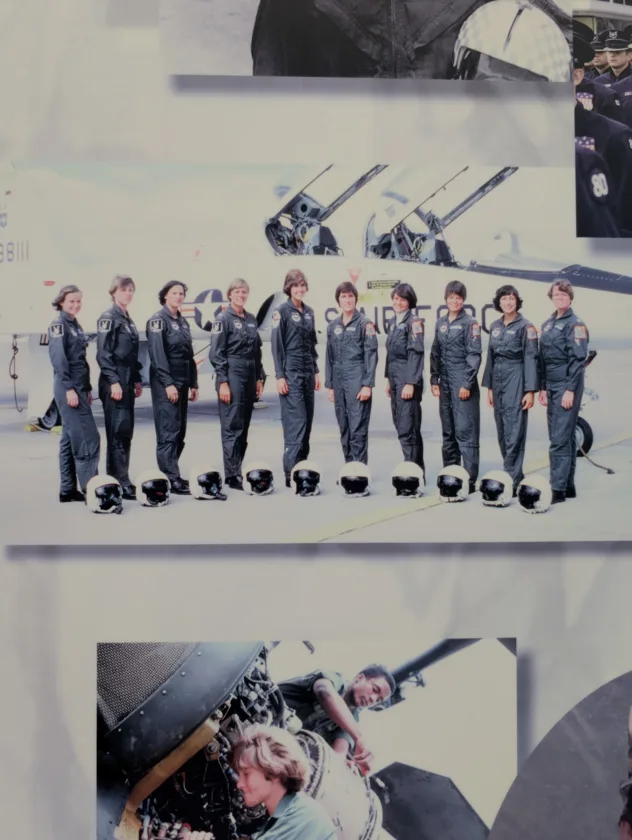
The first 10 female officers to graduate from the U.S. Air Force Undergraduate Pilot Training Program pose for a photo at Williams Air Force Base in 1977. This photo is featured on a wall in the Military Women's Memorial in Arlington, Virginia, as well as the Delta Chamber of Commerce in Escanaba. (Photo courtesy of Ann Jousma Miller)
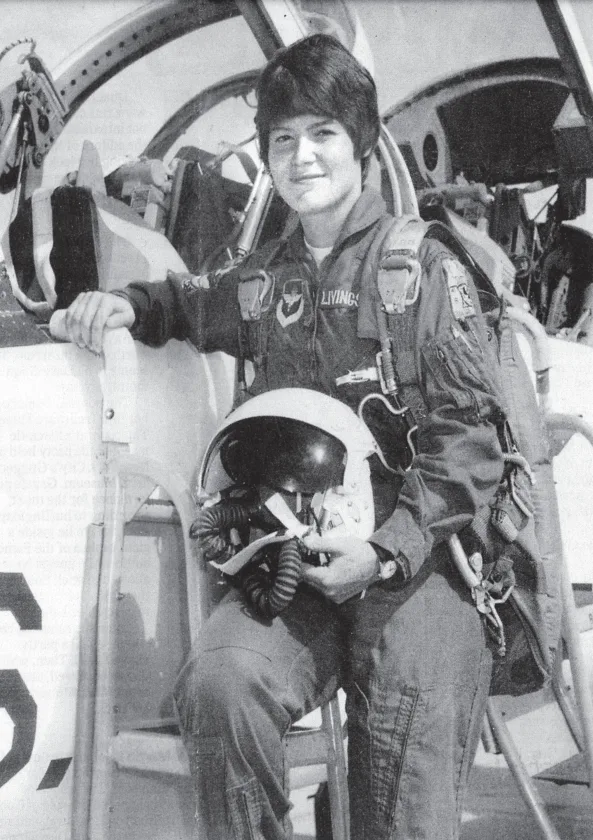
Mary Livingston during pilot training in 1977 (Photo courtesy of the Schoolcraft County Historical Society)
First Lt. Mary Livingston performs a pre-flight check on a T-38 aircraft prior to flying a training mission in 1977. (Photo courtesy of the U.S. National Archives)
Retired U.S. Air Force Lt. Col. Mary Livingston poses in front of a T-38 Talon from the 435th Flying Training Squadron June 29, 2020, at Joint Base San Antonio-Randolph, Texas. (Photo courtesy of U.S. Air Force by Sean M. Worrell)
The first 10 female officers to graduate from the U.S. Air Force Undergraduate Pilot Training Program pose for a photo at Williams Air Force Base in 1977. This photo is featured on a wall in the Military Women's Memorial in Arlington, Virginia, as well as the Delta Chamber of Commerce in Escanaba. (Photo courtesy of Ann Jousma Miller)
Mary Livingston during pilot training in 1977 (Photo courtesy of the Schoolcraft County Historical Society)
Trending
WASHINGTON, D.C. -- Nearly 1,000 miles from Michigan's Upper Peninsula, a local museum curator stumbled upon a piece of Delta County history: a photograph of a local trailblazer displayed at the Military Women's Memorial in Arlington, Virginia.
Ann Jousma Miller, curator of the Upper Peninsula Veteran’s Museum located in the Delta Chamber of Commerce in Escanaba, joined the 29th Upper Peninsula Honor Flight as they journeyed to Washington, D.C. and surrounding areas.
As Miller toured the Military Women's Memorial in Arlington, Virginia, she realized that she had curated many of the same exhibits featured at the museum.
"After curating the Upper Peninsula Military Museum, I found so many of the incidents and tributes that we have placed in the Upper Peninsula Military Museum here at the Women’s Memorial, and the Hello Girls, the WASPs, the Women Air Service Pilots and the trailblazers, of course, of 1977 from the U.S. Air Force," Miller said.
Both the Military Women's Memorial and the Delta Chamber of Commerce honor Lt. Col. Mary Livingston, of Indiana, who was one of the first 10 women in the country to graduate from undergraduate training in the U.S. Air Force. Livingston also became the first female T-37 instructor pilot in the world.
Miller said she was shocked to have found Livingston's photo all the way in Virginia.
"I’m so honored to have Lt. Col. Mary Livingston as part of our exhibit," Miller said.
Livingston, 74, said she was not aware of her photo being on display in the Military Women's Memorial but is "not surprised that it is." She worked with Miller in the past to provide material for the museum in the Delta Chamber of Commerce.
While Livingston was born in Indiana, she spent most of her childhood in Garden Township before moving back to Indiana to attend school.
"I spent probably about a half of the year up in Michigan, so I've always considered that my home," Livingston said.
Livingston first learned to fly at around 16 or 17 years of age with Vern Bernard, the longtime manager of the Schoolcraft County Airport.
"What a wonderful introduction to flying and having such a good instructor at the very beginning of my flying career," Livingston said.
Livingston's father also flew airplanes, and one of her brothers was in the U.S. Air Force. Livingston recalled a time when her family traveled to Illinois to visit her brother where he was stationed.
"He took my dad and I to a hangar because he worked on airplanes, and he had us climb up on a ladder and go into the aircraft. Man, I fell in love, absolutely fell in love. So, I have to blame one of my older brothers for that."
Livingston said that from that point on, the dream of joining the Air Force stayed in the back of her mind, though she says she wasn't aware of society's expectations for women at the time.
"I was a tomboy, so I never really thought of me not being able to do something so much other than what society expected… I had been just so totally unaware that there were so many restrictions on women."
As Livingston prepared to graduate from high school, she told her high school counselor that she wanted to become an astronomer.
"And the counselor went, 'Oh, you can’t do that. How about teaching? How about being a nurse?' I couldn’t imagine myself being a nurse then or even now… I would say that's when I realized that society had expectations different than what my expectations were."
Livingston then enrolled in an engineering program at Perdue University.
“My senior year, I was a late-night type of person, and that’s when the Air Force would always show its advertisements for the military (on TV)," Livingston said. "They always showed planes flying off into the distance, and I went, "Oh, I’d like to do that." I went to the recruiter and he said, 'Nah, women can’t fly.' And I thought to myself -- being very naive -- well, they will someday."
Livingston was not deterred. Upon graduating from college in 1974, she took the Air Force qualification exams and was accepted into the service as an industrial engineer officer.
Almost two years into her career, the Air Force launched a test program to "determine whether or not women were capable of being pilots in the Air Force," according to Livingston.
“Amazingly enough, I was accepted. I still cannot tell you why I was accepted," Livingston said.
When she was accepted into the program in 1976, Livingston served as a second lieutenant -- the lowest ranking an officer could hold in the Air Force. Livingston then went to Hondo, Texas, to complete the flight screening program along 10 other women.
It was during this training that Livingston discovered how each woman in the program responded to the stress of being highly scrutinized, both in the service and the press.
“There was a big difference between somebody that’s a professional pilot and somebody who’s a recreational pilot," Livingston said. "I can’t say the standards are higher, but the precision of which you fly is different, because you all have to maintain a certain set of standards… Right there, you were able to see how the women reacted to the stress of going through intense training… and also how they reacted to the microscope that we were put under."
Livingston said being under a microscope wasn't as difficult for her as it was for others in her program, as others had been in the Air Force for longer and "had more at stake."
"Maybe the pressures they put on themselves were greater than what I put on myself. It’s hard to tell," Livingston added.
Livingston ultimately bonded with a woman who would become her roommate in the service.
"She and I discovered that we both were there for the same reason, and that was just to fly planes. There really wasn’t any other agenda," said Livingston.
After completing the flight screening program over the course of a few weeks, Livingston qualified to move onto the year-long pilot training at Williams Air Force base in Arizona. She was 23 years old at the time.
Livingston completed training alongside five women -- as the group of 10 was split in two -- and 45 men. She reflected on this chapter in her life, saying, "If we thought we were under a microscope before, we had no clue… It was extraordinarily challenging, and the reason is that you have to maintain and achieve a standard in a very short period of time. It was a very grueling and intensive program."
The women in the training learned a variety of courses, including calculus and chemistry.
“What most people would have a semester to be able to learn, you were given two weeks," Livingston said. "Then at the exam, at the end, you had to achieve almost 100%. Because in flying, mistakes can kill you."
When asked if Livingston experienced discrimination during her training, she said, "You know, generally, for the most part, if you want to look for discrimination, you’ll find it. But that is nothing that I ever really looked for. Did I experience it? Yes. Did I ever let it define me, bother me? No, not really. Because like the 45 men, we were just working hard to get through. That’s where the priority was."
Livingston also described her experience with journalists who were reporting on the historic training program.
"That was very eye-opening, because I discovered then that generally every reporter has an agenda. Some were there to show that women shouldn’t be there, some were there to show that women -- that us 10 women -- were very different," Livingston said.
After she graduated from pilot training, Livingston was sent to San Antonio, Texas, to train to become an instructor. Livingston was then selected to become the first female T-37 instructor pilot in the world and was stationed at Columbus Air Force Base in Columbus, Mississippi.
"(That) was daunting, because now I'm just by myself, and there's all these men who have heard about us but have never met any of us. And boy, did they have opinions," Livingston said. "And again, I won’t dwell on that because most of it was just vastly amusing. It was understandable that people were interested, and it was very understandable that men would be concerned."
While Livingston encountered discrimination, she learned to face these challenges with resilience, confidence and a keen sense of humor.
Livingston went on to serve as an instructor trainer back in San Antonio, Texas, before becoming an economics instructor for the U.S. Air Force Academy.
"I’m thankful, because I qualified to be an instructor, which was really quite an honor, and I discovered that I loved teaching students," Livingston added.
Later on, she served as a detachment commander, section head of a department in a flight screening program at the Air Force Academy and recruiting squadron commander.
Over the course of Livingston's career, she said she requested to be stationed at the now-decommissioned K.I. Sawyer Air Force Base in Marquette, but that never came to fruition. Livingston would eventually retire from the service at 44 years old.
Today, Livingston resides in Indianapolis with her husband of 46 years -- also a retired Air Force serviceman-- and grown daughter. Livingston teaches courses in Bible Study Fellowship, a global interdenominational Christian organization offering structured Bible study programs, and runs a business with her husband.
While Livingston has made historic strides for women and the future of aviation, she remains very humble.
"Every woman has had their own challenges, whether it be in flying, reporting, journalism… there are still some of those expectations of how a woman should behave. We all can support one another with a sense of humor, hopefully."
------
Sophie Vogelmann can be reached at 906-786-2021 or svogelmann@dailypress.net.