
Appellate court denies Escanaba man’s challenge to 2024 convictions
Trending
ESCANABA -- The Michigan Court of Appeals has affirmed a Delta County jury's 2024 decision to convict an Escanaba man.
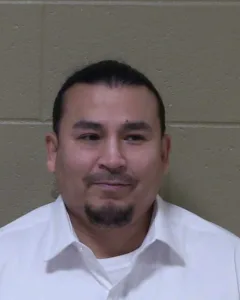
In 2024, Noel Delalus Sagataw, 41, of Escanaba was convicted by a jury in the Delta County 47th Circuit Court of three counts of resisting and obstructing a police office and one count of simple assault.
Sagataw was sentenced to seven months in jail for each assaulting/resisting/obstructing a police officer charge with credit for three days already served, in addition to 93 concurrent days for the assault and battery charge with credit for 7 days already served. He was ordered to pay $884 in fines and fees.
The Hannahville Indian Community chairperson also banished Sagataw from all tribal lands in the Hannahville Indian Community.
According to a Michigan Court of Appeals decision released Friday, Sagataw appealed his convictions, arguing that his trial counsel's assistance was unconstitutionally ineffective because counsel failed to make use of certain evidence in his defense, and counsel did not call additional witnesses at trial.
Sagataw’s conviction stems from an incident on Sept. 30, 2023, when he was working as a bouncer at a bar in Escanaba. That day, a fight broke out inside the bar amongst five or six patrons. Eventually, the fight moved outside.
As it did, the victim of the charged assault, who was a bartender, saw Sagataw "standing there with his left hand in [the] face" of a female coworker of the victim's, "screaming nasty things" at her, according to the appellate court.
"To the victim, it appeared that defendant was about to smack the coworker's face," the appellate court continued. "The victim had learned earlier that day that her coworker was 20 weeks pregnant, which prompted the victim to intervene. The victim put her coworker behind her, and defendant then "got in [the victim's] face" and smacked her across her face."
Sergeant Samuel Carr of the Escanaba Department of Public Safety (EDPS) was dispatched in response to the fight that had broken out inside the bar and reportedly witnessed Sagataw strike the victim.
After he arrived, Carr saw Sagataw -- who was being held back by an unknown individual -- screaming at the victim and ordered them to "knock it off." Sagataw then struck the victim, and Carr told Sagataw he was under arrest and ordered him to place his hands behind his back.
Sagataw, walking backwards from Carr while making direct eye contact, did not comply despite further orders from Carr to stop. Sagataw then turned around and ran down an alley behind the bar.
Carr attempted to run after Sagataw, but another unknown individual grabbed Carr, resulting in the arrest of that other individual.
EDPS Officers Trevor Codere and Aaron Young responded to the scene shortly after Carr arrived. After being informed of the situation, Codere and Young pursued Sagataw, identified themselves as law enforcement and repeatedly ordered Sagataw to stop, but Sagataw did not comply.
Ultimately, the officers were able to detain Sagataw after he ran into a dead end.
As a result, Sagataw was charged with one misdemeanor count of assault for his altercation with the victim and three felony counts of assaulting/resisting/obstructing a police officer. Sagataw's felony charges carried with them a fourth-offense habitual offender enhancement.
Sagataw was also initially charged with a second misdemeanor count of assault, but this charge was later dismissed.
Over the course of the two-day jury trial that followed, the three EDPS officers and the victim testified.
The appellate court reported that through cross-examination of the witnesses, defense counsel elicited testimony regarding the victim's level of intoxication on the evening in question.
The victim testified that she had not consumed alcohol or other illicit substances that evening, but she received a minor-in-possession citation from Carr.
Carr testified that the victim expressly told him that evening that she was drunk and underage. Carr also testified he could not tell if the victim was drunk given that she was "hysterical" when he interviewed her after the altercation with Sagataw.
Sagataw’s sole witness -- EDPS Officer Jordan Ladouce -- testified that he also interacted with the victim after the incident. Ladouce stated that he observed the victim to be intoxicated as he could "smell the odor of intoxication" and "could see it in her eyes," according to the appellate court.
Ladouce further testified her speech was slurred, though neither Carr nor Ladouce administered a breathalyzer test or any sort of field sobriety tests.
After the jury deliberated for roughly an hour, Sagataw was convicted as charged. He subsequently appealed the conviction.
In his appeal, Sagataw first argued his defense counsel was ineffective for failing to make use of certain evidence regarding an "attack and injury" that he claims he suffered on the night of the events at issue in this case.
Sagataw offered two documents in support of his argument. The first is a police report regarding a complaint made by Sagataw on Oct. 4, 2023 -- a few days after the events at issue in this case.
According to the report, Sagataw stated to the reporting officer that -- on the same night of the events at issue -- an unknown individual hit him in the head, knocking him to the ground, and then another individual kicked him in the head.
As a result, Sagataw said he lost consciousness shortly before the events at issue in this case. He further said he did "not remember anything from that point" forward and later "woke up in the rear of a police car."
The police report also indicates that when the reporting officer contacted the individual Sagataw identified as having kicked him in the head, the individual stated he did not know who Sagataw was and denied any assault.
The second document Sagataw offered is an "After Visit Summary" reflecting an Oct. 3, 2023, emergency room visit by Sagataw for a head injury. The document includes a listed diagnosis of "[c]oncussion with loss of consciousness of 30 minutes or less, initial encounter."
According to Sagataw, "[t]he only defense that [he] had in this case" in light of the prosecution's evidence "was that he lacked intent and was not criminally responsible for his actions," and trial counsel was ineffective for not using these two documents regarding his "attack and injury" to mount such a defense -- namely, by "request[ing] a criminal responsibility exam" or a "jury instruction for intent."
The Michigan Court of Appeals affirmed Sagataw's conviction, ruling Sagataw failed to carry the burden of demonstrating his counsel's ineffectiveness at trial, both in providing evidence and proper assistance.
"To start, defendant has provided nothing to support his assertion that the documents discussed above would have provided a colorable basis for requesting a criminal responsibility exam, let alone one that would have inured in favor of any defense on his part," the appellate court said. "In fact, defendant does not even identify what defense he believes such an exam would have supported in this case."
The appellate court further ruled Sagataw’s suggestion that the proffered documents would have been sufficient to warrant a jury instruction regarding intent is equally lacking.
An argument Sagataw makes regarding prejudice was also briefly mentioned by the appellate court, in which they stated Sagataw "has offered nothing more than the conclusory assertion that a jury likely would have acquitted him had it only known of this alleged assault on him and his concussion."
------
Sophie Vogelmann can be reached at 906-786-2021, ext. 148, or svogelmann@dailypress.net.