
Transitional housing shelter question remains
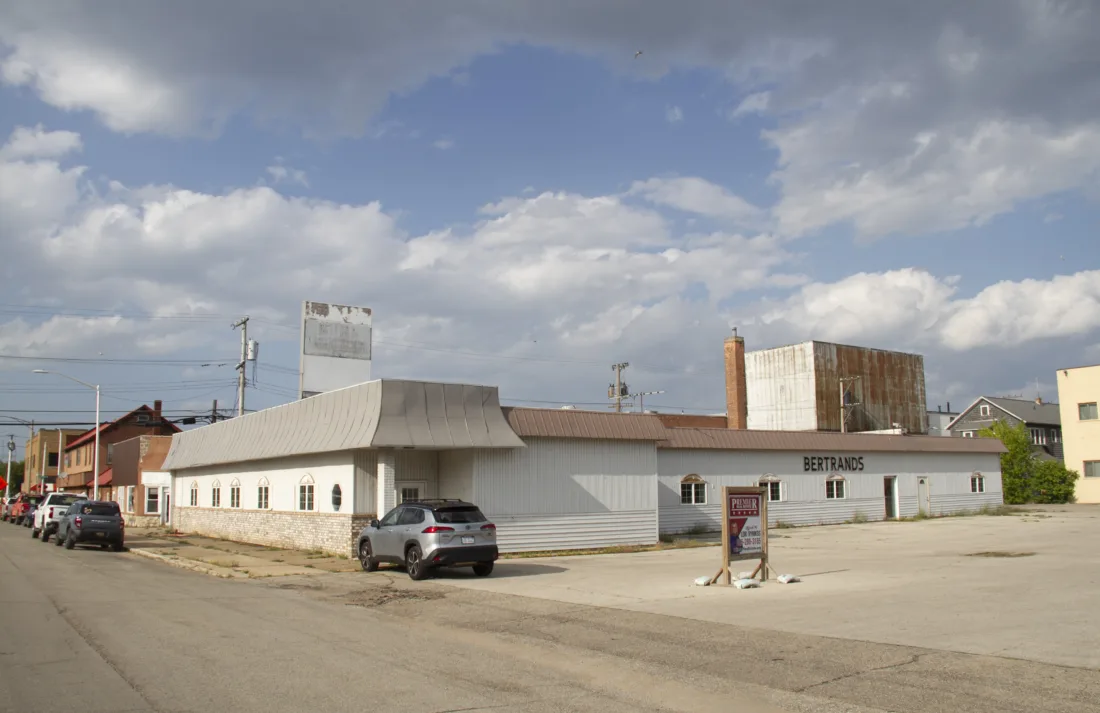
113 S. 10th St. has been for sale for a while. Hope on the Horizon requested permission to open a transitional housing shelter on the premises, but others do not support the rezoning. (R. R. Branstrom | Daily Press)
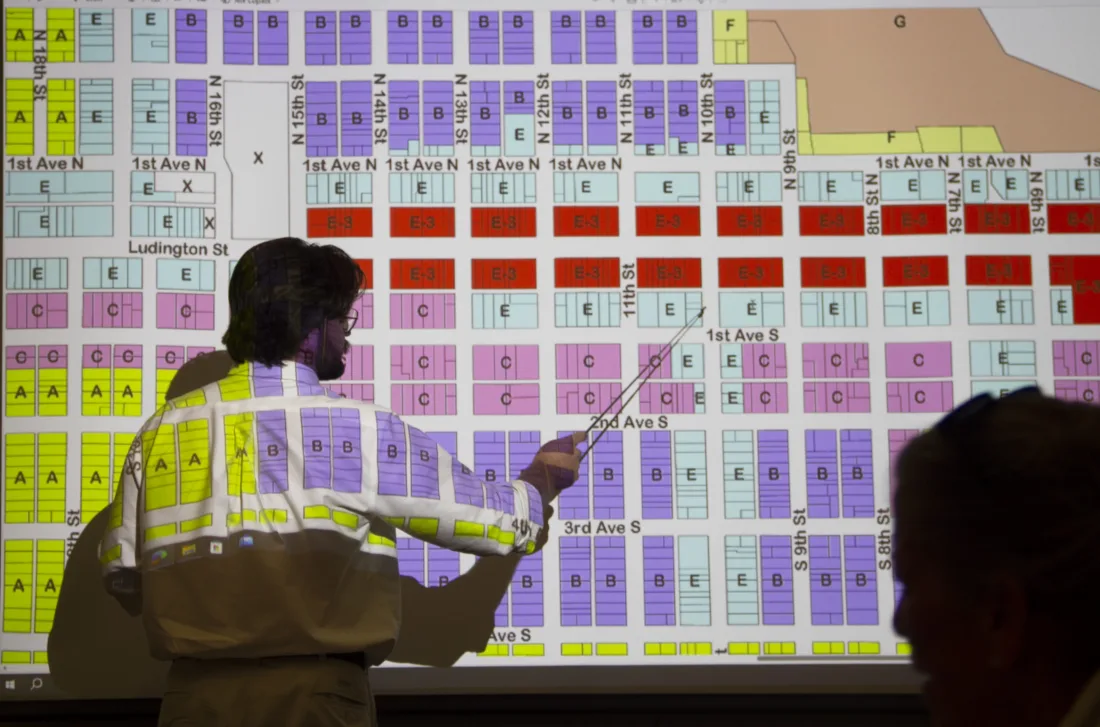
Before a map of the City of Escanaba, Planning and Zoning Administrator Joseph Walker points to a site presently zoned E (commercial) that an applicant requested be rezoned to C (multi-family) in order to serve as a homeless shelter. (R. R. Branstrom | Daily Press)
113 S. 10th St. has been for sale for a while. Hope on the Horizon requested permission to open a transitional housing shelter on the premises, but others do not support the rezoning. (R. R. Branstrom | Daily Press)
Before a map of the City of Escanaba, Planning and Zoning Administrator Joseph Walker points to a site presently zoned E (commercial) that an applicant requested be rezoned to C (multi-family) in order to serve as a homeless shelter. (R. R. Branstrom | Daily Press)
Trending
ESCANABA -- After passionate speeches arguing multiple viewpoints on transitional housing in Escanaba, the city's planning commission last Thursday decided to recommend denial of a request for the former Bertrands building at 113 S. 10th St. to the city council.
The discussion at the regular meeting of the planning commission on Aug. 13 was neither the beginning nor the end of talks about bringing shelter and other aid to people experiencing homelessness in the Escanaba area.
"Hope on the Horizon" -- an organization waiting on paperwork to become a 501(c)(3) nonprofit -- began seeking property about three years ago, applicant Laurie Kaski-Hammar told the planning commission. Hope on the Horizon's goal is to provide to individuals and families in need with services that may gradually increase in time. Specifically, first steps will be to provide clothing, food and resources; beds for overnight stays will be available later. They also intend to open a storefront, such as a coffeeshop, to give residents job experience.
"Transitional housing means a facility which is operated by a government or a nonprofit agency providing interim sleeping and bath accommodations; interim eating and cooking facilities; and professional services to assist individuals or families in locating permanent housing," the City of Escanaba defines the categorization in its zoning ordinance.
The type of facility that Hope on the Horizon aims to operate won't be able to open just anywhere. According to Escanaba Planning and Zoning Administrator Joseph Walker, transitional housing facilities may operate by right (without needing explicit permission) only in zone C, which is for multi-family use.
Hope on the Horizon reportedly has not been able to find a property in zone C that meets their needs. The ideal property would be one story, have ample parking and not be close to residential neighbors, Kaski-Hammar said.
The vacant building at 113 S. 10th St. that still bears signage from two former occupants -- Bertrands and Bittner Engineering -- seemed to check all the boxes that Hope on the Horizon was looking for, with one exception. It's located in zone E, which is designated for commercial use.
Before purchasing the property, Hope on the Horizon met with Walker and then presented to the planning commission last week a request to rezone the property from E to C.
Before the applicant (Hope on the Horizon and head organizer Laurie Kaski-Hammar) even discussed their intention, about a dozen community members -- both residents of Escanaba and elsewhere -- spoke during public comment.
It's uncommon for planning commission meetings to see such a turnout, but over 50 attendees filled the council chambers at Escanaba City Hall that evening.
Many people spoke to state that there was a need of some sort of homeless shelter in the area. Not everyone considered the specific question at hand -- whether the 10th Street site was appropriate -- but several did.
"I think it’s a great location," said Christine DeSalvo. "It’s in close proximity to everything a homeless person would need -- Saint Vincent de Paul, the Social Security Office for help. It’s very open, so we know what’s going on there because it’s on a busier street. ...We used to have the Hope at the Inn that was used temporarily. If it’s ran right and organized with the city, I think it’s great, and it’s long overdue."
Community Action Agency is another organization that assists people experiencing hard times.
"My clients wonder from day to day where they’re going to lay their head at night. The effort that it takes to survive that kind of stress leaves no energy to resolve their issues," said one Community Action worker. "When our brains are in crisis mode, we can’t think critically. ...Community Action Agency receives funding for emergency lodging in hotels, but that funding doesn’t meet the need. We often run out before the fiscal year ends and have to turn people away. Even when funding is available, it’s not long enough to address the need for safe housing while they take on the work of obtaining permanent, stable housing, employment, whatever it is that they need."
But the planning commission's job wasn't to determine whether there was a need or not; their responsibility is to advise City Council on whether a rezoning in this exact location was the right choice.
"The issue at hand is not the compassion. It’s not whether there’s a need. The issue on hand is the zoning," said resident Jill Pascoe. The property in question "is right next to our beautiful downtown district that we’ve been trying to improve and unify over the last so many years, and I don’t think (transitional housing) is good for businesses," Pascoe said, stating that she would be opposed to a rezoning.
"Based on some other projects that have happened in the community recently, the lack of communication and the lack of transparency of these projects might really be the issue at hand -- really knowing what it’s going to entail, what is it going to look like in the future," said Kathleen Ciantar, who has a business nearby. "I would just recommend or encourage you to slow down a little bit, give it some consideration, and maybe get some more information out into the public."
Hope at the Horizon has been in contact with Room at the Inn, a shelter in Marquette, and has also based some of their plans off an operation in Traverse City, Kaski-Hammar shared. Multiple people associated with Room at the Inn came down from Marquette to voice their support of Hope on the Horizon's goals for Escanaba.
"No matter where these homeless people are living in your community, they exist ...whether they’re in this properly-zoned space or not," remarked Leila Heuser, administrative assistant at Room at the Inn. "I think the responsible thing to do would be to open a shelter in this community."
While some supporters suggested that a shelter in the area would reduce the pressure on businesses -- giving people without homes a place to stay instead of hanging out in doorways of local businesses -- others felt that the character of the neighborhood would be harmed if the transitional housing was allowed to come so close to Ludington Street.
"The community desires to see this dated historic downtown area transformed into a revitalized, vibrant mixed-use center by filling voids with shops, restaurants and and enhanced public spaces ... (to) make this central core once again a place where city and regional residents, as well as tourists, are drawn," states the City of Escanaba's master plan about Ludington Street.
The master plan, developed recently based on feedback from residents, acknowledges that there is a need for homeless support but gives no guidance on where it should be located.
Ultimately, the planning commission voted to recommend denying the request to rezone 113 S. 10th Street from E: Commercial to C: Multi-family.
Several factors must be considered before an area is rezoned, and Walker's report stated that although "the conditions of the site, including its long-term vacancy, are a concern... they do not necessarily indicate that the property cannot be utilized under its current zoning designation."
Planning Commission Chair Kasja Nelson said that she'd rather see a variance rather than a complete rezone, while Commissioner Michael Harris asked whether another property -- specifically one on Stephenson Avenue -- might be able to fit the bill for Hope on the Horizon.
The Escanaba City Council will soon hear about the transitional housing question. Though the council does have a meeting tonight, the topic is not on the agenda and will likely appear in September.