
Monarchs gather in Stonington before journey south
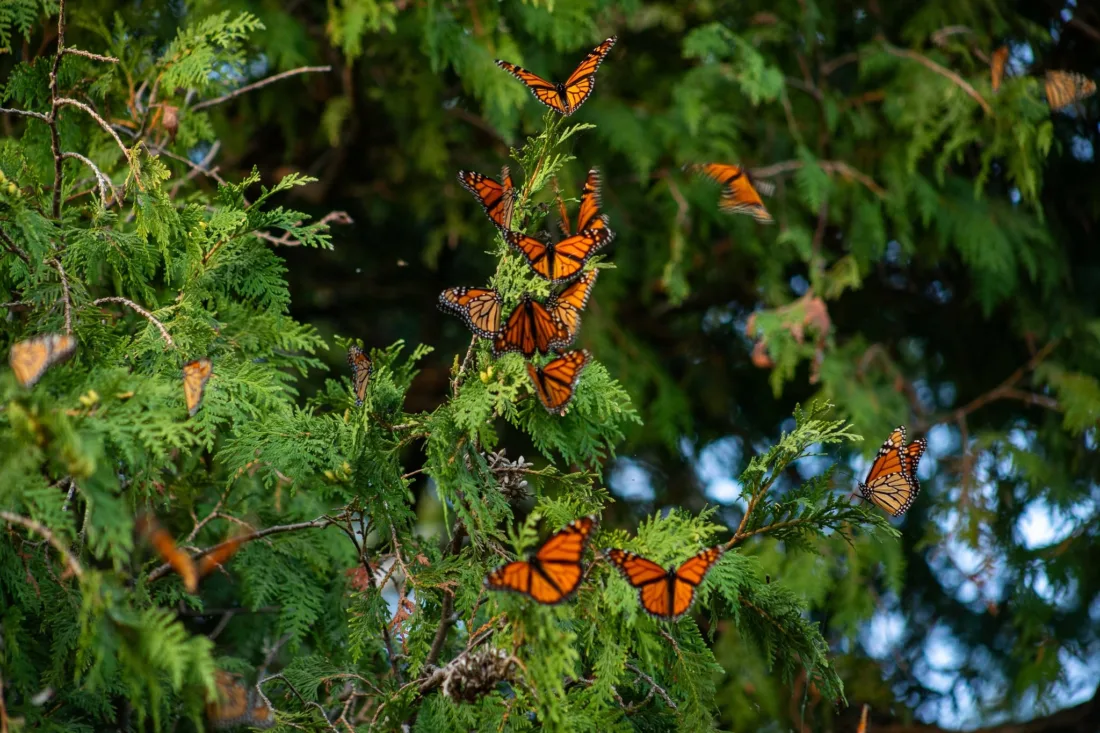
Monarch butterflies roost in the trees along the Stonington Peninsula. (Photo courtesy of Clairmont Photography)
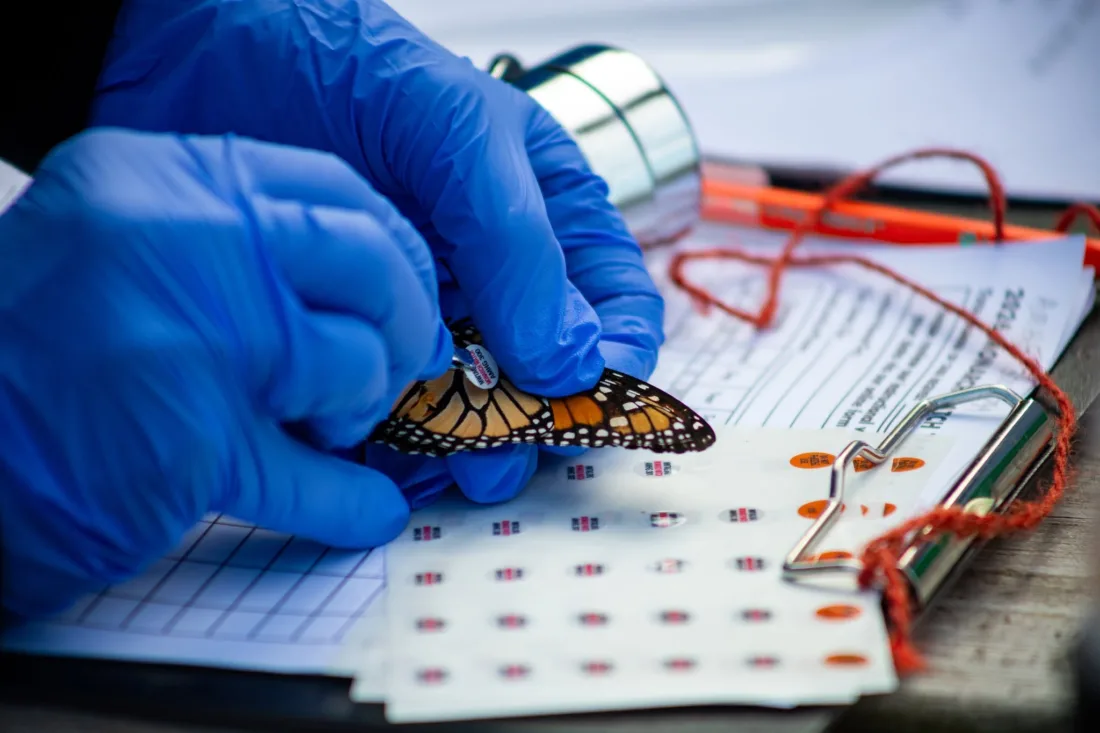
A monarch butterfly gets tagged by a volunteer with The Monarch Project in Stonington. (Photo courtesy of Clairmont Photography)
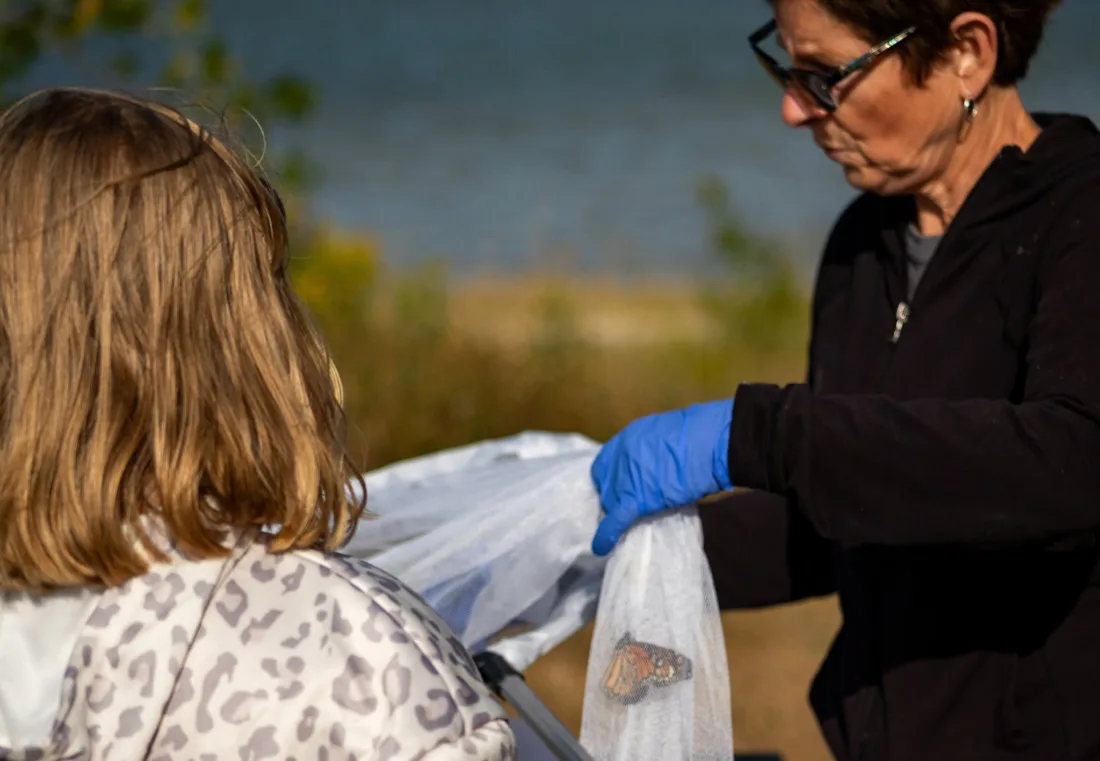
Opal Hoffmann, a Stonington resident and one of the main volunteer coordinators with The Monarch Project, works to retrieve a monarch from a net with the help of a community member. (Photo courtesy of Clairmont Photography)
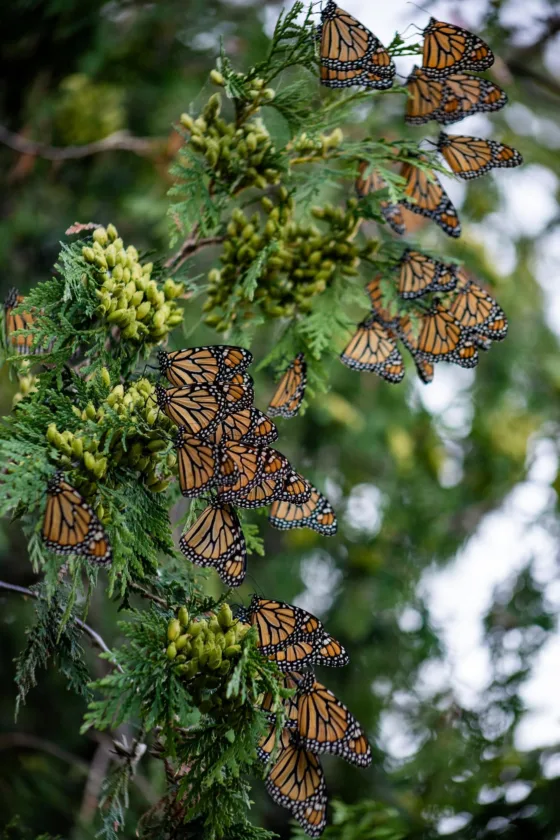
Monarchs can often appear brown rather than their signature bright orange when roosting in trees, as their wings are closed. (Photo courtesy of Clairmont Photography)
Monarch butterflies roost in the trees along the Stonington Peninsula. (Photo courtesy of Clairmont Photography)
A monarch butterfly gets tagged by a volunteer with The Monarch Project in Stonington. (Photo courtesy of Clairmont Photography)
Opal Hoffmann, a Stonington resident and one of the main volunteer coordinators with The Monarch Project, works to retrieve a monarch from a net with the help of a community member. (Photo courtesy of Clairmont Photography)
Monarchs can often appear brown rather than their signature bright orange when roosting in trees, as their wings are closed. (Photo courtesy of Clairmont Photography)
Trending
STONINGTON -- It's that time of year again. Hundreds to thousands of monarch butterflies from the Upper Peninsula and Canada annually migrate to roost in the cedars on the Stonington Peninsula, which serves as a gathering place before they continue their journey south.
From mid-August through the third week of September, the bright orange insects get funneled onto the peninsula by north winds and follow the shoreline south to the point.
Once there, they typically rest in the cedar trees overnight before leaving in the morning or the next couple of days, heading toward the Door County Peninsula in Wisconsin if conditions are favorable.
They then travel southwest until they reach the Sierra Madre Mountain area of Mexico, stopping to rest and feed along the way. The journey takes about one and a half to two months to complete.
The Stonington Peninsula's location marks an important stop along the monarchs' migration route. A local group known as "The Monarch Project" has been recording the annual monarch migration in Stonington every year since 1996.
Opal Hoffmann, a Stonington resident and one of the main volunteer coordinators with The Monarch Project, said the study in Stonington is considered one of the longest monarch studies in the country.
"The reason we're such a good stopover is the way the point is geographically located," Hoffmann said. "We’re on the top of Lake Michigan, and they don't like to cross big bodies of water."
As the monarchs arrive at the peninsula, The Monarch Project waits for what is called a "roost," when the monarchs cluster in the trees on the peninsula for one or two nights.
The butterflies are then closely monitored throughout their time in Stonington, as the group collects information that can help researchers better understand the species and the challenges it faces.
The group counts milkweed, larvae, eggs, potential predators and diseases that may be affecting the population that year and reports that data to the Monarch Larvae Monitoring Project with the University of Minnesota.
During their recording of the fall migration, The Monarch Project works with Monarch Watch through the University of Kansas. This work consists of tagging the butterflies and testing for ophryocystis elektroscirrha (OE), a protozoan parasite most prevalent in the south that infects only monarch, queen and lesser wanderer butterflies.
Many members of the public are getting involved in this year's fall migration, as the public is welcome to help carefully net the monarchs for tagging. The tagging program has aided in researchers’ efforts to learn more about the monarchs' long-distance journey.
"Scientists were able to figure out all their migration routes, how far they travel in a day, and some of the diseases they might carry in the tagging program," Hoffmann said. “Then people all the way down to Mexico, if they see a tagged butterfly, it gets reported to Monarch Watch."
While some have made public comments on the group's Facebook page stating it appears the butterflies are arriving at the point a bit earlier than usual, the monarch's migration pattern is actually running about a week later than last year, according to Hoffmann.
Hoffmann also noted the group is unsure what effects this summer's wildfires in Canada will have on the monarch population.
"Out here in Stonington, we had ash on our cars, so it would be all over the milkweed," Hoffmann said. "We don't know how that's affected them."
The monarchs' journey south is part of a much larger annual life cycle.
The butterflies migrate south because they cannot survive in cold temperatures, their food source diminishes and milkweed dies off or ages. They will begin their journey back north in late February to early March, when they mate, lay eggs and then perish while still in the southern states.
Newly hatched monarchs will continue this cycle, all while heading north, back to their breeding grounds.
These migrating butterflies are called "Super Monarchs," as they live eight to nine months, while non-migrating butterflies only live two to five weeks.
The Super Monarchs that can be found visiting the Stonington Peninsula in late May to early June are generally the third or fourth generation from their relatives in the south.
While the species faces parasites and predators, they also face challenges from human activity.
Migratory monarch butterflies are classified as an endangered species by the International Union for Conservation of Nature due to the use of pesticides, loss of habitat and climate change.
By planting milkweed -- the only plant monarchs lay their eggs on and the only source of food for their offspring -- planting more native plants for their food source and avoiding the use of chemicals and pesticides, the public can support the species.
To get involved in the local migration monitoring on the Stonington Peninsula, follow The Monarch Projects' Facebook page, "Monarch Butterfly Migration on Stonington Peninsula." Hoffmann often posts when the group will be tagging the next morning.
------
Sophie Vogelmann can be reached at 906-786-2021 or svogelmann@dailypress.net.