
Manistique East Breakwater Lighthouse: The harbor’s watchful eye
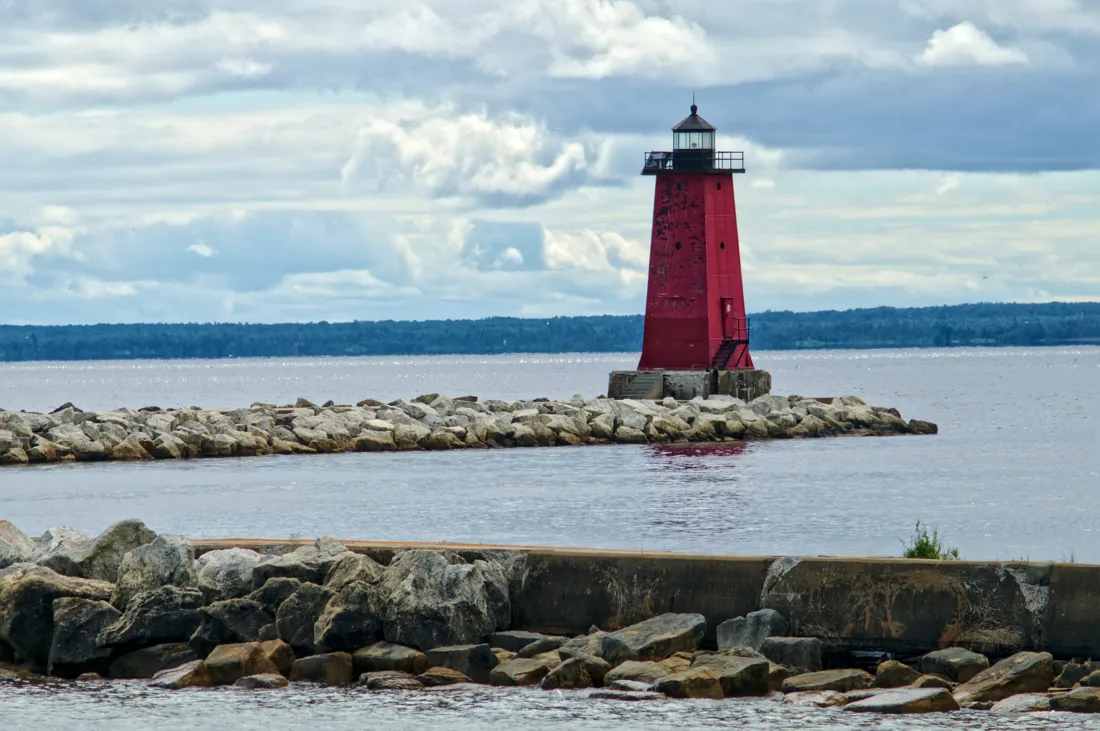
Manistique East Breakwater Lighthouse (“Lighthouse” by Bruce Guenter, CC BY 2.0)
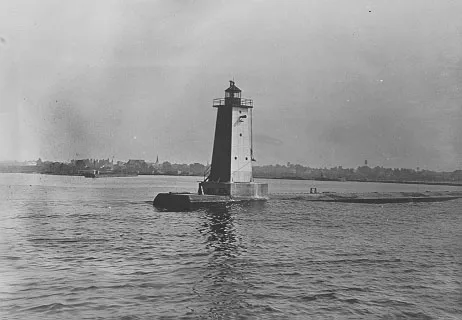
Manistique East Breakwater Lighthouse, harbor of Manistique, Michigan (Photo courtesy of U.S. Coast Guard)
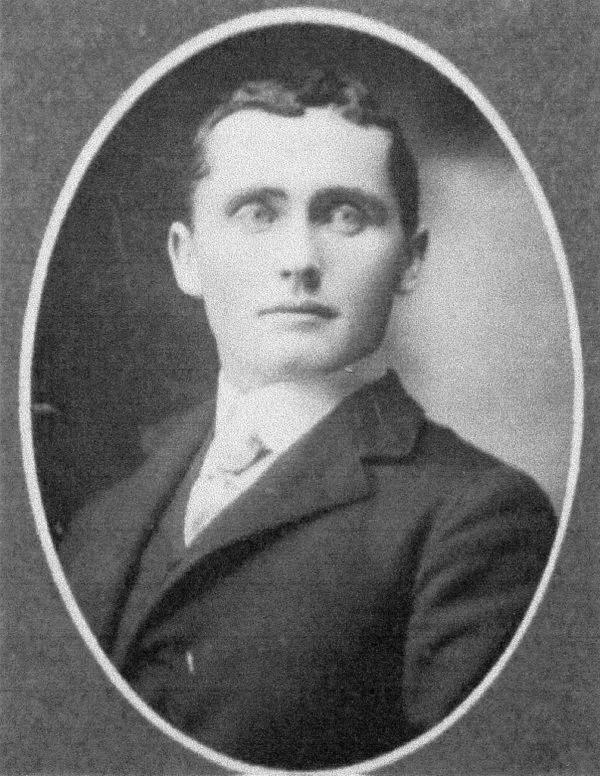
Walter Ottosen, longest serving keeper of the Manistique East Breakwater Lighthouse (Photo courtesy of Carol Dixson via Schoolcraft County Historical Society)
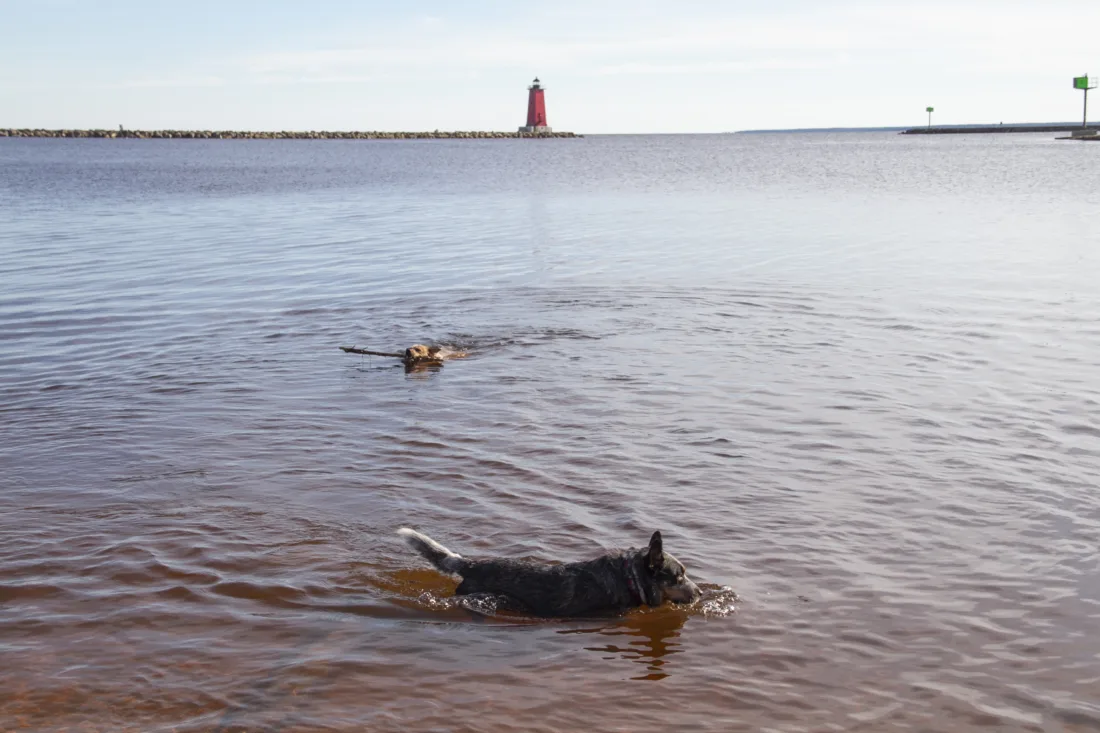
Australian cattle dogs who reside in Escanaba play at a Manistique beach in August 2025 with the iconic lighthouse in the background. (R. R. Branstrom | Daily Press)
Manistique East Breakwater Lighthouse (“Lighthouse” by Bruce Guenter, CC BY 2.0)
Manistique East Breakwater Lighthouse, harbor of Manistique, Michigan (Photo courtesy of U.S. Coast Guard)
Walter Ottosen, longest serving keeper of the Manistique East Breakwater Lighthouse (Photo courtesy of Carol Dixson via Schoolcraft County Historical Society)
Australian cattle dogs who reside in Escanaba play at a Manistique beach in August 2025 with the iconic lighthouse in the background. (R. R. Branstrom | Daily Press)
Trending
Editor’s note: This story on the Manistique East Breakwater Lighthouse is the ninth in a series on the area’s lighthouses and lightships.
MANISTIQUE -- Towering over the city's harbor and donning bright red paint, one of Manistique's most recognizable landmarks holds stories of endurance, restoration and even heartbreak.
The Manistique East Breakwater Lighthouse is located at the mouth of the Manistique River. While it is now privately owned, it remains an active navigation aid to commercial and recreational boaters under U.S. Coast Guard operation.
In the late 19th century, timber crib piers constructed in the 1870s protected Manistique's harbor, providing limited shelter to the traveling mariners.
According to the Manistique Tourism Council, by 1910, local leaders convinced the federal government of the financial importance of the harbor as timber and pig iron shipping increased.
A harbor expert with the U.S. Army Corps of Engineers was then sent to Manistique to create plans for two concrete breakwaters at the mouth of the river, forming a 31-acre enclosed basin.
The contract to construct the breakwaters was awarded to the Greiling Brothers Company, and construction began in 1910.
George Putnam, the newly appointed Commissioner of lighthouses, also recommended the erection of lights on the breakwater. In 1912, the U.S. Lighthouse Service constructed temporary range lights on one of the piers.
Congress approved funding for permanent lights the following year, and by 1914, lights on the west breakwater had been completed.
The east breakwater structure itself was not completed until 1915, when work also began on the east breakwater light and a station keeper’s house at the foot of the breakwater, as detailed by the Manistique Tourism Council.
Construction on the light was completed in August 1916, and the new beacon was lit for the first time on August 17 of that year.
The Manistique East Breakwater Lighthouse, originally painted dark grey or black and constructed with steel, stands 35-feet tall with a black parapet lantern room that housed a Fourth-Order Fresnel lens and a diaphone foghorn.
A black staircase stands at the pier, climbing several feet to a door at the bottom of the tower, though the inside is closed to the public today.
A two-story duplex was built at the end of Range Street as a keepers' residence, 1,200 feet from the inner end of the east breakwater. It reportedly contained space for two keepers' quarters, each consisting of a living room, dining room, kitchen, three bedrooms and bathroom.
The former keepers' home on Range Street is now a private residence.
During its years of manual operation, the lighthouse was maintained by seven keepers in all from the U.S. Lighthouse Service, which was eventually merged into the U.S. Coast Guard.
The death of the light's first keeper, Charles Corlett, in 1920 created the vacancy for a man named Walter Ottosen to transfer to Manistique as head light keeper. Ottosen would go on to become the longest serving keeper at the light, from 1920 to 1941.
Born at Washington Island, Wisconsin, on July 18, 1876, Ottosen was the youngest of three surviving children born to Danish immigrants, according to the Schoolcraft County Historical Society.
With the outbreak of the Spanish American War in April of 1898, Walter enlisted in the 3rd United States Infantry and went into training camp at Fort Snelling, Minnesota, where he met Althea Current, who he would later marry in 1902 and have eight children with.
Ottosen entered the lighthouse service in 1903 at Manitowoc, Wisconsin, before moving to Kenosha as assistant keeper. He then served as an assistant keeper at Rock Island and Menominee and was assigned light keeper at Pilot Island.
According to the Schoolcraft County Historical Society, Althea had been growing increasingly dissatisfied in her marriage, and she left Walter and the children for the first time in 1925. Several more separations followed before the couple divorced in April 1928.
The newly single father reportedly found his second wife, Roseline (Webb) Taylor, through either a newspaper or magazine ad. He then drove to Canada to bring Rose and her daughter, Kathleen, back to Manistique, where the blended family would reside until retirement.
Walter spent a total of 38 years in the lighthouse service -- 21 of those spent at the Manistique East Breakwater Lighthouse -- and he retired in October 1941. He received the efficiency star for excellence in operating the Manistique lighthouse for five consecutive years prior to his retirement.
As Manistique’s importance as a port waned and a massive wave of lighthouse automations ensued, the east breakwater light was eventually automated in 1969, and the original Fourth Order Fresnel lens was replaced with a 12-inch (300 mm) Tidelands Signal acrylic optic, the Manistique Tourism Council reported.
The next major update came in 2000, when the U.S. Army Corps of Engineers replaced the concrete breakwater with rip rap.
Five years later, the lighthouse was listed on the National Register of Historic Places.
In May 2012, the lighthouse was made available under the National Historic Lighthouse Preservation Act of 2000 to eligible federal, state and local agencies, non-profit corporations and various other parties for educational, recreational, cultural or historic preservation purposes.
According to Lighthouse Digest, the City of Manistique could have received the lighthouse for free under the National Historic Lighthouse Preservation Act, but they reportedly declined.
The city also backed out of a previous deal they had made to partner with the Michigan Lighthouse Conservancy for the long-term care of the lighthouse, Lighthouse Digest reported.
On June 10, 2013, the General Services Administration opened an online auction for the lighthouse.
The auction closed just over one month later, with only one bid of $15,000 having been submitted by Bill Collins of Newbury, Ohio. Collins purchased the lighthouse sight-unseen, as he had never been to Manistique.
The Pioneer Tribune reported on Aug. 8, 2013, that Collins had been a fan of lighthouses since childhood, as he grew up alongside Lake Erie. He said he had been pursuing the purchase of a lighthouse for a while prior to the Manistique purchase, scouring the Great Lakes and a few in the Ohio area.
Just a couple of months before Collins purchased the lighthouse in Manistique, he purchased Liston Rear Range Lighthouse in Port Penn, Delaware.
Once the purchase on the Manistique East Breakwater Lighthouse was final, Collins began renovations of the light.
Although the lighthouse was painted red at some point during the 1900s, Collins chose to restore its bright-red color rather than return it to its original dark gray or black. Local contractors were hired to complete the restoration.
Today, the Manistique East Breakwater Lighthouse draws thousands of tourists and locals every year, as it is one of the primary attractions in the area. While visitors cannot go inside, it stands as a bright reminder of Manistique's maritime history.
------
Sophie Vogelmann can be reached at 906-786-2021 or svogelmann@dailypress.net.