
Assessments made following Fuller tornado
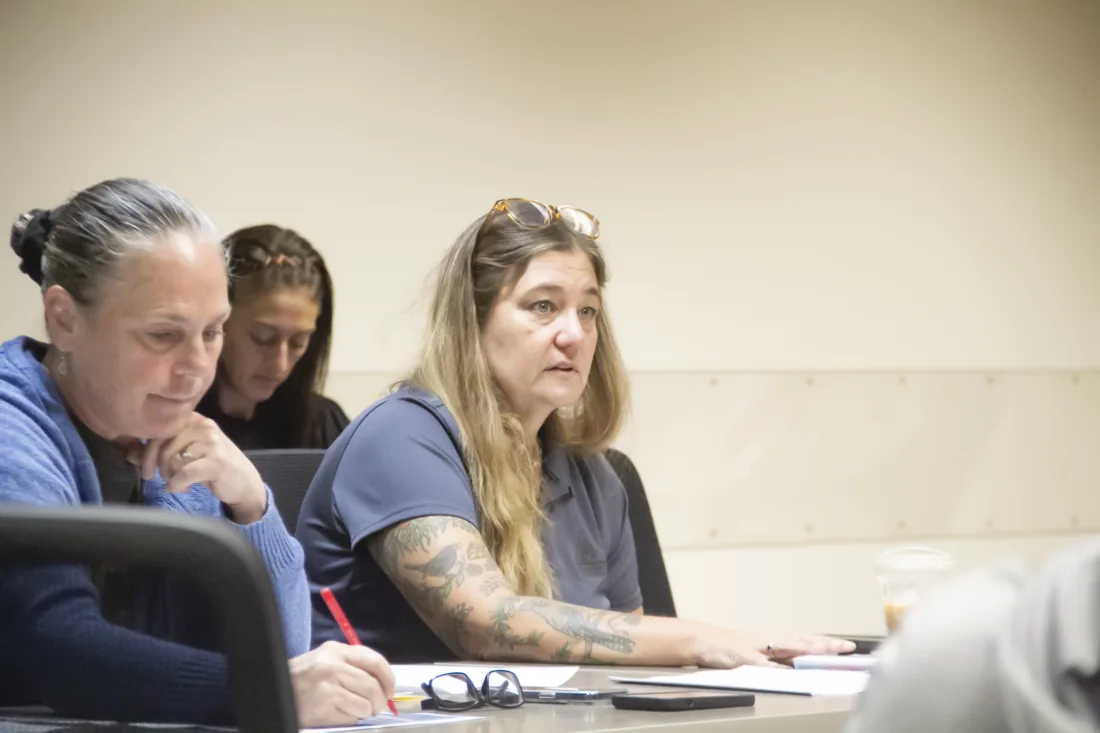
Delta County Parks Manager Heather LeDuc reports on the aftermath of a July tornado. (R. R. Branstrom | Daily Press)
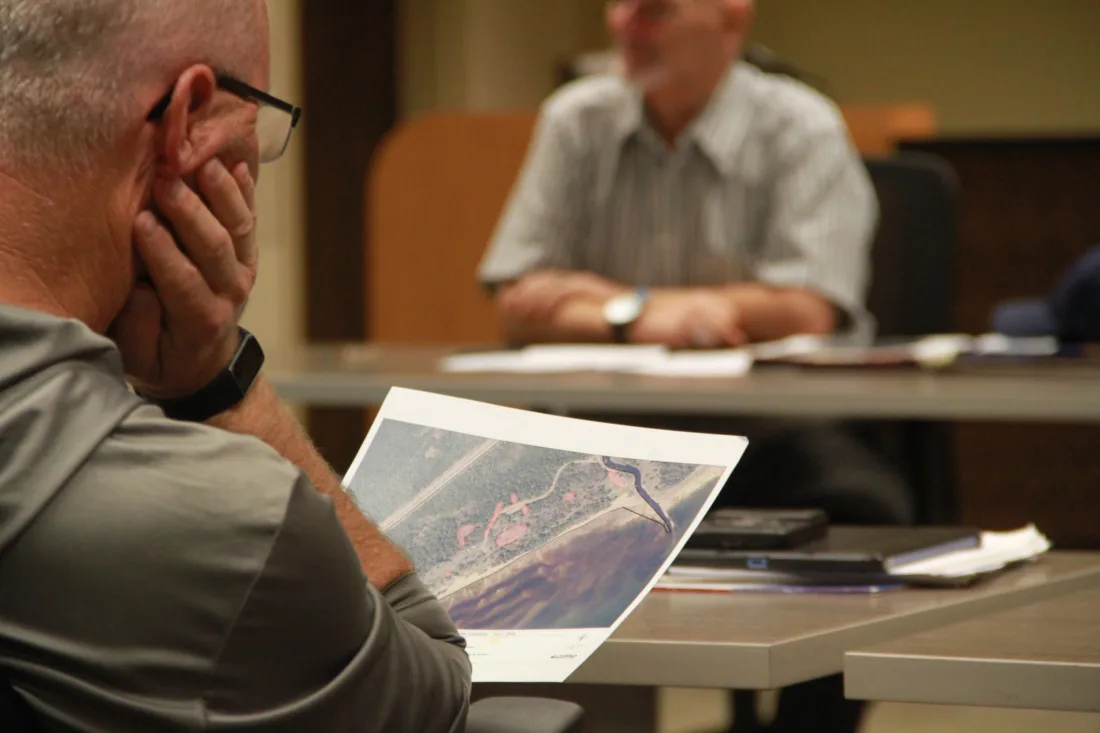
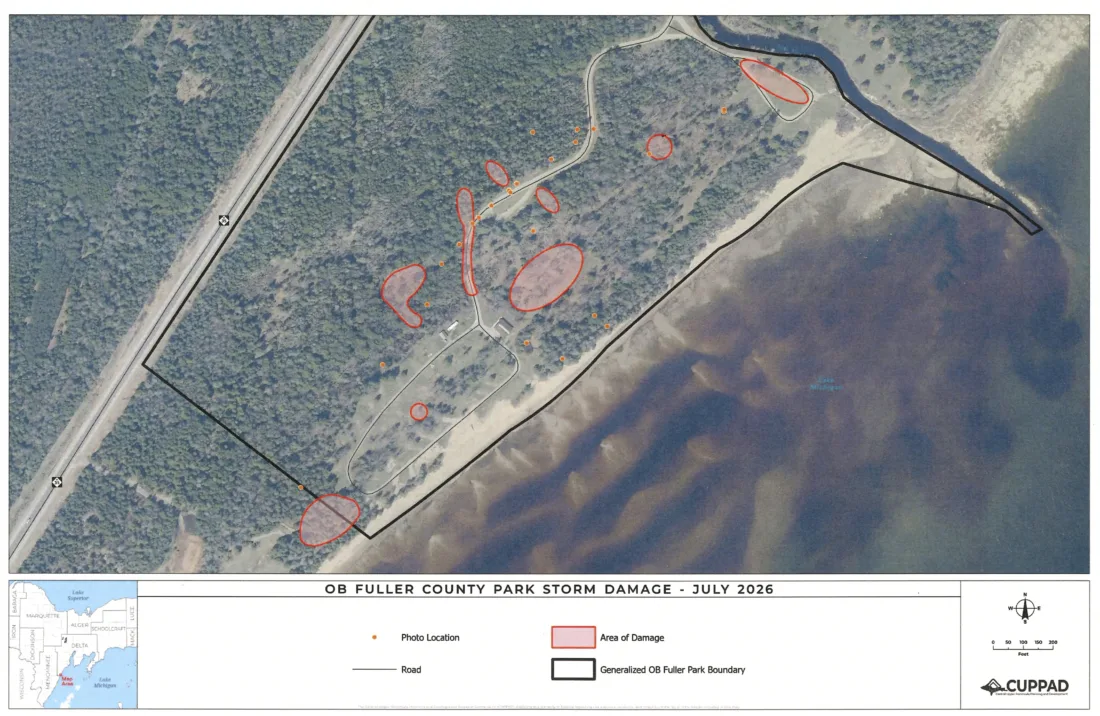
Robert Aschbacher looks over a map of Fuller Park during a meeting about storm damage there. (R. R. Branstrom | Daily Press)
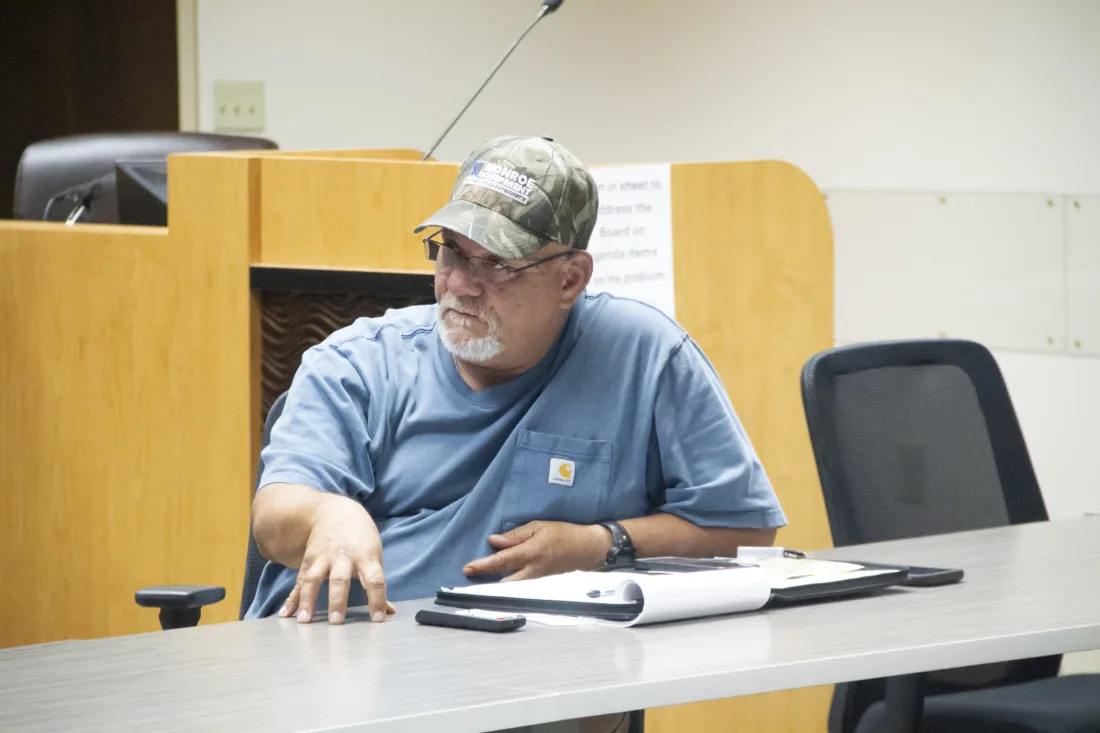
Matt Jensen at the Delta County Parks and Recreation Advisory meeting on Aug. 25. (R. R. Branstrom | Daily Press)
Delta County Parks Manager Heather LeDuc reports on the aftermath of a July tornado. (R. R. Branstrom | Daily Press)
Robert Aschbacher looks over a map of Fuller Park during a meeting about storm damage there. (R. R. Branstrom | Daily Press)
Matt Jensen at the Delta County Parks and Recreation Advisory meeting on Aug. 25. (R. R. Branstrom | Daily Press)
Trending
ESCANABA -- A special meeting of the Delta County Parks and Recreation Commission on Tuesday addressed damage at O.B. Fuller Park caused by an EF1 tornado last month.
On July 20, campers hunkered down in a bathhouse on the grounds of the Delta County Park as a violent storm passed through the area. The tornado that hit Fuller was one of at least three tornadoes spawned by supercells in the Upper Peninsula that evening, the National Weather Service determined.
Despite hundreds of trees downed on the Fuller Park property, no people were injured, only one camper was totaled and a tree fell on a truck, reported Delta County Parks Manager Heather LeDuc.
That night, when word came that a storm and possible tornado were imminent, the camp host went to every site and encouraged campers to take shelter in the bathrooms.
"Everybody stayed together. ...We did give that option for people to get refunded, (but) everybody wanted to stay, and they worked together to help clean up," LeDuc said. "Our maintenance crew came in right away and responded that evening ...a couple volunteers, too, and got it so that the emergency exits were cleared with the ingress and egress. We brought in Dombrowski (Tree Service), who also helped to clear the area so that it was safe for people to navigate around."
Robert Aschbacher, a member of the parks and recreation commission who has a forestry background, helped lead an assessment of the damage and subsequent recommendations, which were presented Tuesday.
Aschbacher recruited Bill Cook, Joe Kaplan, Glenn Vande Water and Charlie Becker to help informally survey Fuller Park after the storm.
"The crew was out there, and Dombrowski was out there, so we stayed out of their way, watched what they were doing, and then we walked the entire property... we got enough view out there to get a good idea of what could be done," Ashbacher informed the commission.
Observations and recommendations by the group were then presented and discussed.
The first order of business, from a safety perspective, should be to remove any hazards -- fallen trees blocking paths or dead ones too near campsites. However, much of the blowdown pockets that were farther away from campers could be left in place, Aschbacher said.
For the trees that would need to be removed, Delta County Parks will aim to borrow a wood processor. The fallen trees were likely of too little value for anyone to purchase, but they could be split and bundled as firewood or chipped. The downed material was from a number of tree types – maple, cedar, white pine, poplar -- and would probably last a few seasons at the county campgrounds once made into firewood.
Commissioner Nate Brockman was charged with first reaching out to the MSU Forestry Innovation Center to request use of their processor. Park and recreation personnel would aim to process the firewood in-house to save costs.
Since there are fewer trees in Fuller Park now, the commission tossed around the idea of putting in an interpretive trail, but no motions were made in that regard.
One other side effect of tree loss is that there will be more light, creating conditions in which certain invasive plants thrive, so the assessment team suggested that white poplar, buckthorn and poison ivy be treated or removed. Riverbank stabilization will also need to be completed in the near future.
Costs for work to rectify tornado damage have not been counted aside from a bill from Dombrowski that amounted to around $20,000 -- less than expected, Delta County Administrator Emily DeSalvo said. The county will know how much they're responsible for after the insurance company determines what they will cover.
Board members and county personnel expressed gratitude for all who offered up their time, expertise and energy to help restore Fuller Park so quickly.