
Air quality throughout Delta County reaches “hazardous” levels
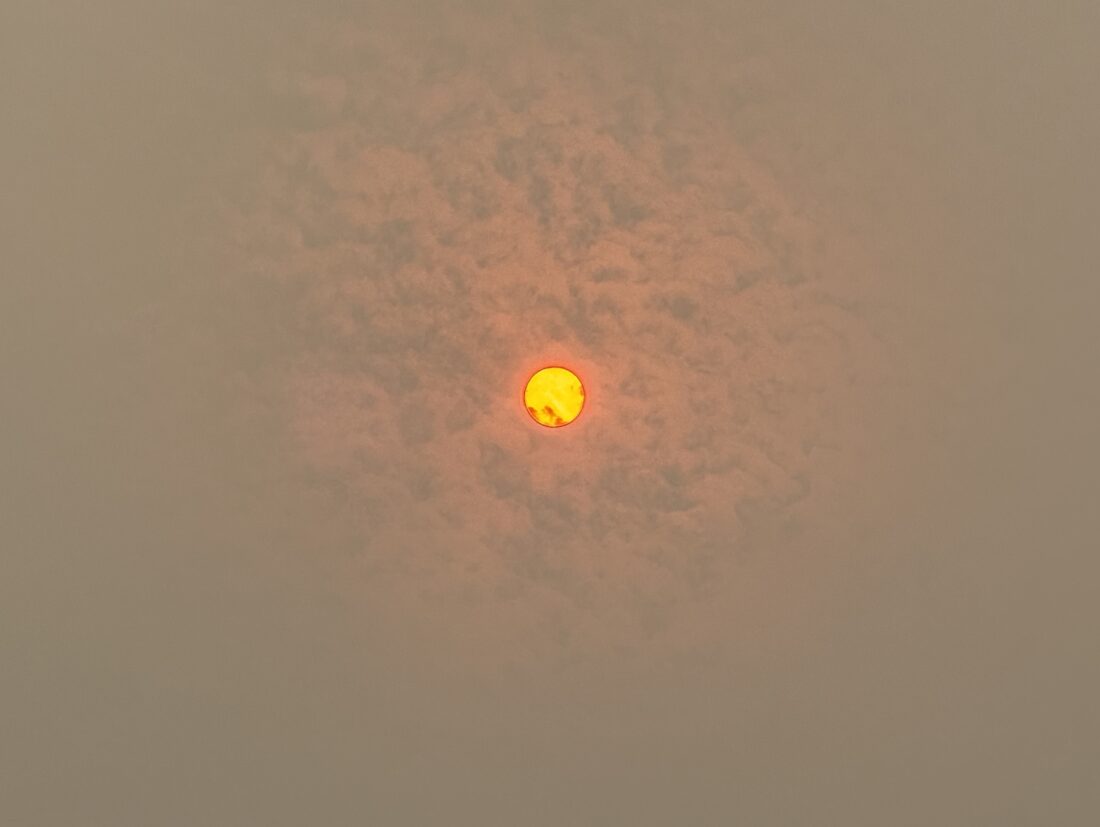
This photo shows the sun at approximately 9 a.m. Wednesday behind the Daily Press in Escanaba. A haze from the Canadian wildfires has blanketed areas across the Midwest and Northeast. (Sophie Vogelmann | Daily Press)
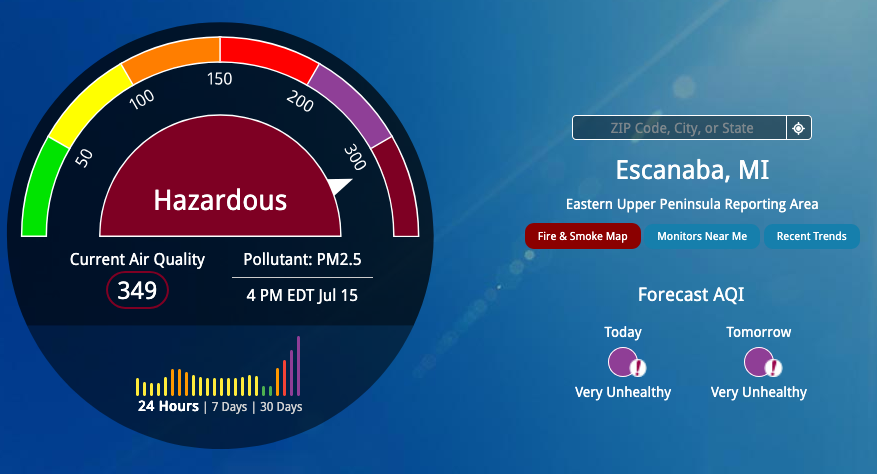
AirNow's air quality graphic for Escanaba as of Wednesday afternoon (Data courtesy of the Michigan Department of Environment, Great Lakes and Energy)
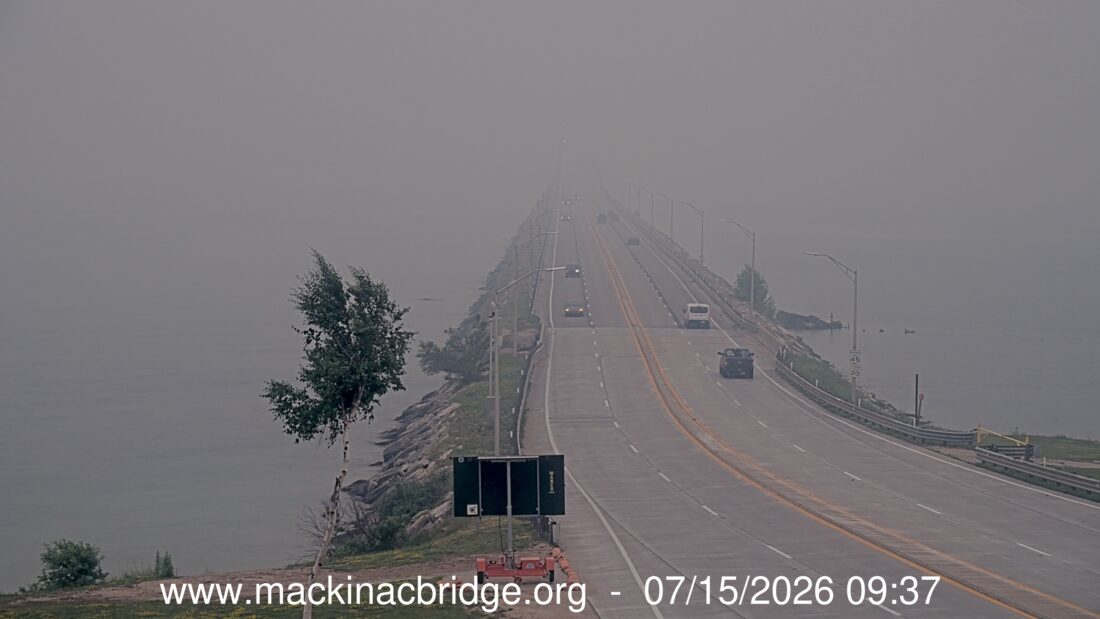
View of the Mackinac Bridge on Wednesday at 9:37 a.m. (Screenshot courtesy of Mackinac Bridge Authority)
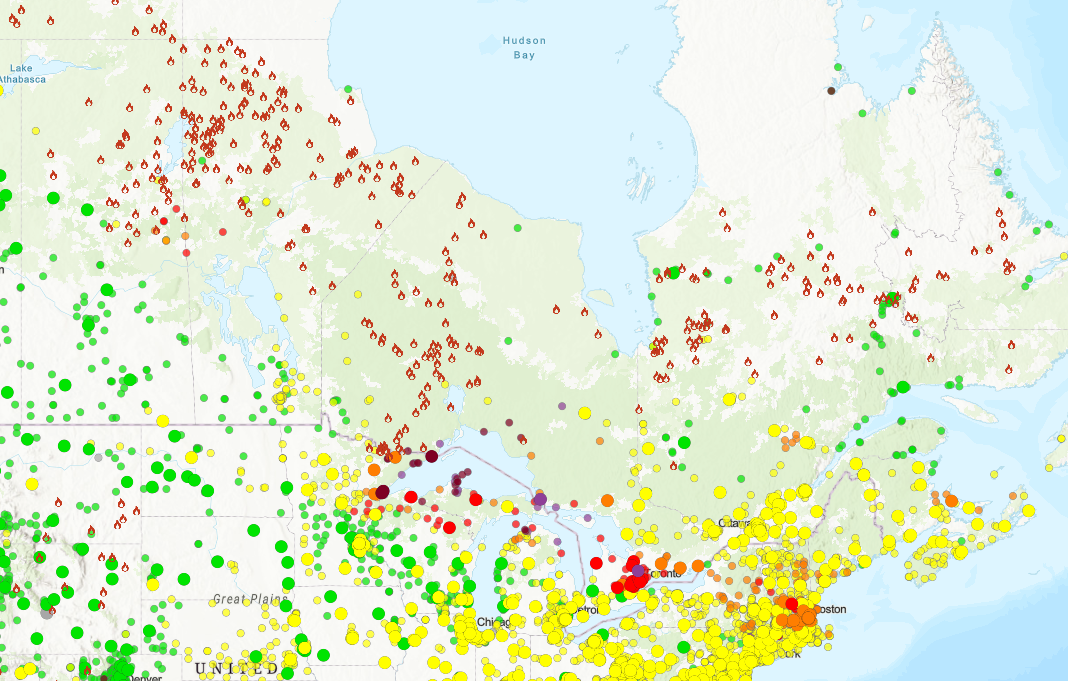
Wildfire activity across Canada (Map image courtesy of Canadian Interagency Forest Fire Centre)

Dave Thorsen with Yooper Farmhouse talks with a customer at the Escanaba Farmers Market on July 15 as thick smoke hangs in downtown. Due to the dangerous air quality, about five fewer vendors participated at the market, reported Downtown Development Authority Director Craig Woerpel. He noted that customer activity was down a little, but still busy enough that one vendor sold out of vegetables in 10 minutes. (Courtesy of Craig Woerpel)
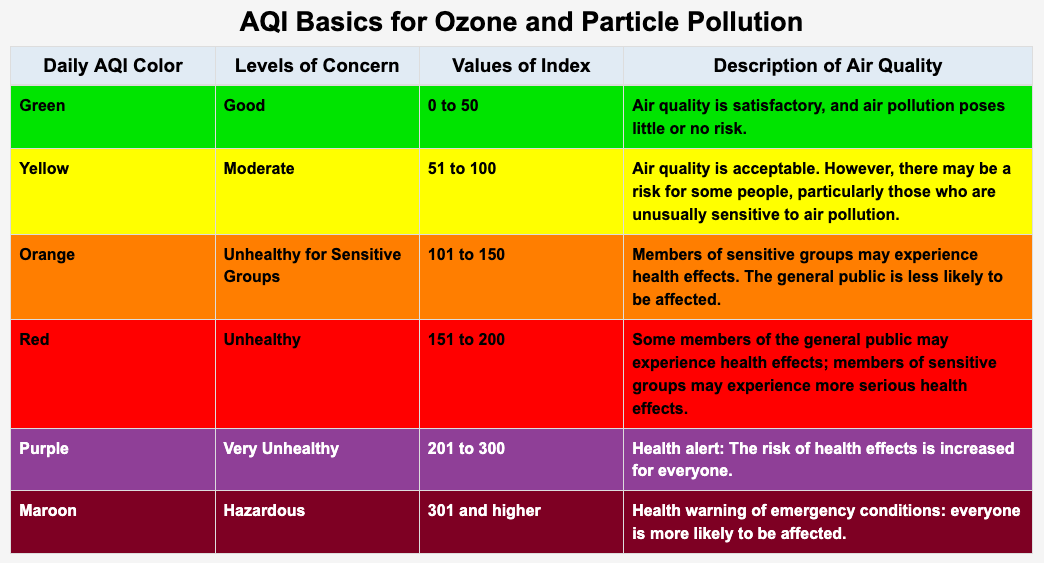
The Air Quality Index (AQI), provides a color-coded framework for Michigan residents to see the levels of some types of air pollution in their area. The higher the AQI, the worse the air quality and the more cause for concern. (AQI index image courtesy of EGLE)
This photo shows the sun at approximately 9 a.m. Wednesday behind the Daily Press in Escanaba. A haze from the Canadian wildfires has blanketed areas across the Midwest and Northeast. (Sophie Vogelmann | Daily Press)
AirNow's air quality graphic for Escanaba as of Wednesday afternoon (Data courtesy of the Michigan Department of Environment, Great Lakes and Energy)
View of the Mackinac Bridge on Wednesday at 9:37 a.m. (Screenshot courtesy of Mackinac Bridge Authority)
Wildfire activity across Canada (Map image courtesy of Canadian Interagency Forest Fire Centre)
Dave Thorsen with Yooper Farmhouse talks with a customer at the Escanaba Farmers Market on July 15 as thick smoke hangs in downtown. Due to the dangerous air quality, about five fewer vendors participated at the market, reported Downtown Development Authority Director Craig Woerpel. He noted that customer activity was down a little, but still busy enough that one vendor sold out of vegetables in 10 minutes. (Courtesy of Craig Woerpel)
The Air Quality Index (AQI), provides a color-coded framework for Michigan residents to see the levels of some types of air pollution in their area. The higher the AQI, the worse the air quality and the more cause for concern. (AQI index image courtesy of EGLE)
Trending
ESCANABA -- The Michigan Department of Environment, Great Lakes, and Energy (EGLE) issued a statewide air quality alert at midnight Tuesday as thick smoke from ongoing Canadian wildfires elevated fine particulate matter (PM2.5) to what the U.S. Environmental Protection Agency considers “hazardous” levels across the region.
The U.S. Environmental Protection Agency, in collaboration with other government and private agencies, offers a zip code-level tracking map of current air quality at airnow.gov. According to AirNow, particle pollution reached “hazardous” levels in Escanaba on Wednesday and is forecast to be "very unhealthy" Thursday.
An Air Quality Index (AQI) rating of hazardous means everyone should stay indoors and reduce activity levels, according to AirNow. An AQI rating of "very unhealthy" indicates the air poses an increased risk to everyone. People with heart or lung disease, older adults, children and teens are urged to avoid physical activities outdoors.
In Cananda, more than 3,000 fires have burned nearly 4.5 million acres this summer, according to CNN, with a dozen blazes flaring up in Ontario in recent weeks, filling the skies with smoke that is starting to drift south.
Activities in Delta County were hindered Wednesday, and some that were scheduled for Thursday have been postponed due to the smoke. While Lunch on Ludington continued, Escanaba Downtown Development Authority Director Craig Woerpel said attendance was half of normal, with several regulars reporting the low attendance was because of smoke.
The Escanaba Farmers Market did run from 3 to 6 p.m. Wednesday, however several vendors did not attend because of the smoke. Woerpel said as of Wednesday, the Pop-Up market will continue Thursday.
The area's extreme heat warning also caused the William Bonifas Fine Arts Center to cancel the youth Art at the Marketplace on Tuesday, and Music Monday was also canceled Monday due to heat.
The Escanaba City Band also postponed their show to Thursday. The Escanaba Public Library postponed Live on the Lawn that was scheduled for Thursday to Aug 6.
"Combining heat and humidity with smoke is a real problem," Woerpel said. "Even if an activity continues, we hope people will make their own judgement on how it might affect them. Better to be safe. Know too, that many businesses in the downtown have air conditioning and continue to be open during construction."
Many Upper Peninsula residents, including those in Delta County, reported ash falling from the sky Wednesday and accumulating on vehicles and other outdoor surfaces.
"There is nothing the state can do to reduce the pollutants from the fires drifting over from Canada," EGLE said. "However, state agencies, including EGLE, Health and Human Services, Natural Resources and Agriculture and Rural Development are working together to give Michiganders the latest information on how to be informed and protect yourself and your loved ones when air quality may be harmful."
The Michigan Department of Health and Human Services (MDHHS) urges residents to monitor air quality conditions in their area and adjust their level of physical activity and take protective actions according to the guidance at the Your Health and Wildfire Smoke webpage .
"We want Michigan families to know how to best take precautions to protect their health and safety during air quality events," said Dr. Natasha Bagdasarian, Michigan’s chief medical executive. "Wildfire smoke is expected to affect air quality this week, starting in northern Michigan and the Upper Peninsula. We are urging Michiganders to check the Air Quality Index regularly to decide if they should be participating in outdoor activities and using the website to help determine what actions they should take to keep themselves and their families safe."
The US National Weather Service Marquette, Michigan, posted the following recommendations Wednesday:
-- Avoid strenuous outdoor activities, especially if you have heart disease and respiratory conditions.
-- Keep an eye out for symptoms (wheezing, coughing, chest tightness, dizziness, or burning in the nose, throat and eyes).
-- Keep windows closed to prevent smoke from getting indoors; if possible, run central air conditioning with MERV-13 or higher rated filters.
MDHHS further recommends seeking shelter elsewhere if you do not have an air conditioner and it is too warm to stay inside with the windows closed. Michigan residents can call or text 211 or contact their local health department to find out if there is a shelter or cooling center nearby. The agency suggests residents also consider spending time in an air-conditioned public place such as a library, mall, movie theater, etc.
"Previous wildfire events emphasized how important communication is when wildfire smoke may impact Michigan's communities," said Annette Switzer, EGLE's Air Quality Division director. "We want to make sure residents stay informed and feel confident about how to protect themselves and their families."
The public can sign up for alerts through the EnviroFlash system. The system will send the alert directly to the subscriber’s email or cellphone number. Michigan residents can also monitor their area's air quality on AirNow's website.
Michiganders are encouraged to always check to see if burning is permitted in the area before you decide to burn by checking the map and regulations at Michigan.gov/BurnPermit.
For more tips on burning and fire safety, visit the DNR's Fire Management webpage.
The smoke is the latest environmental concern to affect the Upper Peninsula after the National Weather Service (NWS) issued an "extreme heat warning" on Monday.
According to the National Space and Aeronautics Administration (NASA), both heat extremes and wildfire events have become more frequent and will continue to increase in frequency due to climate change.
Over a 21-year period, NASA found that extreme wildfires have become more frequent, more intense and larger across the globe.
NASA wrote, "The largest increase in extreme fire behavior was in the temperate conifer forests of the Western U.S. and the boreal forests of northern North America and Russia. Warmer nighttime temperatures are a major contributing factor, allowing fire activity to persist overnight."
More information can be found at https://science.nasa.gov/earth/explore/wildfires-and-climate-change/.
------
Sophie Vogelmann can be reached at 906-786-2021 or svogelmann@dailypress.net.