
New artwork debuts at Pioneer Trail Park’s Ziibing Pavilion
Sign honors Indigenous heritage, land and community

The Ziibing Pavilion at the park, located along the Escanaba River at 6822 U.S. 2, now features a custom-designed sign created by Anishinaabe artists Sherri Loonsfoot Aldred and Aiyana Aldred. (Sophie Vogelmann | Daily Press)
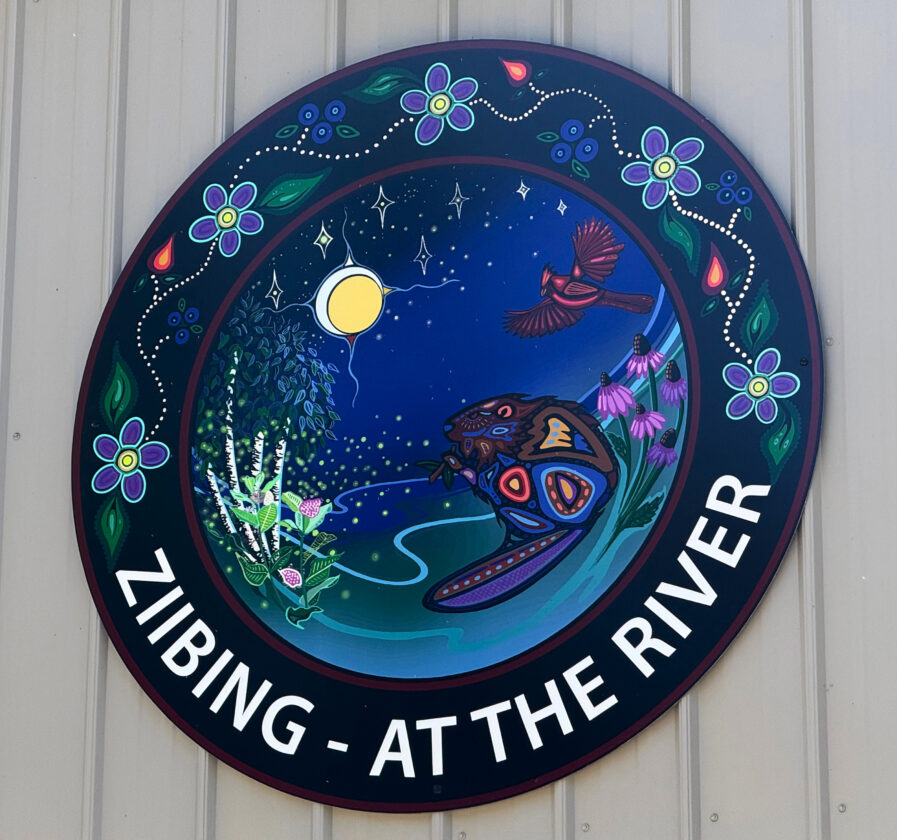
Anishinaabe artists Sherri Loonsfoot Aldred and Aiyana Aldred created the artwork now on display at the Ziibing Pavillion at Pioneer Trail Park in Escanaba, which tells the story of the land, culture and community in the area through its symbols. (Sophie Vogelmann | Daily Press)
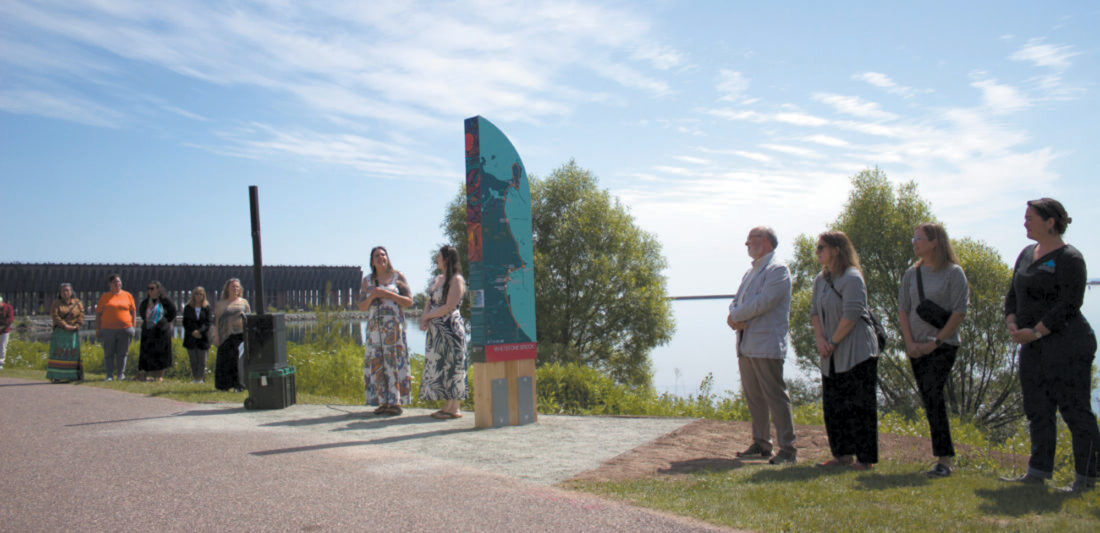
Sherri Loonsfoot Aldred and Aiyana Aldred, the artists behind the new sign featured at the Ziibing Pavillion in Pioneer Trail Park, have collaborated on numerous public art and cultural interpretation projects, including the interpretive signs along the Shoreline Cultural Trail in Marquette. (Photo courtesy of the Marquette Arts & Culture Center)
The Ziibing Pavilion at the park, located along the Escanaba River at 6822 U.S. 2, now features a custom-designed sign created by Anishinaabe artists Sherri Loonsfoot Aldred and Aiyana Aldred. (Sophie Vogelmann | Daily Press)
Anishinaabe artists Sherri Loonsfoot Aldred and Aiyana Aldred created the artwork now on display at the Ziibing Pavillion at Pioneer Trail Park in Escanaba, which tells the story of the land, culture and community in the area through its symbols. (Sophie Vogelmann | Daily Press)
Sherri Loonsfoot Aldred and Aiyana Aldred, the artists behind the new sign featured at the Ziibing Pavillion in Pioneer Trail Park, have collaborated on numerous public art and cultural interpretation projects, including the interpretive signs along the Shoreline Cultural Trail in Marquette. (Photo courtesy of the Marquette Arts & Culture Center)
Trending
ESCANABA -- A vibrant new addition to Pioneer Trail Park is telling the story of the land, river, wildlife and people who have long called the area home.
The Ziibing Pavilion at the park, located along the Escanaba River at 6822 U.S. 2, now features a custom-designed sign created by Anishinaabe artists Sherri Loonsfoot-Aldred and Aiyana Aldred.
The project began when Delta County Parks and Recreation Manager Heather LeDuc approached Loonsfoot in November 2025. From the initial conversations to the completed artwork in spring 2026, the process took approximately six months and included research, concept development, sketching, revisions and final artwork preparation.
Ziibing (pronounced zee-bing) means “at the river” in the Anishinaabemowin language. The pavilion honors the tribes of the Great Lakes region in which Pioneer Trail Park sits on their ancestral lands.
“An important aspect of the design was the inclusion of Anishinaabe language and cultural representation,” Loonsfoot said. “Language revitalization has been a major focus in much of the public artwork that my daughter, Aiyana, and I have created. We wanted visitors to encounter the original language of this place and recognize the longstanding connection Anishinaabe people have to these lands and waters.”
LeDuc said the sign is much more than artwork -- it is a story of culture, nature and community. Every element was intentionally chosen to reflect the spirit of Pioneer Trail Park and the lands and waters that surround it.
According to Loonsfoot, the design emerged through numerous conversations with LeDuc about the history, ecology and stories connected to the Escanaba River site.
“We discussed the plants, birds, insects and seasonal changes that visitors experience along the river,” Loonsfoot said.
Loonsfoot said she wanted the artwork to reflect the natural cycles of the site, from morning to night and the changing seasons.
“Those cycles mirror the way Anishinaabe people have traditionally lived in relationship with the land,” Loonsfoot said. “Throughout the year, families moved with the seasons to harvest maple sap, gather medicines, fish, collect berries, hunt and prepare for winter. Those seasonal activities reflect a deep understanding of the land and its rhythms, and I wanted that relationship to be present in the artwork.”
At the center of the design is a beaver, known as Amik (ah-mik) in the Anishinaabe language. The beaver symbolizes wisdom and serves as the beloved mascot of Pioneer Trail Park.
“There was a large beaver who called the shoreline home here at Pioneer Trail Park,” LeDuc said. “Back in 2021, it was trapped and killed. We honor this beaver, who lost his life here, as our mascot.”
Above Amik are seven stars representing the Seven Grandfather Teachings of the Anishinaabe: wisdom, love, respect, bravery, honesty, humility and truth.
Loonsfoot said the teachings continue to guide Anishinaabe ways of living and relating to one another and the natural world. They emphasize living in balance, caring for all living things and understanding that society is part of a larger web of relationships.
Within the woodland floral border, three fires are woven into the design. The fires represent the three tribes of the Anishinaabe in the region -- the Ojibwe (Chippewa), Odawa (Ottawa) and Potawatomi, known as the Keepers of the Fire.
LeDuc said the fires also represent the campfires that bring people together at Pioneer Trail Park.
Additionally, the sign features five coneflowers, each representing a part of the Delta County Parks system: Pioneer Trail Park, O.B. Fuller Park, Rapid River Falls Park, Sac Bay Park and the Delta County Forest.
“Together, they symbolize the connection between all of the special places entrusted to our care,” LeDuc said. “Coneflowers are native to our region and thrive naturally in our growing zone, making them a fitting symbol of belonging, resilience and balance. As long-time dwellers of this landscape, they remind us of the importance of native plants and our deep connection to the land that sustains us.”
LeDuc said that fireflies scattered throughout the artwork represent the campers and visitors who bring life to the parks each season.
“Like fireflies lighting up a summer evening, each visitor adds something special to the story of this place,” she said.
Milkweed, another native plant found within the park, appears in the design, as well, serving as an important host plant for migrating monarch butterflies.
“Ecological stewardship was another important theme,” Loonsfoot noted. “The milkweed serves as a reminder that caring for the land and protecting native species are responsibilities that connect traditional Anishinaabe values with contemporary conservation efforts.”
Loonsfoot and Aldred's latest project builds on work they previously completed for the City of Marquette’s Cultural Trail, where they created interpretive signs highlighting Anishinaabe history, language and cultural connections to the landscape.
“Our work combines my background in painting and visual storytelling with her expertise in graphic design and digital illustration,” Loonsfoot said about her work with her daughter. “We develop concepts together, discuss the cultural and educational goals of each project and then bring our respective strengths to the final design.”
The Ziibing Pavilion sign continues that effort to share Indigenous perspectives and honor local stories.
“I hope visitors gain a deeper appreciation for the longstanding relationship between Anishinaabe people and this landscape,” Loonsfoot concluded. “The sign encourages people to see the river not simply as a recreational space, but as a living place with stories, language, history and relationships that extend back generations.”
--
Sophie Vogelmann can be reached at 906-786-2021 or svogelmann@dailypress.net.