
Invest UP, EGLE present brownfield authority guide to county commissioners
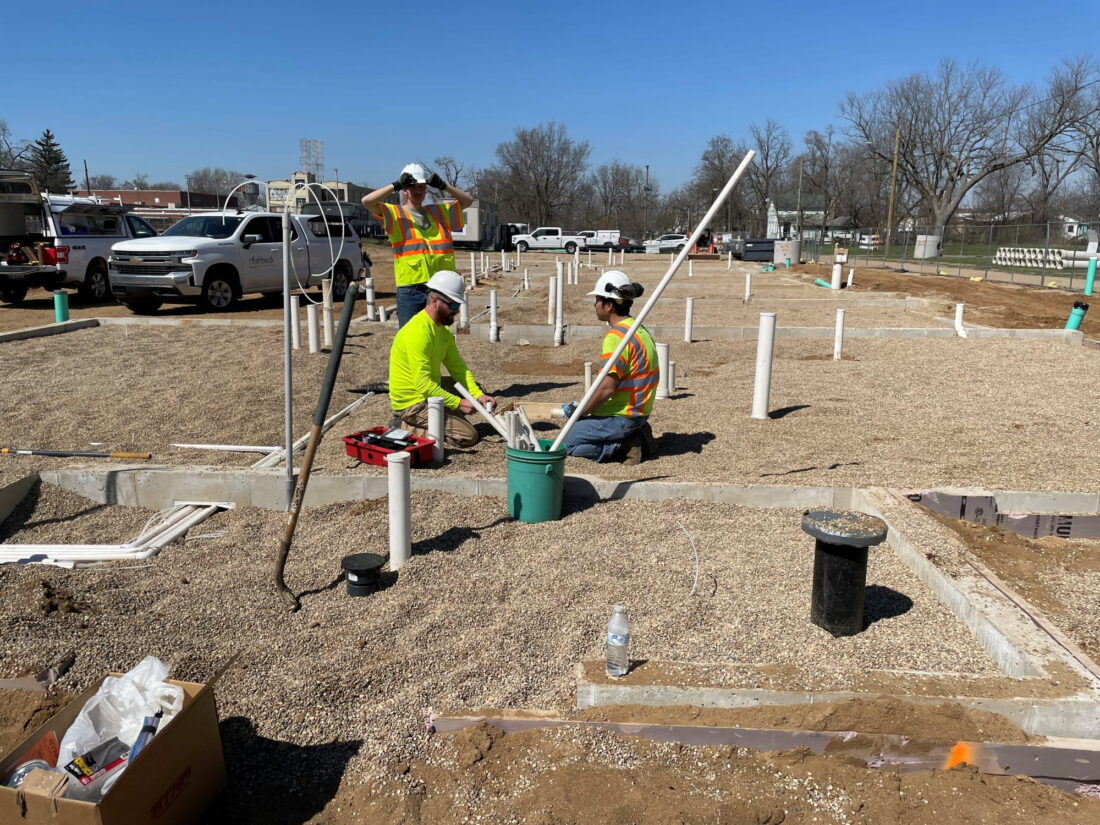
Workers install vapor mitigation system at a brownfield in lower Michigan. (Photo courtesy of the Michigan Department of Environment, Great Lakes and Energy)
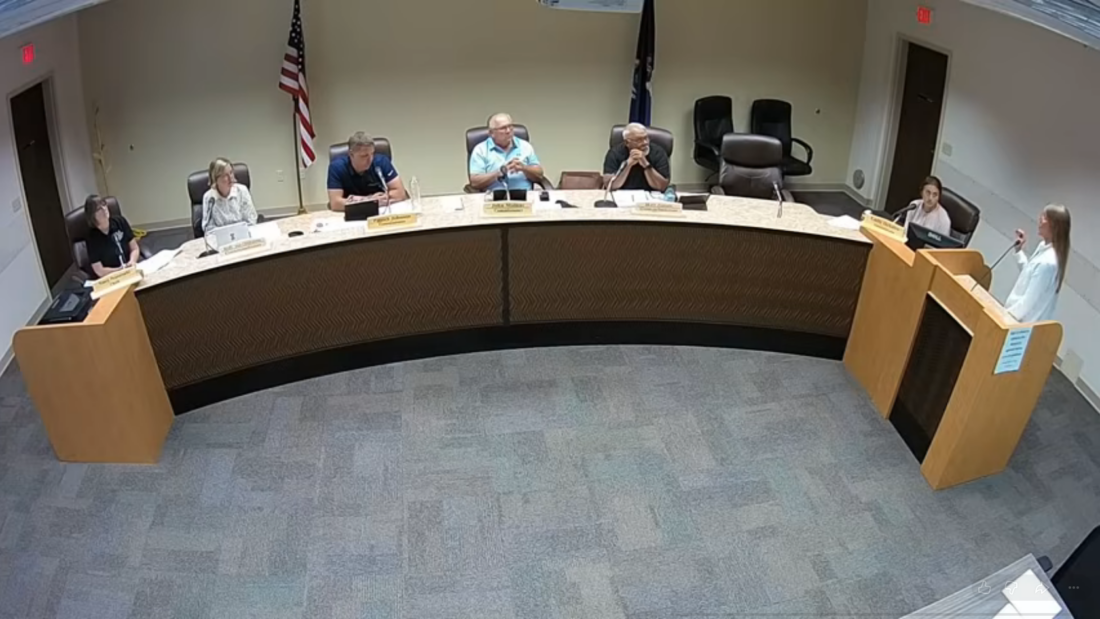
Anne Giroux, director of development for InvestUP, addressed the Delta County Board of Commissioners Tuesday to present information on brownfields.
Workers install vapor mitigation system at a brownfield in lower Michigan. (Photo courtesy of the Michigan Department of Environment, Great Lakes and Energy)
Anne Giroux, director of development for InvestUP, addressed the Delta County Board of Commissioners Tuesday to present information on brownfields.
Trending
ESCANABA -- Representatives from InvestUP and the Michigan Department of Environment, Great Lakes and Energy (EGLE) outlined the benefits of brownfield authorities and discussed how Delta County can reactivate its dormant authority during Tuesday’s Delta County Board meeting.
Anne Giroux, director of development for InvestUP, and Abigail Hanson, a brownfield coordinator with EGLE, provided an overview of brownfield programs and redevelopment incentives available to local governments and developers.
Giroux said she has been delivering similar presentations throughout the U.P. as counties revisit their brownfield programs that have sat inactive for decades. As part of that effort, she explained what qualifies as a brownfield in Michigan.
“The definition of a brownfield is different in every state, and it’s particularly broad in Michigan,” Giroux said.
In Michigan, properties qualify as brownfields if they are contaminated, contain blighted buildings, are considered functionally obsolete, are owned or controlled by a land bank authority or are housing property.
Giroux noted that housing property was added to the state’s brownfield definition in 2023.
"That's really kind of unique to Michigan and kind of a big deal that the State of Michigan came out and said, 'We think housing is a big problem - or lack thereof - and we're going to put it on a level playing field with all these other challenging sites and provide these incentives to help support housing,'" said Giroux.
One of the primary redevelopment incentives available through brownfield programs is Tax Increment Financing (TIF), a public financing tool used to support economic development and community improvement projects.
Under TIF, increases in property tax revenue generated by redevelopment can be captured and used to reimburse developers for eligible expenses, including site preparation, infrastructure improvements and building rehabilitation. Giroux said municipalities would also continue to collect taxes based on the property’s original taxable value.
According to Giroux, redevelopment plans must first be approved by the city or township where the project is located before advancing to the county board for consideration.
"Between that local unit of government and then the county board, you're determining whether you want to support that project," Giroux said. "It's a very locally driven approval process."
During Hanson's portion of the presentation, she emphasized the importance of community support in redevelopment efforts.
“We always want to make sure the community is on board with the redevelopment," Hanson said. "We're not going to come in there and support something that doesn’t already have the community’s support.”
Hanson then outlined EGLE’s brownfield grant and loan programs. Eligible projects may receive up to $1 million in grant funding and $1 million in loan funding annually.
In addition, EGLE offers environmental assessments at no cost to qualified applicants through its brownfield Site Assessment Program.
Hanson said EGLE typically distributes between $10 million to $15 million annually through its brownfield grant programs but noted that relatively few projects in the Upper Peninsula apply for the funding.
"The state does have a geographic distribution goal, so if you have a good project, if we can check all our boxes, there's a very high likelihood of getting funding for it,” Hanson said.
A local example of brownfield redevelopment is the former Delta County Jail property at 111 N. Third Street in Escanaba. In 2023, the City of Escanaba received a $700,000 Brownfield Redevelopment Grant from EGLE to support the site’s redevelopment into a Hampton Inn.
The grant will pay for the transport and disposal of soil and groundwater contaminated with metals and petroleum compounds. Despite an anticipated completion date of April 2025, the project has not yet entered the construction phase.
In other business, the board:
– Rescinded previously approved resolutions regarding department head wage increases and approved larger salary adjustments effective immediately. The board had originally approved the increases to begin in fiscal year (FY) 2027, but County Administrator Emily DeSalvo reported that funding was available within the budget to implement the increases in FY 2026 and beyond. The county building inspector’s salary was increased to $71,500 annually; the maintenance and housekeeping services director’s salary to $90,000; and the controller’s salary to $66,000.
– Approved a proposal from the Michigan Department of Transportation, submitted through Paul Rodman, seeking consent to purchase grading rights for a parcel of fairgrounds property at 1027 N. Lincoln Road in Escanaba for $2,400. Proceeds from the sale will be allocated back into the fairgrounds.
– Reviewed DeSalvo’s annual performance evaluation. Commissioner Kelli Van Ginhoven said the evaluation process was handled poorly after department heads were not provided evaluation forms due to a reported miscommunication. Board members said DeSalvo exceeded expectations in nearly every category, including communication, decision-making, problem-solving and more.
– Discussed the possibility of placing a Headlee millage override proposal before county voters. The proposal would restore the county’s general operating millage from its current rate of 4.9804 mills to its original voter-approved rate of 5.45 mills, allowing the county to collect the full amount authorized in 1976.
– Reviewed opioid settlement fund indicators that will be submitted to the Michigan Department of Attorney General. The report includes overdose trends, treatment-system performance data and more across the state and in Delta County. According to the report, Michigan recorded 1,938 overdose deaths in 2024, compared with seven in Delta County. The information is expected to be posted on the county website.
– Approved the FY 2025-26 Hazardous Materials Emergency Preparedness Grant agreement. Emergency Management Coordinator Paul Geyer’s grant application was approved by the board in February. The awarded grant was accepted and approved Tuesday night.
– Authorized issuance of a request for proposals (RFP) for renovations at the Delta County Service Center, 2920 College Ave. in Escanaba. The project includes construction of two new offices and a front desk window.
– Approved a lease agreement with Fabick CAT for a Caterpillar 265-05H1 compact track loader. The equipment will be shared among the Parks Department, Building and Grounds Department and Sheriff’s Office. The five-year lease totals $91,902, or $1,531.70 per month, and includes a purchase option at the end of the lease.
– Approved amendments to the Delta County Airport fee schedule to formalize structured weekly and monthly rates for ramp fees and transient hangar fees. According to the meeting agenda, the changes address recent requests from visiting operators, correct inconsistencies in the airport's current policy and aligns the airport with standard practices to secure predictable, short-term revenue.
– Authorized the Delta County Airport to issue of a request for proposals (RFP) from qualified vendors to supply firefighter personal protective equipment free of per- and polyfluoroalkyl substances (PFAS), including turnout gear, hoods, gloves and boots. The board also approved the airport to issue a RFP from qualified vendors to perform mobile PFAS foam system cleaning on Aircraft Rescue and Fire Fighting vehicles as the airport transitions to synthetic fluorine-free foam.
----
Sophie Vogelmann can be reached at 906-786-2021 or svogelmann@dailypress.net.