Unleashed potential: incarcerated handlers rehabilitate dogs
-
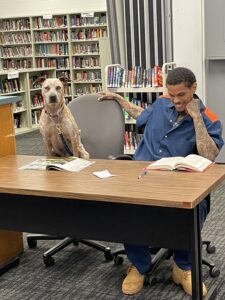
- Jordan, an incarcerated handler at Alger Correctional Facility, is shown with Memphis, a dog being trained in the Dawgz Adapt program through a partnership with the Delta Animal Shelter. (Courtesy photo)
-
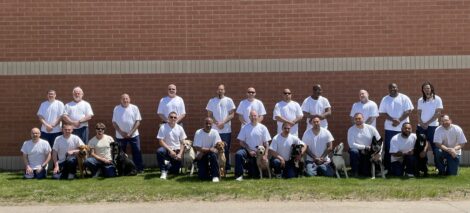
- 26 incarcerated people at the Alger Correctional Facility are currently training 20 dogs from the Delta Animal Shelter, including a recent litter of puppies, as part of the Dawgz Adapt program. (Courtesy photo)
-
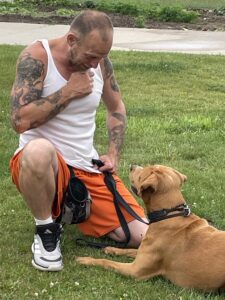
- Incarcerated people at Alger Correctional Facility are given the opportunity to train dogs from the Delta Animal Shelter in the Dawgz Adapt program. Brian, an incarcerated handler at the facility, kneels next to Oakley during training. (Courtesy photo)
-
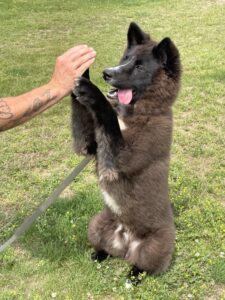
- Dogs receive training tailored to their needs in the Dawgz Adapt program — a partnership between the Delta Animal Shelter in Escanaba and Alger Correctional Facility in Munising. Benny, shown being trained here, got adopted in November 2025 after completing the program. (Courtesy photo)
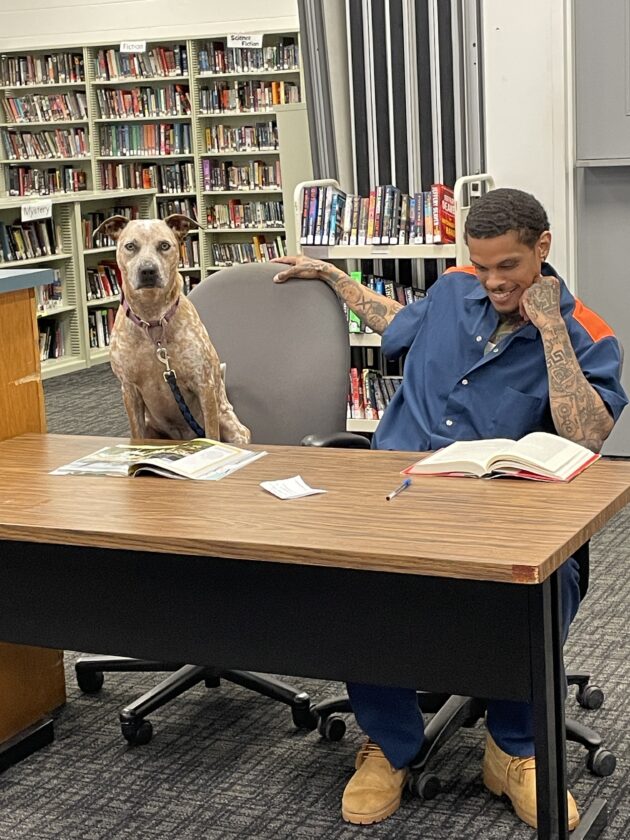
Jordan, an incarcerated handler at Alger Correctional Facility, is shown with Memphis, a dog being trained in the Dawgz Adapt program through a partnership with the Delta Animal Shelter. (Courtesy photo)
ESCANABA– At Alger Correctional Facility in Munising, a unique partnership with the Delta Animal Shelter in Escanaba is transforming lives on both ends of the leash through the Dawgz Adapt program.
In the five plus years of the Dawgz Adapt program, incarcerated people at the facility have trained 319 dogs from the shelter, achieving a 100% adoption rate for all program graduates.
The facility in Munising previously partnered with the Eva Burrell Animal Shelter in Manistique in 2011. Altogether, more than 500 dogs have been trained and adopted through the program over the years.
“Being in Dawgz Adapt is special because the dogs who are charged to our care are nurturing us as much as we care for them,” said one person who is incarcerated at Alger.
Currently, 26 incarcerated people are working with 20 dogs, including a recent litter of 8 puppies whose mom passed away before their arrival.
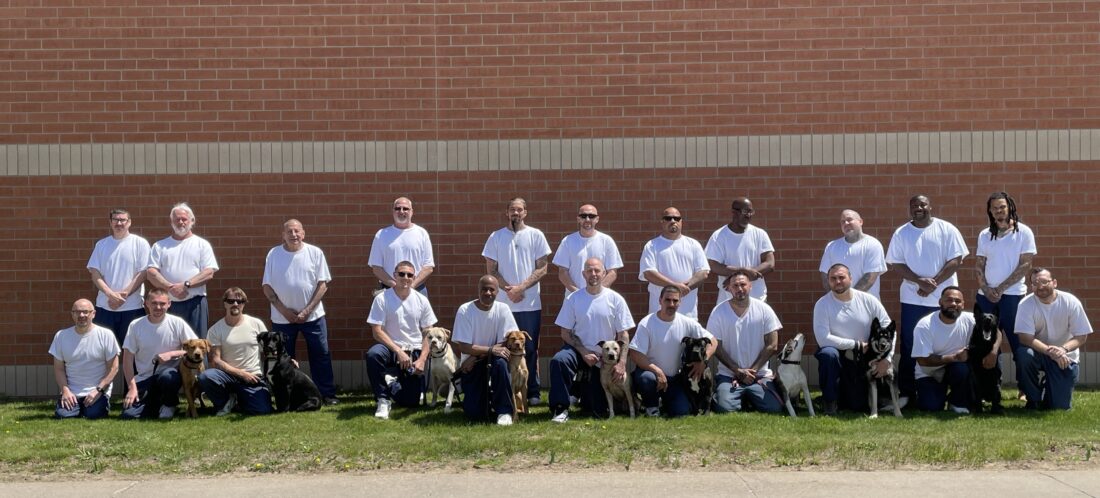
26 incarcerated people at the Alger Correctional Facility are currently training 20 dogs from the Delta Animal Shelter, including a recent litter of puppies, as part of the Dawgz Adapt program. (Courtesy photo)
“When we get puppies that are young and without a mom, they need that extra socialization, plus being around other dogs helps them become a better dog,” said Tonya Gartland, executive director of the Delta Animal Shelter. “That helps us out, too, because that is a lot to take on here.”
Each dog receives individualized training tailored to its needs, focusing on socialization, obedience and behavioral challenges.
“For the prisoners, it teaches them responsibility — to be accountable for a life other than themselves,” said Patti Hubble, deputy warden at Alger Correctional Facility. “It’s rehabilitation… just shows them that their life still has meaning.”
Gartland noted the training reduces the likelihood of dogs being surrendered back to the shelter once adopted.
“So, it’s things that they probably could be adopted out with, but their chances of being brought back is higher just because some people don’t have time to work with these little things,” Gartland said.
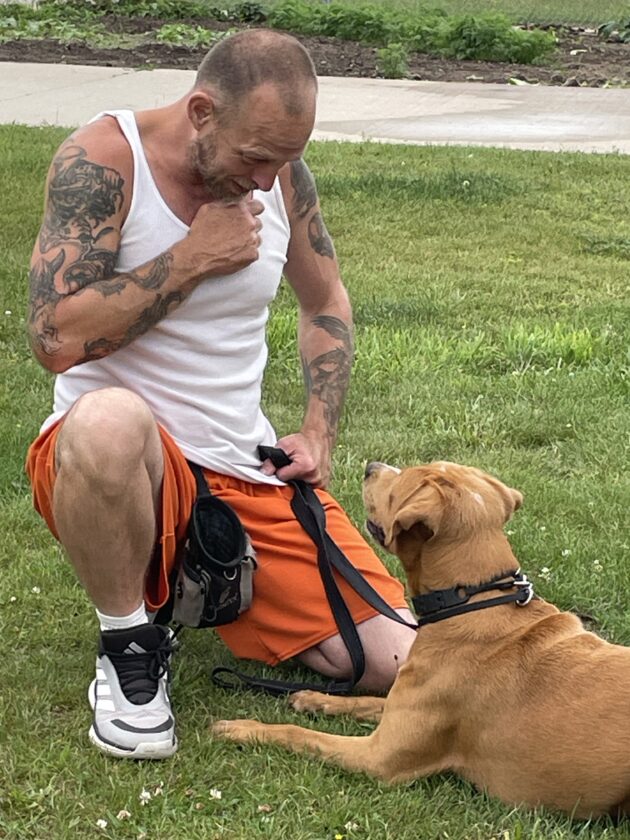
Incarcerated people at Alger Correctional Facility are given the opportunity to train dogs from the Delta Animal Shelter in the Dawgz Adapt program. Brian, an incarcerated handler at the facility, kneels next to Oakley during training. (Courtesy photo)
Funding for the program primarily consists of shelter staff providing food and medical care, like spay/neuter services, to the dogs.
“Every time we get low on food, we’ll put a call out and our community is so great that they help with that, or otherwise we use our Elmer’s points and we’ll get a pallet of dog food,” Gartland said.
Sammi, a professional K9 handler and president of D&D Dog Dynamics in Gladstone, visits the shelter to evaluate potential dogs for the program, assessing traits such as food aggression and socialization skills.
Incarcerated handlers are also assessed for their overall institutional behavior in order to participate in the program. Participants come from diverse backgrounds, including individuals serving life sentences as well as those with shorter remaining terms.
While some dogs arrive to the facility fearful of humans or having never been on a leash, they are fully adoptable by the end of their training.
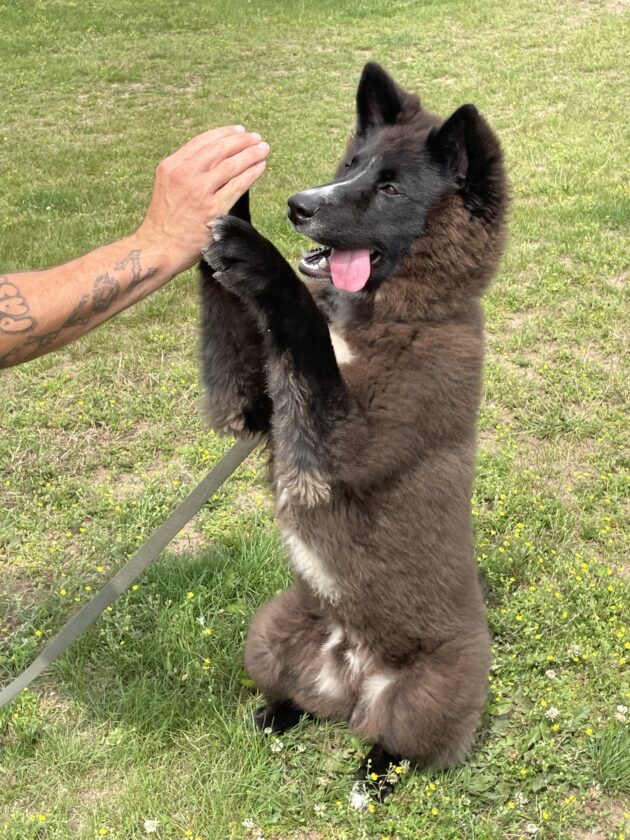
Dogs receive training tailored to their needs in the Dawgz Adapt program — a partnership between the Delta Animal Shelter in Escanaba and Alger Correctional Facility in Munising. Benny, shown being trained here, got adopted in November 2025 after completing the program. (Courtesy photo)
Training time varies for each dog, though most spend about eight weeks in the program. Some progress faster, while others require additional time.
Dogs that complete training are adopted directly from the facility in Munising, reducing the stress they might experience if transported back to the shelter in Escanaba.
Many dogs that are trained in the program go on to serve their community, illustrating the real-world impact of the program.
Jet, one Dawgz Adapt graduate, is training to become an arson-detecting dog under Zachary Denome, chief of the Escanaba Township Volunteer Fire Department.
A labradoodle named Franklin also completed Dawgz Adapt training and went on to become a Wellness Response Dog for the Michigan Department of Corrections (MDOC).
For the participants, the program offers those who are incarcerated a chance to grow alongside the dogs.
“I’ve been in the program for three years,” said David, an incarcerated person at Alger. “This program allows me to give back and make a difference to the community that I hurt. It means a second chance and a new beginning for me and the dog.”
Dominic, who has participated in the program for two years, emphasized the lessons he has learned in Dawgz Adapt.
“It is a great way to teach myself patience and build structure,” he said. “And watching the animals get better is by far the most important! This program has been an important journey during my incarceration.”
Hubble added, “[The program has] changed their life. It’s made them feel like they are purposeful. Some of them came to prison thinking they were just a lost cause and nobody cared about them. Then when we give them a life to be responsible for, they’re like, ‘Well, we can be trusted again.'”
Dawgz Adapt is part of a broader effort by the MDOC, which has partnered with organizations like Paws with a Cause and Leader Dogs for the Blind, as well as local shelters, to train around 3,000 dogs since 2009.
Nearly 1,500 dogs once considered difficult to adopt have found permanent homes through MDOC programs.
Other facilities around the state also partner with shelters through similar programs, such as Central Michigan Correctional Facility (STF) with Dalis to the Rescue through the Pawsitive Connections program; Newberry Correctional Facility (NCF) partners with Luce County Animal Shelter through the NCF Paws for Adoption program; and Saginaw Correctional Facility (SRF) partners with Bay County Animal Care Center and Saginaw County Animal Care & Control through the Iron Paws program.
Ellis, an incarcerated individual at Alger, emphasized the program’s importance in helping participants focus on their future.
“Partaking in the dog program has showed me a new understanding of life beyond my own — it’s given me perspective and much purpose with tools that I can use when I go home,” Ellis said.
To follow along with MDOC training programs, visit Dogs of the MDOC’s Facebook page, https://www.facebook.com/mdocdogs.
More information on the Delta Animal Shelter can be found at their website, https://deltaanimal.org.
The Delta Animal Shelter’s Dawgz Adapt Amazon wish list can be found by visiting https://www.amazon.com/hz/wishlist/ls/25W7W216AJ1DH?ref_=wl_share.
—
Sophie Vogelmann can be reached at 906-786-2021 or svogelmann@dailypress.net.
Local News
Logging industry recognition
HARRIS — Loggers, foresters, distributors and other people and businesses connected to the timber industry in ...
Looking back on the Calumet Mine in Felch Township
Unleashed potential: incarcerated handlers rehabilitate dogs
Nominate a red line hero

Man sentenced after 2023 terrorist attack on MSP