
U.P. veterinarian to judge Iditarod
-
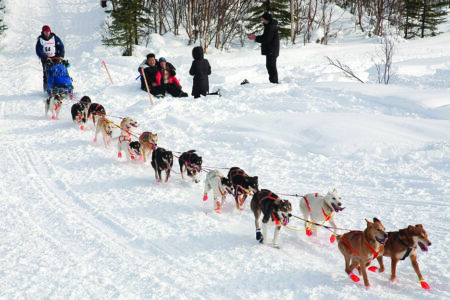
- Tim Hunt races in the 2009 Iditarod. (Courtesy photo)
-
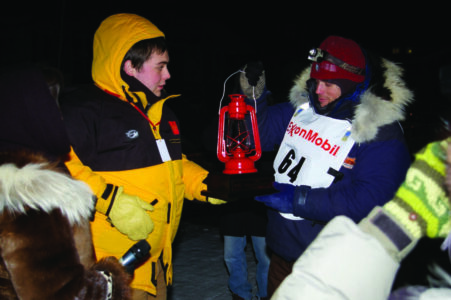
- Tim Hunt receives the Red Lantern award at the 2009 Iditarod. (Photo courtesy of Tim Hunt)
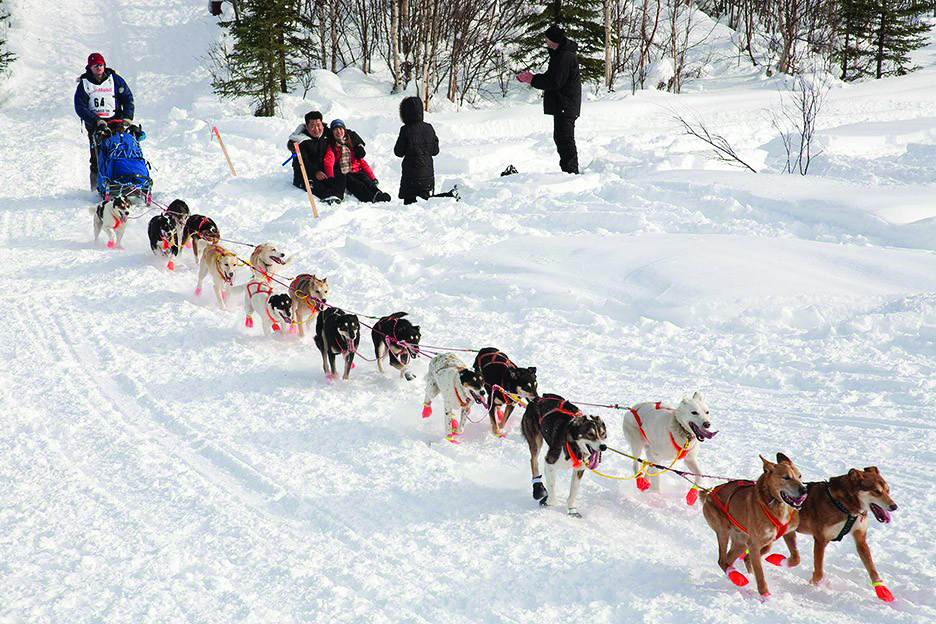
Tim Hunt races in the 2009 Iditarod. (Courtesy photo)
MARQUETTE — Dr. Tim Hunt of the Bayshore Veterinary Hospital in Harvey has been involved in the sport of mushing since 1995. Now he is on his way to Alaska to judge the Iditarod, the famed 1,000+ mile sled-dog race from Seward to Nome.
Hunt is no stranger to the Iditarod, which is known as the “Last Great Race on Earth,” having competed in it and finished both in 2009 and 2015. In 2009, Hunt was awarded the Red Lantern Award for his performance at the Iditarod, a tradition in mushing communities for the final musher to cross the finish line.
In 2015 Hunt finished 45th out of 66 finishers with a time of 12 days, 45 minutes, and 35 seconds.
“It was hard and grueling and very cold, but a life-changing experience,” recalled Hunt.
He has also mushed in a variety of other races between 1995 and 2015, racing in places like Canada, Europe and the Rocky Mountains. Hunt has run the UP200 16 times.
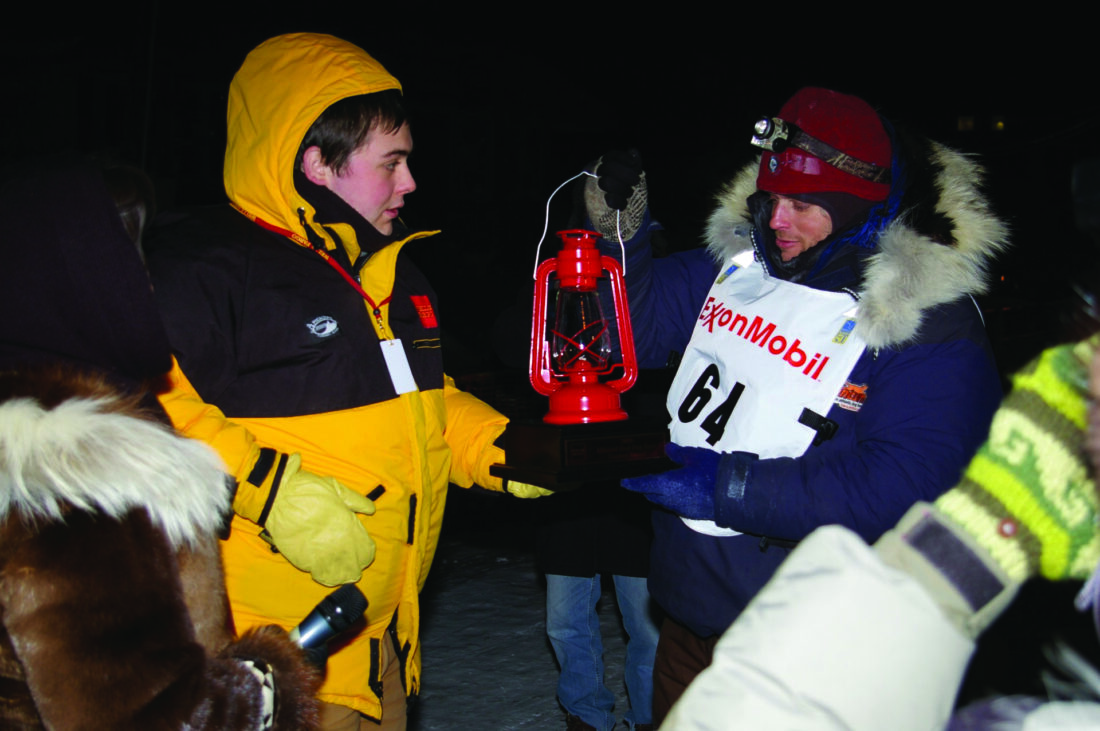
Tim Hunt receives the Red Lantern award at the 2009 Iditarod. (Photo courtesy of Tim Hunt)
Tim hunt races in the 2009 Iditarod. (Photo courtesy of Tim Hunt)
Interspersed with his mushing career, Hunt has provided service as a race veterinarian, including three times at the Iditarod in 2000, 2001 and 2002.
“That was really a great experience,” he said. “(I) learned a tremendous amount about dog care and how those amazing athletes traverse the trail without a second thought. They are the most amazing athletes in the world short of a dolphin. And maybe Michael Phelps.”
Hunt has never judged a sled-dog race before, but was offered the opportunity to make his judging debut on what is arguably the biggest stage in sled-dog racing this year by Iditarod Race Marshal Dan Carter, a fellow UP200-alumn.
“There are six or seven race judges, plus a Race Marshal that will follow the race,” said Hunt. “They have to man the checkpoints as the teams go through, and then leap-frog ahead to (the next) checkpoint … (they’re) constantly moving along the trail.
“You move from checkpoint to checkpoint typically in a small plane that lands on the snow with skis, or on the (frozen) river. The judges’ duties are to make sure the roads are compliant and that the dogs are treated appropriately; that required gear is present, to interact with mushers and locals and so on. It’s not necessarily the police, but it’s the closest thing to it.”
Hunt expects to be in Alaska for 10-12 days.
“I’m excited to get back to Alaska; I haven’t been there since 2018,” said Hunt. “Seeing the dogs that have been so superbly trained in action is always something to make your hair stand up. It’s not an easy race; fewer people have finished it than have climbed Mount Everest.
“I’m excited to see the wilderness and fly in various parts of Alaska that are not accessible typically.”
The Iditarod begins on March 7 and as of Tuesday, 36 mushers will be competing. Two of those mushers were born in Michigan; Keaton Loebrich in Midland, and Joseph Sabin in Grandville. Both mushers are now based out of Alaska.
“I do know many of the mushers, but there are many that are unfamiliar faces that I’ll get to know some,” said Hunt. “That’s always fun, talking with them and (hearing) tales from the trail.”
Annie Lippert can be reached at 906-228-2500, ext. 550. Her email address is alippert@miningjournal.net.
Local News
U.P. veterinarian to judge Iditarod
“Moderately severe” flu season lingering

Key witnesses, detectives testify in second day of Jackson trial
Arrests made following attempted drug smuggling at Newberry prison

Seasonal road restrictions beginning
Escanaba City Council to discuss West Side Park equipment
ESCANABA - The Escanaba City Council will consider several agenda items at its regular meeting Thursday, including ...