
Hard-working road crews still at it
Department heads speak on blizzard cleanup
-
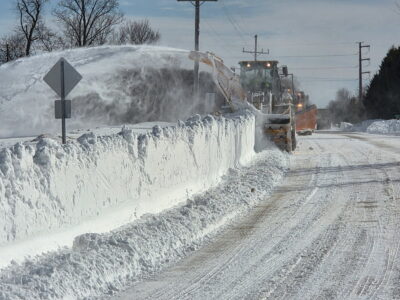
- The Delta County Road Commission works its way through the aftermath of the biggest single snow event in recent history. (Delta County Road Commission photo)
-
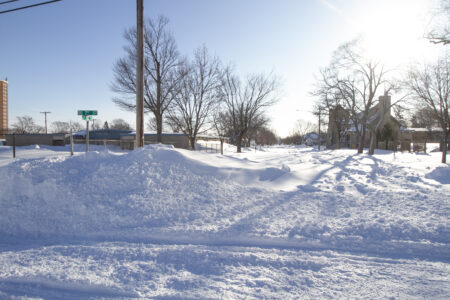
- By 9:30 a.m. Tuesday, March 17, South Seventh Street in the City of Escanaba had been plowed, but Second Avenue awaited clearing. By Thursday, the city’s Public Works Department had worked its way through the street priority list and even cleared the alleys. (R. R. Branstrom | Daily Press)
-
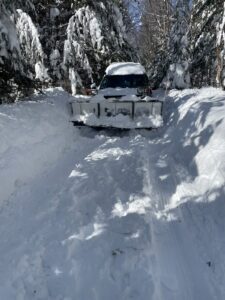
- A private snowplow attempts to bust through drifts on a backwoods driveway in Hyde on March 17, 2026. (Photo courtesy of Cindy Anthony)
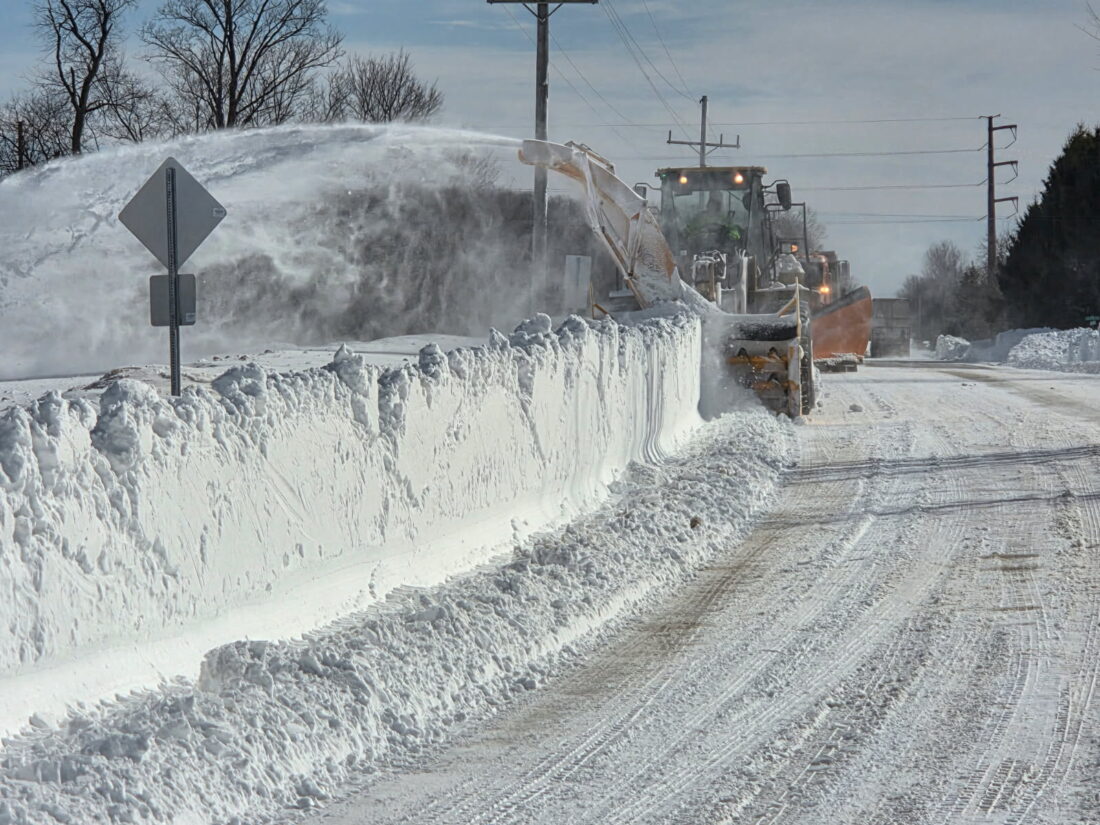
The Delta County Road Commission works its way through the aftermath of the biggest single snow event in recent history. (Delta County Road Commission photo)
ESCANABA — Road crews have had a challenging week cleaning up from a blizzard the likes of which haven’t been seen in the banana belt in almost half a century. The snow that fell between Sunday the 15th and Tuesday the 17th dumped between 33 and 52 inches in Delta County. Those measurements were taken in Escanaba and Round Lake, respectively.
Some have compared the recent storm to the blizzard of 1978, which also dropped around three feet in the area. As Escanaba Public Works Director Kent Dubord pointed out just days before Winter Storm Elsa, road-clearing is different today and can be trickier for his department, considering that there are now more cars on the road, bigger plows and fewer DPW employees.
“The crew was called in to begin plowing streets at 8:30 a.m. on Sunday, March 15. They split into two shifts: one worked until 9:00 p.m., while the other continued until midnight,” Dubord explained. “The crew that finished at 9:00 p.m. went home for a few hours before returning at 2:00 a.m. on Monday to resume plowing. The second shift remained at Public Works overnight and began their next shift at 4:00 a.m. Monday.”
Indeed, cars left on the street posed a problem, but the bigger issue was the hazardous, unmanageable conditions from the weather alone.
“With snow falling continuously at a rate faster than could be managed, combined with whiteout conditions and wind gusts exceeding 50 mph, both vehicles and plow trucks became stuck throughout the city. For the safety of both drivers and residents, the decision was made to pull all trucks off the roads at 10:00 a.m. Monday,” Dubord said.
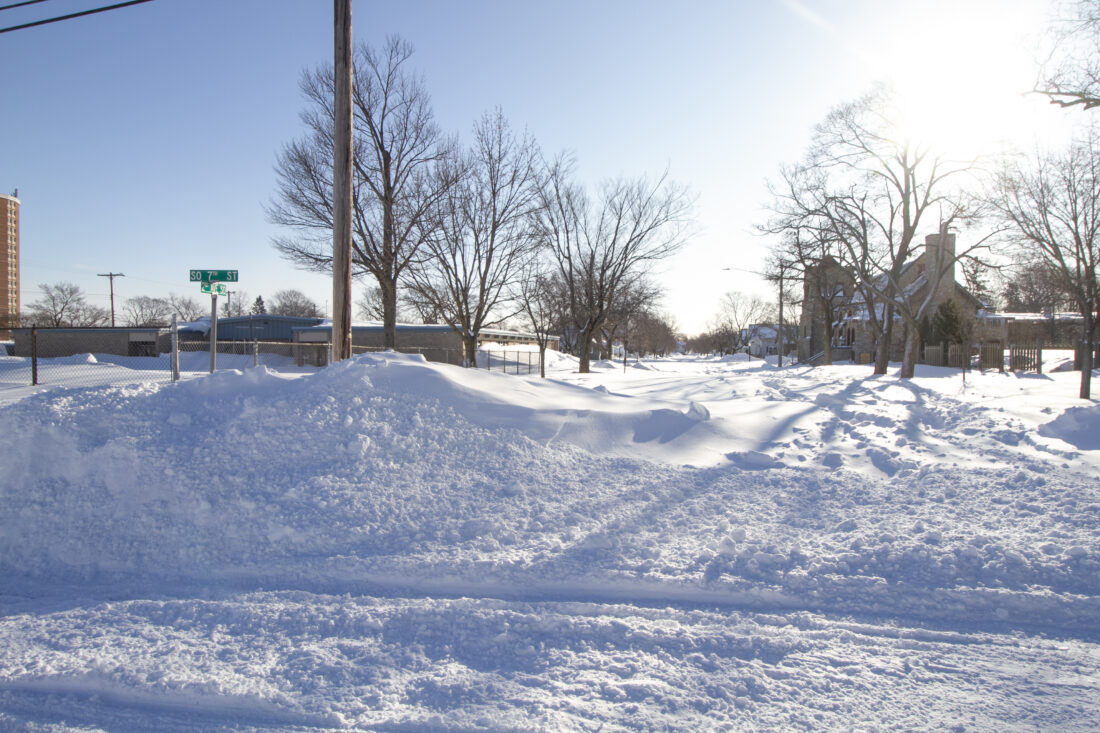
By 9:30 a.m. Tuesday, March 17, South Seventh Street in the City of Escanaba had been plowed, but Second Avenue awaited clearing. By Thursday, the city's Public Works Department had worked its way through the street priority list and even cleared the alleys. (R. R. Branstrom | Daily Press)
The county was also forced to stop plowing on Monday.
“The wind and sheer volume of snow, those were the two big issues,” said Delta County Road Commission Manager Jody Norman.
Citizens who tried to drive and got their vehicles stuck would not be towed, as companies like Gene’s Towing were also only responding to emergencies.
“If I had to guess, I would say we came across about 15 to 20 abandoned vehicles,” Norman reported. “If we could get around them we would. If they were blocking the road, we left and came back later to see if the obstruction was cleared. It wasn’t just cars and trucks, though; I believe the guys said they found a couple snowmobiles abandoned as well.”
When Escanaba crews were able to resume plowing at 10 p.m. Monday, they focused on major and local streets, and continued into the next evening. Some of the vehicles they found stuck and abandoned in the middle of streets were ultimately towed.
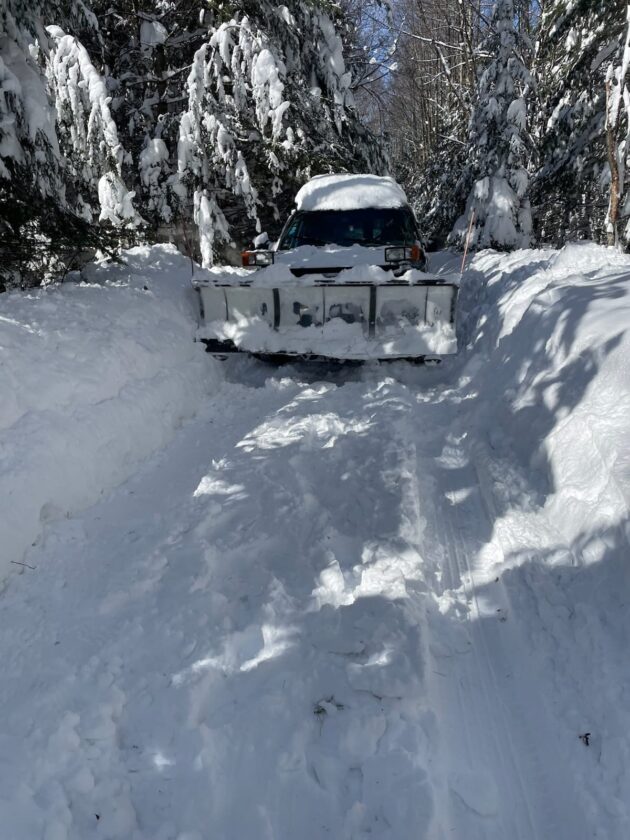
A private snowplow attempts to bust through drifts on a backwoods driveway in Hyde on March 17, 2026. (Photo courtesy of Cindy Anthony)
With a greater area to cover and more rural residents needing to be reached, the county had unique and pressing issues to solve.
“Tuesday quickly turned into a rescue mission just to get our drivers in here. We had a list of dialysis patients that needed to get to treatment, and the power companies had a list of roads that needed to be opened. After that, it was 911 calls only that we would respond to,” said Norman.
In the city, “The entire crew was finally able to return home Tuesday evening after spending two consecutive nights at Public Works. They returned again at midnight to begin clearing alleys and started snow removal operations on (Ludington) Street Wednesday morning, working until 8:00 p.m. that night,” Dubord said.
Overall, equipment performed well, with most issues being minor and quickly repaired. However, Dubord shared, there were a couple more notable problems for the City of Escanaba: “A loader went down Friday night (with) parts expected March 19, a backup salter failed Sunday, the blower went down Wednesday — parts expected March 25 — and the primary salter failed Thursday.”
Local contractors assisted to maintain operations. The city rented a loader from Gene’s Towing and one from Oberstar, Dubord said.
The Delta County Road Commission fared better, equipment-wise, and Norman praised the mechanics, noting that not a single truck had a mechanical issue — “other than a couple hydraulic lines that broke, and one truck had a tire chain break that took out a brake line, but those are to be expected.”
In large blizzard events, finding enough places to put the removed snow can be difficult. Norman said the county is “just about maxed out on storage,” and that if another six inches were to fall now with high winds, “that would create some massive issues.”
Under normal circumstances in Esky, “snow is hauled to o four designated locations,” Dubord explained. “Snow collected from Stephenson Avenue, Third Avenue North, and Sheridan Road is typically transported to Northshore or the compost site behind Public Works. Snow removed from Main Street east of 10th Street is usually hauled to one of the two parking lots in the park.
“However, due to current conditions–particularly on Jenkins Drive and 4th Street, which have not yet been fully plowed–all snow is currently being hauled to Northshore. Snow collected west of 10th Street is also transported to either Northshore or the compost site.”
The first mission was to make roads passable. Now, the objective is to make travel safer through widening lanes and removing banks in the streets.
“Friday, the 20th, we had a pass on every road with a full time resident, and about 50% had been widened beyond the single pass they originally had,” said Norman on Monday. “Today, the 23rd, we continue to widen roads and are now starting to look at opening culverts and ditches to allow a free flow of all the water that is to follow.”
While much of the snow is melting in the warmer weather, removal still remains a necessity in some places. Dubord said that the DPW should be removing the snow piles from the center of Ludington Street this week.
Though Governor Gretchen Whitmer had declared a state of emergency, opening up assistance for Delta County, Norman said the Road Commission hasn’t received any assistance and isn’t expecting it. He remarked that it help would be great, but the commission is “not banking on it.”
Community members have expressed their appreciation, though, having dropped off goodies to the road commission and sent thanks in letters and comments.
“We would really like to thank the community for their support and patience during this historic event. It was one we will not forget anytime soon,” Norman said.
Dubord noted that the biggest challenge during the blizzard was “determining how to maximize productivity while keeping crew members safe under extreme weather conditions and extended work hours,” and the team in Escanaba performed their duties well.
“The department demonstrated strong teamwork and commitment to reopening the city as quickly as possible,” Dubord said.
Local News
Hard-working road crews still at it

BraveBots bring banner from below bridge

Lake Effect Inn: a hidden gem, welcoming in any season

Delta County welcomes Bald Eagle HD

Appellate court denies new trial for man in near-fatal beating
Fatal fire in Marinette County
ESCANABA -- One person was pronounced dead at the scene and three others were transported for medical treatment ...