Delta County Board to discuss resolution opposing judicial changes
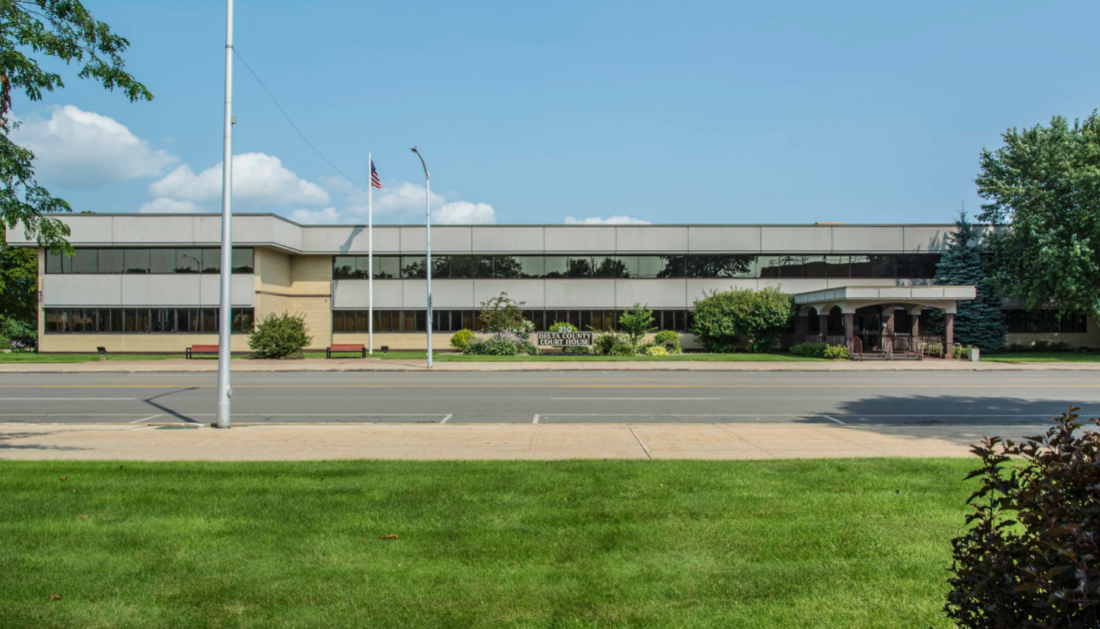
The Delta County Board on Tuesday will consider several agenda items, including a resolution opposing recommendations from the State Court Administrative Office (SCAO) that would alter the structure of Delta County’s circuit, probate and district courts. (Google Maps photo)
ESCANABA – The Delta County Board will meet Tuesday to consider a resolution opposing recommendations from the State Court Administrative Office (SCAO) that would alter the structure of Delta County’s courts.
The regular meeting will be held at 5:15 p.m. in the boardroom at the Delta County Service Center, 2920 College Ave.
Under Article VI, Section 11 of the Michigan Constitution, the number of judges and the structure of judicial circuits must be adjusted, upon recommendation of the Michigan Supreme Court, to reflect changes in judicial workload. To comply with that requirement, the SCAO has proposed several structural and judgeship changes across the state.
In Delta, Alger and Schoolcraft counties, the SCAO is reaffirming its 2013 recommendation to expand the 47th Circuit Court to include Alger and Schoolcraft counties. Under that proposal, the circuit courts would be realigned, while probate and district courts in all three counties would remain unchanged.
Alternatively, if the circuit courts are not realigned, the SCAO recommends eliminating the 94th District Court judgeship in Delta County.
According to Delta County Administrator Emily DeSalvo, county administration has met with all three judges in Delta County, and each opposes both recommendations. The Michigan Association of Counties is requesting a formal response from the county indicating whether it supports or opposes the proposals.
The county’s proposed resolution states that reducing judicial resources could “compromise the timely administration of justice, leading to delays in hearings, longer case processing times and increased burdens on court staff, litigants and the broader justice system.”
According to the SCAO estimates, the 47th Circuit Court, Delta County Probate Court and the 94th District Court require 1.92 judges to manage their workload. Delta County currently has three judges, which SCAO calculates as an excess of 1.08 judges, with each judge operating at about 64% of a full workload.
By comparison, the 11th Circuit Court, the probate and district courts serving Alger, Luce, Mackinac and Schoolcraft counties, the 92nd District and the 93rd District Courts require an estimated 2.90 judges. Those courts currently have four judges, an excess of 1.10 judges, with an average workload per judge of 73%.
If realigned, Delta, Alger and Schoolcraft counties would have a total judicial need of 3.38 judges with four assigned judges, resulting in an estimated workload of 85% per judge.
Case filing data from the SCAO’s December 2025 Judicial Resources Report shows that from 2019 to 2024, Delta County averaged 5,554 filings across its circuit, probate and district courts. During the same period, Alger County averaged 1,749.5 filings and Schoolcraft County averaged 1,139.83 — significantly fewer than Delta County.
The state covers a judge’s salary, up to 9% in retirement contributions and the employer portion of FICA taxes, for a total annual cost of $217,160.17 per judge. If all SCAO recommendations statewide were enacted – including adding 25 circuit judgeships and eight district judgeships, converting one district judgeship to a circuit judgeship and more – the estimated annual cost to the state will be an additional $6,919,666.
The SCAO notes that because local funding, particularly staffing for the courts, varies widely, it is difficult to estimate the amount that a funding unit would save from a specific judgeship reduction.
In other business, the board:
Will consider approval of the FY2025 Emergency Management Performance Grant (EMPG), which provides federal funds to the state to offset the cost of the emergency management coordinator position within the county. The FY2025 EMPG package provided $7,218 to the county, which is significantly lower than in previous years, according to Delta County’s Emergency Management Coordinator Paul Geyer.
Will consider ending all current compensatory time accumulation/award for all salaried, non-union/non-elect county employees. Employee benefit time was recently evaluated for errors in reporting. According to DeSalvo, salaried, non-union/non-elect county employees have been earning or accumulating compensatory time either on a weekly basis or on their anniversary date, which is in conflict to the Department of Labor law and with the Governmental Accounting Standards Board’s Statement no. 101.
—
Sophie Vogelmann can be reached at 906-786-2021 or svogelmann@dailypress.net.
Local News
Murder trial for Tavaris Jackson to begin
Delta County Board to discuss resolution opposing judicial changes
Gordon’s Resort a year-round U.P. destination
Though controlled quickly, Harbor Tower fire injures two, displaces some
West Bagley Homemaker Club passes 70 years