US Navy cancels ships to be built in Marinette
-
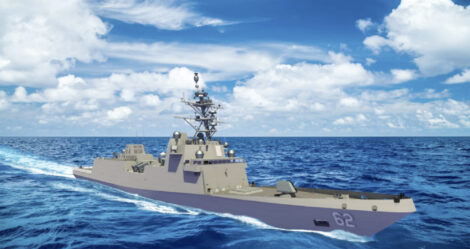
- This rendering of a Constellation Class Frigate was included in a June 2025 Government Accountability Office report. (Photo courtesy of the Government Accountability Office, via Wisconsin Public Radio)
-

- Wisconsin’s Democratic U.S. Sen. Tammy Baldwin, left, tours Fincantieri Ace Marine in Green Bay on April 22, 2024. (Joe Schulz/Wisconsin Public Radio)
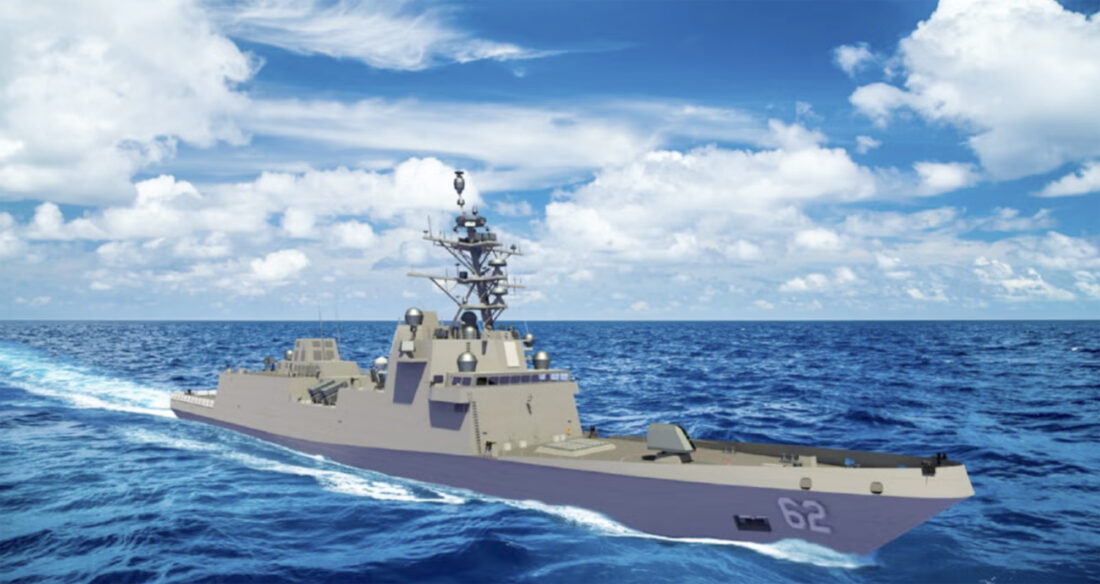
This rendering of a Constellation Class Frigate was included in a June 2025 Government Accountability Office report. (Photo courtesy of the Government Accountability Office, via Wisconsin Public Radio)
U.S. Sen. Tammy Baldwin is calling on the U. S. Navy to “keep commitments made” by bringing more shipbuilding to Wisconsin after the cancellation of a multi-billion dollar contract with a Marinette shipbuilder.
Navy Secretary John Phelan announced in a social media video last week that the Navy would cancel its Constellation-class frigate program, which has faced delays and cost overruns.
In April 2020, Fincantieri Marinette Marine was awarded a contract to build the lead ship with options to build up to nine more, according to a report from the Government Accountability Office. The Navy exercised options for six ships — the first two are under construction.
Marinette Marine broke ground on a new 32,000-square-foot shipbuilding facility in early 2021 to help it execute what would’ve been a $5.5 billion contract if all 10 ships had been ordered. The new building was part of a $800 million investment in upgrading the company’s shipyards, including three in Wisconsin.
Construction on the first frigate began in 2022. The program faced design and construction challenges that pushed the completion of the first ship back from 2026 to 2029, according to the Government Accountability Office.

Wisconsin’s Democratic U.S. Sen. Tammy Baldwin, left, tours Fincantieri Ace Marine in Green Bay on April 22, 2024. (Joe Schulz/Wisconsin Public Radio)
Now, Phelan says the Navy is cancelling the order for the four ships that have not yet started construction. He said the decision came from a “need to grow the fleet faster” and to “rapidly construct new classes of ships.”
“We greatly value the shipbuilders of Wisconsin and Michigan,” he said in the social media video. “While work continues on the first two ships, those ships remain under review as we work through this strategic shift.”
In a statement, Fincantieri Marinette Marine’s parent company said the company reached an agreement with the Navy on the program that “encompasses the continuity of work” on the two ships currently under construction. The company says it expects to receive orders for new ships and will work with the Navy to deliver new classes of vessels.
“The path forward … provides for the necessary stability for our teams and the entire Wisconsin System of Yards, allowing us to continue investing in innovation and skills,” Fincantieri Marine Group CEO George Moutafis said in a statement. “As the Navy transitions to new vessel types, we stand ready to support their evolving needs.”
Even so, it’s not clear how the canceled frigates will affect the workforce at Marinette Marine. The local boilermakers union declined to comment.
Autumn Timblin, Marinette County economic development and tourism director, said the shipbuilder is a major employer, drawing workers from across the county and surrounding counties.
Manufacturing accounted for 29% of the jobs in Marinette County as of 2023, or a monthly average of 5,143 jobs, according to a 2025 state workforce profile of the county. Nearly half of those workers are employed at the shipyard, the city’s largest employer. According to Fincantieri, the company has 2,175 employees and contract workers at the site.
Timblin says the county hopes the Navy’s decision won’t lead to a workforce reduction at Marinette Marine.
“No one necessarily knows what it means or what the outcome is going to be,” she said “And as Fincantieri has stated, they’re looking and hoping for other contracts to come through and be able to work something through with the Navy, but everything’s just kind of an unknown at this point.”
At the federal level, Baldwin, who has previously advocated for domestic shipbuilding, told WPR she was “deeply disappointed” when she received a call last week from the Navy secretary informing her that the service wouldn’t move forward with four of the ships.
Baldwin, a Democrat, said she asked the Navy to bring additional work to Fincantieri Marinette Marine to ensure the shipyard will not experience a gap in work from the canceled vessels.
“If this administration wants to take their time and not see the urgency facing this shipyard and facing this workforce, then there’s the potential for gaps in the production and a really big negative impact on the workforce there,” she said.
Beyond Navy ships, Baldwin also said there are opportunities to build more commercial vessels in the Great Lakes region. She says the U.S. produced five vessels for trans-Atlantic and trans-Pacific commerce last year, while China produced 1,700.
“If we want to be dominant in shipbuilding and in maritime commerce, we have got to give these shipyards work,” she said.
Local News

Though controlled quickly, Harbor Tower fire injures two, displaces some

Bald Eagle Harley-Davidson hits the road, coming to Escanaba

Bay BPA advancing to nationals in Tennessee

Mugshot released: Local substitute teacher arrested for criminal sexual conduct
Mugshot released: Local substitute teacher arrested for criminal sexual conduct