Rural Michigan broadband access to jump with $920M in fed funding
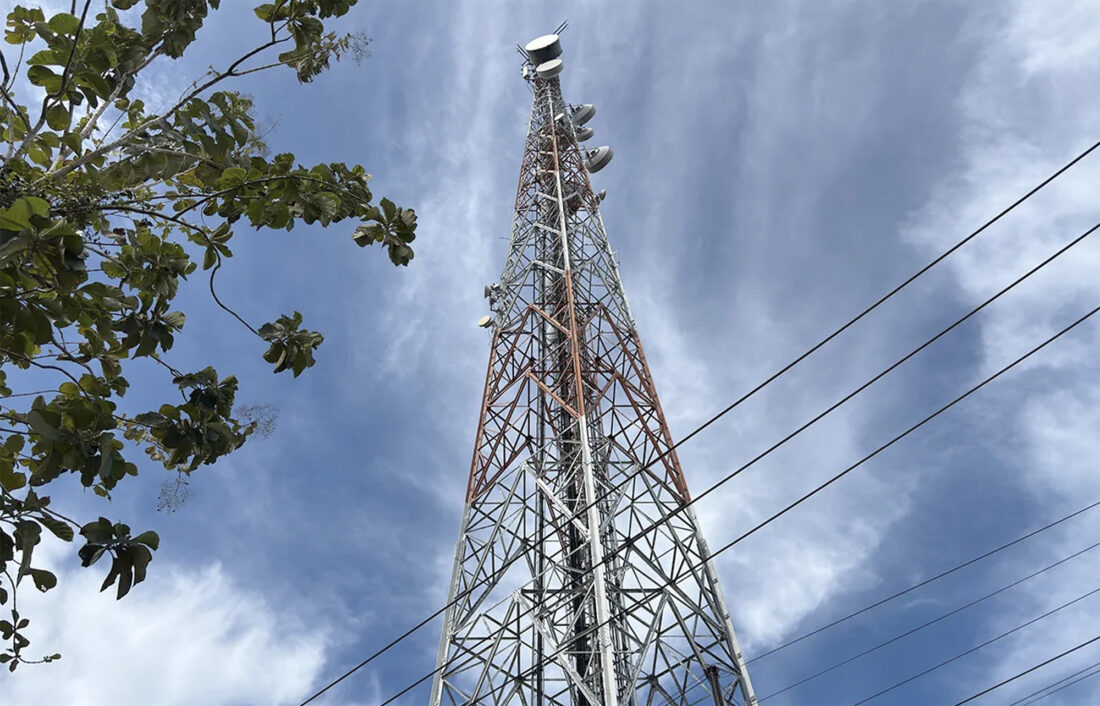
Expansion of broadband access in rural northern Michigan should pick up steam soon, with an influx of federal dollars. (Shutterstock photo, via Bridge Michigan)
(This story was originally published by Bridge Michigan, a nonprofit and nonpartisan news organization. Visit the newsroom online: bridgemi.com.)
Efforts to expand high-speed internet across rural northern Michigan will get a $920 million boost from a federal grant, which over the next four years is expected to make broadband available to an additional 200,000 homes and businesses.
Combined with $550 million in matching funds from providers, the almost $1.5 billion investment is a potential game-changer for rural counties, said Gov. Gretchen Whitmer.
The federal grant was announced in 2023, but it’s taken two years to get projects in local communities lined up for disbursement of those funds. In four years, the investment is expected to add 31,000 miles of fiber-optic lines across the state.
“When we expand access to affordable, high-speed internet, we open doors to jobs, healthcare, education, opportunity and so much more,” Whitmer said in a statement. “We’re making historic investments across the state to ensure that no matter where someone lives or works, they have the connectivity they need to thrive and reach their full potential.”
A separate state program, called Realizing Opportunity with Broadband Infrastructure Networks, offers grants to local communities to assist in internet expansion projects. It is expected to expand high-speed internet access to an additional 50,000 households in 2026.
“We know that access to reliable, high-speed internet is no longer a luxury,” said Eric Frederick, chief connectivity officer for the Michigan High-Speed Internet Office. “This funding … helps Michiganders get access to education, visit doctors, apply for jobs and so much more.”
Currently, about 9 of 10 Michigan homes have access to internet service of at least 100 megabits per second, the minimum rate the Federal Communications Commission sets for high-speed internet, also called broadband. That puts Michigan in the middle of the pack among states.
Yet there are 23 counties — mostly in northern Michigan or the Upper Peninsula — where less than 60% of homes have broadband access, according to data from Connect Nation, a nonprofit working to close the digital divide.
In Lake County, just 22% of homes have high-speed internet available; In Osceola County, it’s 28%.
By comparison, Wayne, Oakland and Macomb counties all have broadband access surpassing 99%.
Katy Xenakis-Makowski, superintendent of Johannesburg-Lewiston Area Schools in Otsego County, told Bridge Michigan that many of her students and half her teachers don’t have high-speed internet at home.
“They just started to put broadband in my neighborhood this summer,” Xenakis-Makowski. “We had an ice storm and were out (of school) for eight days. People say, ‘Oh, you should just make them up by going online,’ and we can’t.”
Government support is needed to expand high-speed internet infrastructure to rural regions where there aren’t enough potential consumers to make the expansion financially viable. The U.P.’s Luce County, for example, has a population of about six people per square mile.
Michigan has made notable progress in increasing access, as well as the speed of the internet available. In 2018, just 4.3% of households had access to 1 Gigabytes of service, compared with 45.2% in 2025.
After the announced expansions are complete, “Michigan will be closer to universal availability than ever before,” said Frederick. “There will still likely be extremely remote and rural locations that may still need to be connected, but nearly all Michigan households and businesses will be able to access high-speed internet after these investments are made.”
Even when internet lines are laid, there’s the problem of service cost in areas that have a high poverty rate. Nationally, between 3% and 8% of households where broadband is available do not have internet in their homes, either because of cost or choice.
As of 2023, more than 492,000 Michigan households had either no internet access or no availability of broadband, according to the Michigan Digital Equity Plan, published by the Michigan Department of Labor and Economic Opportunity. Another 730,000 households faced barriers related to affordability, device access or digital literacy.
The average internet bill in Michigan is $65 a month. Some Michigan internet providers offer lower rates for low-income households.

Local News
Circuit Court
ESCANABA – These individuals were recently sentenced in Delta County Circuit Court on unrelated charges: - ...

Daily Press’ ‘Design an Ad’ contest returns, connecting students with local businesses

Double tap

Two charged in Apple Barrel robbery
The fall of the House of Ludington