Rescue divers strive to serve the public
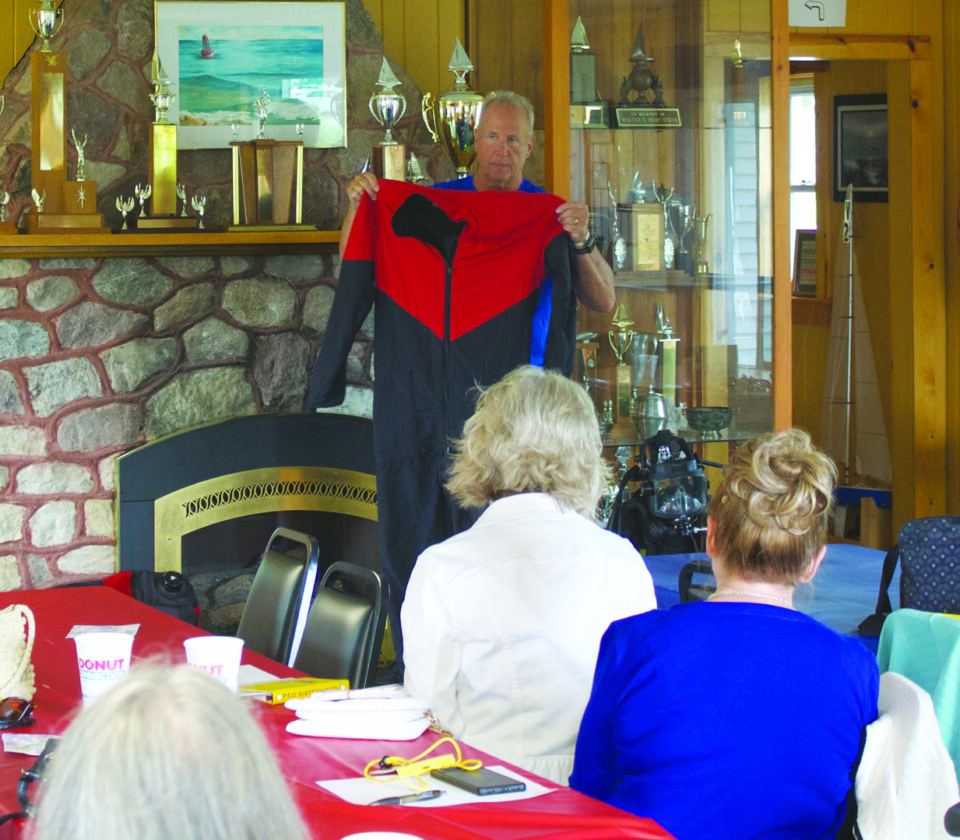
ESCANABA – The Escanaba Yacht Club (EYC), in conjunction with the Philanthropic Education Organization (PEO), invited club members and the public for an informative presentation from the Delta County Search and Rescue Team.
PEO is a local organization that raises money to support local women in furthering their education by providing scholarships.
Attendees heard firsthand from volunteer diver Jim Kirby and Delta County Marine Deputy Jon Smith about the history of the team, what they do, and how they do it.
“It started in about the 70s, and it was just a group of local divers who probably looked more like a club at that time. They would get together, they wanted to use their skills, their diving ability to help our community,” Smith shared.
The initial group featured recreational divers who volunteered their time and own equipment to serve the community. While the equipment worked, the team needed specialized equipment for rescues and recoveries.
“Most of us have all our own gear, but it’s recreational equipment. And as you get into the public safety diving, you need more specialized equipment,” Smith said.
“It’s much different. It’s much more expensive than just buying your own recreational gear.”
Kirby and Smith shared that several organizations and community members stepped up to fund and support the team.
“We were able to slowly, but relatively quickly, because of the aggressive grant writing we did and the fundraising to start equipping our divers with standardized gear so every diver is diving with the same equipment,” Smith said.
The current suits are 10 to 15 years old, but Smith said the suits have a decent life expectancy.
“There are replaceable seals and things that are usually the things that rip or tear. So we’re able to replace those and try to keep them around as long as possible,” Smith explained.
Kirby showed and demonstrated how each piece of the diver’s equipment works, from the wetsuit to the diving mask.
“All this on weighs a little over 100 pounds,” Kirby said.
When going on a dive, the protocol requires a minimum of three people.
“So we have the diver who’s diving, we have a backup who’s fully ready to go in case something goes wrong with the diver. And if the backup diver has to go in, then the ’90 percenter’ (another person ready to dive in if needed) gets fully dressed and ready to go in,” Smith explained.
Additionally, each diver is paired with a tender who monitors the diver’s line that is attached to the shore or a boat.
They spoke about what it’s like to be in the water on a search, saying the visibility is minimal.
“Most of our diving, you can put your hand right up to your face and not see it,” Smith said.
The team is on call 24/7, even in the winter when individuals are prone to falling through the ice.
“Ice recovery is usually easier than summertime (recovery) because we know where they went through,” Smith said.
The majority of the team consists of volunteers who have an app that alerts them if a rescue is needed. Divers can also note if they are responding to the scene in the app.
One attendee asked Kirby and Smith how they handle and prepare for the job, especially when they find a body.
Kirby says every diver handles it differently, but he takes into consideration the closure and help he and the team can provide to friends and families.
“You got to look at what you’re doing for these families, the closure for these families,” Kirby said.
Another asked how the community can promote water safety, and Kirby says the answer is simple.
“Number one, PFDs – personal life jackets. We have never recovered somebody with a life jacket. It’s so simple,” Kirby said.
Smith added it’s a good idea to bring a life jacket to the beach or even when walking across the marina docks, especially if there are children with you, as you never know what can happen.
Local News
Whitmer extends State Emergency to Osceola County
LANSING, Mich. – Governor Gretchen Whitmer on Tuesday added Osceola County to the list of counties under a state ...
Lingering snow around Houghton leads to late snowmobile race
Former state rep Sara Cambensy announces run for state senate

Swajanen announces campaign launch event for Marquette County District Court bench

Lunchtime Live special edition hints at spring