Keep an eye on the ice during warm weather

ESCANABA – As anglers, skiers and outdoor enthusiasts alike enjoy ice activities, respecting the elements and taking precautions before stepping on the ice is essential.
An expert weighed in on how the public can prepare to go out on the ice and what to do if you get stuck, among other tips.
“First and foremost, tell someone you trust specifically where you are going, how you will access the lake, and when youre expecting to return,” said Delta County Search and Rescue Chief Mike Markovich.
Local bait shops, such as Blade’s Bait and Tackle, are a good source of information regarding ice conditions. However, Markovich reminds ice venturers to use common sense when traversing the ice.
“Remember, all ice has a potential to break,” he said.
Paul “Blade” Bloedorn, owner of Blade’s Bait and Tackle, is an excellent local resource for information regarding ice conditions. For the final week of February, which has been on the warmer side, ice conditions are still expected to be good through the next month.
“Ice will continue to be over 20 inches thick through this warm-up. Snow will melt down and get a little sloppy during the day (and will) freeze hard at night. Much like maple syrup running this time of year,” Blade said.
“Ice conditions are as good as it gets and we will have through March, maybe April.”
Even with good ice conditions, as described by Blade, it’s essential to have emergency supplies on hand every time you venture on the ice, including ice picks to pull yourself out of the freezing waters. Screwdrivers are also a nice alternative to ice picks.
Be sure to bring flotation devices such as a life jacket or float suit as well.
Markovich also recommends bringing a throw bag or rope should you or a friend fall through the ice.
Preemptive measures such as measuring the thickness of the ice with an ice spud are a good idea when out on the ice.
Your phone is vital should you need to call for help, but ensure it is stored in a waterproof container or case.
“This can be as simple as a Ziploc bag,” Markovich said.
When out, Markovich recommends avoiding certain areas.
“Some areas of danger would include river mouths, areas of moving water, such as points of land, which the water has to move around, pressure cracks, voids in the ice where ships have traveled, and warm water discharges. It is also much more dangerous to travel in darkness,” he said.
He said people get stuck when a large sheet of ice breaks away from the main body of ice.
“This can happen from a change in wind direction, a void created by a passing ship, or a pressure crack separating the ice,” he explained.
Markovich provided a few tips on what to do if you cannot get off the ice.
“Don’t panic. Call or text 911. Distribute your weight by sitting or lying down. Don’t congregate together. Stay away from heavy four-wheelers or snowmobiles. Await rescue,” he said.
Should you fall into the ice, there are steps to get back to the surface safely and in a safer area.
“The best way to go about getting yourself back out would be to get back next to the ice shelf from where you came, put your arms out in front of you, let your legs float up, and kick with your legs, pull with your arms until you’re back on the ice,” he said.
“At that point, roll away from the hole from what you fell in and continue to roll or crawl until you get back to solid ice.”
Most ice rescues occur late at night or early in the morning when there is low visibility.
He emphasized calling 911 instead of a friend or a fishing guide, saying the rescue team is well-equipped to get them out of sticky or rather icy situations.
“We have rescuers all over the county. We are highly trained and have the proper equipment to perform an ice rescue. You will not be fined or charged for rescue,” he said.
Markovich has been the team’s chief for seven years; he said the amount of rescues depends on the year.
“Some years it can be zero, some years it can be up to like 30, so it just really depends on the year and the ice conditions,” he said.
He added that there have been a low number of ice rescue calls so far this year.
Always be over-prepared when trekking onto the ice, and don’t be afraid to call 911 should you need help.
Local News
UPPCO prepares for April storm, warns public
MARQUETTE — The Upper Peninsula Power Company (UPPCO) reminds customers and the public that winter weather ...
Logging industry recognition
HARRIS — Loggers, foresters, distributors and other people and businesses connected to the timber industry in ...
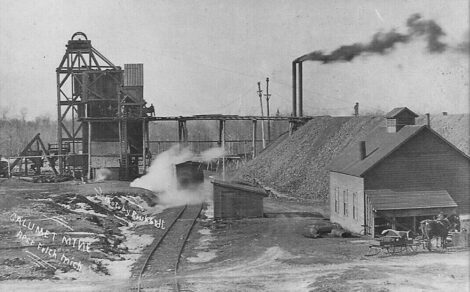
Looking back on the Calumet Mine in Felch Township

Unleashed potential: incarcerated handlers rehabilitate dogs

Nominate a red line hero