
Escanaba’s lead line replacement making headway
Trending
ESCANABA -- Despite a pandemic, soaring material costs, and other issues, the city of Escanaba is working to meet the lead service line replacement mandate issued by the state four years ago.
"We're still plugging away and making headway," said Escanaba Water and Wastewater Superintendent Jeff Lampi.
Prompted by the fallout from the Flint water crisis, the Michigan Department of Environment, Great Lakes, and Energy (EGLE) issued new rules in 2018 that dictated municipalities were required to replace lead service lines at a rate of 5 percent of lines within their borders per year starting in 2021. The rules also changed to prohibit "partial line replacements," where just the lead portion of a service was removed, such as a gooseneck connecting a water main and a residential service line.
Any lines that are made of lead or are downstream of where lead is or previously was located are considered lead contaminated all the way to the in-home meter and must be replaced under the rules. All of the costs associated with the replacements fall on municipalities.
The rule was met with pushback by cities across the state, including Escanaba, which at the time of the announcement estimated it would need to replace around 200 lines annually to meet the 5 percent requirement and complete the replacements by the 2041 deadline. Officials also took issue with the rules because they were not linked to lead particulates in the water, which in 2018 averaged around 5 parts per billion -- well below the current 15 parts per billion limit set by the state at the time and below the 12 parts per billion level that took effect with the new rules.
To meet the deadlines and cover the costs of replacement, the city has tapped into grants, funds released through the pandemic-era American Rescue Plan Act (ARPA), and raised water rates. However, using federal and grant funding means there are a series of waterline replacement projects taking place -- sometimes simultaneously -- that come from different funding sources and have different times for completion.
For example, the city is currently wrapping up the lead service line replacements attached to what Lampi calls "the Booker funds." The $5 million project includes $3 million in grant funds and $2 million in loan funding.
"That work will be done this fall, before the end of this summer, here. We just left 10th, we're just about finished with a couple blocks on 11th, and we're moving to 9th Street after that, and I think we're moving to 2nd Avenue after that is done," said Lampi.
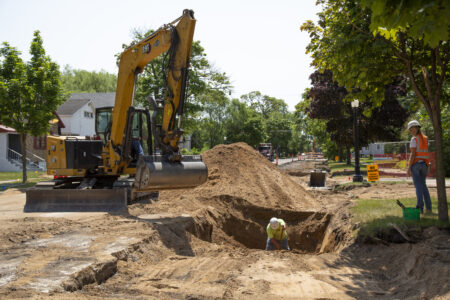
The water department and the city's public works department have been joining forces to orchestrate paving projects around the line replacements, as replacing the lines requires tearing up portions of streets. However, third-party contractors and material issues have left some areas of the city unfinished even after the lines have been replaced.
"We started on South 15th Street and we're still trying to get the contractor back there to do restoration of grass seed and everything. We're still fighting getting Stephenson squared away, they should be pouring curb and concrete there soon, and kind of soft plans for asphalt later this summer on Stephenson," he said.
The next lead service line replacement project, which was recently awarded to Oberstar of Marquette, will be paid for using a $20 million ARPA grant. The project also includes the replacement of 15,250 feet of watermain and other related costs.
"It's probably another three or four weeks before the $20 million work can even start, and the contractors may not even start this year because of lack of materials," said Lampi, adding it takes week or sometimes months to get the necessary materials to do the service line replacement work.
If the work doesn't start this fall, the project will begin next spring. In either case, the project is expected to take between two and three years and result in the replacement of 800 lead service lines.