
Trending
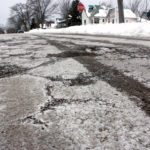
ESCANABA -- The Escanaba City Council is considering asking voters to decide on a tax millage to fund needed road repairs. The issue was discussed during a council work session at city hall Tuesday morning.
"I asked for this meeting because I think it is time for us to make some changes," said Mayor Marc Tall, noting annual street improvements are not keeping up with the deterioration of roads throughout the city.
City crews can handle about $200,000 in road repairs each season, but any work beyond that requires hiring outside help, said Tall. He added the state is increasing the city's road funding, but it's not enough to do what needs to be done.
"It will take a number of years to catch up to where I think the citizens of Escanaba deserve," the mayor commented.
Council members all agreed the city roads need to be fixed, but also considered whether or not underground utilities should be worked on at the same time.
Mayor Pro Tem Ron Beauchamp stated he's in favor of replacing underground infrastructure during the road repair process to prevent city crews from being forced to tear up newly-paved streets when water and sewer problems occur later.
Tall said the city can't afford to work on all the utilities and should make those repairs as problems arise.
"I don't think we can wait to fix all our infrastructure," he said.
Following a half hour of discussion Tuesday, council came to a consensus to have City Manager Patrick Jordan draft up two millage proposals for council to review at its regular meeting on Thursday.
One proposal would ask voters to decide on a millage to fix road surfaces while the second proposal would be a millage to fix roads and replace underground utilities where needed. Estimated costs for each will also be presented to council on Thursday.
The number of years the millage would be in effect and the amount of millage the city would seek would be decided following further discussion.
Council member Ralph Blasier said putting the issue to a vote is a good idea because taxpayers will be given the choice to decide what should be done. He had suggested drafting the two separate proposals for council's review.
"We can't not do the streets and shouldn't ignore the water pipes," said Blasier.
Council member Michael Sattem said he thinks a road repair millage is "a no brainer."
Council member Peggy Schumann said it would be great to make all the underground repairs but that is not feasible, noting the repaving of Ludington Street last year was great for the city. She said making progress on some roads would be good for the community.
When presenting his recommendation for a road millage proposal Tuesday, Tall suggested asking voters approve 1.5 to 2 mills to generate about $500,000 each year indefinitely or for 30 years to catch up on needed road repairs and continuously fix roads into the future.
"It's not enough to solve all the problems in one year, but it's a step in the right direction," he added.
Beauchamp said he thinks fixing the streets and the underground utilities at the same time would draw in more votes for a road millage. He suggested a shorter millage term now and a millage renewal later if needed.
Beauchamp also noted recent news reports say the federal government is increasing the national budget to include more funding for roads and infrastructure. Both Tall and Schumann were skeptical to rely on these federal funds.
Council also has the option to increase Escanaba's annual property tax rate of 17 mills, which has been in place since July 1, 1988, even though the city is permitted to levy up to 19.89 mills a year.
Treasurer/Human Resources Director Bob Valentine told council it is a complicated process to change the property tax levy. He also noted other factors which council should consider while deciding whether or not to seek road funds through a tax millage.
Valentine said the city's street fund currently has a $3 million fund balance. Also, the city will be receiving a significant increase in street funding from the state gas tax fund this year.
That could up the city's annual gas tax share from approximately $1 million to approximately $1.5 million, said City Controller Melissa Becotte.
Jordan also noted the governor is proposing a new formula for personal property taxes that could generate additional funding, but added, "I have a hard time counting on Lansing to fix our problems."
Council's meeting on Thursday begins at 7 p.m. at city hall.
-- -- --
Jenny Lancour, (906) 786-2021, ext. 143, jlancour@dailypress.net