Spring brings increased fire danger
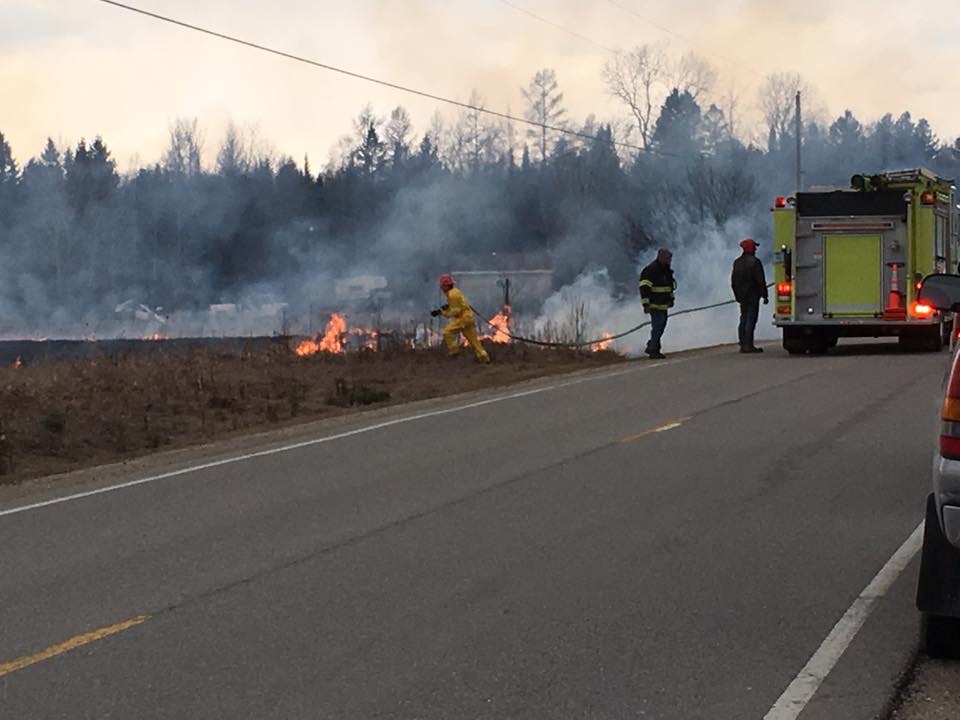
Courtesy photo Escanaba Township firefighters battle a grass fire earlier this month. Spring is a busy time for area firefighters as the risk of wildfires increases dramatically.
ESCANABA — In the Upper Peninsula, the arrival of spring typically coincides with an increase in wildfires. Jay Osterberg, a forest fire officer with the DNR’s Escanaba Management Unit, said this year’s wildfire season is expected to be a particularly busy one.
“Historically, the Upper Peninsula’s spring fire season starts April 1 and runs until green-up in June,” he said.
This is the result of the higher temperatures, relatively low humidity, and wind associated with spring in the area. The wide availability of combustible vegetation at this time of year also helps wildfires to spread.
“The dead vegetation and other fine fuels such as grass are cured and will burn when ignited,” Osterberg said. While rain can temporarily keep these fuels from igniting, they will be flammable again about one day after rainfall occurs.
Last spring was an average one for the Escanaba Management Unit, Osterberg said. This unit deals with wildfires in Menominee County and western Delta County.
“Between (those) two, we responded to 19 fires for a total of 36.9 acres in 2016,” he said.
Out of those fires, 18 took place between April and June.
“This is our busy season,” Osterberg said.
Osterberg said based on the DNR’s current expectations, this
Courtesy photo
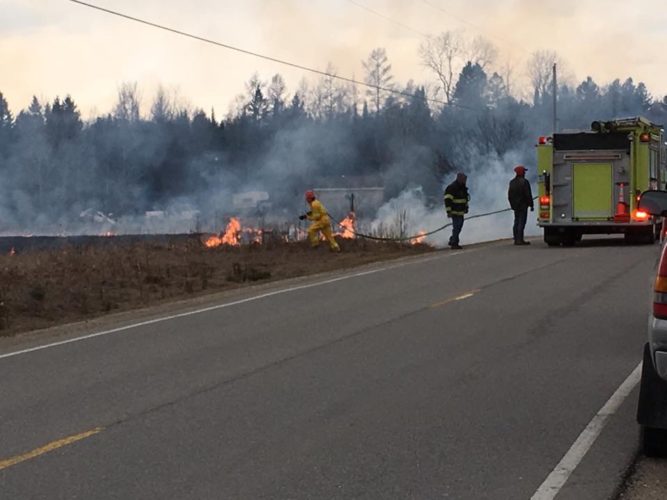
Escanaba Township firefighters battle a grass fire earlier this month. Spring is a busy time for area firefighters as the risk of wildfires increases dramatically.

Jordan Beck | Daily Press
Forest Fire Officer for the DNR’s Escanaba Management Unit Jay Osterberg checks data from an automated weather station which is used to determine fire danger levels in Menominee County. The Escanaba Management Unit deals with wildfires in Menominee County and western Delta County.
Jordan Beck | Daily Press
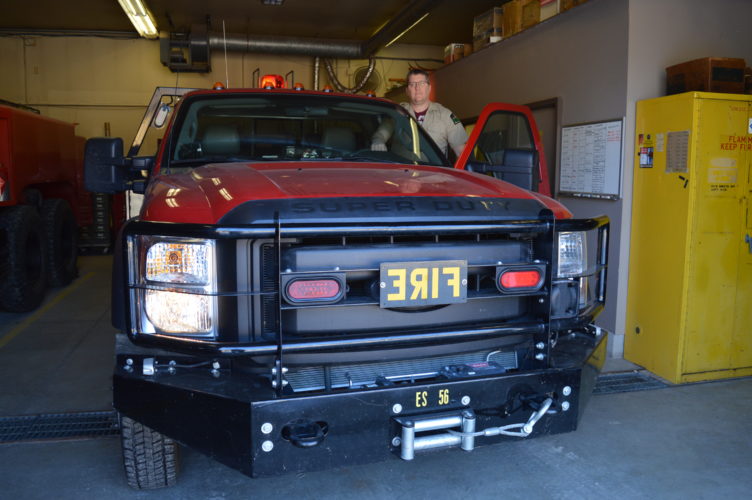
Forest Fire Officer for the DNR’s Escanaba Management Unit Jay Osterberg is pictured with a vehicle used by the unit. Osterberg said this year’s wildfire season is expected to be a particularly busy one in the area.
“Most of the fields are snow-free,” Osterberg said.
Because of this, Osterberg said it is important for people who are planning to burn their yard waste this spring to keep some safety tips in mind.
“If you do decide to burn yard waste such as leaves and brush, first clear the area around the leaves or brush pile to be burned,” he said. People planning to burn yard waste should also avoid overhanging hazards (such as tree branches or power lines) and rake and compost dead vegetation in their yard before burning.
Osterberg said it is important to have water on hand to extinguish these fires, as well. “Have a water source such as a hose and bucket close by,” he said.
Local News
UPPCO prepares for April storm, warns public
MARQUETTE — The Upper Peninsula Power Company (UPPCO) reminds customers and the public that winter weather ...
Logging industry recognition
HARRIS — Loggers, foresters, distributors and other people and businesses connected to the timber industry in ...
Looking back on the Calumet Mine in Felch Township

Unleashed potential: incarcerated handlers rehabilitate dogs

Nominate a red line hero