Artemis II crew due to land with lots of data
-
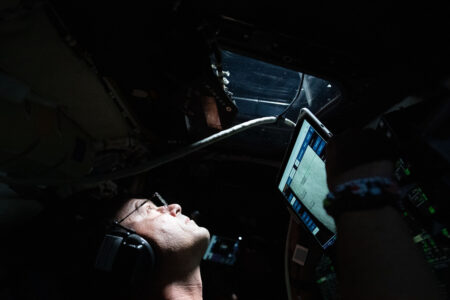
- This image provided by NASA, astronaut and Artemis II Commander Reid Wiseman takes a moment during the seven-hour lunar observation period where the crew reported to the ground team their observations including color nuances, which will help enhance scientific understandings of the Moon on Monday, April 6, 2026. (NASA via AP)
-
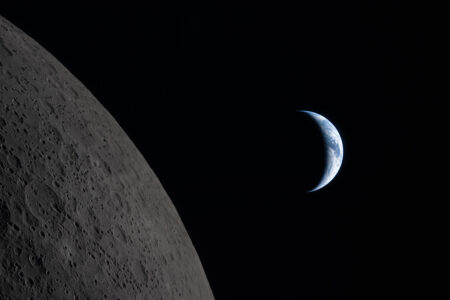
- In this image provided by NASA, the Artemis II crew captured this view of the Earth next to the Moon before Earthset during a lunar flyby, Monday, April 6, 2026. (NASA via AP)
-
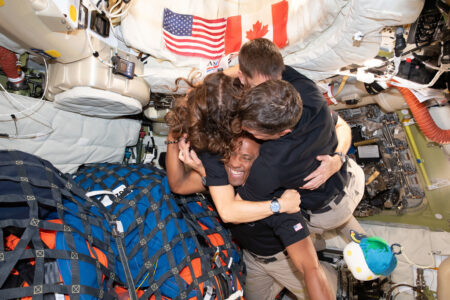
- In this image provided by NASA, The Artemis II crew, clockwise from left, Mission Specialist Christina Koch, Mission Specialist Jeremy Hansen, Commander Reid Wiseman, and Pilot Victor Glover, take time out for a group hug inside the Orion spacecraft on their way home on Wednesday, April 7, 2026. (NASA via AP)
-
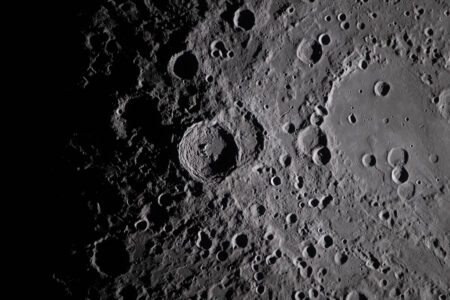
- In this image provided by NASA, the Artemis II crew captured this image of the Vavilov Crater on the Moon during a lunar flyby, Monday, April 6, 2026. (NASA via AP)
-
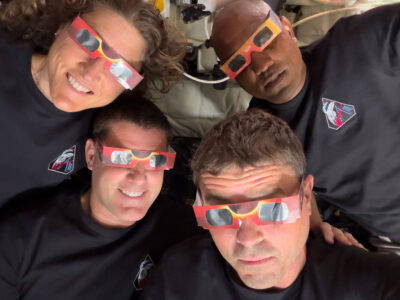
- In this image provided by NASA, the Artemis II crew, counterclockwise from top left, Mission Specialist Christina Koch, Mission Specialist Jeremy Hansen, Commander Reid Wiseman, and Pilot Victor Glover pose with eclipse viewers during a lunar flyby, Monday, April 6, 2026. (NASA via AP)
-
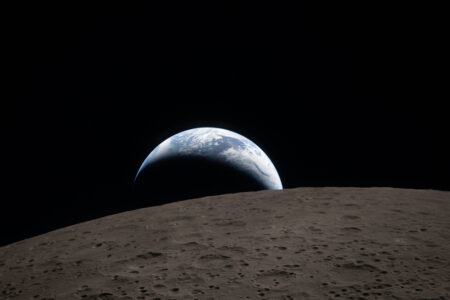
- In this image provided by NASA, The Artemis II crew captured this view of an Earthset on Monday, April 6, 2026, as they flew around the Moon. (NASA via AP)
-
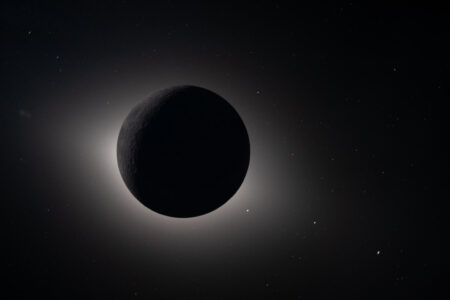
- In this image provided by NASA, The Artemis II crew captured from lunar orbit, the Moon eclipses the Sun on Monday, April 6, 2026. (NASA via AP)
-
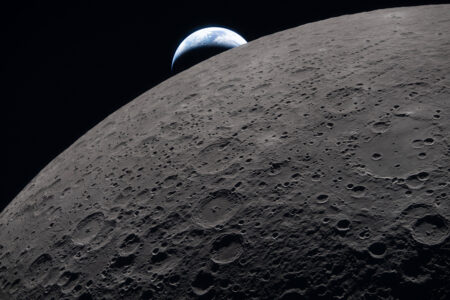
- In this image provided by NASA, the Artemis II crew captured this view as the Earth sets behind the Moon during a lunar flyby, Monday, April 6, 2026. (NASA via AP)
-
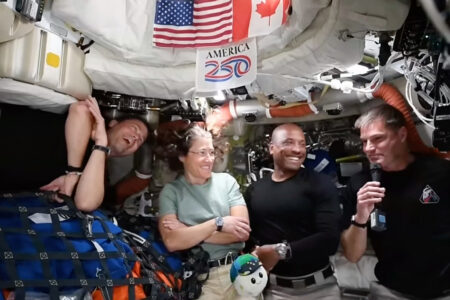
- This image from video provided by NASA shows the Artemis II crew, from left, Commander Reid Wiseman, mission specialist Christina Koch, pilot Victor Glover and Canadian astronaut and mission specialist Jeremy Hansen as they answer media questions during a video conference Wednesday, April 8, 2026. (NASA via AP)
-
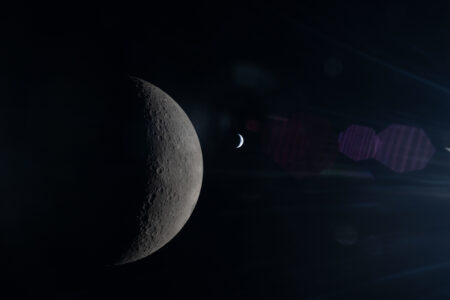
- This image provided by NASA, seen from behind the Moon during Artemis II, the Moon and Earth align in the same frame, each partially illuminated by the Sun on Monday, April 6, 2026. (NASA via AP)
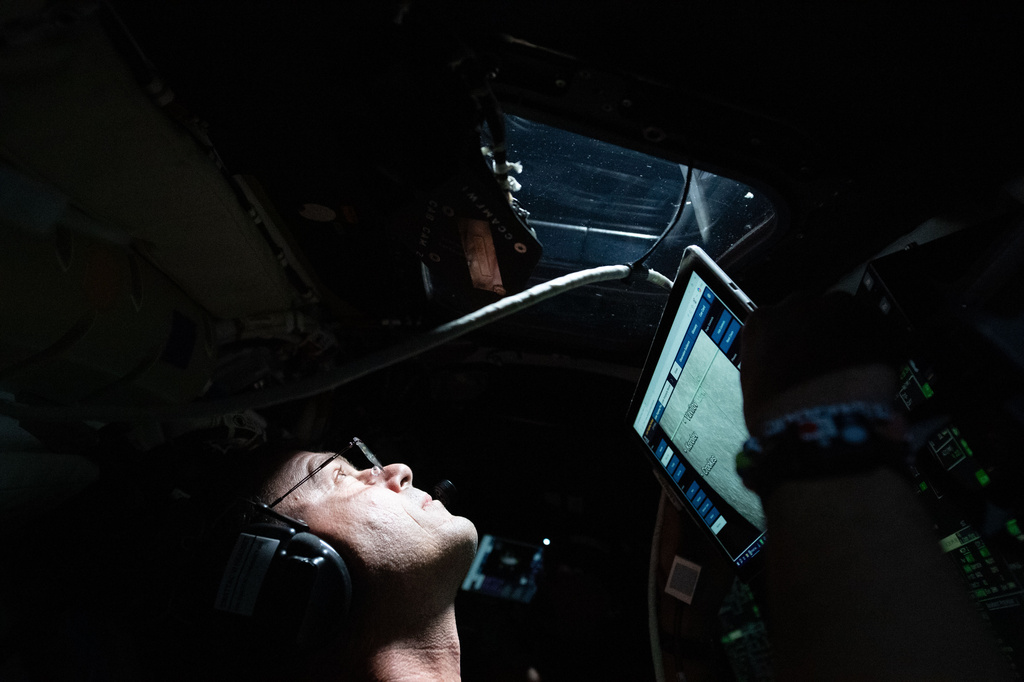
This image provided by NASA, astronaut and Artemis II Commander Reid Wiseman takes a moment during the seven-hour lunar observation period where the crew reported to the ground team their observations including color nuances, which will help enhance scientific understandings of the Moon on Monday, April 6, 2026. (NASA via AP)
HOUSTON (AP) — Drawing ever closer to Earth, the Artemis II astronauts tidied up their lunar cruiser for the upcoming “fireball” return and reflected on their historic journey around the moon, describing it as surreal and profound.
As the next-to-last day of their flight dawned Thursday, humanity’s first lunar explorers in more than half a century were less than 150,000 miles (240,000 kilometers) from home with the odometer clicking down.
“We have to get back. There’s so much data that you’ve seen already, but all the good stuff is coming back with us. There are so many more pictures, so many more stories,” said pilot Victor Glover, adding that “riding a fireball through the atmosphere is profound as well.”
Being cut off from all of humanity for nearly an hour while behind the moon was especially “surreal,” according to commander Reid Wiseman.
“There’s a lot that our brains have to process … and it is a true gift,” Wiseman said late Wednesday during the crew’s first news conference since before liftoff.
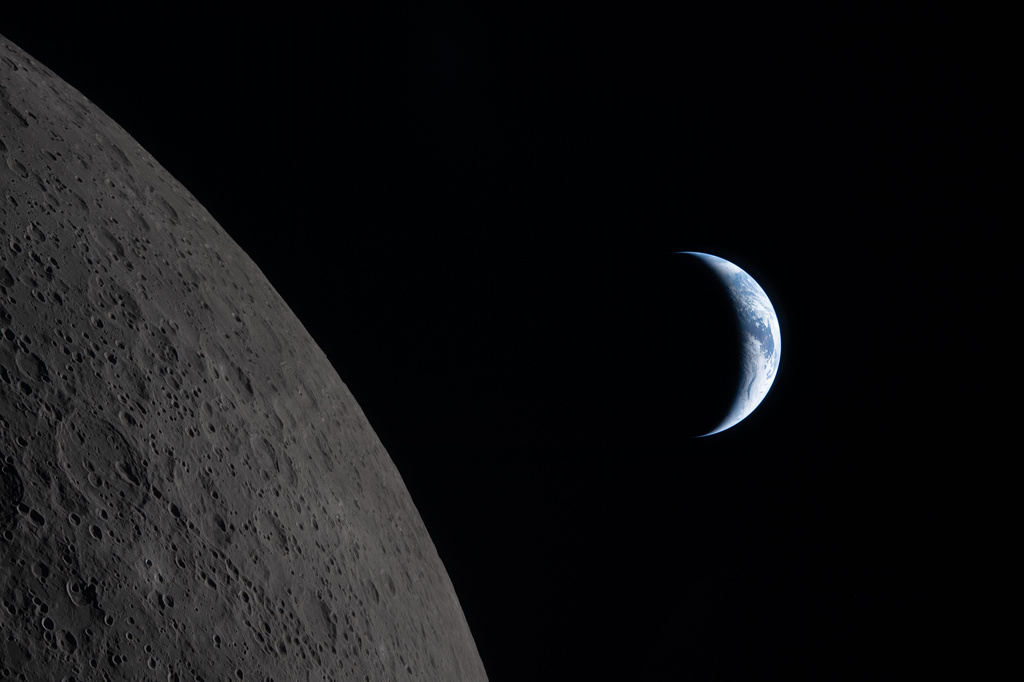
In this image provided by NASA, the Artemis II crew captured this view of the Earth next to the Moon before Earthset during a lunar flyby, Monday, April 6, 2026. (NASA via AP)
While out of contact behind the moon Monday, Wiseman, Glover, Christina Koch and Canada’s Jeremy Hansen became the most distant humans ever, clocking in at a record 252,756 miles (406,771 kilometers) from Earth before heading back. As they emerged from behind the moon, they experienced a wondrous total solar eclipse as the orb blocked the sun from their perspective.
Launching from Florida on April 1 diminished the amount of illumination on the lunar far side, Glover noted, but the eclipse was the consolation prize “and it was one of the greatest gifts.”
While acknowledging anxiety over Friday’s return, NASA Associate Administrator Amit Kshatriya said the crew’s “expressions of love and devotion to family” have warmed hearts worldwide and served as “a great example of why we go and do these missions.”
“If you can’t take love to the stars, then what are we doing?” he said. “That’s why we send humans instead of robots sometimes, that’s why we have that firsthand witness.”
Friday’s reentry and Pacific splashdown off the coast of San Diego — as dynamic and dangerous as liftoff — now topped everyone’s minds. The recovery ship, USS John P. Murtha, was already at sea, with a squadron of military planes and helicopters poised to join the operation.
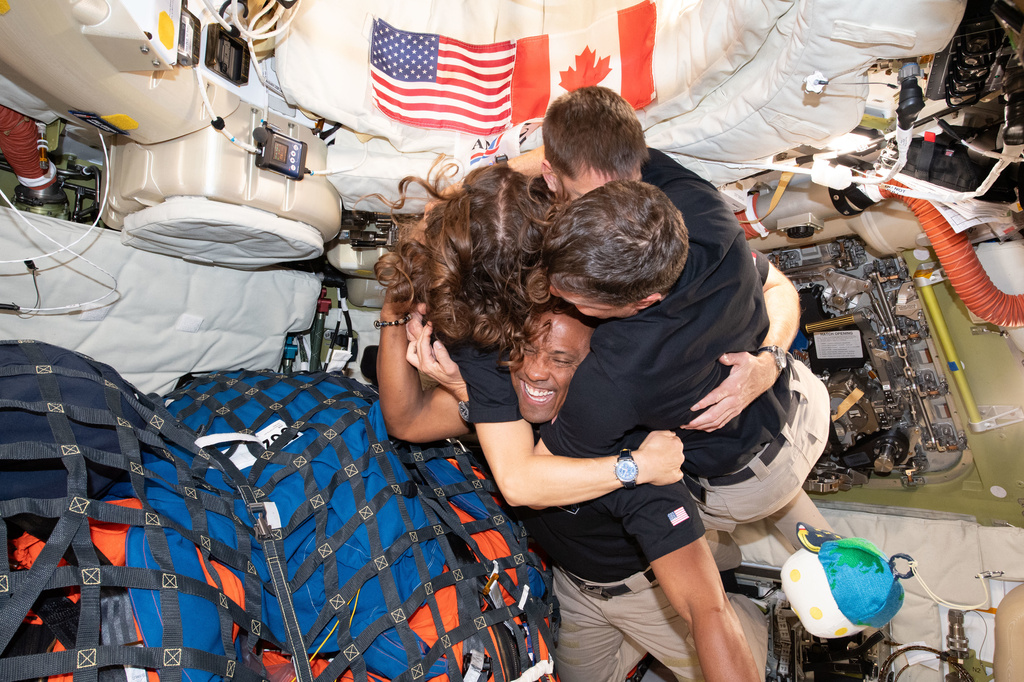
In this image provided by NASA, The Artemis II crew, clockwise from left, Mission Specialist Christina Koch, Mission Specialist Jeremy Hansen, Commander Reid Wiseman, and Pilot Victor Glover, take time out for a group hug inside the Orion spacecraft on their way home on Wednesday, April 7, 2026. (NASA via AP)
It’s the first time that NASA and the Defense Department have teamed up for a lunar crew’s reentry since Apollo 17 in 1972. Their Orion capsule will come screaming back, hitting the atmosphere at a predicted 34,965 feet (10,657 meters) per second — or 23,840 mph (38,367 kph) — not a record but still mind-bogglingly fast.
Flight director Jeff Radigan said the capsule must nail the reentry angle within a single degree.
“Let’s not beat around the bush. We have to hit that angle correctly — otherwise we’re not going to have a successful reentry,” he said.
Mission Control will be paying close attention to how the capsule’s heat shield holds up. During the only other Orion test flight to the moon — in 2022 without a crew — the heat shield suffered considerably more damage than expected from the 5,000 degrees Fahrenheit (2,760 degrees Celsius) of reentry.
Instead of replacing Artemis II’s heat shield, which would have forced another lengthy delay, NASA tweaked the capsule’s descent through the atmosphere to reduce the blisteringly hot exposure. Next year’s Artemis III and beyond will fly with redesigned heat shields.
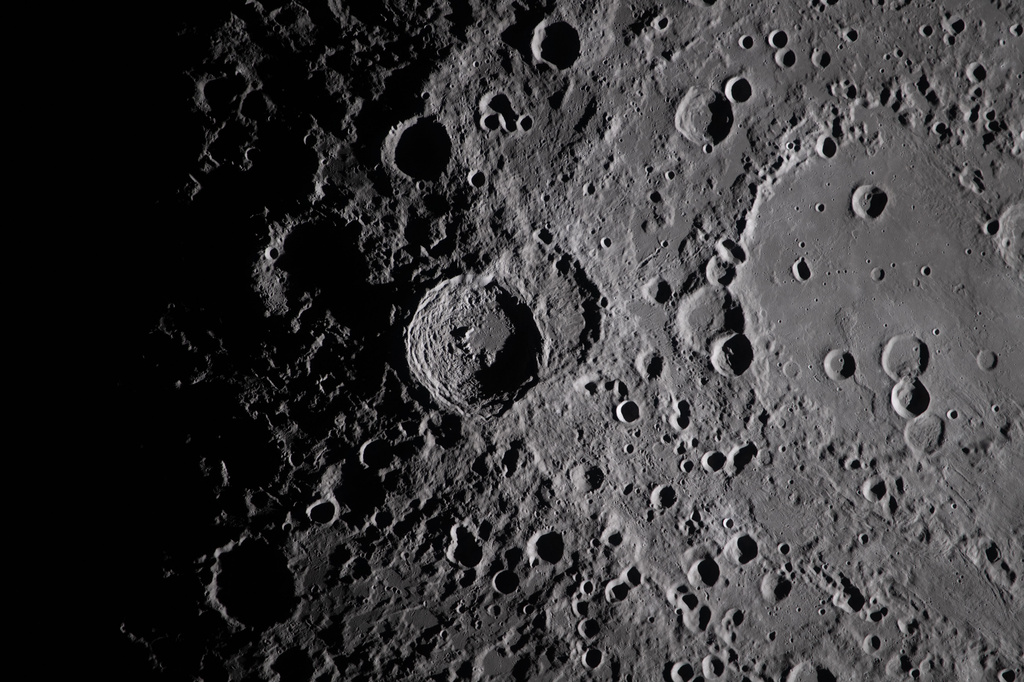
In this image provided by NASA, the Artemis II crew captured this image of the Vavilov Crater on the Moon during a lunar flyby, Monday, April 6, 2026. (NASA via AP)
Artemis III will see astronauts practice docking their capsule with a lunar lander or two in orbit around Earth. Artemis IV in 2028 will attempt to land two astronauts near the moon’s south pole, setting the stage for what NASA hopes will be a sustainable lunar base.
NASA officials have been loath to provide their risk assessment numbers for the nearly 10-day mission, acknowledging launch and entry as the biggest threats.
“We’re down to the wire now,” said NASA’s Lakiesha Hawkins. “We’re down to the end of the mission, and obviously getting the crew back home and getting them landed safely, is a significant part of the risk that’s still in front of us.”
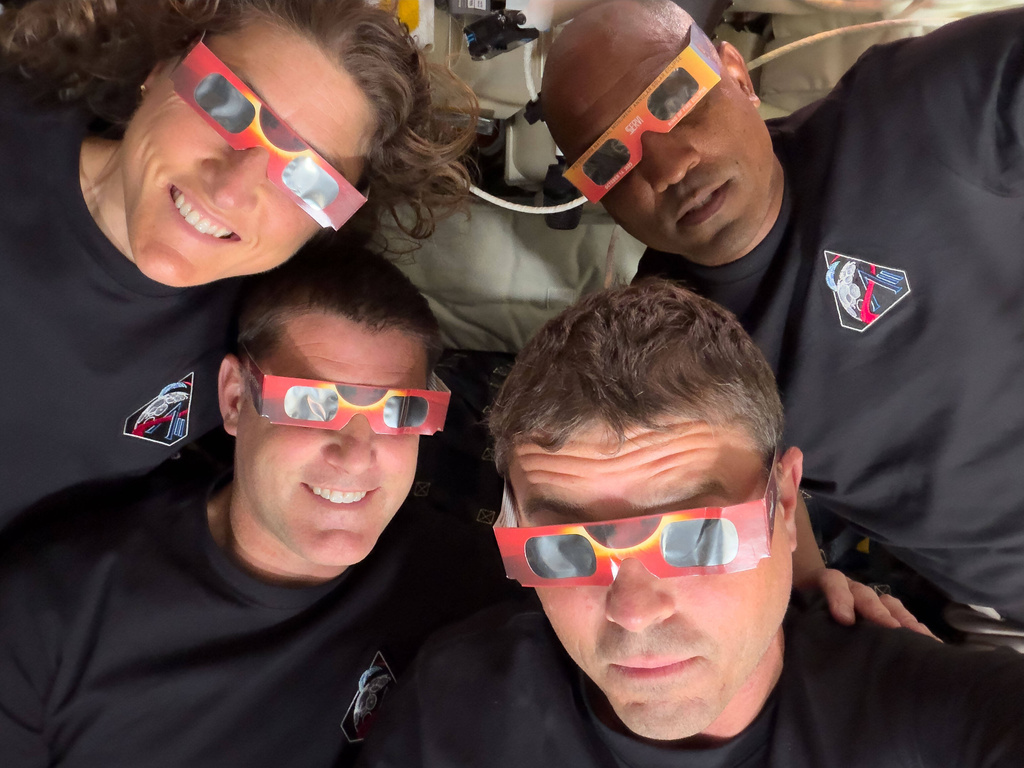
In this image provided by NASA, the Artemis II crew, counterclockwise from top left, Mission Specialist Christina Koch, Mission Specialist Jeremy Hansen, Commander Reid Wiseman, and Pilot Victor Glover pose with eclipse viewers during a lunar flyby, Monday, April 6, 2026. (NASA via AP)
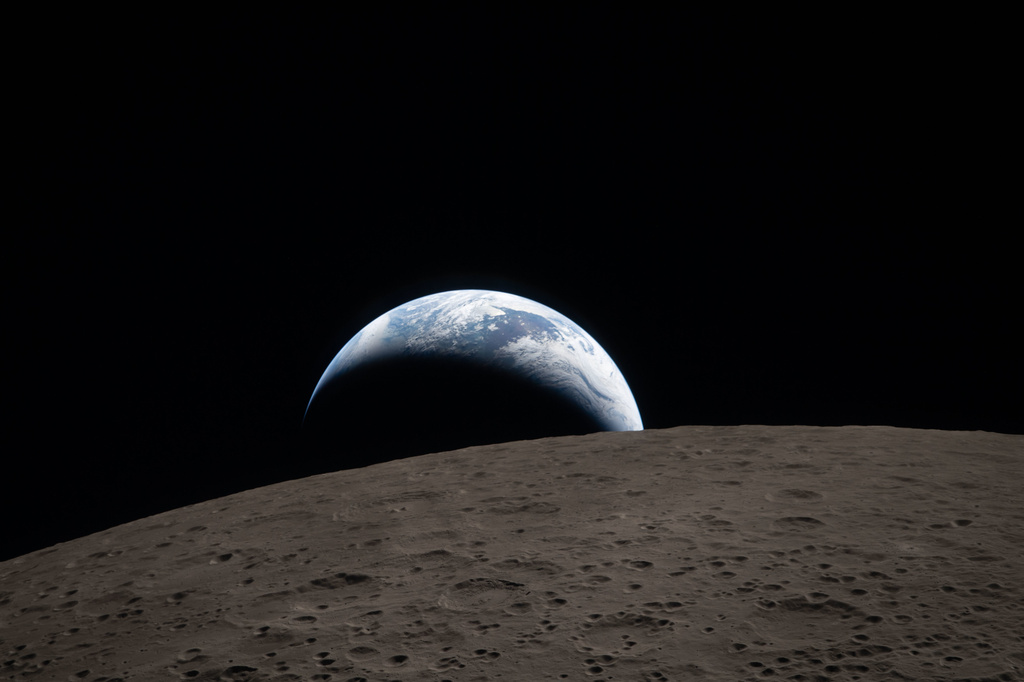
In this image provided by NASA, The Artemis II crew captured this view of an Earthset on Monday, April 6, 2026, as they flew around the Moon. (NASA via AP)
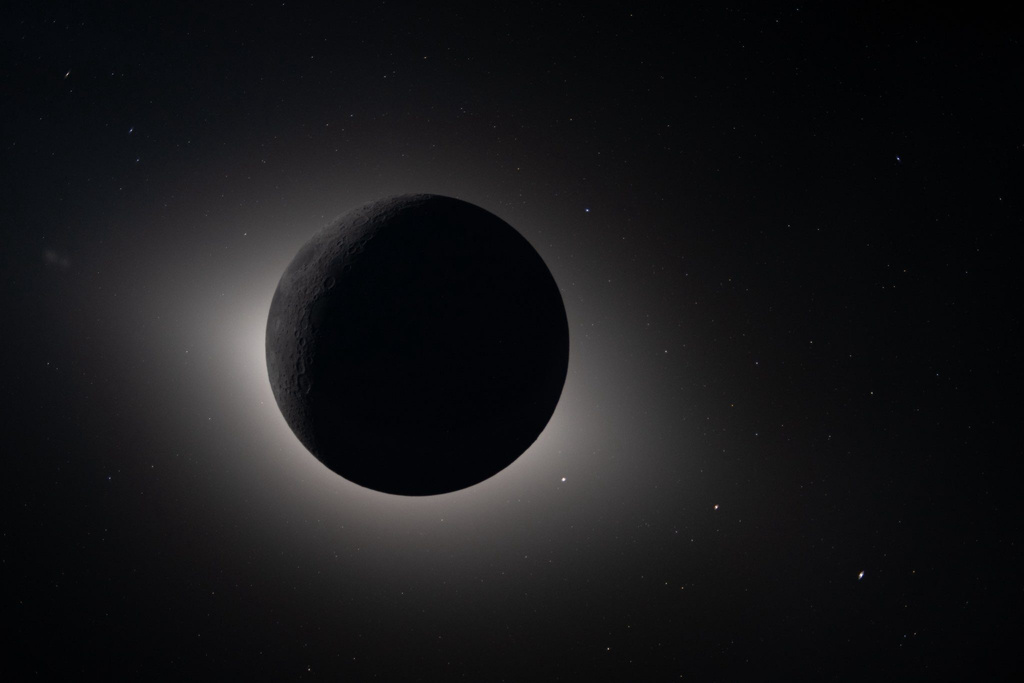
In this image provided by NASA, The Artemis II crew captured from lunar orbit, the Moon eclipses the Sun on Monday, April 6, 2026. (NASA via AP)
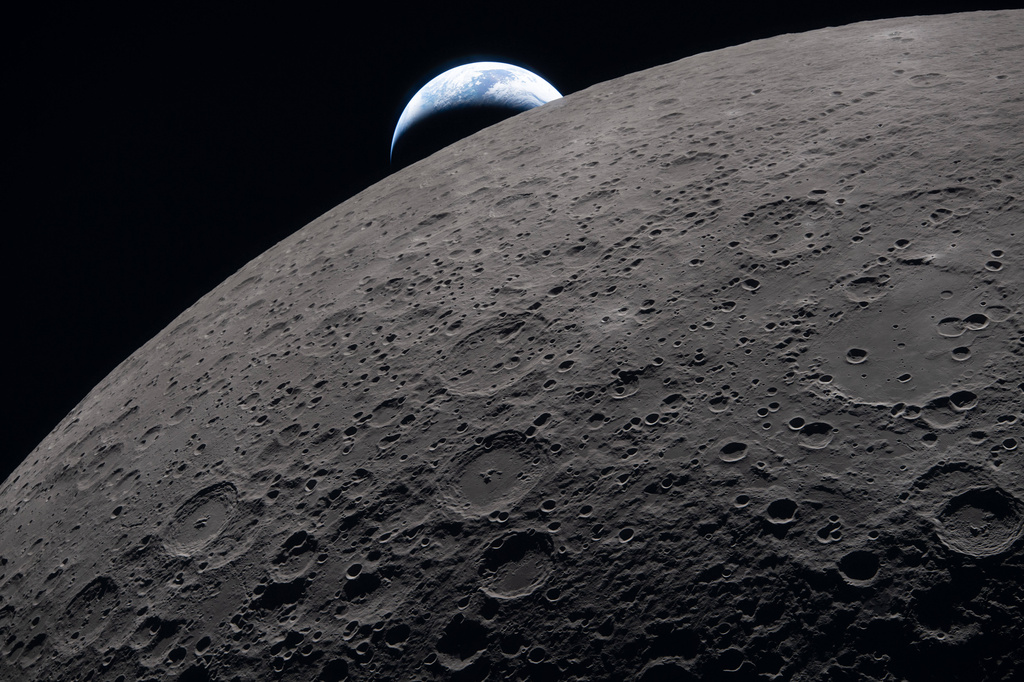
In this image provided by NASA, the Artemis II crew captured this view as the Earth sets behind the Moon during a lunar flyby, Monday, April 6, 2026. (NASA via AP)
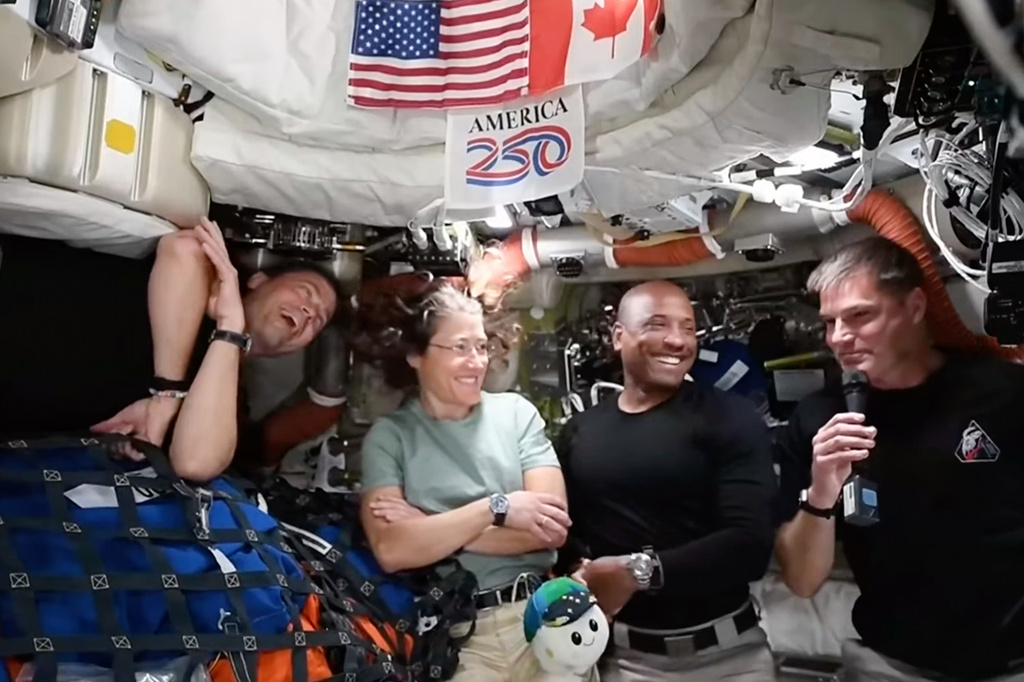
This image from video provided by NASA shows the Artemis II crew, from left, Commander Reid Wiseman, mission specialist Christina Koch, pilot Victor Glover and Canadian astronaut and mission specialist Jeremy Hansen as they answer media questions during a video conference Wednesday, April 8, 2026. (NASA via AP)
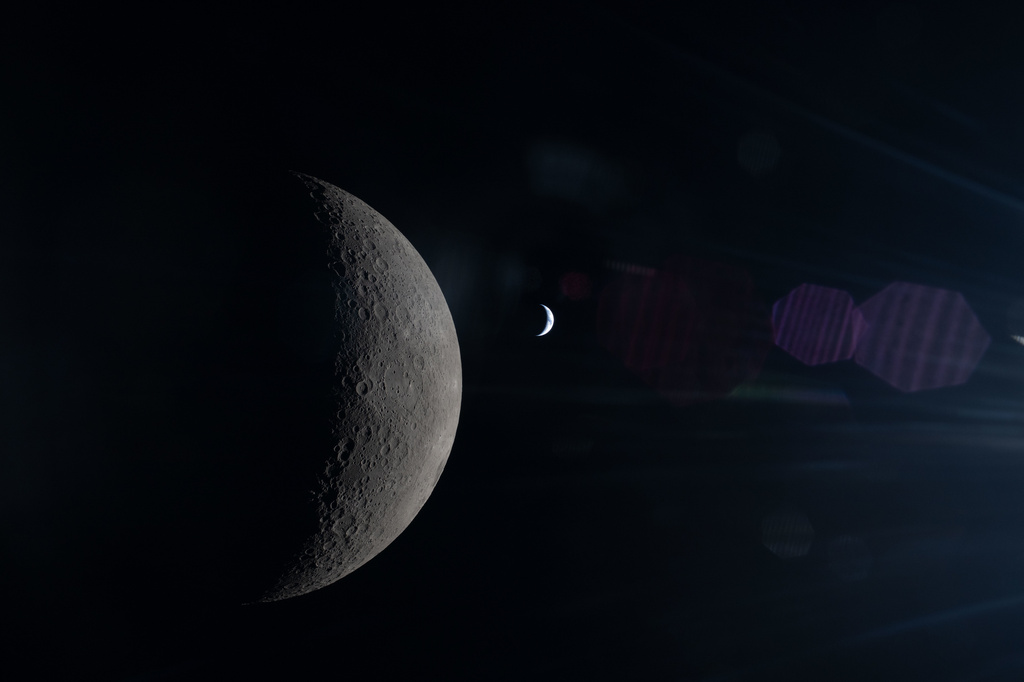
This image provided by NASA, seen from behind the Moon during Artemis II, the Moon and Earth align in the same frame, each partially illuminated by the Sun on Monday, April 6, 2026. (NASA via AP)
International News
Artemis II crew due to land with lots of data

American journalist released, Iraqi officials tell the AP
Trump pulls back on his Iran threats for two weeks, subject to Iran agreeing to ceasefire
TEHRAN, Iran (AP) — U.S. President Donald Trump said late Tuesday he’s pulling back on his threats to attack ...

English choirs seek to protect a musical tradition little changed since Queen Elizabeth I

Trump widens threat to all of Iran’s power plants and bridges as deadline approaches tonight