
Trending
LANSING - Police officers routinely face dangerous situations in a matter of moments, interacting with people from different races, genders and disabilities.
And some such confrontations raise claims of discrimination and bias.
In one prominent Michigan case, a white Grand Rapids police officer fatally shot Patrick Lyoya, a Black man from the Congo, in 2022.
Now, heightened political tensions and increased news coverage of recent incidents alleging police brutality have intensified the discussion in Michigan and across the country over topics like police brutality, discriminatory enforcement and better training.
One major step departments are taking to reduce confrontations is addressing implicit bias, which the American Psychological Association defines as a negative attitude towards a specific social group without being consciously aware of it.
Ron Wiles, the executive director of the Michigan Association of Chiefs of Police, said that since the murder of George Floyd in 2020, law enforcement departments have put more emphasis on eliminating bias both in the workplace and while working in their communities.
Floyd, who was Black, died at age 46 due to cardiopulmonary arrest caused by a white Minneapolis police officer kneeling on his neck during an arrest.
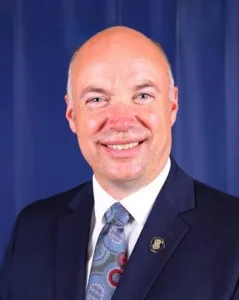
Ron Wiles, executive director of the Michigan Association of Chiefs of Police.
Bias training is designed to help officers recognize and manage their implicit biases and to give them tools for making decisions based on behavior and circumstances rather than based on assumptions about a person's race or background, Wiles said.
"Training helps put those standards into practice for officers and helps them understand how to police different situations. It helps to manage an officer's implicit biases that could affect how they handle a certain situation," Wiles said.
Every police department has a bias training program but they are "somewhat different," depending on the program, Wiles said.
Training varies from department to department. Some require officers to learn in-person while others have implemented online courses, according to Wiles.
In 2023, the Hazel Park Police Department became one of the first departments in the state to require all of its officers to complete an accredited training called "Understanding Implicit and Unconscious Bias" through the Michigan Commission on Law Enforcement Standards according to a 2026 Northern Michigan University study.
According to the study, the program covers four specific areas: how stereotypes and judgments affect an officer's choices; how someone's backgrounds can shape beliefs; the relationship between cognitive processes and biased behavior; and how biases can manifest in interactions with the public.
"In an effort to reduce discrimination, police departments across Michigan should either encourage or require police officers to undergo a training similar to that of the [commission's] certified training courses," according to the study.