From Russia to the U.P.: an Easter story of family and food
Contributed photo
ESCANABA – Ella plucked the last warm brown speckled egg from the nest.
The hen cackled her protest, but now she had a baker’s dozen in her wicker basket.
Ella practically skipped with joy down the muddy path from the chicken coop to the house.
Four sets of dark brown half Russian eyes spotted the wonderful bounty. Fried eggs with bacon or scrambled with toast or how about a tasty potato and egg salad, it all sounded so good. Food was sometimes in short supply with four children around the table, two adults and often a border or two to feed.
Mama was delighted, though, as she explained that these would be Easter eggs. Dyed, decorated and placed in a pretty basket for all to see!
What a wonderful sign of spring and a symbol of the Resurrection.
New life was really something to celebrate after a long cold Upper Michigan winter.
The streetcar went by just then and the kids pushed their noses against the house’s storefront windows. The front part of the house was a corner convenience store. Candy, soda pop, cigarettes and staple goods lined the shelves.
Ella put the eggs on the cupboard and turned to tend to the fussing baby.
A veggie soup of beets and cabbage (borscht) simmered on the back of the kitchen stove. Pa would enjoy the simple but traditional Russian meal.
But, in a few days it would be Easter! There would be “cry sausage” made from the pig raised in the backyard and mixed with plenty of onions, garlic and spices. Ham and mashed potatoes sprinkled with fresh chives snipped from the garden on the south side of the house would be on the table, too.
A sweet cinnamon coffee cake dessert would be a real treat.
Later that evening, after everyone was washed and in bed, including her husband who had to rise early and hike to the I. Stephenson Lumber Mill the next day, Ella decorated the precious eggs.
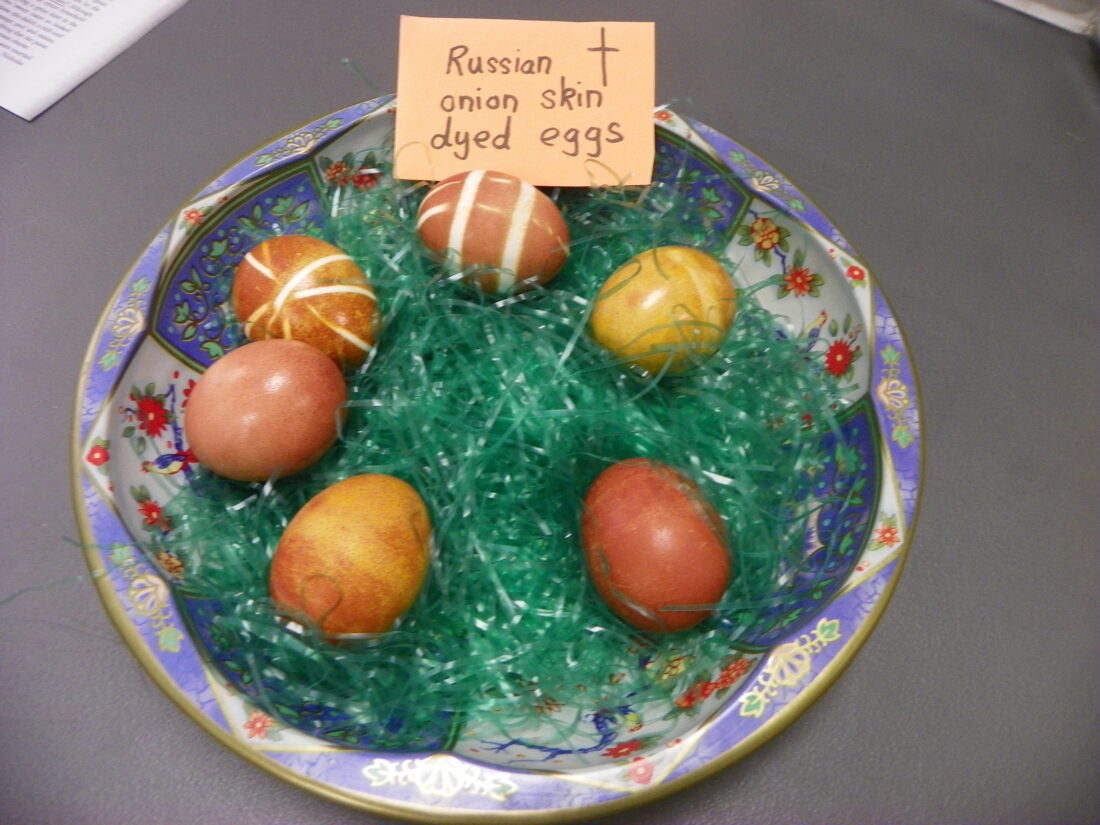
Just like her Russian husband taught her, she boiled half of them in onion skins and water. She tied twine around some eggs to make an interesting pattern on them. The remaining eggs were boiled in beet juice and water.
These red orthodox beauties stood for the blood of Christ at the Paskha (Easter) celebration. Ella gently placed them in the basket and made a table centerpiece out of them. She hoped John and the children would enjoy looking at them as much as she did.
Families need Easter joy now more than ever with the world so troubled. Hitler was ready to invade Poland. President Franklin Roosevelt was starting WPA projects. A picture show called the “The Wizard of Oz” was soon to come to town and bring smiles, though.
On Easter morning, Ella gathered her young family by the lovely Easter eggs. But wait – one was cracked, one was missing a bit of shell and another was literally smashed.
“What happened to our perfect Russian eggs?” she asked with a sigh.
The children explained that Pa, Boris and Harry from the Bay shore all came over and showed them how to do old-fashioned Russian egg tapping.
“Boris’ egg was the toughest,” young James told his mother. “His egg’s shell cracked all the others.”
Ella sighed again but smiled. Egg salad would be on the menu tomorrow!
And so, a tradition from the old country to the new country lives on. On Easter Sunday, many descendants will tap decorated eggs in the spirit of Chris tos Vos Krese.