Trumpet swans reclaim Michigan wetlands
-
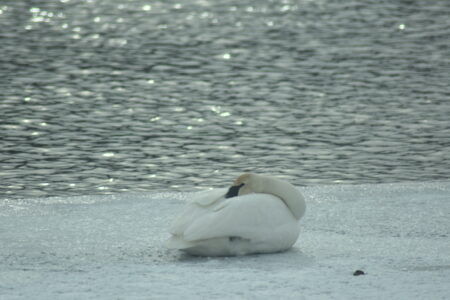
- This image shows a trumpet swan ice napping.
-

- Karen Rose Wils
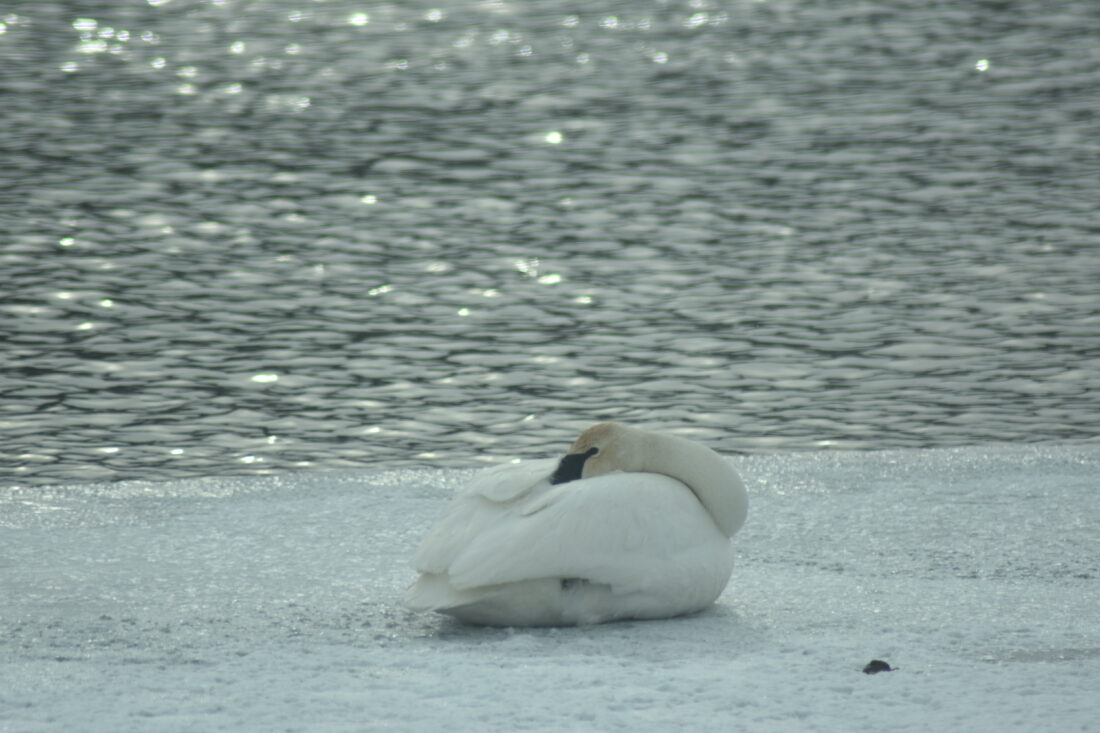
This image shows a trumpet swan ice napping.
ESCANABA- Swans are found in fairy tales. Swan Lake is a beautiful ballet. Even the “ugly duckling” turned out to be a swan!
In my childhood days, swans were found only in books and romantic movies.
But in the last few decades, thanks to Little Bay de Noc, I’ve come to learn that swans are native wild birds of Michigan. Years ago, the only swans that I saw were made of cement and were planters filled with flowers.
I knew that swans had something to do with weddings and tunnel of love amusement park rides.
Elegant, graceful and snowy white, I figured that swans belong to royalty in castles and the elite folks with swimming pools and gated gardens.

Karen Rose Wils
It was a little over twenty years ago that I noticed an extremely large gull floating on the water up near the head of the Bay. While my husband was searching for walleye, I was bird watching. With the help of my zoom lens, I focused on the big white bird and discovered it was a swan.
Little did I know it at that time, but the trumpet swan is the largest and heaviest bird native to Michigan waters. These cobs (males) and pens (females) are members of the duck family and thrived hundreds of years ago in Michigan abundant wetlands and waterways.
As the white folks increased, the white swans decreased. Swan meat was considered a delicacy. The fluffy feathers of the bird were used to adorn women’s dressy hats back in the day. It was a status symbol to own multiple hats made of swan.
The cutting of the virgin timber across the north woods often left rivers and bays stripped of aquatic plant life. And water plants are what swans need to exist.
To make matters worse, a new swan entered the wild scene. The mute swan, a beautiful bird native to Eurasia. Prominent landowners liked to see elegant swans swimming on their ponds, so the mute swan was introduced to North America.
Mute swans began to take over the swallow waters that once belonged to the trumpet swans.
In the 1980’s trumpet swans from Alaska were reintroduced to Michigan. Ever so slowly the big birds reclaimed the weed filled rivers, shallow lakes and wetlands of Upper Michigan.
I’ve read the swans usually mate for life and that the male bird as well as the female bird fiercely protect their nests and cygnets (babies).
Trumpet swans will stay in the frigid U.P. as long as there is just a little open water so that they can search for food.
So, just like a lacey, white Valentine – all slender and graceful and nestled in the snow – swans are once again a part of the U.P. scene.
Have a peaceful and romantic week by your riverside!
Features
Briefs for Friday, Feb. 6, 2026
St. Anthony raffle winner ESCANABA – Dave and Carol Carlson of Wells are the winners of the St. Anthony of Padua ...
Trumpet swans reclaim Michigan wetlands

Purchasing single bedsheets

Missing intimacy in an otherwise good marriage
Briefs for Thursday, Feb. 5, 2026
Wells Lions raffle winner ESCANABA - The $100 winner of the Wells Lions Club’s 52-week raffle for week 27, dated ...