The lovey dovey pigeons of Escanaba
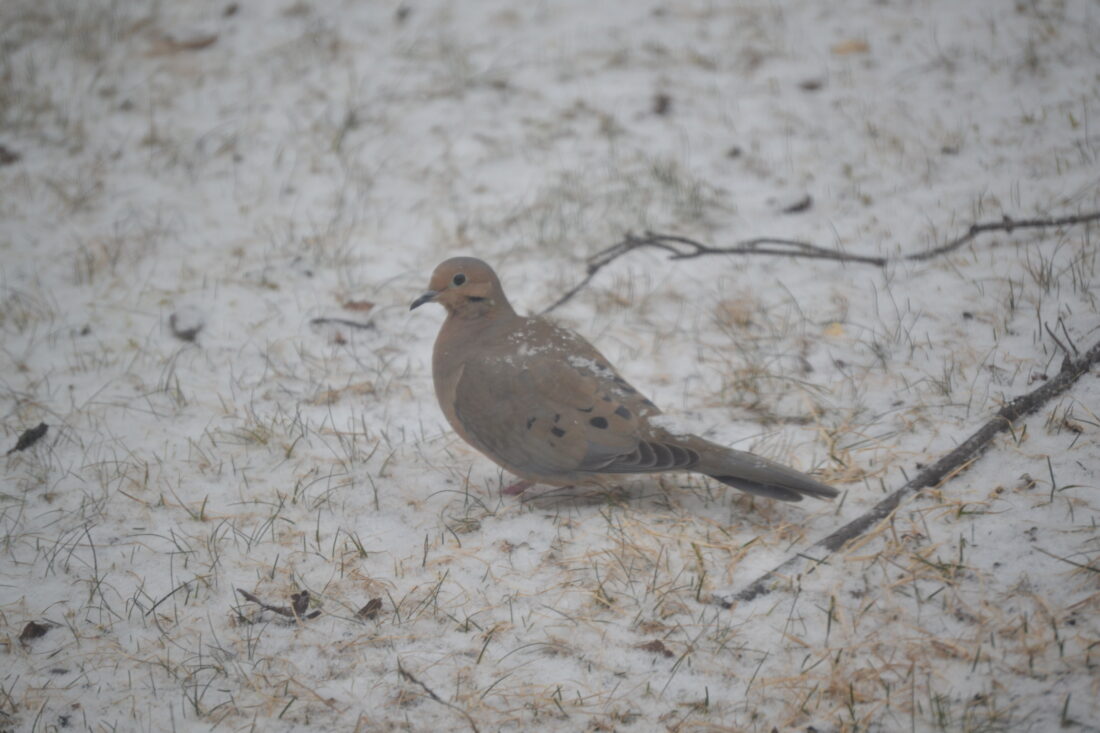
Karen Wils photo A mourning dove on the snowy ground, Michigan’s true lovey dove.
ESCANABA — Love doves, turtle doves and cooing pigeons — sounds romantic right after Valentine’s Day.
The pudgy, cute little pigeons line the power lines like puppets on a stage. They watch for bird feeders being filled and bits of food below.
Pigeons are very abundant in Escanaba.
Birds of a feather flock together and this is so true of this bird. He is the European pigeon belonging to the columbidae family of birds.
These birds thrive in the U.P., especially around towns, cities and farms. They perch on statues, fence posts, telephone poles and roof tops.
Ranging in color from charcoal gray to snowy white sometimes with bands of iridescent green, pigeons are prolific.
But the pigeon is not native to the Northwoods. They came over with the Pilgrims (early settlers) tucked away roosting in the wooden beams of the boats.
They too found a good home in North America.
In the early days of Escanaba, pigeons nested by the hundreds on the many wooden ore docks that sprung up over the years on the north shore.
I remember my uncles and quite a few other families harvesting them for the supper table. In Europe pigeon meat is known as squab and is severed in elegant restaurants.
North America did, at one time have an actual native pigeon. It was called the passenger pigeon. I have read that this bird was the most numerous species in the world. Their flocks once darkened the skies as they migrated from area to area.
A bit bigger with a longer tail than the European pigeon, passenger pigeons fed mostly on a diet of tree mast.
Easy food and greedy Americans hunted this beautiful bird and shipped them by the train car loads to the big mid-west cities to be used for food. By the 1900s much of our forest canopy fell to supply the lumber mills taking with it passenger pigeon habitat.
Martha, the last known living passenger pigeon, died in a Cincinnati zoo in 1914.
The third bird I’m going to mention in this family has a much happier story. Even though its name sounds sad “mourning dove” this feather friend is doing well in his native Michigan homeland.
Mourning doves get their name from that very low sorrowful coo of theirs. What would summer sunrises be without that magically somber sound of the mourning doves calling?
More streamlined than pigeons, with earth-tone feathers that look like velvet, black spots and blue eye rings, the mourning dove looks like a movie star.
They are a favorite at the bird feeders. They make flimsy nests in spruces or apple trees around our backyards. Mourning dove wings make a pleasant whistling sound when they fly.
Around our town the pigeons rule the tree tops, power lines and bird feeders, but if you scatter a few seeds beneath the trees, some mourning doves may visit and serenade you with their love songs.
To all the “Lovey Doves” out there, have a sweet weekend.
——
Karen (Rose) Wils is a lifelong north Escanaba resident. Her folksy columns appear weekly in Lifestyles.